
 By Ayaz Gul
VOA News
March 8, 2024
ISLAMABAD — The United Nations warned Afghanistan’s Taliban authorities Friday that their bans on women’s education and work risk pushing the country further into deeper poverty and international isolation.
The head of the U.N. Assistance Mission in Afghanistan, or UNAMA, called again on the fundamentalist regime to reverse the restrictions as the world marked International Women’s Day to highlight the need to invest in women.
“It is heartbreaking that we are seeing precisely the opposite unfolding in Afghanistan: a catastrophic and deliberate disinvestment that is causing immense harm to women and girls, creating only barriers to sustainable peace and prosperity,” said Roza Otunbayeva.
Since reclaiming power in August 2021, the Taliban have blocked girls from accessing secondary school education and beyond. They have limited women’s freedom of movement outside the home and prohibited most from public and private sector workplaces, including the United Nations and other aid groups.
The U.N. Development Program, or UNDP, reported Thursday that nearly 70% of Afghans do not have enough basic resources, and restrictions on women continue to thwart basic rights and economic progress. It said the Afghan economy had contracted by 27%, and unemployment doubled since the Taliban takoever.
“The biggest challenge is the continued edict that bans girls’ education. Not being able to move forward after the sixth grade is a major stumbling block,” said Kanni Wignaraja, UNDP’s director for Asia and the Pacific, told reporters in New York.
“Last year, no girl graduated the twelfth grade so how are they going to jump from sixth grade to moving into technical colleges or universities need for the medical field?” said Wignaraja, who recently returned from a visit to Afghanistan.
The ban on female aid workers has undermined relief activities in a country where the U.N. estimates more than 12 million women will need humanitarian assistance this year.
In a statement Friday, UNAMA said it “also fears a recent crackdown by the de facto authorities because of alleged non-compliance with the Islamic dress code is pushing women into even greater isolation due to fear of arbitrary arrest.”
The U.N. refers to the Taliban as de facto authorities because no foreign government has formally recognized their government in Kabul.
However, the euphemism has upset human rights groups and many women in Afghanistan, who are vehemently opposed to granting legitimacy to the Taliban government until it lifts all bans on women.
Heather Barr, the associate director at Human Rights Watch, urged diplomats, the UN, and aid workers on Friday to stop referring to the Taliban as the de facto authorities to show solidarity with Afghan women.
“This euphemism kowtows to Taliban demands for normalization,” Barr said on X, formerly known as Twitter. Rights groups oppose any recognition of the Taliban and accuse it of implementing “gender apartheid” policies.
“Every step toward normalizing the Taliban—every time they walk a red carpet, or send a new ambassador, or host a meeting w/smiling foreigners—sends a message to the Taliban that what they’re doing to women & girls is fine and they are free to carry on,” she wrote in a subsequent X post.
The U.N. acknowledged in a quarterly report Wednesday that the Taliban had consolidated political, security, and economic gains since taking power. However, it noted that Afghan de facto authorities “appear to be facing growing internal disagreements over key governance issues, including the enforcement of the drug ban.”
The report did not elaborate further, but Otunbayeva suggested after briefing a U.N. Security Council meeting on Wednesday that curbs on Afghan women were among the issues causing internal Taliban disagreements.
“There is a part of the [Taliban] government who understand that they should overcome [these restrictions]. But someone else … decided that no, women and girls should be behind the scene,” she said, without naming anyone.
Most of the religious edicts or decrees the reclusive Taliban supreme leader, Hibatullah Akhundzada, has issued over the past 2½ years have targeted women directly, banning their rights to education, work, to visit public places, including parks and gyms, as well as preventing them from taking road trips without a male chaperone.
Akhundzada, who directs the government from the southern Afghan city of Kandahar, defends his policies and dismisses international calls to reverse them as interference in Afghanistan’s internal matters.
Related
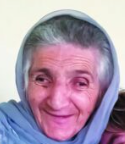 News Line Magazine: Tova Moradi, who was forced to flee Kabul, recalls her religious roots, a girlhood interrupted and the love she still carries – Around sundown on Aug. 31, 2021, a minivan stopped in front of Tova Moradi’s house in Kabul, Afghanistan. She had to get in as quickly and quietly as possible. Any attention could be dangerous. The Taliban had just taken control of Kabul two weeks prior. Their fighters were going door to door, hunting suspected opponents. Despite her frailty, the 83-year-old Moradi was a prized target because she was Jewish and had misled the Taliban during its previous rule in the 1990s by sheltering a rabbi in her house. She needed to escape, and Israelis were helping her flee.
 Ariana: Afghanistan’s Noor Ali Zadran bid adieu to international cricket on Thursday after two Test matches, 51 ODIs and 23 T20Is. Zadran, who starred with a 28-ball 45 in Afghanistan’s first-ever ODI against Scotland at the ICC Cricket World Cup Qualifiers in 2009, played his final game last week at the Tolerance Oval in the Test match against Ireland. The 35-year-old opener retires with 1216 runs in ODIs including a hundred and seven fifties. He made his T20I debut in 2010 and last played a T20I in 2023.

 8am: Local sources in Panjshir province report that the Taliban plan to establish migrant settlements on private lands in the Anaba district. These lands, currently serving as pasturelands in the village of Anaba, are nestled amidst residents’ houses and rugged mountains. However, some Panjshir residents and civil society activists criticize the Taliban, accusing them of echoing the historical actions of Emir Abdul Rahman Khan and Amanullah Khan, which disrupted local demographics. They stress that any attempt to seize land and relocate non-native individuals will only escalate tensions in the province.
 Akmal Dawi
 Khaama: International media reports indicate that the process of issuing special immigrant visas to Afghan citizens for the United States is coming to a close by the end of this year. Reuters reported on Wednesday, March 6th, citing the US State Department that out of the 38,500 special visas allocated for Afghan citizens, only 8,000 remain. According to the report, the issuance of the remaining visas will conclude by the third anniversary of the withdrawal of foreign forces from Afghanistan, meaning until August this year.
 8am: Recently, Iranian authorities have reported a 20% increase in the production of industrial drugs (methamphetamine) in Afghanistan over the past ten months. Eskandar Momeni, the head of Iran’s Drug Control Headquarters, stated that regarding the Taliban’s claims of reducing drug cultivation and production, “It should not be the case that traditional drugs decrease while industrial drugs increase. The fight against drugs in Afghanistan should encompass all types of drugs.” Previously, the United Nations also reported an increase in the production and trafficking of methamphetamine in Afghanistan under Taliban control, indicating how deceptive and false the group’s claims of combating drugs are.