
 Transparency International: Providing the first-ever comprehensive assessment of Afghanistan’s capacity to fight corruption, National Integrity System Assessment: Afghanistan 2015 identifies the weaknesses that have undermined the effectiveness of billions of dollars of international funding and contributed to ongoing war in the country. It makes key recommendations to improve Afghanistan’s chances of establishing a viable government with trusted institutions. Click here to read more (external link).
Taliban commander in women’s dress arrested in Paktika

Taliban commander arrested wearing women’s clothing in eastern Paktika province. Photo: NDS
1TV: Afghan security forces have arrested a Taliban commander wearing women’s clothing in east, officials said Wednesday. Khezr Ali, also known as Chapi, was caught during a raid by intelligence agents in Barmal district of Paktika province, the National Directorate of Security said in a statement. Click here to read more (external link).
U.S. aims to stop paying for Afghan ‘ghost’ troops
 1TV: Testifying before House Armed Services Committee late last week, U.S. Defense Department officials said they hope to have in place in coming months “an integrated pay and personnel system” for Afghan security forces that will help identify and account for thousands of individuals in the ranks, the Military Times reported Tuesday. Click here to read more (external link).
‘Wall of kindness’ emerges in Afghanistan to help those in need
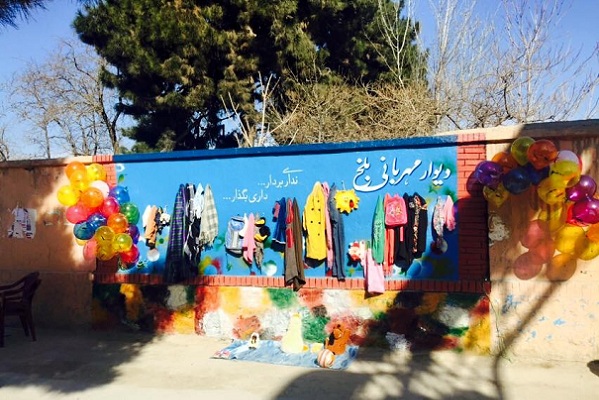
1TV: The wall painted in blue with hooks for clothes, carries the sign: “If you don’t have, take it. If you have, leave it.” The charity wall in the provincial capital city of Mazar-i-Sharif city was created in joint cooperation by civil society activists, journalists and the provincial council. The idea to set up charity walls under the name “wall of kindness” was first developed in Iran in September last year. Click here to read more (external link).
Pakistan Probe Provides No Clues on Missing Afghan Politician
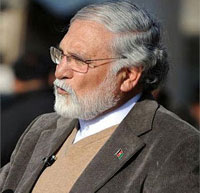
Fazlullah Wahidi
VOA News
Ayaz Gul
February 17, 2016
ISLAMABAD—Authorities in Pakistan have reported no progress in their probe to ascertain motives or locate the whereabouts of a visiting senior Afghan politician, nearly a week after he was kidnapped in Islamabad.
Fazlullah Wahidi, former governor of Afghanistan’s western Herat province, arrived in the capital city with his family to apply for a visa to visit Britain. According to the initial complaint relatives registered with the Islamabad police, unknown men kidnapped him Friday afternoon from the guesthouse in which he was staying.
The British embassy in Kabul does not issue visas to Afghans.
Police and intelligence agencies have been working hard to resolve the matter but they have not yet made any progress, despite “some encouraging initial leads,” according to a Pakistani government official with knowledge of the probe, who spoke with VOA on the condition of anonymity.
Afghan diplomats said they are in touch with the Pakistani government and hope for quick progress in the case. They feared the incident, if not resolved, could setback efforts the two countries are making to improve their strained ties.
“The case if not resolved as hoped could severely impact prominent Afghan’s traveling to Pakistan – something that actually needs to be encouraged and promoted for broadening positive interactions between our two countries as I want to push as part of my mission,” Kabul’s newly appointed ambassador to Islamabad, Hazrat Omar Zakhilwal told VOA on Wednesday.
Mysterious disappearance
The mysterious disappearance of the former governor comes at a time when Pakistan and Afghanistan, together with the United States and China, have stepped up joint efforts to arrange direct peace talks between the Kabul government and the Taliban to end the Afghan war.
Officials from the four nations are scheduled to meet again in the Afghan capital on Monday to further the peace process amid expectations that peace talks between the warring sides could start before the end of this month.
For years, Wahidi ruled the eastern Kunar province abutting Pakistan before being assigned to govern Herat. However, President Ashraf Ghani months ago removed him from office in a bid to improve provincial governance.
The missing Afghan politician is a vocal critic of Pakistan’s alleged interference in Afghan internal affairs and its secret support to the Taliban insurgency, charges Islamabad denies.
Taliban denies involvement
The Taliban has denied involvement in the kidnapping.
“There are enough problems for us [the Taliban] to deal with inside Afghanistan and our policy also does not allow us to conduct operations on a foreign soil,” Taliban spokesman Zabihullah Mujahid told VOA when asked whether the insurgent group was behind the abduction of former Afghan governor.
Criminal gangs are blamed for acts like kidnapping for ransom in parts of Pakistan, particularly the largest city and commercial hub, Karachi. But such crimes are not common in the nation’s capital.
Officials do not rule out the possibility of internal Afghan rivalries. Extremists linked to the Pakistani Taliban who are waging a bloody insurgency against the state could also be behind Wahidi’s kidnapping.
However, some Pakistani officials and critics appear unhappy over the former Afghan governor’s arrival in the country without giving prior information to local authorities to ensure his personal security.
HRW: Afghan Taliban Recruits Scores of Child Soldiers
 VOA News
Ayaz Gul
February 17, 2016
ISLAMABAD—An international human rights group has accused Afghanistan’s Taliban of recruiting scores of children to its ranks for insurgent activities, including the production and planting of improvised explosive devices. The militant group has denied this.
In a detailed report, New York-based Human Rights Watch demanded the Taliban immediately put an end to the illegal use of child soldiers.
International humanitarian law, or the laws of war, prohibits the recruitment or use of children under 15 by parties to a conflict, it said.
Children thrown into battle
HRW senior Afghanistan researcher Patricia Gossman says the Taliban’s apparent strategy to throw increasing numbers of children into battle is “as cynical and cruel as it is unlawful.”
“Afghan children should be at school and at home with their parents, not exploited as cannon fodder for the Taliban insurgency,” she added.
The report says Taliban forces have been training and deploying child soldiers since the middle of 2015 due to expanded insurgent operations against Afghan government forces.
It asserted that the Islamist insurgency has increasingly used madrasas, or Islamic religious schools, in the northern province of Kunduz to provide military training to children between the ages of 13 and 17, many of whom have been deployed in combat.
“The Taliban’s increasing use of children as soldiers only adds to the horrors of Afghanistan’s long conflict both for the children and their families. The Taliban should immediately stop recruiting children and release all children in their ranks, even those who claim to have joined willingly,” Gossman said.
The Taliban had briefly overrun the provincial capital of Kunduz during its offensive operations in the north in September.
The findings are based on interviews it conducted with relatives of 13 children recruited as Taliban soldiers during the past year, says HRW, adding it verified these claims through interviews with civil society activists, political analysts and the United Nations.
Taliban spokesman, Zabihulla Mujahid, in a written statement sent to reporters has denied it is adding children to its ranks.
“Children are neither recruited nor allowed to participate in Taliban jihadi activities in the battlefield or even in its administrative affairs,” Mujahid asserted.
Child civilian casualties
The United Nations says conflict in Afghanistan continues to have a devastating impact on children and it continues to record high levels of child civilian casualties.
U.N. Special Representative for Children and Armed Conflict, Leila Zerrougui visited Afghanistan this week to review implementation of an Action Plan the Afghan government signed with the United Nations in 2011 and a road map to compliance in 2014 to end and prevent the recruitment and use of children in its national security forces.
Speaking to reporters in Kabul at the end of her five-day trip on Tuesday, she said Afghan officials recognize there is a problem and they are in the process of addressing it.
“People recognize that they have shortcoming that they have lack of capacity that they are acting under very difficult and complex circumstances that they are dealing with competing priorities and they do not have always the resources, expertise and the capacity to cover them all. So, this for me is half of the work done,” said Zerrougui.
Related
Human Right Watch: Taliban Child Soldier Recruitment Surges – Children Trained in Madrasas to Fight, Plant IEDs
President Cancels Smart City Contract, Sacks Advisor
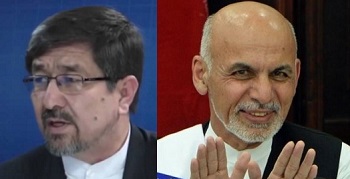
Abdul Ali Mohammadi (left) and Ashraf Ghani (right)
Tolo News: President Ashraf Ghani’s deputy spokesman Sayed Zafar Hashemi said that the Smart City housing contract has been canceled as part of the Presidential Palace’s new decisions on the controversial deal. He added that Ghani fired his legal advisor Abdul Ali Mohammadi and ordered that the court’s decision should be implemented on Khalilullah Frozi, one of main defaulters of Kabul Bank. Click here to read more (external link).
Taliban militants kill dozens of Afghan forces in Helmand

Press TV
February 16, 2016
A series of militant attacks have claimed the lives of dozens of soldiers and policemen across the southern province of Helmand over the past three days.
Local Afghan officials said on Tuesday that at least 18 soldiers were killed during clashes with the Taliban militants in Sangin and Musa Qalah districts of the volatile province.
In another incident, at least 10 policemen lost their lives during a gun battle with Taliban in Gereshk area, a road junction north of the district capital Lashkar Gah.
At least two more policemen were killed when armed men clad in Afghan police uniform opened fire on them in Khan Nashin district on Monday night.
In the worst incident in Helmand on Sunday, a militant attack on a checkpoint in the district center of Sangin killed seven soldiers and 15 policemen.
Hundred of afghan security personnel have remained surrounded in various districts of the troubled province.
“Roads to Sangin are mostly blocked with explosive devices and we cannot send reinforcements,” Reuters quoted an Afghan security official as saying.
“Right now, some 250 police and 300 soldiers are surrounded by Taliban in Marjah and our forces are providing them support from the air,” the officials said.
Meanwhile, Afghan civilians continue to bear the brunt of the ongoing war across the country.
The United Nations has said in a recent report that Afghan civilian causalities surpassed 11, 000 in 2015.
The figure shows a four percent increase compared to 2014. One in every four victims was a child.
According to the UN, nearly 59,000 people have been killed or wounded in Afghanistan since 2009.
Afghanistan is gripped by insecurity more than 14 years after the United States and its allies invaded the country as part of Washington’s so-called war on terror. The 2001 invasion removed the Taliban from power, but many areas across the country still face violence and insecurity.
Tasked With Combating Opium, Afghan Officials Profit From It

The New York Times: More than ever, Afghan government officials have become directly involved in the opium trade, expanding their competition with the Taliban beyond politics and into a struggle for control of the drug traffic and revenue. At the local level, the fight itself can often look like a turf war between drug gangs, even as American troops are being pulled back into the battle on the government’s behalf, particularly in Helmand, in southern Afghanistan. Click here to read more (external link).
Profiting off of chaos: How the U.S. privatized its war in Afghanistan
 Salon: Salon sat down with the journalist Antony Loewenstein to discuss one of the more explosive controversies he uncovers in his book: how the U.S. war in Afghanistan was privatized. Loewenstein spent time in war-torn Afghanistan, as well as neighboring Pakistan, researching for “Disaster Capitalism.” His compelling recounting of his experiences paints a picture of a crisis-stricken world in which virtually everything has been privatized, in which private military companies, or PMCs — 21st-century warlords — exercise more control over countries than their own inhabitants. A slew of Western multinational corporations quite familiar to Americans appear throughout the chapter, including Northrop Grumman, DynCorp, Halliburton and more. Click here to read more (external link).