
 Counter Punch: U.S. people should earnestly ask how the U.S. could help build trust here in Afghanistan, and, as a first step, begin transferring funds from the coffers of weapon companies to the UN accounts trying to meet humanitarian needs. The “giant” could be seen stooping, humbly, to help plant seeds, hoping for a humane harvest. Click here to read more (external link).
Gunmen Storm Afghan Courthouse, Target Judicial Officers
 VOA News
June 1, 2016
Five civilians and a policeman were killed when Taliban gunmen stormed a courthouse in Eastern Afghanistan on Wednesday.
A suicide bomber detonated outside the courthouse of Ghazni, allowing the three gunmen to enter the building. An hour-long gunfight ended in all three assailants being killed by police forces.
In a separate incident Wednesday in the northern province of Balkh, a senior police official was killed and four other officers wounded when their vehicle hit a roadside bomb.
The Taliban has also claimed responsibility for this attack.
Judicial officers have been frequent targets of the Taliban in Afghanistan, particularly after they vowed revenge for six of their members who were executed last month for a suicide attack in April that left 64 people dead.
Other Security News
Hamid Karzai’s Recent Comments Questioned

Karzai
Tolo News: Analysts said they think Karzai is to blame for the Taliban resurgence and that he wants to regain power. “Karzai goes on trips to Russia, China or other countries, and he has close relations with the Taliban. Why did he [Karzai] express remorse when Mullah Mansour was killed, and when Taliban [members were] executed? Because he has specific programs and agendas of his own,” said Ahmad Wali Massoud, the former Afghan envoy to Britain. Click here to read more (external link).
Pakistan introduces new border management system for Afghans

ISLAMABAD, June 1 (Xinhua) — Pakistan introduced a new mechanism on Wednesday that requires Afghans to carry valid travel documents for crossing the border.
Pakistani officials said they have put in place the new border management system to check illegal cross-border movement as militants also take advantage of the loose control.
Spokesman for the Pakistani embassy in Kabul Akhtar Munir told Xinhua that nearly 20,000 people cross the Torkham border daily, a large majority of them without passports and visa because of relation for the locals on both sides of the border.
Some Pakistani experts suggest that people living 5 miles (approximately 8 km) on both sides could cross the border without any documents under an agreement.
Residents at Torkham said hundreds of people and vehicles were stuck at the busy border crossing due to the new system as majority people living close to the border do not keep passports and had long been crossing the border without documents.
Pakistan and Afghanistan share an around 2,600-km border and mostly porous.
Pakistani security guards at the border made announcements over the loudspeakers, warning Afghans against travelling to Pakistan without valid documents, witnesses said.
Afghanistan was seeking delay in enforcement of strict condition in view of the upcoming the holy Muslim month of fasting. However Pakistani started implementation of the new system.
Pakistani officials said the system will be later extended to other border crossings, depending on availability of funds.
Pakistan temporarily closed Torkham border last month after Kabul raised objections at the fencing of the border at some points to stop the movement of the militants. The border was later opened at the order of the country’s army chief.
Related
Kabul’s Counter-IS Strategy Short on Specifics, Analysts Say
 VOA News
Noor Zahid
May 31, 2016
The government of Afghanistan says it has adopted a new strategy to counter Islamic State, but it has not given any specific details.
The plan, approved Monday at the National Security Council weekly meeting chaired by President Ashraf Ghani, calls IS an “enemy of Afghanistan’s national security.”
“The counter-IS strategy was approved in principle so that all specific priorities in the fight against IS are identified,” Tawab Ghorzang, the spokesperson for the Afghan National Security Council, told VOA’s Afghan service.
“The Afghan government is committed in its fight against the IS group,” Ghorzang said, adding that Afghan security and defense forces have been asked to organize their anti-IS policies and operations in accordance with the new strategy.
But in a nation known for unbridled lawlessness — and where Afghan troops are struggling in the fight against IS, the Taliban and other militants — the strategy seems vague, analysts say.
It’s not clear what military, political and social tools would be used to combat IS, RAND Corporation military analyst Rebecca Zimmerman told VOA.
“Until the strategy is public, it will be difficult to know how specific it is,” she said. “In what provinces will the campaign take place? Will it rely predominantly on Afghan military forces?”
“How will it interface with the U.S. counter-IS efforts?” she asked. “To what extent is the counter-IS plan synchronized with other efforts to combat anti-government groups, such as al-Qaida and the Taliban?”
IS footprint
IS has established a footprint in a number of districts in eastern Nangarhar province. Its fighters have launched multiple attacks on government security checkpoints. IS also has engaged in fierce clashes with rival Taliban militants in the province.
Recent Afghan and NATO cleanup operations have made it more difficult for IS to expand in the country. Many areas have been cleared of IS fighters and its capabilities have been eroded, according to government officials and analysts.
Kabul-based analyst Wahid Muzhda believes that IS has relatively small numbers in Afghanistan who influence only one part of the country compared to the broader impact of the Taliban.
“IS is not that big of a challenge. The government should prepare a strategy to combat other militant groups,” Muzhda told VOA.
Afghan National Security Council spokesman Ghorzang told VOA that the government’s IS strategy will include ways political groups and Afghans can help “eradicate the IS phenomenon.”
RAND’s Zimmerman told VOA: “The existence of a strategy developed by the Afghan government to combat IS [is] a good step. That it appears to comprise not only military, but also political elements is a positive sign.”
VOA’s Mohamad Jafar contributed to this report.
Rula Ghani Inaugurates First Women’s University
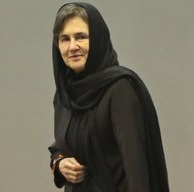
Rula Ghani
Tolo News: Afghanistan’s First Lady Rula Ghani on Sunday officially inaugurated the first women’s educational complex in Kabul (Moora) in an effort to help Afghan female students pursue education in a number of key fields including medical science, computer technology and management. Moora is the first all-girls educational and training complex in the country. Click here to read more (external link).
Pakistan Hands Over Body of Slain Afghan Taliban Chief to Relatives

Mullah Akhtar Mansur
VOA News
Ayaz Gul
May 31, 2016
ISLAMABAD—Pakistan said the body of Afghan Taliban chief Mullah Akhtar Mansoor, who was killed in a U.S. drone strike more than a week ago, has been “handed over to his relatives” for burial.
Interior Minister Nisar Ali Khan told reporters in Islamabad Tuesday the action came after DNA tests confirmed the man killed in the May 21 attack was Mansoor.
Khan said the body was released to Mansoor’s relatives “after fulfilling legal requirements” and they have taken it back to Afghanistan.
On Sunday, Pakistani officials revealed that Mansoor’s DNA matched the samples taken from a close family member who had crossed the Afghan border to receive the body.
The Taliban chief was returning from Iran and traveling through the Pakistani province of Baluchistan when a drone targeted the vehicle in which he was traveling. The Pakistani driver was also killed.
Minister Khan said authorities have also arrested all the officials who allegedly facilitated Mansoor in acquiring a Pakistani national identity card and travel documents, enabling him to undertake journeys within and outside Pakistan.
U.S. President Barack Obama defended the drone strike, saying Mansoor was plotting deadly attacks on U.S soldiers and their Afghan partners and was blocking efforts aimed at seeking a negotiated settlement of the conflict in Afghanistan.
The Taliban has since appointed Mullah Hibatullah Akhundzada as its new chief.
In Afghanistan, the Taliban isn’t the only group battling for land
 The Washington Post: HERAT, AFGHANISTAN — Amid the city’s swirling winds, construction crews work steadily to create a new downtown strip that, someday, will include high-rise office towers and thousands of new homes. That’s bad news for people like Nesar Ahmad Papalzai who have watched the rising property values in their city in western Afghanistan contribute to a chronic problem: land-grabbing. Click here to read more (external link).
Taliban Abducts Dozens in Northern Afghanistan
 VOA News
Ayaz Gul
May 31, 2016
ISLAMABAD—Afghan officials said Tuesday that the Taliban took dozens of people hostage near the northern city of Kunduz.
The insurgents apparently set up a check-point in a pre-dawn action on the main road near the provincial capital and stopped buses and vehicles heading to Kunduz from the national capital, Kabul.
A regional police commander, Sher Aziz Kamawal, told VOA that the insurgents seized at least 52 passengers and killed 17 of them. Residents saw bodies of the slain passengers floating in the nearby Chardara river.
Reports say the rebels initially detained more than 200 people, but later released majority of them.
It is unclear whether the hostages are Afghan government officials or members of the national security force, prime target of insurgent attacks in Afghanistan.
Kamawal did not rule out the possibility that there were some security forces among the hostages.
The Taliban had briefly overrun Kunduz last September.
Afghan forces recaptured the strategically important city days later with the U.S. air support. But residents say retreating insurgents setup hideouts in surrounding districts and have since conducted guerrilla attacks occasionally.
Deadly fight rages in Helmand
Meanwhile, intense clashes between Afghan forces and Taliban rebels are continuing in three districts of southern Helmand province.
The fighting in Nadali, Gereshk and Marjah began Saturday when the Islamist insurgency staged a string of coordinated attacks. Local police commanders have confirmed killing of more than 50 Afghan forces, while dozens more were wounded.
The Taliban also is said to have seized territory and the fighting has reached the provincial capital, Lashkargah.
On Tuesday, provincial governor Hayatullah Hayat undertook an inspection of the city and said reports of its collapse are misplaced.
He confirmed only 40 casualties among Afghan forces and said at least 50 rebels have been killed while another 70 were wounded in the fighting.
The governor said fresh Afghan forces have also arrived in the conflict zone and a counter-offensive is being planned.
Helmand, where several districts are under the control of the insurgency, is the largest Afghan province and a poppy-growing hub.
The Taliban has intensified insurgent activities after its new leader, Mullah Hibatullah Akhnduzada took charge following the killing of his predecessor, Mullah Mansoor, in the May 21 U.S. drone strike in neighboring Pakistan.
A Taliban spokesman, Qari Mohammad Yousafi, claims its fighters have killed more than 100 Afghan forces, including several commanders since the fighting began.
He says insurgents have captured nearly two dozen security posts and two large military bases in the area.
The insurgent group often exaggerates its battlefield advances.
More Security News
- Taliban kill 17 passengers after kidnapping around 185 in Kunduz
- Baghlan NDS Arrests Teenage Suicide Bomber Suspect
- Taliban suicide attacks organizer killed in Laghman province
- 118 militants killed in southern Afghan province in 3 days: official
- Key ISIS leader killed in an airstrike near Kabul
- 14 militants killed in separate airstrikes in Paktia province
Dramatic Rise in Number of Afghans Displaced by Conflict
VOA News
Ayaz Gul
May 31, 2016
ISLAMABAD—The number of Afghans who have fled violence and remain trapped in their own country has doubled over the past three years, says a new report by Amnesty International.
A staggering 1.2 million people are internally displaced in Afghanistan, showing a dramatic increase from some 500,000 in 2013, says the report in an attempt to cast a fresh light on the country’s forgotten victims of war. It comes amid fears of an escalation in the Taliban-led insurgent attacks this year.
“Even after fleeing their homes to seek safety, increasing numbers of Afghans are languishing in appalling conditions in their own country, and fighting for their survival with no end in sight,” warned Amnesty’s South Asia Director Champa Patel.
Afghans already form one of the world’s largest refugee populations, with an estimated 2.6 million of them living in neighboring Pakistan and Iran, according to the U.N. refugee agency.
“While the world’s attention seems to have moved on from Afghanistan, we risk forgetting the plight of those left behind by the conflict,” said Patel.
Despite the promises made by successive Afghan governments, internally displaced people (IDPs) in Afghanistan continue to lack adequate shelter, food, water, health care, and opportunities to pursue education and employment, according to Amnesty International’s findings.
The research found the situation facing IDPs has dramatically worsened over the past years, with less aid and essentials, such as food, available,
It blamed alleged corruption, a lack of capacity in the Afghan government and fading international interest for a lack of implementation of a new national IDP Policy launched in 2014.
Instead, the report says, forced evictions by both the government and private sectors is a daily threat to the IDPs.
“The Ministry of Refugees and Repatriation, charged with coordinating the Policy’s implementation, is badly under-resourced and has been beset by corruption allegations for years,” it added.
Most of the internally displaced population lacks basic health care facilities, and education for IDP children has been interrupted since they were forced to leave their homes.
“They have lost the traditional sources of their livelihoods, and only have few opportunities for informal work, creating circumstances where women are excluded, and children are being exploited and not educated,” said Patel.
Amnesty International has called on the Afghan authorities and international community to immediately ensure that the most urgent needs of those displaced are met.
“Afghanistan and the world must act now to end the country’s displacement crisis, before it is too late,” Patel warned.
The Afghan government has not yet commented on Amnesty’s report.