logo

Daily Updated Afghan News Service

  • Home
  • About
  • Opinion
  • Links to More News
  • Good Afghan News
  • Poll Results
  • Learn about Islam
  • Learn Dari (Afghan Persian/Farsi)

Recent Posts

  • Photographs from UK inquiry appear to show Afghans shot in their beds during SAS raids November 19, 2026
  • UN: More Than 1,600 Suspected Dengue Cases Recorded in Afghanistan November 19, 2026
  • Sweden rejects asylum request of former Afghan ambassador, plans deportation to US: Le Monde November 19, 2026
  • Tolo News in Dari – November 19, 2026 November 19, 2026
  • Afghanistan suffer 9-2 defeat to Iran in Beach Soccer Asian Cup opener November 19, 2026
  • Akhundzada Wants Subordinates, Not Partners In Power, Say Resistance Groups November 18, 2026
  • Taliban Tighten Restrictions in Panjshir as Residents Say Their Movements Are “Under a Microscope” November 18, 2026
  • Tolo News in Dari – November 18, 2026 November 18, 2026
  • Biden says he was told Kabul would hold for six months after US troops left November 18, 2026
  • Afghanistan’s GDP Per Capita Set To Fall For Third Straight Year, Says World Bank November 18, 2026

Categories

  • Afghan Children
  • Afghan Sports News
  • Afghan Women
  • Afghanistan Freedom Front
  • Afghanistan United Front
  • Al-Qaeda
  • Anti-Government Militants
  • Anti-Taliban Resistance
  • AOP Reports
  • Arab-Afghan Relations
  • Art and Culture
  • Australia-Afghanistan Relations
  • Book Review
  • Britain-Afghanistan Relations
  • Canada-Afghanistan Relations
  • Censorship
  • Central Asia
  • China-Afghanistan Relations
  • Civilian Injuries and Deaths
  • Corruption
  • Crime and Punishment
  • Drone warfare
  • Drugs
  • Economic News
  • Education
  • Elections News
  • Entertainment News
  • Environmental News
  • Ethnic Issues
  • EU-Afghanistan Relations
  • Everyday Life
  • France-Afghanistan Relations
  • Germany-Afghanistan Relations
  • Haqqani Network
  • Health News
  • Heroism
  • History
  • Human Rights
  • India-Afghanistan Relations
  • Interviews
  • Iran-Afghanistan Relations
  • ISIS/DAESH
  • Islamophobia News
  • Japan-Afghanistan Relations
  • Landmines
  • Media
  • Misc.
  • Muslims and Islam
  • NATO-Afghanistan
  • News in Dari (Persian/Farsi)
  • NRF – National Resistance Front
  • Opinion/Editorial
  • Other News
  • Pakistan-Afghanistan Relations
  • Peace Talks
  • Photos
  • Political News
  • Reconstruction and Development
  • Refugees and Migrants
  • Russia-Afghanistan Relations
  • Science and Technology
  • Security
  • Society
  • Tajikistan-Afghanistan Relations
  • Taliban
  • Traffic accidents
  • Travel
  • Turkey-Afghanistan Relations
  • UN-Afghanistan Relations
  • Uncategorized
  • US-Afghanistan Relations
  • Uzbekistan-Afghanistan Relations

Archives

Dari/Pashto Services

  • Bakhtar News Agency
  • BBC Pashto
  • BBC Persian
  • DW Dari
  • DW Pashto
  • VOA Dari
  • VOA Pashto

Pakistan says quartet framework on Afghanistan still intact

3rd June, 2016 · admin

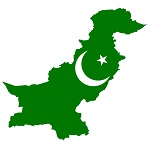
pakistanISLAMABAD, June 3 (Xinhua) — Pakistan said the quartet on peace and reconciliation inAfghanistan is still intact and that political negotiation is the best option to solve the years of conflict.

The comments came on Thursday amid speculations about the fate of the Quadrilateral Coordination Group of Afghanistan, China, Pakistan and the United States.

“A politically negotiated settlement among all stakeholders, including Taliban, is the best and sustainable solution for peace in Afghanistan, for which the QCG has a very important role to play. The QCG mechanism is very much in place,” the Pakistan Foreign Ministry said.

The QCG met last month in Islamabad and agreed to push for the political negotiation to find out solution to the problem.

“All members of the QCG including Afghanistan have been supporting the QCG and consider it a useful forum for facilitating the Afghan peace process. Therefore, Pakistan believes that a politically negotiated settlement is a viable option for achieving the goal of peace and reconciliation in Afghanistan,” spokesperson Nafees Zikriya said.

Zikriya said the use of military force and violence has not provided a solution to the conflict in Afghanistan for the last 15 years.

“It is unlikely to bring peace in future as well. We believe that the military approach will further destabilize Afghanistan. We have repeatedly said that all parties at war should refrain from violence since violence begets violence,” he said.

To a question about Pakistan’s decision to introduce a new border management that requires Afghans to carry travel documents for entering Pakistan, he said it is vital for checking infiltrations across the long and porous Pakistan-Afghanistan border.

“The Afghan government’s cooperation in this regard is important for strengthening mutual security,” the spokesman said after Afghan gov’t raised objections to the decision.

Illegal cross-border movement had been an issue between the two neighbors as militants would take advantage of the porous 2,600-km border to move across the border.

Posted in Pakistan-Afghanistan Relations, Peace Talks |

Salma Dam Celebrated By Herat Residents

3rd June, 2016 · admin

heratprovinceTolo News: A number of Herat residents on Thursday held their own celebration to inaugurate Salam dam and called it an historical event. The participants praised security forces for securing Salam dam and called the forces “constructive and peace champions”. The residents said that the utilization of the dam will bring effective changes to the agriculture and industry sectors of the country. Click here to read more (external link).

Related

  • Modi to inaugurate $300 million Salma Dam built by India in Herat
Posted in Economic News, India-Afghanistan Relations, Reconstruction and Development | Tags: Herat |

Afghanistan dismiss skills endorsement of Taliban chief by Pakistan’s Sami-ul-Haq

3rd June, 2016 · admin
Sami-ul-Haq

Sami-ul-Haq

Khaama Press: An influential Pakistani religious scholar who was once labeled as the ‘Father of Taliban’ has endorsed the war skills of the newly-appointed Taliban chief. Sami-ul-Haq warned that Afghanistan would see a surge in violence following the ascension of new Taliban leader Mullah Haibatullah. Afghan defense officials dismissed the skills endorsement by Sami-ul-Haq and said the Mullah Haibatullah Akhundzada is neither a religious cleric nor he has skills in military. Click here to read more (external link).

Posted in Pakistan-Afghanistan Relations, Taliban | Tags: Hibatullah Akhundzada, Sami-ul-Haq |

Saleh warns NSC for blaming Ata Mohammad Noor for the fall of Kunduz city

3rd June, 2016 · admin
Amrullah Saleh

Amrullah Saleh

Khaama Press: Former Afghan Intelligence Chief Amrullah Saleh criticized Tawab Ghorzag, the spokesman for the National Security Council for blaming Ata Mohammad for the instability of Kunduz province. He warned to release the 200 classified documents and audio clips prepared by the fact finding team regarding the fall of Kunduz city if Ghorzang did not amend his remarks. The fact finding team led by Saleh concluded their investigation late in the month of November last year and blamed government’s failure in leadership and structural complexity for the fall of the city. Click here to read more (external link).

Posted in Political News, Security | Tags: Amrullah Saleh, Atta Mohammad Noor, Kunduz, Tawab Ghorzag |

Karzai Says Taliban Leader’s Killing Has ‘Hurt’ Chances For Afghan Peace

3rd June, 2016 · admin
karzai_presstv

Hamid Karzai

Radio Free Europe/Radio Liberty
By Rabia Akram and Frud Bezhan
June 2, 2016

KABUL — Former Afghan President Hamid Karzai says the killing of Taliban leader Mullah Akhtar Mansur in a U.S. drone strike has damaged the prospects of a negotiated peace settlement with the militant group.

Karzai, in an interview with RFE/RL’s Radio Mashaal in Kabul on June 2, also called the war in Afghanistan a “foreign problem” and called on countries such as Russia, Iran, and India to be involved in the peace process.

He said the May 21 drone strike that killed Mansur in the Balochistan Province of southwestern Pakistan “has hurt the peace process.”

“If the intention was peace, then this shouldn’t have been done,” Karzai said.

During the last years of his 2002-14 presidency, Karzai had a rocky relationship with the United States and was critical of U.S. air strikes, which he said were killing too many civilians rather than the militants they targeted.

Washington and Kabul hailed Mansur’s death as a possible breakthrough in restarting stalled peace talks with the Taliban.

Mansur had refused to engage in a series of talks held in Islamabad and attended by the Quadrilateral Coordination Group (QCG), made up of officials from Afghanistan, Pakistan, the United States, and China.

The group has been trying to facilitate direct talks between the Afghan government and the Taliban since 2015.

Under Mansur’s leadership, the Taliban made substantial military gains against Afghan security forces and carried out deadly bombings in Kabul.

Since Mansur’s death, the Afghan Taliban has announced that Mullah Haibatullah Akhundzada, a religious hard-liner, is the new Taliban leader.

In a recent audio recording, a voice purported to be Akhundzada’s vowed in a recent audio recording that there will be no return to peace talks.

The drone strike that killed Mansur was the first known U.S. attack on a top Afghan Taliban leader on Pakistani soil.

The attack angered Islamabad, which has accused Washington of violating its territorial integrity.

“As it looks now and from all that I have heard in the statements from the Taliban, the government of Pakistan, others, it has hurt the peace process,” Karzai said.

The ex-president also called for a regional solution to the conflict in Afghanistan.

He specifically called for Russia and neighboring Iran and India to be involved in any political settlement with the militants.

“If peace in Afghanistan was our own issue, a matter among Afghans, then why did the United States get involved or why did Pakistan and China engage in talks?” Karzai said. “Their involvement [in the peace efforts] proves that our problem exists outside and is foreign.”

He added: “Since it is a foreign problem, there are foreigners that are powerful and strong and can have influence [on the talks]. Such actors are Russian, India and Iran — these countries should also be included in the process so that we can have results.”

Karzai has close ties with India, where he once studied and which he has visited often, including after stepping down as president in 2014.

India has been a key supporter of Kabul since the U.S. invasion in 2001, a stance that has led observers to point to the threat of a “proxy war” in Afghanistan between India and archrival Pakistan.

Karzai has also forged warm ties with one-time Afghan nemesis Moscow.

During his time in power, Karzai was keen to bolster ties with regional players like Russia to shore up security after the pullout of most NATO troops from Afghanistan in 2014.

Moscow has a vested interest in containing the Islamic State (IS) militant group and other extremists. IS and Taliban fighters have made advances in northern Afghanistan, near the border with the former Soviet republics of Central Asia. Moscow is also worried about the Afghan drug trade, which could worsen Russia’s destructive heroin epidemic.

Russia has signaled its willingness to boost its involvement in Afghan security and provide weapons and training to Afghan forces.

In October, Russian President Vladimir Putin described the situation in Afghanistan as “genuinely close to critical” in an address to fellow Commonwealth of Independent States (CIS) leaders at a summit in Kazakhstan.

Putin warned of “terrorists of different stripes…gaining more influence and not hiding their plans for further expansion” and urged neighbors to “be ready to react in concert.”

In the past year, a number of Afghan lawmakers and high-profile officials, including Afghan Vice President Abdul Rashid Dostum, a former warlord and Afghan Army general, have visited Russia to request helicopter gunships and heavy weapons.

But Moscow has so far been wary of increasing its role in Afghan affairs. The Soviet Union’s calamitous 1979-89 military venture in Afghanistan killed or displaced millions of Afghans and sapped Moscow’s precious political, military, and economic resources in the Soviet Union’s dying decade.

Written by Frud Bezhan, based on reporting by Rabia Akramkhan

Copyright (c) 2016. RFE/RL, Inc. Reprinted with the permission of Radio Free Europe/Radio Liberty, 1201 Connecticut Ave NW, Ste 400, Washington DC 20036.
Posted in Peace Talks, Russia-Afghanistan Relations, Taliban | Tags: Hamid Karzai, Mullah Mansur |

China Remains Afghanistan’s Hope for a Secure Future

3rd June, 2016 · admin

china_flagVOA News
Ayesha Tanzeem
June 2, 2016

ISLAMABAD—When Afghan President Ashraf Ghani took over in late 2014 and talk of peace and reconciliation with the Taliban gained momentum, skeptics derived hope from China’s newfound interest in the process.

China could succeed, many thought, where the United States had failed — in convincing Pakistan to change its behavior toward the Afghan Taliban. Both the U.S. and Afghanistan accuse Pakistan of providing a safe haven to the Afghan Taliban. Pakistan has so far resisted any pressure.

At the heart of Chinese interest in stability in Afghanistan are two major factors. One is fear that religious militancy in Afghanistan will further fuel Islamist insurgency in China’s own Xinjiang province bordering Afghanistan. Militants from the Uighur Muslim minority in Xinjiang have occasionally received support and training in Afghanistan.

The second is hope of extending the One Belt, One Road initiative through the region to Central Asia.

The initiative is an effort by China to build a network of overland road and rail routes, oil and gas pipelines, and other infrastructure projects spanning from West China through Central Asia to Europe while simultaneously developing ports and coastal infrastructure through South and Southeast Asia all the way to the Mediterranean.

What China can do

It may be difficult to precisely measure the kind of influence China can exercise, according to Dr. Hassan Askari Rizvi, a Lahore-based political analyst.

The conflicts between Afghanistan and Pakistan, he said, are so inherent that China cannot force them to change. All it can do is encourage the two rivals to downplay them.

China is a new player at this table. For the first 15 years of the war in Afghanistan, it stayed out of security arena, focusing more on economic interests. Now its economic interests have become intertwined with regional security. So it has joined the game, but is still in the learning stage.

China is more likely to watch and wait rather than act prematurely, according to Kabul-based analyst Hamed Sabori.

Still, Khalid Mahmood, one of Pakistan’s former ambassadors to China, thinks the country is ideally placed to play the role of mediator between Afghanistan and Pakistan.

“[China] commanded respect in Afghanistan, had good ties to Pakistan, and regional stability was in its own interest,” according to Mahmood.

China initiated contacts with the Taliban and eventually agreed to become part of the Quadrilateral Coordination Group (QCG), set up to help facilitate reconciliation talks between the Taliban and the Afghan government.

Diminished enthusiasm

The initial U.S.-Afghan euphoria with Chinese involvement has slightly worn off.

The QCG failed to lead to a decrease in violence in Afghanistan. Both Afghans and Americans realized that China would not pressure Pakistan beyond a certain point. With the killing of Taliban leader Mullah Mansoor and the election of new leader Mullah Hibatullah Akhundzada, chances of peace talks this year are grimmer than ever.

“I don’t believe that we will see peace talks anytime in the short term,” said Brig. Gen. Charles Cleveland, deputy chief of staff for communications for Operation Resolute Support, the NATO mission in Afghanistan.

Analyst Rizvi thinks the Chinese approach has been more measured because it recognizes the limits of Pakistan’s capacity to influence the Afghan Taliban.

Plus, China has a strong alliance with Pakistan, made even stronger by the U.S. courting of Pakistan’s rival India as a regional counterweight to China.

“They [the U.S.] have clearly stated which side they are on, which country they want to raise as [a] counterweight to China … which has implications for Pakistan also,” Mahmood said.

In the eyes of many Pakistanis, including many in the civilian and military leadership of the country, the U.S. does not care about Pakistan’s interests and does not keep in mind its sensibilities when dealing with the region. Mahmood said that drives the country more toward China, which is viewed as a tried and tested friend.

Still hopeful

Nonetheless, China sees stability in the region as being in its own long-term interest. Shahmahmood Miakhel, the country head for the Washington-based United States Institute for Peace, said China has made significant investments in Afghanistan, particularly in the mining sector. These are not short- or medium-term investments, he added, but long-term ones that require a secure regional environment.

Which was why Afghanistan is still pinning its hopes on China.

“China has to work with Pakistan on how to cooperate with Afghanistan,” Miakhel said.

China, Sabori said, is waiting to see how the U.S. and other major players are going to act. Still, it is aware of the danger of continued long-term instability.

“Terrorism is not something that can be confined to a border, so it will finally, at some time, penetrate their border and it will become a major issue for China,” he said.

Posted in China-Afghanistan Relations |

A Hellfire from Heaven won’t Smash the Taliban

2nd June, 2016 · admin · 1 Comment
Pepe Escobar

Pepe Escobar

Pepe Escobar (via Counter Punch): The Pentagon said Mansour was on Obama’s kill list because he had become “an obstacle to peace and reconciliation.” There’s way more to it, of course. Bets can be made that Mansour’s kill will not reduce Afghanistan’s opium production – which has been steadily on the rise for years now. Mawlawi Hibatullah Akhundzada, Mansour’s former number two, has been designated as the new leader. The fact is, poppy production in Afghanistan remains at the highest levels in provinces that are – in thesis – controlled by Kabul. Click here to read more (external link).

Posted in Drugs, Opinion/Editorial, Pakistan-Afghanistan Relations, Security, Taliban, US-Afghanistan Relations | Tags: Hibatullah Akhundzada, Mullah Mansur |

Taliban Kidnap 17 in Northern Afghanistan

2nd June, 2016 · admin

sare-polVOA News
Ayesha Tanzeem
June 2, 2016

ISLAMABAD—Regional officials in Afghanistan say Taliban abducted at least 17 passengers in the north of the country late Wednesday.

Zabiullah Amani, the provincial governor’s spokesman, said the passengers, local residents of Balkhab district, were traveling to the capital of Sar-e-Pul province when Taliban kidnapped them.

He said local tribal elders were negotiating their release.

This is the second mass kidnapping in a week by the Afghan Taliban. Some 200 passengers were abducted earlier this week by insurgents who set up illegal check points on a highway in northern Kunduz province. They later released some of those passengers but executed at least 17 of them.

Meanwhile, hundreds of protesters gathered in Kabul Thursday for a demonstration against the Kunduz abductions and killings. The protest was organized by the Afghanistan Green Trend party led by former intelligence chief Amrullah Saleh. Demonstrators chanted anti-Taliban slogans.

The protest ended after the organizers were allowed to enter the city and read out their resolution at Pashtoonistan square near the presidential palace gates.

From a different part of Afghanistan, a Parwan police chief said four people: a woman, a man, and two of their drivers, were killed as they drove from Baghlan province to Parwan province. They worked for the non-governmental organization Focus International.

Other Security News

  • Taliban Kills Two Hostages In Afghanistan’s North
  • Parwan Police Arrest 3 Talibs Suspected Of Killing Aid Workers
  • 64 school girls poisoned in central Maidan Wardak province
  • 99 militants killed in latest Afghan military operations: gov’t
  • 2 killed, 16 injured in E. Afghan blast
  • U.S. military sees Afghan talks with new Taliban leader unlikely
Posted in Civilian Injuries and Deaths, Security, Taliban | Tags: Amrullah Saleh, Kidnapping, Kunduz, Parwan, Sar-e-Pol |

Pakistan Enforces New Border Crossing Regulation on Afghans

2nd June, 2016 · admin


VOA News
Ayesha Tanzeem
June 2, 2016

TORKHAM BORDER CROSSING—Pakistan has introduced new policies along its border with Afghanistan, ostensibly to reduce cross-border terrorism. But the measures are also likely to add to human suffering for the thousands of people who frequently travel back and forth for work or medical treatment.

This used to be a nearly open border, especially for Pashtuns, many of whom had relatives on both sides. Afghans seeking medical treatment in Pakistan, laborers who went daily to the other side to work, businessmen, and people going for family functions made up the thousands who crossed this border daily. Traveling back and forth was a breeze. That will now end.

Pakistan has announced that, for security reasons, only Afghans with proper documents will be allowed in.

Drop in crossings expected

Up to 25,000 people used to cross this border every day. Local officials say with the new restrictions the number is expected to drop significantly.

On day one of the new policy, thousands crossed over from Pakistan to Afghanistan, while the traffic from the other side was down to a trickle.
Those coming over from Afghanistan described long lines in the blistering heat.

Pashtuns with families across the border were worried about the implications.

“It’ll make it really difficult for the old people, the sick, the relatives who live on both sides of the border who travel frequently back and forth. We’re all Pashtuns living on both sides of the border. The situation is so bad on the other side that I cannot even describe it,” said Hameedullah Siddiqi, a Peshawar resident.

Others favored the move.

“All kinds of people cross over. No one knows who they are, where they are coming from, where they are going. Now, at least we’ll have that information,” said Din Mohammad Mehsud, a Pakistani doctor.

Pakistan says strict border management is the only way to stop militants who cross over from Afghanistan to carry out attacks inside Pakistan.

But some analysts think the move could backfire. While terrorists could use unofficial routes in the mountains to cross over, the suffering of ordinary Afghans might add to the already high anti-Pakistan sentiment in Afghanistan.

VOA Deewa Service’s Ibrahim Shinwari contributed to this report.

Posted in Pakistan-Afghanistan Relations | Tags: Durand Line, Pashtuns |

MoI rejects Taliban has gained access to biometric system

2nd June, 2016 · admin

ministry_of_interiorKhaama Press: The Ministry in its statement further added that the reports are baseless and are part of the propaganda by the enemies of the country against the Afghan forces. MoI said the system is used to record the data of the security personnel as well as the applicants applying to obtain passports and driving license, insisting that the system is fully protected and only certain responsible people have access to it. Click here to read more (external link).

Posted in Security, Taliban |
Previous Posts
Next Posts

Subscribe to the Afghanistan Online YouTube Channel

---

---

---

Get Yours!

Peace be with you

Afghan Dresses

© Afghan Online Press
  • About
  • Links To More News
  • Opinion
  • Poll