
 ESPNCricinfo: Ireland and Afghanistan are looking forward to a pivotal round of ICC meetings in the hope that they come out the other side as Test-playing countries. Among the topics up for discussion in front of the ICC board this weekend is the structure of Test cricket, and whether the five-day format should be opened up to more than the current ten Test sides. Specifically, it is Ireland and Afghanistan who are knocking on the door and waiting to see if the Full Member boards open up that possibility. Click here to read more (external link).
Report: Militant Groups in Afghanistan Get Rich Off Mineral Smuggling
 Noor Zahid
VOA News
February 1, 2017
The smuggling of Afghan minerals supplies millions of dollars to armed groups, insurgents and strongmen in the country, an Afghan anti-corruption watchdog reported Wednesday.
The Afghanistan Anti-Corruption Network said in a report that militant groups last year received at least $46 million from minerals and precious stones illegally exported from eastern Nangarhar province to neighboring Pakistan.
The report said up to 750,000 tons of marble and talc stones were smuggled in 2016 from various parts of the restive province, where Taliban and Islamic State fighters have been active in several districts.
“Every day, 500 trucks carrying white stones pass through government-controlled roads and arrive in Pakistan from where the stones are shipped to European countries,” Zaman Khan Amarkhail, president of the anti-corruption network, told Radio Liberty’s Afghanistan service. “Each truck carries around 45 tons of stone.”
Talc, one of the most in-demand minerals, is used in the manufacturing of various products including cosmetics, plastics, ceramics and paints.
Afghanistan has some of the world’s richest mineral resources, including extensive deposits of world-class copper, iron, gemstones and precious metals.
Surveillance of mines ‘weak’
Insurgent groups and local strongmen have taken over mining operations in many areas and put a levy on minerals smuggled out of the country, watchdog groups say.
“Unregistered and illegal artisanal and small-scale mining operations continue to be a source of civil strife, unrealized government revenues, and lost economic output,” the U.S. Special Inspector General for the Reconstruction of Afghanistan (SIGAR) said last year in a report.
“The unregulated and illegal excavation and trafficking of precious stones and other minerals has played a role in the fundraising strategies for militant groups and organized crime syndicates,” the SIGAR report said.
The Afghan government says fighting between Afghan forces and militant groups has led to an increase in illegal mining.
“Due to the conflict and insecurity, we have not been able to properly protect the mines, and illegal extraction of mines and smuggling continue,” said Ghizal Habibyar, Acting Minister of Mines and Petroleum.
Analysts say the mineral-smuggling occurs through a strong network of militants, local mafia, and some civil and military officials in the country.
“A triangle of Taliban militants, including some Central Asian fighters that are linked with al-Qaida, local strongmen, and corrupt government officials are involved in this illegal business,” Haroon Rashid Sherzad, a Kabul-based civil society activist and former deputy minister of anti-narcotics, told VOA.
“It is a huge business for the involved parties who are thriving under a weak government surveillance,” Sherzad said.
The Afghan mines ministry says the government has banned the exports of minerals to Pakistan and encouraged local businesses to invest in the sector and legally export processed material to foreign countries.
“But the ongoing insurgency and instability in the province has not allowed businesses to establish factories,” an official of the ministry of mines told VOA, on condition of anonymity.
Border corruption
Pakistan and Afghanistan have no official agreement on the export of minerals to Pakistan.
An ever-increasing demand by the Pakistani industrial sector continues to draw raw material from Afghanistan, including chromite, lapis lazuli, coal, and marble.
Experts say border corruption is costing Afghanistan millions of dollars. Although customs revenue collections have increased during the past year, according to the country’s finance ministry, rampant corruption at border crossings means the government loses an untold amount in revenues.
“Surveillance is weak at the borders. An individual with a license to export 100 tons of stones would be able to export 1,000 tons instead,” Sherzad said. “Corrupt officials turn a blind eye to illegal exports and, in return, they too benefit from it.”
According to the anti-corruption network, precious stones are being illegally extracted from at least 2,000 mines in northeastern Badakhshan province.
“Last year, $300 million worth of precious stones were smuggled from the province to China,” said Zabiullah Wardak, a member of the watchdog group. The remote Badakhshan province is connected to China through the narrow Wahkhan Corridor.
The Taliban and Islamic State have imposed several illegal levies in areas they control.
“They are receiving money by imposing various taxes, from Ushar [an Islamic tax on agricultural products] to municipality and transportation taxes,” Sherzad said. He added that many Taliban commanders are running illegal businesses besides directing fighting against government forces.
Afghan Government Control Shrank, Troop Deaths Soared Last Year: Report

Radio Free Europe/Radio Liberty
February 1, 2017
Afghan forces have continued to lose ground to insurgents throughout the country since taking over security responsibilities from NATO at the end of 2014, a report by a U.S. watchdog said on February 1.
As of mid-November, the government controlled or influenced 57.2 percent of Afghanistan’s 407 districts, a 6.2 percent decrease from August and a 15 percent reduction from a year earlier, the Special Inspector General for Afghanistan Reconstruction (SIGAR) said in the report.
At present, almost one-third of the Afghan population or 9.2 million people “live in areas that are contested,” it said, and about 2.5 million people live under the control or influence of the insurgency, down from 2.9 million three months ago.
It was unclear why the population directly controlled by the Taliban shrank. One factor could be larger than expected internal displacement caused by the conflict.
The United Nations estimates that nearly 640,000 Afghans had to flee their homes in 2016.
Meanwhile, the report found that the death rate among Afghan forces soared by 35 percent last year, prompting it to conclude that the Afghan government and security forces need continued support and cannot survive without donor assistance.
Based on reporting by AFP and dpa
Copyright (c) 2017. RFE/RL, Inc. Reprinted with the permission of Radio Free Europe/Radio Liberty, 1201 Connecticut Ave NW, Ste 400, Washington DC 20036.
Other Security Related News
Afghan women practice ancient Shaolin martial arts
 Associated Press: While Afghanistan’s Buddhists were carving the giant sandstone statues in Bamiyan in 500 A.D., Buddhists in China were creating martial arts in the Shaolin temple in Henan Province. Fifteen hundred years later, 10 ethnic Hazara women and girls practice the martial arts of Shaolin on a hilltop in the west of Kabul. They are preparing for the day that Afghanistan can send its women’s team to the Shaolin world championship in China. Click here to read more (external link).
ACB Announces Appointment Of Ex-West Indies Coach
 Tolo News: Afghanistan Cricket Board on Wednesday announced the appointment of former West Indies head coach, Phillip Simmons, as the national team’s new consulting coach. According to Farid Hotak, ACB’s spokesman, Simmons will be assisting the current head coach on technical issues. Hotak said Simmons has tremendous experience in team management and has immense technical expertise. Click here to read more (external link).
Related
Pakistan not involved in Afghanistan’s violence, says army
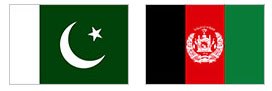
ISLAMABAD, Jan. 31 (Xinhua) — Pakistan army said on Tuesday the country is not involved in acts of terror in neighhbouring Afghanistan.
Comments by the army spokesman, Major-General Asif Ghafoor, came at a time when relationship between Pakistan and Afghanistan is tense.
Both countries routinely accuse each other of loose border control that enable the militants cross the porous border for violent activities. Pakistan and Afghanistan have nearly 2,600 kilometers border, mostly porous.
“Afghanistan should take steps for improving management of its borders,” General Ghafoor, Director-General Inter Services Public Relations (ISPR) told a news conference in his office.
“Pakistan desires peace and stability in Afghanistan. We support an Afghan owned and Afghan led reconciliation process for peace in the country,” the military spokesman said.
Talking about the outcome of the security situation he said that sanctuaries of terrorists have been eliminated in the lawless tribal regions, which border Afghanistan.
“Most of the terrorists were killed in the operation while the remaining managed to take refuge in Afghanistan due to non-presence of troops on the other side of the border,” he said.
General Ghafoor said leadership of the outlawed Tehrik-e-Talban Pakistan is hiding in Afghanistan, adding it is the stated policy of Pakistan that it will never allow its territory to be used against any other country.
Related
Afghans who helped the U.S. military worry they, too, will suffer under Trump’s refugee ban

Donald Trump
The Los Angeles Times: For seven years, Ekram Razeqy worked alongside U.S. forces in some of Afghanistan’s most volatile provinces, surviving roadside bombings and Taliban ambushes as an interpreter for American troops. Fearing he could be targeted by Taliban sympathizers when he returned to civilian life, he applied for a special visa that allows interpreters who assisted U.S. forces in the wars in Afghanistan and Iraq to resettle with their families in the United States. Click here to read more (external link).
Related
About 500,000 Afghan Children At Risk: AIHRC

Tolo News: Afghanistan Independent Human Rights Commission (AIHRC) on Tuesday said that there are serious concerns about the lives of between 300,000 and 500,000 Afghan children employed as laborers or work on the streets. The AIHRC stated that the issue of child labor affects hundreds of thousands of children who are deprived of a formal education. Click here to read more (external link).
Attack on Quebec mosque kills six, two suspects arrested
 Press TV
January 30, 2017
Six people have been killed in a shooting attack on a mosque in Canada’s Quebec, according to police, who have arrested two suspects in the case.
Assailants opened fire at people inside the mosque, known as the Islamic Cultural Center of Quebec, during evening prayers at 20:00 local time on Sunday (0100 GMT Monday).
Quebec police said later that eight other people had also been wounded in the shooting attack, and that they had no reason to believe that gunmen other than the two arrested had been involved. Earlier, police had not ruled out the possibility that a third attacker might have fled the scene.
Police also said an investigation had started and no information was yet available about the suspects taken into custody.
‘A terrorist attack on Muslims’
Prime Minister Justin Trudeau of Canada in a statement called the mosque incident “a terrorist attack on Muslims.”
“We condemn this terrorist attack on Muslims in a centre of worship and refuge,” he said in the statement.
Before issuing the statement, Trudeau had on his Twitter page called the incident “a cowardly attack,” and said his “thoughts are with victims & their families.”
Trudeau had also said the government had offered “any & all assistance needed.”
Quebec Province’s Prime Minister Philippe Couillard also took to Twitter to express solidarity “with Quebec people of Muslim faith.”
He also wrote that the government was “mobilized to ensure the security of the people of Quebec.”
The Islamic Cultural Center of Quebec, also known as the grand mosque of Quebec, has been the target of hate crimes before. During the Muslim holy month of Ramadan last June, a pig’s head was left on the doorstep of the mosque.
During federal elections in 2015, a majority of people in Quebec supported a ban on the Muslim head veil, or niqab. Another attack was reported on a mosque in the Saguenay region of Quebec Province in 2013, involving pig blood splattered on the floor of the site.
In 2015, a mosque was set on fire in the neighboring state of Ontario.
Just on Saturday, Prime Minister Trudeau had said his country would welcome Muslims and people of other faiths whom the United States has banned. US President Donald Trump has issued an executive order barring all incoming nationals from Iran, Iraq, Syria, Sudan, Libya, Yemen, and Somalia from the United States for 90 days. The listed countries are all Muslim-majority.
The Canadian Immigration Ministry also announced on Sunday that the country would offer temporary residence permits to people stranded in the country as a result of Trump’s ban.
Related
Maternal death rates in Afghanistan may be worse than previously thought
The Guardian (UK): For years, declining death rates among pregnant women have been hailed as one of the great gains of foreign aid in Afghanistan. In reality, however, Afghan women dying in pregnancy or childbirth may be more than twice as high as numbers provided by donors would suggest. Since 2010, published figures have shown maternal mortality rates at 327 for every 100,000 live births, a significant drop from 1,600 in 2002. Yet recent surveys give a different picture. Click here to read more (external link).
Other Health News