
 Ariana: The sixth season of the Afghanistan Champions League kicks off Thursday, September 10, with defending champions Abu Muslim Farah facing Sarsabz Yashlar of Faryab in the opening match. The match is scheduled for 7:30pm Kabul time and will mark the start of a season running until November 21. Ten clubs will compete in the league, with matches played in a home-and-away format in Kabul. Click here to read more (external link).
25 years since assassination of Ahmad Shah Massoud

Ahmad Shah Massoud
Amu: Wednesday marks 25 years since the assassination of Ahmad Shah Massoud, a prominent commander who fought Soviet forces and later the Taliban and was declared a national hero by the former government. Massoud was assassinated on Sept. 9, 2001, in Khwaja Bahauddin district of Takhar province in northern Afghanistan when two attackers posing as journalists detonated explosives during an interview. His assassination came two days before the Sept. 11 attacks in the United States. Massoud publicly advocated elections and broader public participation in determining Afghanistan’s political system. “The only reasonable path for Afghanistan is through democracy and elections, with every person having one vote,” Massoud once said. He also supported education and employment for women. Click here to read more (external link).
Tolo News in Dari – September 9, 2026
Taliban Claim to Have Acquired Anti-Drone Systems
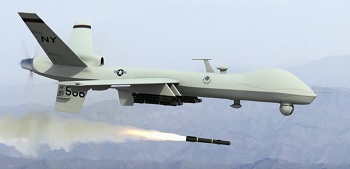
8am: The Taliban claim to have acquired anti-drone systems and plan to begin installing and operating the systems in Kandahar province. The sources added that the systems are intended to prevent Pakistani drones from operating in border areas. The Taliban also claimed that the deployment would be expanded to other border areas of Afghanistan after Kandahar. Click here to read more (external link).
Amnesty International condemns Pakistan order requiring Afghan medical students to return
 Ariana: Amnesty International has condemned the Pakistan Medical and Dental Council’s decision requiring Afghan medical students in Pakistan to return to Afghanistan, calling it discriminatory and arbitrary. The organization said the decision would have particularly severe consequences for female Afghan students, many of whom have already been denied access to higher education in Afghanistan under the Islamic Emirate’s restrictions on women and girls. Click here to read more (external link).
More
- Shocking: Pakistan Orders Nearly 1,000 Afghan Medical Students to Leave Within 24 Hours
- Kabul police spokesman condemns Pakistan order expelling Afghan medical students
- Former Pakistani Envoy Calls on Pakistan to Allow Afghan Medical Students to Complete Studies
- Afghan Embassy in Islamabad calls for halt to expulsion of Afghan students
Tolo News in Dari – September 8, 2026
25 Years After 9/11, Could Afghanistan Again Become A Launchpad For Global Terror?
 By Ray Furlong and Daud Khattak
Radio Free Europe/Radio Liberty
September 8, 2026
Twenty-five years after serving as the global launchpad for the 9/11 attacks, Afghanistan has come “full circle” — with the Taliban retaking power after a 20-year US-led military presence and Al-Qaeda operatives again finding safe haven in the country.
So far, this has not led to major terror acts in Western capitals plotted in Afghanistan, let alone anything like the 9/11 attacks.
But former military, diplomatic, and intelligence officials, as well as regional experts, have shared mixed views in interviews with RFE/RL on why this is. Some argued that the situation now is fundamentally different to that before 9/11. Others warned of a resurgent threat and a “ticking bomb.”
Following 9/11, Washington decided to support an alliance of anti-Taliban forces to drive the Taliban from power and hunt down Al-Qaeda leaders based in the country. But this turned into a 20-year war with an enormous financial and human toll.
In 2020, during Donald Trump’s first term as US president, an agreement was signed with the Taliban under which international forces would withdraw and the Taliban would “not allow any of its members, other individuals or groups, including Al-Qaeda, to use the soil of Afghanistan to threaten the security of the United States and its allies.”
Under the deal, the Taliban also committed not to allow “recruiting, training, and fundraising” by such groups or individuals.
The Return Of Al-Qaeda
The withdrawal eventually took place in 2021, under President Joe Biden. Since then, numerous reports by United Nations sanctions teams have documented the return of Al-Qaeda members to Afghanistan.
One such report, in December 2025, described Afghanistan as the “symbolic homeland” for the group and noted “personal relationships and intermarriages” between Al-Qaeda and Taliban members.
“It is already harboring terrorists who have international aspirations. The next question is going to be whether they’re going to carry those out. But has Afghanistan come full circle to where it was before 9/11? Yes, it has,” former US diplomat Annie Pforzheimer told RFE/RL.
Pforzheimer was the US deputy head of mission in Kabul in 2017-18 and acting deputy assistant secretary of state responsible for Afghan affairs in 2018-19.
“I see this as both direct and indirect threats against the rest of the world,” she said. “Al- Qaeda is still there and all too powerful given its history.”
General HR McMaster, who served as US national-security adviser in 2017-18, shares Pforzheimer’s concerns. He told RFE/RL it was a “self-delusion” to expect the Taliban to stick to the deal.
“They are a terrorist organization,” he said. “What we should be doing is weakening the terrorist government in Afghanistan.”
Both Pforzheimer and McMaster emphasized that Al-Qaeda is not the only dangerous group active with Taliban blessing in Afghanistan. Indeed, UN reports have also noted how Al-Qaeda has worked with the Tehrik-e Taliban Pakistan (TTP) group to carry out cross-border attacks into Pakistan. Islamic State militants are also present in Afghanistan and have carried out attacks there and in Pakistan.
Colin Clarke, executive director of the Soufan Center, a New York-based think tank focused on security issues, told RFE/RL that Afghanistan was a “witch’s brew” of groups that resembled “a ticking bomb.”
‘Lived Experience Of 9/11’
But other experts urge caution. Much has changed since 9/11 and indeed since the Taliban retook power in Afghanistan. The group is now actively reaching out to seek international cooperation, even recently sending a delegation to meet with the European Union in Brussels, and has been recognized by Russia as Afghanistan’s legitimate government.
While outreach has been met with a cool response in the West due to the Taliban’s harsh restrictions on women’s rights and general human rights abuses, some experts believe the movement’s leadership has a tighter rein on groups such as Al-Qaeda than in the past.
“A major difference now relative to pre-9/11 is that the Taliban lived through the experience of 9/11 and the ramifications that that brought, and so I have to believe they are keeping a very close eye on what these members of Al-Qaeda are doing,” Jonathan Schroden, chief research officer at CAN, a Washington-based think tank, told RFE/RL.
Schroden, who is finalizing a book on the history of US counterterrorism operations in Afghanistan, said the country is now not the key focus.
“If you’re trying to combat the most virulent Al-Qaeda affiliates at this point in time, those exist in Africa, whether it’s Al-Shabaab or the West African various groups that carry an Al-Qaeda affiliation. Those are the most active, the most violent,” he said.
The latest US Counterterrorism Strategy, published in May, also emphasizes threats from these and other geographical areas, and Schroden is not alone with his assessment of the situation in Afghanistan.
Carter Malkasian, a former special assistant for strategy to the chairman of the Joint Chiefs of Staff, now at the National War College, wrote recently in Foreign Affairs that “the absence of terrorism” after five years of Taliban rule was indicative that things had changed in Afghanistan.
Malkasian, who was a political officer in Helmand Province in 2009-11, challenged UN reporting to say “there is little evidence to suggest that Al-Qaeda is organizing, fundraising, or training on Afghan territory” but acknowledged that intelligence was patchy.
“Washington’s ability to monitor Afghanistan is not what it was in 2020, let alone 2011. The United States may be unable to detect terrorist plotting and training in mountain villages or in the backstreets of Kabul, Kandahar, or Jalalabad,” he wrote.
This was a point picked up by Schroden, who noted there has been no US strike in Afghanistan since it killed Al-Qaeda’s then leader, Ayman al-Zawahri, in Kabul in 2022.
“Either the US has so little insight into what’s happening there that it can’t generate targets to strike, or there just aren’t the types of high-value targets to strike in Afghanistan today as there once were,” he said.
Copyright (c) 2026. RFE/RL, Inc. Reprinted with the permission of Radio Free Europe/Radio Liberty, 1201 Connecticut Ave NW, Ste 400, Washington DC 20036.
Afghanistan announce multi-format series with Bangladesh, Zimbabwe
 Amu: Afghanistan will host Bangladesh and Zimbabwe for a series of international cricket matches in the United Arab Emirates in October and November, including three Tests, a one-day international tri-series and three T20 internationals, the Afghanistan Cricket Board announced Tuesday. The schedule will begin with a one-off Test between Afghanistan and Bangladesh from Oct. 9-13. Click here to read more (external link).
Other Afghan Sports News
Rising Theft and Vanishing Children: What Is Happening in the South Under Akhundzada’s Shadow?

Mullah Hibatullah Akhundzada
8am: Several residents from the southern provinces are expressing serious concern over the rise in thefts and criminal offenses in these provinces. They say that despite the Taliban’s claims of ensuring security, they have failed to protect the lives and property of the people. According to them, widespread poverty and severe unemployment have contributed to the rising crime rate in the southern region. Some residents of Kandahar, Zabul, and Helmand provinces emphasize that no one is safe on the streets or in the alleys. Armed robberies, beatings, vehicle theft, kidnapping, murder, and armed clashes are cited as among the most serious current security challenges in these provinces. Click here to read more (external link).
AFF, Taliban Clash In Badakhshan’s Zebak District
 Afghanistan International: Local sources in Badakhshan reported clashes on Monday, 7 September, between Afghanistan Freedom Front forces (AFF) and the Taliban in Zebak district. According to the sources, the fighting began on Monday in Zebak. Sources from the AFF also confirmed that its forces were engaged in clashes with the Taliban in the district. Click here to read more (external link).