
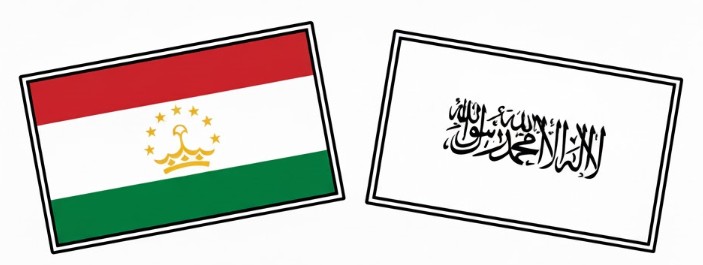
RFE/RL: More than a month after a pair of attacks killed five Chinese nationals working at a gold mine near Tajikistan’s remote border with Afghanistan, questions remain over what led to the high-profile incidents that could reshape both countries’ relations with China. Click here to read more (external link).
 8am: The Afghanistan Freedom Front has claimed that two Taliban fighters were killed and two others wounded in an attack in Kunduz province. According to the Afghanistan Freedom Front, the vehicle carrying Taliban fighters was also set on fire in the attack.
  8am: For more than four years, the Taliban have systematically erased Persian words and expressions from schools, universities, and even city streets. In recent days, images shared on social media have revealed a new phase of this effort. Taliban authorities have removed urban signboards in Kabul, rearranged text, replaced Persian with Pashto, and gone so far as to translate proper names. In one striking example, “Shahr-e Naw Kabul” appears as “Nawi Shar,” while “Bagh-e Daoud” has been changed to “Daoud Ban.” These changes have triggered strong reactions from many citizens. Around the same time, the group removed Persian and Uzbek signboards from Samangan University.
  Afghanistan International: The latest incident occurred on Thursday evening in Faizabad, the capital of Badakhshan, where armed men shot and killed Mohammad Shah, an Ismaili resident originally from Shighnan district. Shah, who worked for a private office in the province, was attacked in the Dasht-e-Qargh area while returning home from a bakery, according to eyewitnesses.
  Ariana: Pakistan Under‑19s secured a dominant 133‑run victory over Afghanistan Under‑19s in the 5th match of the Zimbabwe Under‑19 One‑Day Tri‑Series at Sunrise Sports Club, Harare, on Friday. This marked Afghanistan’s second consecutive loss to Pakistan in the tournament.
  Afghanistan International: The Afghanistan Freedom Front said it carried out a rocket attack on a Taliban court building in northern Afghanistan, killing four Taliban members and wounding two others. In a statement issued on Friday, the group said the attack targeted the Taliban’s Court of Appeal in Maimana, the capital of Faryab, at about 6:30 p.m. on Thursday. The AFF said the strike hit a meeting of the Taliban’s judicial police, which it described as an enforcement arm of the Taliban’s Ministry for the Propagation of Virtue and Prevention of Vice.
 Afghanistan International: The incident took place in Chah Ab district of Takhar province, where Taliban forces and personnel connected to a gold mining company entered the area to launch an extraction operation. Several people on both sides were injured, according to the sources. A video obtained by Afghanistan International shows residents throwing stones at Taliban members, while gunfire can be heard in the background.