logo

Daily Updated Afghan News Service

  • Home
  • About
  • Opinion
  • Links to More News
  • Good Afghan News
  • Poll Results
  • Learn about Islam
  • Learn Dari (Afghan Persian/Farsi)

Recent Posts

  • Photographs from UK inquiry appear to show Afghans shot in their beds during SAS raids November 19, 2026
  • UN: More Than 1,600 Suspected Dengue Cases Recorded in Afghanistan November 19, 2026
  • Sweden rejects asylum request of former Afghan ambassador, plans deportation to US: Le Monde November 19, 2026
  • Tolo News in Dari – November 19, 2026 November 19, 2026
  • Afghanistan suffer 9-2 defeat to Iran in Beach Soccer Asian Cup opener November 19, 2026
  • Akhundzada Wants Subordinates, Not Partners In Power, Say Resistance Groups November 18, 2026
  • Taliban Tighten Restrictions in Panjshir as Residents Say Their Movements Are “Under a Microscope” November 18, 2026
  • Tolo News in Dari – November 18, 2026 November 18, 2026
  • Biden says he was told Kabul would hold for six months after US troops left November 18, 2026
  • Afghanistan’s GDP Per Capita Set To Fall For Third Straight Year, Says World Bank November 18, 2026

Categories

  • Afghan Children
  • Afghan Sports News
  • Afghan Women
  • Afghanistan Freedom Front
  • Afghanistan United Front
  • Al-Qaeda
  • Anti-Government Militants
  • Anti-Taliban Resistance
  • AOP Reports
  • Arab-Afghan Relations
  • Art and Culture
  • Australia-Afghanistan Relations
  • Book Review
  • Britain-Afghanistan Relations
  • Canada-Afghanistan Relations
  • Censorship
  • Central Asia
  • China-Afghanistan Relations
  • Civilian Injuries and Deaths
  • Corruption
  • Crime and Punishment
  • Drone warfare
  • Drugs
  • Economic News
  • Education
  • Elections News
  • Entertainment News
  • Environmental News
  • Ethnic Issues
  • EU-Afghanistan Relations
  • Everyday Life
  • France-Afghanistan Relations
  • Germany-Afghanistan Relations
  • Haqqani Network
  • Health News
  • Heroism
  • History
  • Human Rights
  • India-Afghanistan Relations
  • Interviews
  • Iran-Afghanistan Relations
  • ISIS/DAESH
  • Islamophobia News
  • Japan-Afghanistan Relations
  • Landmines
  • Media
  • Misc.
  • Muslims and Islam
  • NATO-Afghanistan
  • News in Dari (Persian/Farsi)
  • NRF – National Resistance Front
  • Opinion/Editorial
  • Other News
  • Pakistan-Afghanistan Relations
  • Peace Talks
  • Photos
  • Political News
  • Reconstruction and Development
  • Refugees and Migrants
  • Russia-Afghanistan Relations
  • Science and Technology
  • Security
  • Society
  • Tajikistan-Afghanistan Relations
  • Taliban
  • Traffic accidents
  • Travel
  • Turkey-Afghanistan Relations
  • UN-Afghanistan Relations
  • Uncategorized
  • US-Afghanistan Relations
  • Uzbekistan-Afghanistan Relations

Archives

Dari/Pashto Services

  • Bakhtar News Agency
  • BBC Pashto
  • BBC Persian
  • DW Dari
  • DW Pashto
  • VOA Dari
  • VOA Pashto

New Chief Is ‘Ideal’ Taliban Leader, Analyst Says

26th May, 2016 · admin · 1 Comment
Haibatullah Akhundzada

Haibatullah Akhundzada

VOA News
Ayesha Tanzeem
May 25, 2016

ISLAMABAD—The Taliban’s new chief, Mawlawi Haibatullah Akhundzada, has a reputation as a respected religious scholar with the title “sheikh-ul-hadith,” a specialist in interpreting the words of Mohammad, the prophet of Islam.

He enjoyed the esteem and trust of the Taliban’s founding leader, Mullah Omar, who turned to him for a final say on important and potentially sensitive edicts and fatwas, according to Thomas Ruttig of the Afghanistan Analysts Network.

Haibatullah also comes from a very strong tribal background. By electing him and his deputies, the Taliban has managed to accommodate all racial, tribal, ethnic and subtribal actors that needed to be pacified, said professor Adeel J. Khan, a regional security and defense analyst who teaches in European and Pakistan universities.

“This is the [most] ideal set up that the Taliban could get,” Khan said.

Haibatullah’s Noorzai tribe is one of the three big Durrani dynasty tribes. Founded in 1747 by Ahmad Shah Durrani, the Durrani empire once extended beyond present-day Afghanistan to northeastern Iran, eastern Turkmenistan, most of Pakistan and northwestern India.

The other two Durrani tribes are Popalzai, the tribe of former Afghan President Hamid Karzai, and Ishaqzai, the tribe of former Taliban chief Mullah Akhtar Mansoor and his military rival, Mullah Rasool.

Khan predicted that Haibatullah’s election would take care of Rasool’s faction.

“In normal Pashtun circumstances, if Noorzais and Ishaqzais have joined each other, Rasool has to toe the line now or he will be eliminated,” he said.

Nazar Mohammad Mutmaeen, a pro-Taliban analyst based in Kabul, said the Noorzai tribe also commands support within large swaths of the Taliban. At the start of the current war in 2001, he said, most members of the Noorzai tribe supported the Taliban while members of the Achakzai tribe supported the Afghan government.

Deputies chosen

The Taliban shura, or council, has also elected two deputies for Haibatullah. One of them, Sirajuddin Haqqani, was also a deputy to the recently killed Mansoor. He is the son of Jalaluddin Haqqani, the founder of the Haqqani network, one of the most lethal groups in Afghanistan.

The United States has offered a reward of $10 million for information leading to the capture of Sirajuddin Haqqani.

The other deputy, Mullah Yaqoob, is a son of Mullah Omar and currently heads the Taliban military commission for 15 of Afghanistan’s 34 provinces.

This setup means that “for all religious, political and diplomatic matters, Akhundzada (Haibatullah) will matter, but for the military matters it will be the Haqqanis who will call the shots,” according to Khan.

Although the Haqqanis will not have ultimate control, he said, they would operate through two Taliban commanders who lead important military units in the Taliban structure — the Quetta military commission in the south and the Peshawar military commission in the north.

The names of the commissions, Khan said, do not imply that the members live in these Pakistani cities. Rather, they are based on geographical affinity to the region under the control of the relevant commander.

The Peshawar commander usually travels between Parwan, Kapisa and Nangarhar, while the Quetta commander is mostly in Nimroz, Zabul, Helmand and Kandahar.

According to Khan, the Quetta commission, which controls the south and west of Afghanistan, has four additional zonal commanders, while the Peshawar commission has six additional zonal commanders controlling the north and east of the country. The zonal commanders are quite independent and belong to different tribes.

Pakistan’s influence wanes

The new setup is likely to decrease Pakistan’s influence on Taliban military and logistical affairs.

“The leadership is divided among these three people who are dependent on 12 military commanders, so Pakistan now has to talk to some 15 or 16 odd people coming from God knows how many tribes and how many ideas,” Khan said.

While Afghanistan’s President Ashraf Ghani has warned the Taliban to renounce violence or face the same fate as their late leader, chances of reduction in violence are now less than before.

“Contrary to the public perception, Mansoor was never against talks. So this was a guy who was for talks, and we see his fate,” Khan said, adding that it would now be difficult to persuade the Taliban to accept any talks.

Plus, by eliminating the rifts that arose with the election of Mansoor, the Taliban may have also solidified its position on the battlefield.

Haibatullah’s background

Haibatullah was born in the Sperwan area in the Panjwayi district of Kandahar province in Afghanistan, in 1966 or 1967. During the Soviet invasion of Afghanistan in the 1980s, he lived as a refugee in Pakistan’s Balochistan province and studied in local madrassahs, or Islamic seminaries.

He also fought against the Soviet forces and their Afghan partners. Taliban sources claim he mostly lived in Kandahar during that time and was part of the Hezb-e-Islami faction headed by jihadi commander Maulvi Khalis.

When the Taliban came to power, he worked in its court system as one of the senior judges.

After the United States and its allies attacked Afghanistan in 2001, Haibatullah escaped across the border to Baluchistan province in Pakistan.

Taliban sources claim he played a central role in regrouping the Taliban after the group was ousted from power by U.S.-led forces.

Once the Taliban regained some strength and established a shadow government against the regime in Kabul,  Haibatullah was given the responsibility of looking after the judicial affairs, according to Taliban sources. Other local sources say he ran a court based in Kuchlak, a town 20 kilometers from Quetta, the provincial capital of Baluchistan province. People brought their land disputes as well as any complaints against the Taliban to him.

Roles in mosque, madrassah

Four years ago, an Afghan Baloch in Kuchlak area called Mohammad Alam Mohammad Hassni, from the Mohammad Hassni tribe — who was famous for his transport business and well-known locally as al-Haj, a title used for someone who has performed multiple Hajj or pilgrimages to Mecca — set up a mosque and a madrassah in the area.

He made Haibatullah the imam of the mosque and put him in charge of the madrassah called Khairul Madaris, where he also lectured senior students. Many of those students became Taliban cadre.

Gul Mohammad Kakar, a Kuchlak local, said the new Taliban chief was famous for his religious knowledge and oratory skills. When he spoke, Kakar said, people listened. He was also known for his good manners. He performed those duties until he was elected a deputy of late Taliban chief Mansoor in August 2015.

Sources close to the Taliban claim that Haibatullah stayed in the area until an attack on Mansoor last December. After the attack, he left, and his whereabouts since then have been uncertain.

Posted in Haqqani Network, Taliban | Tags: Hibatullah Akhundzada, Kandahar |

End ‘Moral Crimes’ Charges, ‘Virginity’ Tests

25th May, 2016 · admin · 1 Comment

hrwHuman Rights Watch: Afghanistan’s government should urgently act to end wrongful imprisonment and humiliating, scientifically invalid “virginity exams” of women and girls, Human Rights Watch said today. Despite a pledge from President Ashraf Ghani in a February 2016 letter to Human Rights Watch to “prevent the imprisonment of women accused of running away from their family,” Afghan police and prosecutors continue to engage in the abusive practice. Click here to read more (external link).

Posted in Afghan Women, Human Rights | Tags: Ashraf Ghani |

Eleven Killed In Suicide Bombing Near Kabul

25th May, 2016 · admin

explosionRadio Free Europe/Radio Liberty
May 25, 2016

A suicide attack on a vehicle carrying court employees has killed at least 11 people and wounded four others west of the Afghan capital, Kabul.

Interior Ministry spokesman Najib Danish said the attacker detonated his explosives vest as he walked by the vehicle in Paghman district during the morning rush hour on May 25.

The casualties include both court workers and civilians.

The Taliban claimed responsibility for the attack, which came as the movement announced a new leader to replace Mullah Akhtar Mansur, who was killed in a U.S. drone strike last week.

Based on reporting by Reuters and AP

Copyright (c) 2016. RFE/RL, Inc. Reprinted with the permission of Radio Free Europe/Radio Liberty, 1201 Connecticut Ave NW, Ste 400, Washington DC 20036.

Other Security News

  • Afghan special forces capture 15 Taliban members
  • 8 Afghan soldiers martyred during counter-terrorism operations
  • ‘US wants to use Afghanistan as staging ground for intervention’
Posted in Civilian Injuries and Deaths, Security, Taliban |

Pakistan Army Chief Criticizes U.S. Drone Strike On Taliban Chief

25th May, 2016 · admin · 1 Comment
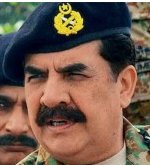
Raheel Sharif

Raheel Sharif

Radio Free Europe/Radio Liberty
May 25, 2016

Pakistan’s military says the country’s army chief has met with U.S. Ambassador David Hale to express Islamabad’s serious concerns over a drone strike on Pakistani soil that killed Afghan Taliban leader Mullah Akhtar Mansur.

A May 25 military statement says General Raheel Sharif denounced “such acts of sovereignty violations” as “detrimental to relations and counterproductive for the ongoing peace process.”

The statement comes a day after Pakistani Interior Minister Chaudhry Nisar Ali Khan complained about the drone strike, saying it is “against international law” for the U.S. government to say that “whoever is a threat to them will be targeted wherever they are.”

Mansur was killed on May 21 when his vehicle was struck by a U.S. drone in Pakistan’s southwestern province of Balochistan.

On May 25, the Taliban named Mullah Haibatullah Akhundzada, one of Mansur’s two deputies, as successor.

Based on reporting by AP and Dawn

Copyright (c) 2016. RFE/RL, Inc. Reprinted with the permission of Radio Free Europe/Radio Liberty, 1201 Connecticut Ave NW, Ste 400, Washington DC 20036.
Posted in Drone warfare, Pakistan-Afghanistan Relations, Peace Talks, Taliban |

Taliban IDs New Leader, Confirms Mansoor Death

25th May, 2016 · admin
Haibatullah Akhundzada

Haibatullah Akhundzada

VOA News
Ayaz Gul
May 25, 2016

ISLAMABAD—Afghanistan’s Taliban says Mawlawi Haibatullah Akhundzada has been appointed the new chief of the group following the death of Mullah Akhtar Mansoor.

In a Pashto language statement on Wednesday, the Tailban also formally confirmed Mansoor was killed in a U.S. drone attack last week.

“Mawlawi Haibatullah Akhundzada has been appointed as the new leader of the Islamic Emirate (Taliban) after a unanimous agreement in the shura (the supreme council), and all the members of shura pledged allegiance to him,” the Taliban statement said.

Why US eliminated Mansoor

U.S. President Barack Obama confirmed on Monday that Mansoor was eliminated because he was blocking Afghan peace and reconciliation efforts.

The new Taliban leader was a deputy to Mansoor along with Sirajuddin Haqqani, the leader of the notorious Haqqani network.

Haqqani has retained his position while the son of the group’s founder, Mullah Yaqoob, has been appointed as a second deputy to the new Taliban chief.

Haibatullah is described by some Afghan observers as “a typical village type” Islamic cleric, like the group’s founder, Mullah Omar, and expect his two deputies to play the central role in Taliban military affairs.

Revenge suicide bombing

Wednesday’s announcement came as a Taliban suicide bomber killed at least 11 people and wounded several others in Kabul. Afghan police say the attack targeted a minibus carrying judicial officials.

A Taliban spokesman, Zabihullah Mujahid, said the attack was carried out in reaction to the execution of six Taliban members earlier this month after they were sentenced to death by the Afghan judicial system.

The U.N. Assistance Mission in Afghanistan (UNAMA) condemned the suicide attack that it says killed and wounded civilians, including children.

“Attacks against judicial authorities are cowardly and contrary to international humanitarian law,” said UNAMA chief, Nicholas Haysom, demanding accountability for the perpetrators.

Posted in Civilian Injuries and Deaths, Haqqani Network, Security, Taliban | Tags: Hibatullah Akhundzada, Kabul, Mullah Mansur, Mullah Mohammad Yaqoob, Sirajuddin Haqqani, Zabihullah Mujahid |

Afghanistan Claims Killed Taliban’s ‘Shadow Governor’ In Helmand

25th May, 2016 · admin · 1 Comment

helmand_aq_mapRadio Free Europe/Radio Liberty
May 25, 2016

Afghan authorities claimed security forces killed a senior Taliban commander they identified as the “shadow governor” of the southern province of Helmand.

The Taliban denied the report, which came days after Taliban leader Mullah Akhtar Mansur was killed by a U.S. airstrike in southwestern Pakistan.

Omar Zwak, a spokesman for the provincial governor of Helmand, said Mullah Muzamel had died of injuries sustained during an air strike in Marjah district late on May 22.

“First he was wounded and later that night he died of his wounds,” Zwak said.

Interior ministry spokesman Sediq Sediqqi said in a tweet that Muzamel had been killed in a special forces operation along with two of his commanders, Qari Feda Mohammad and Mulawi Hamid.

However Qari Yousuf Ahmadi, a Taliban spokesman for southern Afghanistan, denied the report.

Ahmadi said the shadow governor for Helmand’s name is Haji Mullah Abdul Manan Akhund and that person is safe.

“No official has been killed or wounded in Helmand,” he said.

Helmand, the region that grows most of Afghanistan’s opium crop, is mostly under Taliban control but government forces have launched an offensive to retake lost ground.

Based on reporting by Reuters and dpa

Copyright (c) 2016. RFE/RL, Inc. Reprinted with the permission of Radio Free Europe/Radio Liberty, 1201 Connecticut Ave NW, Ste 400, Washington DC 20036.

Related

  • 53 militants killed in fresh military operations in Afghanistan
Posted in Drugs, Security, Taliban | Tags: Helmand |

Relative of Slain Taliban Leader Wants to Claim Body

25th May, 2016 · admin
Mullah Akhtar Mansur

Mullah Akhtar Mansur

VOA News
Ayesha Tanzeem, Ayaz Gul
May 24, 2016

ISLAMABAD—Pakistan’s interior minister said Tuesday that a blood relative of Taliban leader Mullah Akhtar Mansoor had come forward to claim the charred body of the man who was killed in a U.S. drone strike in Pakistan’s Baluchistan province.

Chaudhry Nisar Ali Khan told a news conference in Islamabad that although the United States and Afghanistan had claimed that Mansoor was killed in a drone strike on Pakistani territory, it was not possible for Pakistan to confirm the news without scientific verification, like a DNA test.

That test, he added, was now underway because of an unexpected development.

“Only today, an opportunity has arisen when a member of his family, who has a blood relationship with him, has formally requested for the body to be handed over to him,” Khan said.

The government, he added, had immediately collected DNA samples from the relative and was waiting for the results to confirm that the body was that of Mansoor.

Criticism softening

Khan said the violation of Pakistan’s territory by a U.S. drone could have “serious implications.” But he seemed to soften the impact of his comment by adding that internal investigations had revealed that the U.S. drone didn’t enter Pakistani territory. It was fired at Mansoor’s car from “another country,” he said, without naming the country.

Baluchistan province borders both Afghanistan and Iran.

Khan acknowledged that senior Pakistani officials in multiple government departments had played a role in issuing fake documents to Mansoor, although he blamed corruption for it. He said several officers had been either detained or were being probed for facilitating the documentation process for the slain Taliban leader.

“I have been banging my head against the walls,” Khan said regarding his efforts to reduce corruption in the authorities that issue national identity cards and passports.

The first ID card for Wali Mohammad, the alias that Mansoor allegedly used on his passport, was issued in 2001 when former military leader General Pervez Musharraf was in power, according to Khan.

The first passport was issued in 2005, again during Musharraf’s regime, and was renewed in 2011 during the former government of the Pakistan People’s Party.

Questions surrounding evidence

Khan also said Pakistan was investigating how Mansoor’s passport survived the drone strike on the car. Pakistan was informed seven hours after the drone strike, according to Khan.

He also said that Pakistan was investigating whether the passport found near the car was in the car at the time of the attack or someone threw it on the ground to mislead authorities. This was the reason he said Pakistan could not confirm whether Mansoor was using this passport when he crossed the border of Iran a few hours before he was killed.

Khan confirmed that the visas on Mohammad’s passport included Bahrain, Iran and Dubai. The passport also had stamps that showed it had been used to travel through Pakistani airports. The minister again rejected allegations his country was supporting the Afghan Taliban.

“Mansoor was traveling alone in a car with his driver. If he had the support and surveillance of Pakistani intelligence agencies, he would not have been traveling under these conditions and would have not entered Pakistan through a regular border post without any security and in broad daylight, Khan said.

The Pakistani minister suggested the killing of Mansoor could be detrimental for efforts aimed at seeking a negotiated settlement to the Afghan conflict, “because you cannot expect them [the Taliban] to come to the table after having droned their leader.”

Related

  • Pakistan does not confirm Taliban leader’s death, will carry out DNA test
Posted in Pakistan-Afghanistan Relations, Taliban | Tags: Mullah Mansur |

Afghan Drama Wins Cannes Film Festival Award

25th May, 2016 · admin


awardribbion

Tolo News:  An Afghan film, Wolf and Sheep, which is about poverty and the poor living conditions in a remote village in Afghanistan, has won an award at this year’s Cannes Festival. Director of the film, Shahrbano Sadat, said the movie also talks about stories involving war, violence and drugs.

“This is a great achievement for Afghan cinema, particularly in the current situation where a number of our filmmakers have left the country,” she said. Click here for more info (External link).

Posted in Art and Culture, Media, Society | Tags: Cannes, Film Award |

India To Deliver More Planes To Afghanistan

25th May, 2016 · admin · 1 Comment

helicopter

Tolo News:  Indian Prime Minister Narendra Modi said during a meeting with President Ashraf Ghani in Tehran that New Delhi is ready to hand over more helicopters to the Afghan Air Force, said the president’s deputy spokesman Sayed Zafar Hashemi.

“India’s Prime Minister has tasked his security delegation to talk with an Afghan delegation about this matter in order to finalize the details and number of helicopters which would be handed over to Afghanistan,” he said as he addressed a press conference in Kabul on Tuesday. Click here for more (External link).


Posted in India-Afghanistan Relations, Security | Tags: Helicopters, India |

No specific timeframe for the conclusion of peace deal with Hezb-e-Islami: ARG

25th May, 2016 · admin
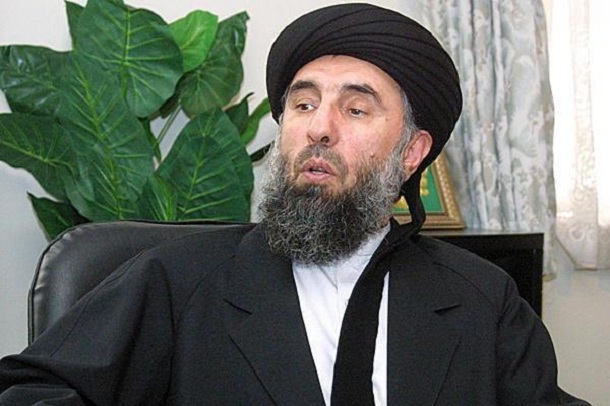
gulbuddin-hekmatyar2016

Gulbuddin Hekmatyar

Khaama Press:  The Presidential Palace announced Tuesday that there is no specific time frame for the conclusion of peace deal with Hezb-e-Islami led by Gulbuddin Hekmatyar. Deputy presidential spokesman Syed Zafar Hashemi told reporters that peace process is always complicated and it would be a mistake to confirm a time frame regarding the peace agreement. Click here for more (External link).

Posted in Peace Talks, Political News | Tags: Hekmatyar, Hezb-e Islami |
Previous Posts
Next Posts

Subscribe to the Afghanistan Online YouTube Channel

---

---

---

Get Yours!

Peace be with you

Afghan Dresses

© Afghan Online Press
  • About
  • Links To More News
  • Opinion
  • Poll