
 BBC News: Scotland’s one-day international against Afghanistan was abandoned after the visitors hit 283-4 before play was ended by rain. The match between sides, who will meet again at the Grange on Wednesday, was forced off without the Scots batting. Click here to read more (external link).
Illegal mining for Chinese market fuels Taliban in Afghanistan

Lapis
China Dialogue: For 6,500 years Afghanistan has been famous for the brilliant blue lapis lazuli, coveted by everybody from the Egyptian pharaohs to the common jewellers of today. These days mining of the precious stone is funding illegal armed groups and driving extremism and corruption in the northern province of Badakhshan, a two-year investigation by Global Witness, a London-based campaign group, has revealed. China – as the major end market for the stone – is in a strong position to help end that threat. Click here to read more (external link).
Should Achakzai’s Afghanistan outburst be allowed to go un-noticed?
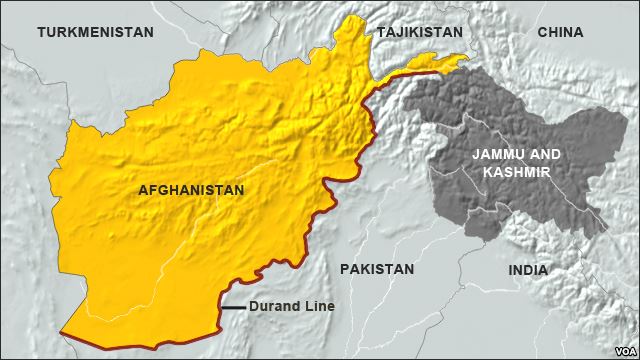
Durand Line
Pakistan Observer: Mahmood Khan Achakzai claimed that he had merely stated that Khyber Pukhotonkhwa was once part of Afghanistan, cannot be dismissed lightly. It is a mere after-thought, a crude attempt to escape from the aftermath. Afghans do have claim on KP, rejecting the British-created Durand Line, but it is also a fact that KP, after historical referendum in the 40s, chose be part of Pakistan. Click here to read more (external link).
GOP Senators Warn Against Further Troop Cuts In Afghanistan
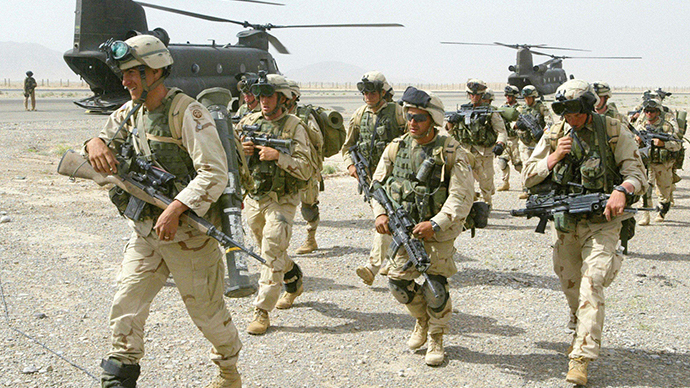
Reuters: The international military mission in Afghanistan will fail if troop levels are reduced further, with potentially dangerous repercussions for the rest of the world, a delegation of U.S. lawmakers warned during a visit to Kabul on Monday. Click here to read more (external link).
Shops Sales Slump In Kabul As Eid Arrives
 Tolo News: A depressed economy and poverty are among the reasons for the slump in shopping sales Kabul as Eid al-Fitr arrives. Afghans say increasing unemployment, the decrease in the value of the Afghani against dollar and prices hike have had a negative effect on the markets in the country. Click here to read more (external link).
Hekmatyar asks HIA fighters to abandon fight against Afghan forces
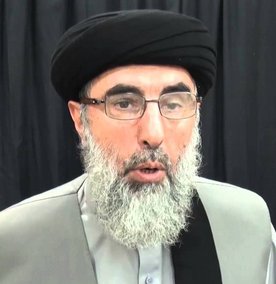
Gulbuddin Hekmatyar
Khaama Press: The leader of Hezb-e-Islami Gulbuddin Hekmatyar has asked his fighters to abandon insurgency against the Afghan National Defense and Security Forces (ANDSF).
Hekmatyar’s instructions to renounce violence is yet another gesture by the group to join peace process which comes days after he declared the peace talks with the Afghan government is effectively dead. He has conveyed the message through a statement issued on the occassion of Eid-ul-Fitr. Click here to read more (external link).
Pakistan’s Grant for Controversial Islamic Seminary Under Review
 VOA News / July 4, 2016
Ayaz Gul
ISLAMABAD — Weeks of scathing criticism has apparently prompted a provincial government in Pakistan to review a grant of $3 million it has recently allocated for a controversial Islamic seminary, which some critics refer to as the “University of Jihad.”
The Darul Uloom Haqqania seminary, or madrasa, headed by Samiul Haq, a former senator, is located in the Khyber Pakhtunkhwa (KP) province, which borders Afghanistan.
Haq’s madrasa, where about 4,000 students are enrolled, has been widely known for links, and publicly expressed sympathies, to the Taliban fighting local and U.S.-led international forces in Afghanistan. That association has won the Islamic cleric the title of “Father of the Taliban.”
The political party ruling the Pakistani province is headed by legendary cricketer-turned politician Imran Khan, leader of the Pakistan Tehreek-e-Insaf (PTI) party and a staunch critics of the U.S.-led anti-terrorism war in the region. He is also a strong opponent of Prime Minister Nawaz Sharif and is popular among educated Pakistani youth.
While provincial ministers have been defending the financial grant allocated for the seminary as part of efforts to “mainstream” thousands of madrasas around the province, Khan has tried to distance himself from the decision, although he reiterated his support for introducing reforms in religious institutions.
Khan learns of funding
Speaking to VOA at his Bani Gala residence near Islamabad, Khan said he was unaware of the funding for Haqqania madrasa until the media drew his attention to it.
He said the provincial chief minister used his discretionary powers to allocate the funds without his knowledge and even without informing some of his Cabinet ministers. But Khan says he has now instructed the provincial authority to submit a report to him to justify the allocation. Under Pakistan’s constitution, a party chief is empowered to do so and can dismiss a public office holder if he or she goes against party policy.
“The situation is evolving right now. What we want the KP Government, because as I said I too only learnt about this specific madrasa on a TV program when I was asked this question. So, what we want the KP government to do now is to announce exactly how this money will be spent, how is it going to mainstream this madrasa, which is one of the main madrasas in KP, and we have been assured by the government that in the next few days they will give us the details about how specifically this money will be spent,” Khan said.
Both Mullah Omar and Jalaluddin Haqqani – founders of Afghanistan’s Islamist Taliban and the lethal Haqqani network respectively – are believed to have studied in the Haqqania madrasa. It is reported that Taliban leader Mullah Akthar Mansoor, who was killed in a U.S. drone strike in May, was also a former student.
Madrasa’s history
The Haqqania madrasa was one of the seminaries Pakistani and U.S. intelligence agencies used for recruiting fighters for the jihad against the Soviet occupation of Afghanistan in the 1980s.
Graduates from the seminary have also joined in large numbers Taliban ranks fighting the U.S.-led international forces and their local allies in Afghanistan.
Many politicians are questioning why so much money is being given to the seminary while more moderate institutions are not receiving similar funding.
Khan stopped short of agreeing when asked whether he might instruct the provincial government to cancel the funding for the seminary in the face of growing demands from political opponents, media commentators and civil society activists.
“Well, it depends where the money is being spent, if this money is going to mainstream the students who at the moment are basically marginalized. I mean, again, the party policy is to mainstream the students from these madrasas. As I said, exactly how it is going to be done we are waiting the report from the chief minister,” Khan said.
But he said there are about 2.2 million students in madrasas across the province and they all come from families unable to pay fees in private or government schools, so there is a need to teach them modern subjects to enable them to get jobs.
“So, our main concern is that we should be bringing these people into mainstream, and so that they become part of the society. Marginalization everywhere in the world, now we know, leads to radicalization. The ISIS (or Islamic State) has mainly got recruits from Muslim communities living in Europe who are marginalized,” Khan asserted.
Political involvement
Political analyst and author Zahid Hussain sees the funding for the seminary as politically motivated, but warns such attempts could undermine Pakistan’s successes against religious extremism and terrorism.
“Such a move could reverse the gains that have been made so far in fighting militancy and extremism. It is simply a political bribe and nothing to do with any professed effort to de-radicalize religious seminaries and bring them into the mainstream. In fact, favoring one group of a particular sect could encourage bigotry and fuel religious disharmony,” Hussain wrote in the daily Dawn.
Religious parties have traditionally struggled in national elections in Pakistan, hardly winning more than a few seats in parliament.
But in conservative regions like Khyber Pakhtunkhwa, religious conservatives still influence regional politics, preventing Khan’s party to win an outright majority in the provincial assembly, and he relies on support from an Islamic fundamentalist party to run the coalition government there.
Related
Afghan Authorities Crack Down on Drug Smuggling
 Khairullah Rasooli, Mohammad Habibzada
VOA News / July 3, 2016
During the past three months 740 suspected drug smugglers have been arrested in Afghanistan.
Afghanistan Deputy Interior Minister for Anti-Narcotics Baaz Mohammad Ahmadi told VOA Afghanistan the arrests were made during 588 police operations across the country.
“Police destroyed six narcotics-processing laboratories during these operations,” said Ahmadi.
He added police also confiscated arms and ammunitions in addition to 111 vehicles and more than $2 million from smugglers.
The Afghanistan Interior Ministry claims police seized 123 tons of narcotics, but Afghan Anti-Narcotics Minister Khodaidad Hazara said compared to the 8,000 tons of narcotics produced in the country that can not be counted as a feat.
The Interior Ministry says charges have been filed and submitted to the Afghan Attorney General’s Office for prosecution.
9 Afghan militants killed, 12 injured

Taliban militants (file photo)
KABUL, July 3 (Xinhua) — Clash between security forces and Taliban militants have left nine militants dead and a dozen others injured in the northern Saripul and Faryab provinces over the past 24 hours, an army spokesman in the northern region, Nasratullah Jamshidi, said Sunday.
According to the official, four militants including a group commanders have been killed in Sayad district of Saripul district and five more insurgents lost their lives in Qaisar district of Faryab province respectively.
A total of 12 militants sustained injuries in the skirmishes which have been continuing in parts of the said districts.
The official however declined to comment on the possible casualties of security personnel.
Other Security News
- US drone raid kills 14 in eastern Afghanistan
- Top security officials investigated for deadly Kabul attack
- Afghan forces recapture security posts in Wardak province
- Taliban’s Eid attack plot foiled in Balkh, bomb making factory busted
- ISIS execute three alleged Taliban fighters in Nangarhar
- 20 militants give up fighting in northern Afghan province
China Delivers First Batch of Military Aid to Afghanistan
 VOA News
Ayaz Gul
July 3, 2016
ISLAMABAD—Afghanistan has received its first batch of Chinese military equipment as part of Beijing’s commitment to provide millions of dollars of assistance to help Kabul fight terrorism.
The shipment on board a Russian cargo plane arrived Sunday in Kabul where Chinese Ambassador Yao Jing handed it over to Afghan National Security Advisor Hanif Atmar.
The cargo apparently contained among other things logistical equipment, parts of military vehicles, ammunition and weapons for the Afghan National Defense and Security Forces (ANDSF).
Jing said Beijing wants to have regular and normal state-to-state relations with the Afghan government and the Afghan people, which includes military cooperation.
“Afghanistan is our close neighbor and a very important neighbor to China… So, this is the beginning of our regular military-to-military exchanges and cooperation,” Jing said.
Atmar declined to discuss further details or value of the Chinese equipment, saying such military matters required secrecy. He said the assistance shows a joint resolve against terrorism facing Afghanistan and China.
“The military aid is just the beginning of our joint struggle against terrorism. I consider it a major change in China’s relations towards Afghanistan that China is standing with the Afghan people in the counterterrorism fight,” Atmar noted.
He said that a next shipment due later this year is expected to include more military equipment along with scanners for Afghan police to enable them to detect bombs such as vehicle-born improvised explosives devices. Afghan officials plan to install the scanners at four entry points to Kabul.
“Both China and Afghanistan, we don’t have any ambitions … But we do have our own duty to safeguard our own peace and the sovereignty. So, in this regard China and Afghanistan are on the same front. We will fight together,” Jing resolved.
China is also part of a Quadrilateral Cooperation Group or QCG, which also includes Afghanistan, Pakistan and the United States, working to bring about a peaceful end to the Afghan conflict. But the four-nation process has been unable to start peace talks between the Afghan government and the Taliban.
The increased Chinese involvement in the conflict-torn Afghanistan, critics believe, stems from concerns that continued instability in its immediate neighborhood could fuel problems in the far western Xinjiang region where Uighur Muslims are waging a low-level separatist insurgency against Chinese rule.