logo

Daily Updated Afghan News Service

  • Home
  • About
  • Opinion
  • Links to More News
  • Good Afghan News
  • Poll Results
  • Learn about Islam
  • Learn Dari (Afghan Persian/Farsi)

Recent Posts

  • Akhundzada Wants Subordinates, Not Partners In Power, Say Resistance Groups November 18, 2026
  • Taliban Tighten Restrictions in Panjshir as Residents Say Their Movements Are “Under a Microscope” November 18, 2026
  • Tolo News in Dari – November 18, 2026 November 18, 2026
  • Biden says he was told Kabul would hold for six months after US troops left November 18, 2026
  • Afghanistan’s GDP Per Capita Set To Fall For Third Straight Year, Says World Bank November 18, 2026
  • The toxic aftermath of decades of war in Afghanistan November 17, 2026
  • Taliban Force Two Shia Clerics To Abandon Mourning Ceremonies In Exchange For Release November 17, 2026
  • Taliban Leader Offers Government Posts To Opponents For First Time November 17, 2026
  • Tolo News in Dari – November 17, 2026 November 17, 2026
  • Ariana Airlines to launch direct flights between Mazar-e-Sharif and Jeddah November 17, 2026

Categories

  • Afghan Children
  • Afghan Sports News
  • Afghan Women
  • Afghanistan Freedom Front
  • Afghanistan United Front
  • Al-Qaeda
  • Anti-Government Militants
  • Anti-Taliban Resistance
  • AOP Reports
  • Arab-Afghan Relations
  • Art and Culture
  • Australia-Afghanistan Relations
  • Book Review
  • Britain-Afghanistan Relations
  • Canada-Afghanistan Relations
  • Censorship
  • Central Asia
  • China-Afghanistan Relations
  • Civilian Injuries and Deaths
  • Corruption
  • Crime and Punishment
  • Drone warfare
  • Drugs
  • Economic News
  • Education
  • Elections News
  • Entertainment News
  • Environmental News
  • Ethnic Issues
  • EU-Afghanistan Relations
  • Everyday Life
  • France-Afghanistan Relations
  • Germany-Afghanistan Relations
  • Haqqani Network
  • Health News
  • Heroism
  • History
  • Human Rights
  • India-Afghanistan Relations
  • Interviews
  • Iran-Afghanistan Relations
  • ISIS/DAESH
  • Islamophobia News
  • Japan-Afghanistan Relations
  • Landmines
  • Media
  • Misc.
  • Muslims and Islam
  • NATO-Afghanistan
  • News in Dari (Persian/Farsi)
  • NRF – National Resistance Front
  • Opinion/Editorial
  • Other News
  • Pakistan-Afghanistan Relations
  • Peace Talks
  • Photos
  • Political News
  • Reconstruction and Development
  • Refugees and Migrants
  • Russia-Afghanistan Relations
  • Science and Technology
  • Security
  • Society
  • Tajikistan-Afghanistan Relations
  • Taliban
  • Traffic accidents
  • Travel
  • Turkey-Afghanistan Relations
  • UN-Afghanistan Relations
  • Uncategorized
  • US-Afghanistan Relations
  • Uzbekistan-Afghanistan Relations

Archives

Dari/Pashto Services

  • Bakhtar News Agency
  • BBC Pashto
  • BBC Persian
  • DW Dari
  • DW Pashto
  • VOA Dari
  • VOA Pashto

Pakistan Rejects Afghan Claims on Terrorism

10th July, 2016 · admin · 5 Comments

pakistanVOA News
Ayaz Gul
July 9, 2016

ISLAMABAD, PAKISTAN—Pakistan on Saturday reacted sharply to Afghan President Ashraf Ghani’s latest aspersions on Islamabad’s counterterrorism efforts.

The Afghan leader told the NATO summit in Warsaw earlier in the day that Kabul was receiving cooperation from regional countries — except for Pakistan — to promote peace and stability in Afghanistan.

“The exception is with Pakistan. Despite clear commitments to a quadrilateral peace process, their dangerous distinction between good and bad terrorists is being maintained in practice,” Ghani asserted.

He was referring to the four-nation group — Afghanistan, Pakistan, China and the United States — that is working for a peaceful settlement of the Afghan conflict.

Ghani’s criticism stemmed from allegations that Pakistani security forces are conducting operations against militants linked to the anti-state Pakistani Taliban but are not taking action against leaders of the Afghan Taliban, which is allegedly based in Pakistan.

Pakistan Foreign Ministry spokesman Mohammad Nafees Zakaria rejected Ghani’s allegations.

“Pakistan is disappointed with the remarks of President Ashraf Ghani of Afghanistan at the NATO summit. … The need of the hour is close cooperation between Afghanistan and Pakistan rather than the constant blame game by the Afghan government based on inaccurate assumptions,” Zakaria said.

He added: “We also expect cooperation of the Afghan government in our fight against terrorism through effective border management and denying sanctuaries to anti-Pakistan terrorists from TTP [Tehreek-e-Taliban Pakistan].”

Pakistani authorities allege that TTP militants have taken refuge on Afghan soil after fleeing security operations and, from there, stage cross-border terror attacks.

Relations between Pakistan and Afghanistan have deteriorated in recent months over the mutual allegations of sponsoring terrorist attacks on each other’s soil. The tensions have also prompted Islamabad to introduce strict monitoring of its long, porous border with Afghanistan to prevent illegal movement on either side.

Related

  • Islamabad: Afghan leaders blame Pakistan for all failures in Afghanistan
  • Experts Praise President Ghani’s Attack on Pakistan at Summit
Posted in Pakistan-Afghanistan Relations | Tags: Ashraf Ghani, Tehreek-e-Taliban Pakistan |

Afghan Refugees Remain Under Pressure in Pakistan

9th July, 2016 · admin · 6 Comments

pakistan_and_afghanistanVOA News
Ayaz Gul
July 9, 2016

ISLAMABAD—Authorities in a Pakistani border province say steps are being taken to prevent police harassment of Afghan refugees, but those with no legal status still will be arrested and deported.

Pressure has grown — particularly from host communities — calling for authorities to send Afghans to their home country, citing economic and security concerns.

Recent political tensions between Pakistan and Afghanistan have added to the challenges for one of the largest and most protracted refugee situations in the world, according to the United Nations.

But the leader of the political party ruling the Khyber Pakhtunkhwa (KP) border province where most of the Afghan families are settled says that efforts are being made to ensure a “comfortable” stay for Afghans who are there legally.

He told VOA that he has met with and organized meetings between the Afghan ambassador to Pakistan Hazrat Omer Zakhilwal and provincial government and police chiefs to look into problems, including allegations of police harassment and extortion.

“There is no doubt that these are people living in desperate situations and they are not there out of their own will. It is because of the situation in Afghanistan and it is our duty to ensure that they live as comfortably as we can make them live,” said Imran Khan, chairman of Pakistan’s Tehreek-e-Insaf (PTI) party.

Local and U.N. refugee officials estimate there are three million Afghan refugees residing in Pakistan, including an estimated one million undocumented Afghans. Most of the refugee families have been living in exile for nearly four decades, after fleeing conflicts and persecution in their homeland.

KP province, which borders Afghanistan, hosts most of the refugees, despite being the smallest of all the four Pakistani provinces.

Accusations of violence

Khan insisted, however, that hostility toward Afghan refugees within the host population has grown because authorities have found undocumented Afghans behind increasingly frequent incidents of kidnapping for ransom and terrorism, particularly in the provincial capital, Peshawar.

“The problem is that the locals complain about the crime, which is coming in from the refugee camps. Most of the people who are picked up, who are kidnapped for ransom in Peshawar, the calls for ransom are coming from Afghanistan. The people are picked up, taken to Afghanistan and the [phone] calls come from there,” Khan said.

“What we need is the help from the seniors of the Afghan refugees who then cooperate with the police, which is what I have been trying to do, so that these criminals are isolated from the bulk of refugees,” he added.

Pakistani authorities blame the violence on militant groups operating out of volatile Afghan border regions, including fugitives linked to the extremist Pakistani Taliban who are sheltering there. They also allege Afghan authorities are not doing enough to counter the illegal cross-border movement.

Afghan ambassador Zakhilwal has acknowledged efforts Pakistani authorities have been making to ease refugees’ concerns.

“Yes, the situation has improved since my meetings with Imran Khan and subsequent to that with [provincial chief minister] Parviz Khattak and the KP police chief,” he told VOA.

Pakistan last month granted a six-month extension to registered Afghan refugees to legally stay in the country, urging the Kabul government and international community to step up efforts for a lasting solution to the refugee crisis.

The repatriation process, however, has significantly slowed down in recent months because of the rise in Taliban-led violence and economic deterioration in Afghanistan.

Only about 6,000 refugees have returned home, compared with nearly 60,000 in 2015, prompting the U.N. refugee agency to double financial grants from $200 to $400 per person for the registered families opting to go back to Afghanistan.

Posted in Human Rights, Pakistan-Afghanistan Relations, Refugees and Migrants |

Thousands In Kabul Mourn The Death Of Anwari

9th July, 2016 · admin
Anwari

Anwari

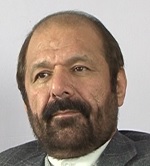
Tolo News: Prominent Afghan politician and former Jihad commander and military advisor to President Ashraf Ghani, Sayed Hussain Anwari, was laid to rest in Kabul on Saturday. Thousands of mourners attended the ceremony including high-ranking government officials and his supporters. Anwari’s coffin was transferred from Sardar Mohammad Dawoud Khan hospital to Khatamunnaibian mosque and buried in Eskart hill in Kabul. Click here to read more (external link).

Posted in Political News | Tags: Syed Hussain Anwari |

President Ghani attacks Pakistan for its dual policy on terrorism

9th July, 2016 · admin
Ghani

Ghani

1TV: Addressing NATO leaders at Warsaw summit on Saturday, President Ashraf Ghani criticized Pakistan for adopting a policy to differentiate between good and bad terrorists. “Our regional initiatives with neighbors are beginning to yield significant cooperative dividends. The exception is with Pakistan – despite clear commitments to a quadrilateral peace process, their dangerous distinction between good and bad terrorists is being maintained in practice,” Ghani told the 28-member alliance. Click here to read more (external link).

Related

  • McCain Calls On Islamabad to Crack Down on Haqqani
Posted in Haqqani Network, Pakistan-Afghanistan Relations, Security | Tags: Ashraf Ghani |

Cricket series between Afghanistan and Ireland to kick off tomorrow

9th July, 2016 · admin

cricket_logo2Khaama Press: A cricket series between the Afghanistan National Cricket team and Ireland will kick off tomorrow, 10th of July, at Belfast. Afghanistan will play 5 One Day International (ODI) matches against Ireland together with a 4-day match, ICC Intercontinental Cup. The second ODI match will played on 12th July, third match on 14th July, fourth match on 17th July, and the final match will be played on 19th July. Click here to read more (external link).

Related

  • Patchy Ireland look for fresh start against buoyant Afghanistan
Posted in Afghan Sports News | Tags: Cricket |

NATO To Maintain Afghan Mission Into 2017; ‘United’ On Russia

9th July, 2016 · admin · 1 Comment

natoRadio Free Europe/Radio Liberty
July 9, 2016

WARSAW — NATO signaled unity in support for Afghanistan and a mix of “defense and deterrence” with dialogue to handle an assertive Russia at a crucial summit, seeking to address an array of challenges faced by the Western alliance and the wider world.

At a two-day summit that NATO leaders said was a defining moment for the alliance, its members also agreed to step up its role in the fight against Islamic State extremists and combat terrorism and human trafficking with a Sea Guardian mission in the Mediterranean.

“In an unpredictable world of challenges from the south and east, NATO remains an essential source of stability,” NATO Secretary-General Jens Stoltenberg said on July 9, wrapping up the main results of the gathering at a Warsaw stadium ahead of a final meeting with Ukrainian President Petro Poroshenko.

NATO must “project stability” beyond its immediate region and become “even more of a training alliance” to help other countries fight terrorism and other threats instead of sending large NATO contingents in to do so, announcing a plan to begin a new training effort in Iraq to aid in combatting Islamic State fighters.

“Protection is better than intervention,” Stoltenberg said.

New Battalions

Day One of the summit was dominated by the formal authorization of plans for multinational battalions of up to 1,000 troops each to be stationed on a rotating basis in Poland and the Baltic states of Estonia, Latvia, and Lithuania — a direct response to Russian belligerence and the biggest such move by the alliance since the end of the Cold War.

The battalions will be led by the United States, Canada, Britain, and Germany.

“The main message is that the alliance is united, that we stand together in our approach based on defense — strong defense — and collective dialogue,” Stoltenberg said on July 9.

Asked by a Russian reporter whether he saw any imminent threat against a NATO ally, Stoltenberg said no, but added a “more assertive” Russia has built up its military capabilities, modernized its armed forces, and tripled its defense spending in recent years.

Moscow, he said, has been “willing to use military force against neighbors, against Ukraine, illegally annexing Crimea, and destabilizing eastern Ukraine.”

Stoltenberg said NATO’s enhanced response forces could be used not only on the alliance’s eastern flank but also to tackle potential threats stemming from the turmoil in parts of the Middle East and North Africa.

He said that while NATO is not in a “strategic partnership” with Russia, despite what he said were efforts to build one after the Soviet breakup, it is also not engaged in a new “Cold War.”

“We are in a new situation which is different to anything else we have experienced before,” he said.

Russia stunned the West in 2014 by seizing the Crimean Peninsula from Ukraine in March 2014 and backing separatists whose war against Kyiv’s forces has killed more than 9,300 people in eastern Ukraine since that April.

The interference in Ukraine has increased concerns in eastern NATO nations such as Poland and the three Baltic states, which were under Moscow’s thumb until the Soviet breakup a quarter-century ago.

In addition to military force, Western governments say that under President Vladimir Putin, Russia has used cyberattacks, propaganda, and other methods in an effort to destabilize European countries and undermine Western unity.

Addressing a news conference following Poroshenko’s meeting with NATO leaders, Stoltenberg reaffirmed the alliance’s support for Ukraine and called on Russia to halt its “political, military and financial support for separatists” battling Kyiv’s forces in the east of the country.

Poroshenko, meanwhile, hailed NATO solidarity with his country, saying he had secured from the alliance “a strong commitment to supporting Ukraine in increasing our defense capability” in the form of an assistance package.

The Kremlin said in a July 9 statement that Putin held a call with French President Francois Hollande and German Chancellor Angela Merkel to discuss the Ukraine crisis and that Putin urged his counterparts “to influence more actively the Ukrainian side” during their planned meetings with Poroshenko.

In downtown Warsaw, a few hundred anti-NATO activists protested against the planned deployments on July 9, carrying banners reading “Stop NATO” and chanting “NATO get out of here.”

Russia, which has long accused NATO of jeopardizing security by expanding eastward, has criticized NATO’s deployment plans.

Konstantin Kosachyov, chairman of the foreign policy committee in the upper parliament house, likened them to “building a dam in the desert,” and Putin’s spokesman said on July 8 that it was “absurd to speak of a threat from Russia.”

Former Soviet President Mikhail Gorbachev was quoted by the Interfax news agency as saying that “NATO has begun preparations for escalating from a Cold War into a hot one.”

“They only talk about defense, but actually are preparing for offensive operations,” Gorbachev was quoted as saying.

NATO leaders dismiss such accusations, saying that the alliance is not seeking confrontation but that Russia’s actions have made it necessary for the alliance to bolster its defenses.

Stoltenberg said during the summit that NATO will “continue to seek meaningful and constructive dialogue” with Russia.

The NATO-Russia Council, which was set up in the 1990s to address Russia’s misgivings about the alliance expanding eastward, is to meet next week for the second time this year. The council was suspended following Russia’s seizure of Crimea.

‘Long Haul’

The NATO summit also produced an agreement to continue training Afghan security forces into 2017, prolonging a support mission in a country that still faces serious instability a decade and a half after the Taliban was driven from power.

Taliban fighters and allied insurgents have regrouped since the U.S. invasion in 2001, and by some accounts now hold more territory than at any time since then. That has prompted the United States and NATO to slow their drawdown of troops.

Speaking after leaders of the 28-nation alliance met with Afghan President Ashraf Ghani and Chief Executive Abdullah Abdullah, Stoltenberg said that Afghan forces will continue to be funded through 2020 “at or near” the current level of $5 billion a year. Most of the money comes from the United States, but Stoltenberg said other allies have promised to put up about $1 billion a year.

“Our message is clear: Afghanistan does not stand alone, and we are committed for the long haul,” the NATO chief said at a news conference.

Stoltenberg said the number of NATO and U.S. forces in Afghanistan in 2017 will remain at about 12,000, but that exact numbers will be decided in the fall. Obama announced this week that the United States would leave 8,400 troops in Afghanistan though the end of his term in January 2017 instead of cutting their numbers.

In an interview in Warsaw with RFE/RL’s Radio Free Afghanistan, Abdullah said that around the time that NATO ended its combat mission, Taliban insurgents thought they could “win militarily” — but that this “did not happen” thanks to the Afghan security forces and support from the international community.

“The people of Afghanistan do not want the country Talibanized again,” he said.

The government is keeping “the door open for negotiations,” Abdullah said. “But unfortunately the Taliban have given us a negative response and are prolonging the conflict in Afghanistan.”

On Iraq, Stoltenberg said NATO leaders agreed on the use of AWACS surveillance aircraft to support the fight against Islamic State extremists, who seized large parts of Iraq and Syria in 2014 and have killed and abused uncounted civilians.That’s in addition to a new “training and capacity-building” effort there.

Stoltenberg also announced plans for an intelligence center in Tunisia and support for Tunisian forces, and said NATO leaders agreed to launch a maritime security operation in the Mediterranean Sea, to help fight trafficking, terrorism, and grapple with the influx of migrants seeking entry in Europe.

A French- and German-brokered peace deal known as the Minsk agreement imposed a cease-fire in eastern Ukraine, but it is violated frequently and the Russia-backed separatists continue to hold parts of the Donetsk and Luhansk regions.

Progress on political aspects of the Minsk agreement, which was meant to resolve the conflict and restore Kyiv’s control over Ukraine’s entire border with Russia, has been slow.

Ahead of the summit, Obama said that “even as our nations remain open to a more constructive relationship with Russia, we should agree that sanctions on Russia must remain in place until Moscow fully implements its obligations” under the Minsk agreement.

With reporting by Mustafa Sarwar of RFE/RL’s Radio Free Afghanistan, Reuters, dpa, AP, AFP, and Interfax

Copyright (c) 2016. RFE/RL, Inc. Reprinted with the permission of Radio Free Europe/Radio Liberty, 1201 Connecticut Ave NW, Ste 400, Washington DC 20036.

Related

  • NATO says ‘ready to stay’ in Afghanistan
  • NATO Pledges Military, Financial Aid Amid Rising Violence
  • Canada Promises More Cash For Afghanistan, While Allies Keep Troops On The Ground
  • Talks With Taliban Needed to Accelerate Political Solution for Afghanistan
Posted in ISIS/DAESH, NATO-Afghanistan, Security, Taliban, US-Afghanistan Relations |

U.S. troop cut won’t impact mission in Afghanistan: U.S. general

8th July, 2016 · admin · 2 Comments

ussoldiers_shadow

Reuters: President Barack Obama’s decision to withdraw roughly 1,400 U.S. troops from Afghanistan won’t adversely impact America’s mission there, a top general said before arriving in Kabul on Friday, adding that some jobs could be done from abroad. Click here to read more (external link).

Posted in Security, US-Afghanistan Relations |

Australia Extends Military Mission In Afghanistan By Six Months

8th July, 2016 · admin

australiaRadio Free Europe/Radio Liberty
July 8, 2016

Australia has extended its military mission in Afghanistan for an extra six months to mid-2017 with the prospect that it could be prolonged further.

Australia’s caretaker government said in a statement on July 8 that Australia would also continue its $100 million a year commitment to the Afghan National Army and National Police until 2020.

“It is vital to continue to build the capacity of the Afghan security forces to defend the Afghan people against the Taliban and other terrorist groups,” the statement said.

The announcement comes two days after U.S. President Barack Obama said Washington would scale back plans to draw down troop numbers in Afghanistan, with 8,400 to remain there next year.

Australia, a U.S. ally, ended combat operations in Afghanistan in 2013. But 270 Australian troops remain in the Afghan capital, Kabul, on a training and assistance mission, which was due to conclude at the end of 2016. The troops will now stay at least until mid-2017.

The international contribution to Afghanistan is under discussion at the two-day NATO summit that opened in Warsaw on July 8.

Based on reporting by AP and News.com.au

Copyright (c) 2016. RFE/RL, Inc. Reprinted with the permission of Radio Free Europe/Radio Liberty, 1201 Connecticut Ave NW, Ste 400, Washington DC 20036.

Related

  • Australia pledges extra $300 million to help develop Afghan forces
  • Western adventures and misadventures in Afghanistan
Posted in Australia-Afghanistan Relations, Security |

U.S. drone strikes destroying families in Pakistan as indiscriminate attacks kill thousands

8th July, 2016 · admin · 4 Comments
US Drone (file)

US Drone (file)

Xinhua: People have been busy celebrating the annual Muslim festival of Eid-ul-Fitr in Pakistan’s southwest city of Taftan except the family of one local taxi driver Muhammad Azam who was killed along with Afghan Taliban chief Mullah Akhtar Mansoor in a U.S. drone strike on May 21 this year in Pakistan. “It’s the first Eid after his (Azam’s) death. We feel joyless and there is no excitement. People are going to each other’s houses to exchange greetings, but they are visiting our’s to express their condolences. Americans have destroyed the lives of Azam’s wife and four children,” Muhammad Qasim, Azam’s grieving elder brother, told Xinhua recently via telephone from Taftan. Click here to read more (external link).

Posted in Civilian Injuries and Deaths, Drone warfare, Human Rights |

Details of US Troop Cuts in Afghanistan Not Yet Set

8th July, 2016 · admin
Ash Carter

Ash Carter

VOA News
Carla Babb
July 7, 2016

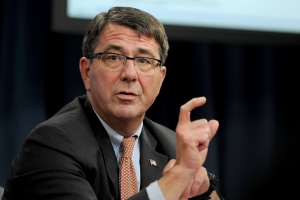
WARSAW, POLAND—U.S. troop numbers in Afghanistan are set to decrease by 1,400 at year’s end, but the Defense Department has not yet come up with a specific plan for trimming its force structure.

“We haven’t decided yet,” Secretary of Defense Ash Carter told reporters Thursday aboard a military plane en route from Washington to Warsaw.

President Barack Obama announced Wednesday that only 8,400 U.S. troops would remain in Afghanistan by January 2017 — more than the force of 5,500 men and women the president had originally determined would stay in Afghanistan, but a 15 percent cut in current troop levels.

According to Carter, events in Afghanistan over the past year taught the Defense Department it “would be better to have some additional forces” than the originally recommended 5,500 to carry out both categories of the U.S. military mission there.

‘Freedom’s Sentinel’

More than 2,000 American troops in Afghanistan belong to a counterterrorism mission called “Freedom’s Sentinel,” rooting out al-Qaida and Islamic State extremists. Others are part of a “train, advise and assist” mission geared toward helping Afghan security forces better defend their country.

The decision on how to reduce troop levels — from the counterterrorism forces, from the train-and-assist team, or from both — will be an “ongoing process,” Carter said.

“It will be made according to need, in the normal way,” he said.

The defense secretary said an effort to “refresh” Afghan forces by scheduling additional training for Kabul’s troops last winter, between the country’s fighting “seasons,” had an important effect in Helmand province. He said he anticipated that a similar U.S. drive to “refit, retrain, [and] re-equip” Afghan forces could produce further benefits in the future.

The Afghanistan crisis is one of three major security issues confronting NATO at this year’s summit in the Polish capital. Afghanistan’s nearly 320,000 troops and police officers have struggled to control the Taliban after 14 years of war.

Posted in Security, US-Afghanistan Relations |
Previous Posts
Next Posts

Subscribe to the Afghanistan Online YouTube Channel

---

---

---

Get Yours!

Peace be with you

Afghan Dresses

© Afghan Online Press
  • About
  • Links To More News
  • Opinion
  • Poll