logo

Daily Updated Afghan News Service

  • Home
  • About
  • Opinion
  • Links to More News
  • Good Afghan News
  • Poll Results
  • Learn about Islam
  • Learn Dari (Afghan Persian/Farsi)

Recent Posts

  • Akhundzada Wants Subordinates, Not Partners In Power, Say Resistance Groups November 18, 2026
  • Taliban Tighten Restrictions in Panjshir as Residents Say Their Movements Are “Under a Microscope” November 18, 2026
  • Tolo News in Dari – November 18, 2026 November 18, 2026
  • Biden says he was told Kabul would hold for six months after US troops left November 18, 2026
  • Afghanistan’s GDP Per Capita Set To Fall For Third Straight Year, Says World Bank November 18, 2026
  • The toxic aftermath of decades of war in Afghanistan November 17, 2026
  • Taliban Force Two Shia Clerics To Abandon Mourning Ceremonies In Exchange For Release November 17, 2026
  • Taliban Leader Offers Government Posts To Opponents For First Time November 17, 2026
  • Tolo News in Dari – November 17, 2026 November 17, 2026
  • Ariana Airlines to launch direct flights between Mazar-e-Sharif and Jeddah November 17, 2026

Categories

  • Afghan Children
  • Afghan Sports News
  • Afghan Women
  • Afghanistan Freedom Front
  • Afghanistan United Front
  • Al-Qaeda
  • Anti-Government Militants
  • Anti-Taliban Resistance
  • AOP Reports
  • Arab-Afghan Relations
  • Art and Culture
  • Australia-Afghanistan Relations
  • Book Review
  • Britain-Afghanistan Relations
  • Canada-Afghanistan Relations
  • Censorship
  • Central Asia
  • China-Afghanistan Relations
  • Civilian Injuries and Deaths
  • Corruption
  • Crime and Punishment
  • Drone warfare
  • Drugs
  • Economic News
  • Education
  • Elections News
  • Entertainment News
  • Environmental News
  • Ethnic Issues
  • EU-Afghanistan Relations
  • Everyday Life
  • France-Afghanistan Relations
  • Germany-Afghanistan Relations
  • Haqqani Network
  • Health News
  • Heroism
  • History
  • Human Rights
  • India-Afghanistan Relations
  • Interviews
  • Iran-Afghanistan Relations
  • ISIS/DAESH
  • Islamophobia News
  • Japan-Afghanistan Relations
  • Landmines
  • Media
  • Misc.
  • Muslims and Islam
  • NATO-Afghanistan
  • News in Dari (Persian/Farsi)
  • NRF – National Resistance Front
  • Opinion/Editorial
  • Other News
  • Pakistan-Afghanistan Relations
  • Peace Talks
  • Photos
  • Political News
  • Reconstruction and Development
  • Refugees and Migrants
  • Russia-Afghanistan Relations
  • Science and Technology
  • Security
  • Society
  • Tajikistan-Afghanistan Relations
  • Taliban
  • Traffic accidents
  • Travel
  • Turkey-Afghanistan Relations
  • UN-Afghanistan Relations
  • Uncategorized
  • US-Afghanistan Relations
  • Uzbekistan-Afghanistan Relations

Archives

Dari/Pashto Services

  • Bakhtar News Agency
  • BBC Pashto
  • BBC Persian
  • DW Dari
  • DW Pashto
  • VOA Dari
  • VOA Pashto

Problems With Paramilitaries In Afghanistan’s Faryab Province

6th August, 2016 · admin · 4 Comments

faryabRadio Free Europe/Radio Liberty
By Bruce Pannier and Mustafa Sarwar
August 6, 2016

Qishloq Ovozi has paid a good deal of attention to what is happening south of Central Asia, in Afghanistan. But most of these reports deal with unrest in the border area and the security problems militants in northern Afghanistan could pose to Central Asian countries.

Mustafa Sarwar, a correspondent for RFE/RL’s Radio Free Afghanistan, known locally as Azadi, came to me with a story about life and problems in Faryab, one of the Afghan provinces bordering Turkmenistan. RFE/RL’s Gandhara website visited this topic a couple of years back. What the Gandhara report described is still true but the scope is larger.

And remember, Central Asia is a big loser if the situation in northern Afghanistan falls into chaos, and this story of Faryab is likely similar to stories in most of the eight Afghan provinces bordering Central Asia.

“Around 6,000 armed militants are present in Faryab,” said Mohamad Jawid Bidar, a spokesman for Said Anwar Sadat, the Faryab governor. “More than half of them are helping Afghan security forces during operations [against the Taliban], but the other half of them are those who prey on ordinary people.”

These are Arbaky forces and Popular Uprising Forces or Kheizish-e Mardomi (as they are termed by the Interior Ministry) — paramilitary groups that have some support from individuals in the Afghan government.

As Bidar noted, “In a province that has more than 1,300 villages with some 8,000 members of the security forces, it’s very hard to establish posts in every village.” Which is why authorities have allowed these paramilitary forces to operate. Though Bidar admitted, “We do not have enough control on these [armed gangs].”

Mohammad Reza Rezayee, the head of public relations for 209 Shaheen Corps in Faryab, echoed Bidar’s comments, saying, “Some of them have played a positive role…but a number of them have caused concern for the locals, as well as for Afghan [government] forces.”

Rezayee claimed that “the provincial police command center provides them with ammunition to fight against the Taliban…but they sell some of the ammunition to the Taliban, which then is used against themselves and Afghan forces in the province.”

“Sometimes,” he added, “they use the weapons against each other.”

Clearly, it is a confusing and terrifying situation for villagers, who have no way of knowing who these armed groups are — pro-government paramilitaries or bandits connected to the government through vague promises.

Ahmad Jawid Kaiwan is the head of the Faryab Civil Society Network. He told Azadi, “Nowadays, people are more concerned about the popular uprising forces (the paramilitaries) than the Taliban because some of these [paramilitary] forces have ignited factional and ethnic fighting.”

Human Rights Watch recently released a report about abuses committed by some of these paramilitary groups, saying at one point that the use of these groups “has undermined security in northern Afghanistan.”

Kaiwan also conceded some of these paramilitary groups have “proven effective, but [they have] also created problems in many instances.”

Extortion is the biggest problem — a fact mentioned by Bidar, Rezayee, and Kaiwan.

Said Hafizullah Fitrat is the head of the Faryab Human Rights Commission. He explained some of these Arbaky groups “are engaged in stealing. Sometime they commit sexual violence on people’s families. They want every household to pay them from 1,000 to 3,000 afghanis ($15 to $45) each month. They want people to give them food,” Fitrat said. “They even forcibly take people to their posts for hard work, such as bringing water from wells or digging…”

Some of these groups are protected by local law-enforcement officials; other groups have grown so strong that police are afraid and unable to act against them.

Abdul Karim is a villager in the Pashtun Kot district. He said the government should move against these groups.

“They are strongmen and they kill and extort people,” Karim said, “From our family, they have killed four of my brothers and I was shot.”

These paramilitary groups are a propaganda bonanza for the Taliban or other groups such as the so-called Islamic State militant group that are trying to get their own footholds in Afghanistan.

Rezayee of the 209 Shaheen Corps said the some of the groups “have created distance between the people and the government.”

We’ve heard during the Majlis podcast from analysts in Afghanistan who say that some Arbaky groups are so lawless that they are pushing villagers into the arms of the Taliban, who generally treat the population better than the paramilitaries do.

But with fighting now going on across northern Afghanistan, and government forces there stretched thin, these paramilitary groups are necessary to counter the growing number of Taliban fighters and foreign militants in the region.

In between these groups, as they have been for decades, are the villagers, who must endure the arrival of one armed group after another and wait and hope that one day, one of these groups might come to help them rather than steal from and abuse them.

Based on reporting by Mustafa Sarwar of RFE/RL’s Radio Free Afghanistan

Copyright (c) 2016. RFE/RL, Inc. Reprinted with the permission of Radio Free Europe/Radio Liberty, 1201 Connecticut Ave NW, Ste 400, Washington DC 20036.
Posted in Central Asia, Security, Taliban | Tags: Faryab |

Insurgency Damaging Afghan Tourism Industry

6th August, 2016 · admin · 1 Comment

compass_and_map_tourismTolo News: The flow of foreign tourists into Afghanistan has dropped dramatically this year amid security threats and insurgency, said Noor Mohammad Hassankhail, head of the Afghan tourism board. Rising violence and ongoing security threats have had a negative impact on the economy in terms of tourism, particularly regarding the vast array of historical sites and monuments Afghanistan has to offer. Click here to read more (external link).

Posted in Security, Travel |

Two For All: Afghanistan’s Identity-Card Crisis

6th August, 2016 · admin · 1 Comment

id_cardRadio Free Europe/Radio Liberty

By Frud Bezhan
August 5, 2016

Afghanistan’s long-standing effort to distribute electronic ID cards to citizens has been marred by dispute, leading to violent street protests, walkouts in parliament, and scuffles among politicians.

In a bid to break the deadlock — which largely centers on the issue of whether ethnicity should be printed on the documents — a new proposal has been made to distribute not one, but two separate IDs. One would be a biometric card that would not document holders’ nationality or ethnicity, and an accompanying booklet that would specify ethnicity and religion.

But the proposal, made on August 3 by Chief Executive Abdullah Abdullah — who shares power with President Ashraf Ghani — has been met with anger by some citizens. Afghans are venting their frustration by ridiculing the two-headed national-unity government (NUG), which came about after the 2014 presidential election failed to determine a lone winner.

Javid Faisal, spokesman to the chief executive, defended the proposal in an interview with RFE/RL’s Radio Free Afghanistan. “The president and other stakeholders have all agreed to this proposal,” he said. “The proposal will assuage the concerns of the Afghan people.”

The controversial proposal must to be approved by both houses of parliament before the new cards can be rolled out.

Ethnic Identities

The Afghan government is seeking to issue biometric cards to citizens to help curtail election fraud and promote national unity. But the issue of whether to include citizens’ ethnicity has instead highlighted Afghanistan’s historical ethnic divisions, largely because critics believe putting everyone under the “Afghan” umbrella is politically advantageous to the country’s largest ethnic group, the Pashtuns.

Ethnic rifts run deep in Afghanistan, and ethnicity is closely tied to citizens’ broader sense of political and social identity.

Some argue that, with precise population estimates unavailable because Afghanistan has never conducted a nationwide census, documenting citizens’ ethnicity on the national ID card could help the government accurately determine the size of the country’s various ethnic groups.

This is contentious because ethnic minorities in Afghanistan claim that population estimates used to determine political representation greatly overstate the percentage of Pashtuns, which arguably results in the group taking a greater share of power than it deserves.

Advocates of the effort to forge a common Afghan identity, however, say singling out citizens’ ethnicity could be divisive. Excluding mention of ethnicity on the ID cards, they argue, could promote unity in the volatile multiethnic country.

Under the proposed format of the new biometric documents, known as “taskera,” holders’ nationalities would be omitted. In addition to the words “Islamic Republic of Afghanistan” identifying the card as an official state document, the card would only include name, province, and address.

The accompanying booklet would include Afghan nationality and specify holders’ ethnicity and religion.

This is not acceptable to citizens such as Abdul Wahid. “I will not get the new ID card that has been proposed,” he told RFE/RL. “We are all Afghans. We’re all from this land and we will all die in this land.”

“If we are Afghans and our ID cards don’t have the word ‘Afghan,’ what does this mean?” asks Obaid, a Kabul resident who goes by one name. “We are Afghans so our ID cards should say we are from the Afghan nation.”

In the absence of a national census, the government has relied on figures compiled from sample censuses dating back to the 1970s to determine the country’s ethnic makeup. The fact that Afghan governments have been dominated by Pashtuns has helped fuel sentiments among ethnic minorities that they are being politically marginalized, and even that the Pashtuns have a stake in preventing a national census from being conducted.

Even the word “Afghan” itself, which historically is synonymous with Pashtuns, is a source of contention among members of minority groups.

Ramin Habibi, another Kabul resident, said the new proposal was a “good step toward transparency” and “a fair compromise.”

But Zaki Wardaki said the country needed to stop thinking along ethnic lines. “I don’t care if my ethnicity is on the card or not,” the Kabul resident said. “For heaven’s sake, let’s leave these rubbish ideas behind.”

The proposed national ID card project is expected to cost $100 million, and will be paid for by the Finance Ministry. The introduction of new ID cards was a key promise made by the government after the presidential election in 2014, which was marred by widespread fraud and voting irregularities.

Copyright (c) 2016. RFE/RL, Inc. Reprinted with the permission of Radio Free Europe/Radio Liberty, 1201 Connecticut Ave NW, Ste 400, Washington DC 20036.
Posted in Ethnic Issues, Society |

Ten Afghan Civilians Killed By Roadside Bombs In Paktia Province

6th August, 2016 · admin

paktia_mapRadio Free Europe/Radio Liberty
August 5, 2016

Afghan officials say at least 10 people have been killed in two explosions in the eastern province of Paktia.

Naqib Ahmad Atal, spokesman for the governor of Paktia Province, said five members of one family died when their vehicle struck a roadside bomb on August 5.

Atal said another five people were killed when their tractor hit a similar device a short time later.

Both of the roadside bombs had been planted in Paktia’s Chamkani district.

Atal blamed Talban fighters who are active in the area.

The United Nations says the Taliban is responsible for the vast majority of civilians killed and wounded in Afghanistan.

The UN says 1,601 civilians were killed in Afghanistan during the first half of 2016.

Based on reporting by AP and AFP

Copyright (c) 2016. RFE/RL, Inc. Reprinted with the permission of Radio Free Europe/Radio Liberty, 1201 Connecticut Ave NW, Ste 400, Washington DC 20036.
Posted in Civilian Injuries and Deaths, Security, Taliban | Tags: Paktia |

Pakistan Seeks Return Of Helicopter Passengers Captured By Taliban

5th August, 2016 · admin · 2 Comments

helicopterRadio Free Europe/Radio Liberty
August 5, 2016

Pakistani Prime Minister Nawaz Sharif says his government is using “formal and informal channels” to seek the return of seven passengers of a crashed Pakistani helicopter who were captured by the Taliban in Afghanistan.

Sharif made the comments in an August 5 statement, after the Pakistani government aircraft crash-landed the day before in the eastern Afghan province of Logar.

Provincial officials and an unidentified Afghan Taliban commander said all seven people onboard — reportedly six retired Pakistani military officers and a Russian navigator — were detained by the militants.

Pakistan’s army chief, General Raheel Sharif, called Afghanistan’s president to request his country’s help.

“Afghan President Ashraf Ghani assured all possible assistance in this regard,” a Pakistani military spokesman said.

The Afghan Defense Ministry said the government had instructed security forces to “spare no efforts to secure the release of the crew members.”

Islamabad said the Mi-17 transport helicopter was on its way to Russia for maintenance.

Based on reporting by Reuters, AFP, and dawn.com

Copyright (c) 2016. RFE/RL, Inc. Reprinted with the permission of Radio Free Europe/Radio Liberty, 1201 Connecticut Ave NW, Ste 400, Washington DC 20036.

Other Security News

  • MoD To Probe Pakistani Helicopter’s Crash In Logar
  • Helmand Battle Moves Closer To Lashkargah City
  • Airstrike kill 5 Pakistani militants fighting for ISIS in Afghanistan
Posted in Pakistan-Afghanistan Relations, Security, Taliban |

China Forms Antiterror Alliance With Pakistan, Tajikistan, Afghanistan

5th August, 2016 · admin · 5 Comments

china_flagRadio Free Europe/Radio Liberty
August 5, 2016

Pakistan, Afghanistan, and Tajikistan have joined China in a military alliance aimed at countering Islamist militancy, officials said.

Military leaders from the four countries gathered on August 4 in the northwestern Chinese region of Xinjiang to announce the alliance, the Pakistani Army said.

Known as the Quadrilateral Cooperation and Coordination Mechanism, the alliance is meant to bring together member states in areas of counterterrorism and intelligence, the army said.

Pakistan and Afghanistan, both already U.S. allies in the war on terror, have faced violence from Islamist militant groups including Al-Qaeda and the Taliban for more than a decade.

Tajikistan has been the victim of its own Islamist militants. China has been battling an ethnic minority group of Islamist militants in its Muslim-dominant, oil-rich region of Xinjiang near the country’s border with Pakistan.

China is also working with Pakistan and the United States to broker so far fruitless peace talks to end a Taliban insurgency that has raged for 15 years in Afghanistan.

U.S. State Department spokesman Mark Toner said Washington welcomed the new alliance as a “positive” for the region.

“There’s a lot of work to be done,” he said.

Based on reporting by Reuters and dpa

Copyright (c) 2016. RFE/RL, Inc. Reprinted with the permission of Radio Free Europe/Radio Liberty, 1201 Connecticut Ave NW, Ste 400, Washington DC 20036.
Posted in Al-Qaeda, China-Afghanistan Relations, Security, Taliban | Tags: Tajikistan |

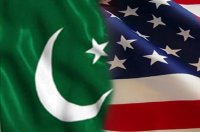
Pakistan Brushes Aside Skepticism of Anti-terror Campaign

5th August, 2016 · admin

pak_us_flagVOA News
Ayaz Gul
August 4, 2016

ISLAMABAD—Pakistan again brushed aside U.S. skepticism of its anti-terror efforts Thursday, saying Pakistani security forces are attacking militant groups without distinguishing between “good and bad” terrorists.

The statement comes a day after the U.S. Defense Department announced it would not pay Islamabad $300 million in military reimbursements because of insufficient action by Pakistan against the Haqqani network of terrorists and the Afghan Taliban.

The funds come from the Pentagon’s so-called Coalition Support Fund (CSF) program for allies that incurred costs in supporting the U.S.-led fight against terrorism and extremism.

Pakistan has received around $14 billion since 2002, making it one of the largest recipients.

Foreign Ministry spokesman Nafees Zakaria, in responding to the decision, told reporters in Islamabad that the CSF “serves shared interests” of both Pakistan and the United States, enabling them to build on the gains achieved over the past years that have improved security in areas near the Afghan border.

“We have taken decisive action against terrorists and extremists and also cooperate widely with other countries to defeat it. Our sincerity and resolve is unquestionable. … It is our firm resolve that we will take action against any terrorist in Pakistan, whatever color or shape it manifests itself in,” he said.

Allegations against Pakistan

Recent tensions in bilateral relations mainly stem from Washington’s frustration over Islamabad’s alleged unwillingness to act against the Haqqani and Taliban insurgents.

U.S. and Afghan military commanders allege leaders and fighters of these groups use sanctuaries on Pakistani soil for plotting and staging attacks against local and foreign troops in Afghanistan.

They maintain that while Pakistani counterinsurgency operations are targeting anti-state militants, including the so-called Tehreek-i-Taliban Pakistan or TTP, they have spared insurgents linked to the Haqqani network and the Afghan Taliban and instead covertly support their violent campaign.

Pakistan’s response

Islamabad rejects the charges.

Zakaria said that over the past decade, Pakistan has concluded a large number of military operations that have “sequentially dismantled and destroyed terrorist infrastructure” on its side of the border with Afghanistan.

He said tens of thousands of Pakistanis, including security personnel, have lost their lives in the war against terrorism, in addition to the billions of dollars in losses to the national economy.

Zakaria welcomed a decision Wednesday by the U.S. Department of State to designate a TTP splinter faction, Jamaat-ul-Ahrar, as a global terrorist organization.

Pakistani officials say the extremist outfit operates out of Afghan border areas and has been behind deadly terrorist attacks on civilians — including religious minorities — and security forces.

Bilateral tensions between the United States and Pakistan were exacerbated after a U.S. drone strike in May killed the leader of the Afghan Taliban, Mullah Akhtar Mansoor, on Pakistani soil.

Posted in Haqqani Network, Pakistan-Afghanistan Relations, Security, Taliban, US-Afghanistan Relations |

Pakistani Helicopter Crashes In Afghanistan, Taliban Captures Those Aboard

5th August, 2016 · admin

helicopterRadio Free Europe/Radio Liberty
August 4, 2016

Officials in Islamabad say a government helicopter crash-landed in Taliban-held territory in Afghanistan on August 4 and that all passengers and crew — including a Russian navigator — were feared to have been captured by militants.

DawnNews reported that a Punjab government Mi-17 helicopter had seven people aboard and was traveling to Uzbekistan for maintenance when it went down close to the Afghan-Pakistan border and Pakistan’s Kurram tribal area.

It reported that all seven people onboard survived the crash but were taken hostage by Taliban militants who set the helicopter on fire.

Pakistani Army General Asim Bajwa said those captured by Taliban militants included retired military officers and a Russian navigator.

Bajwa also said that Army Chief General Raheel Sharif had called the top U.S. military commander in Afghanistan, General John Nicolson, and was assured “all possible help” to recover the helicopter crew.

Afghanistan’s TOLO News reported that the helicopter belonged to Pakistan’s military.

Based on reporting by AP, Reuters, and Dawn News

Copyright (c) 2016. RFE/RL, Inc. Reprinted with the permission of Radio Free Europe/Radio Liberty, 1201 Connecticut Ave NW, Ste 400, Washington DC 20036.
Posted in Pakistan-Afghanistan Relations, Security, Taliban |

Zahiri An Olympic Medal Hopeful For Afghanistan

5th August, 2016 · admin
Wahab Zahiri

Wahab Zahiri

Tolo News: Wahab Zahiri is one of three Afghan athletes at this year’s Olympic Games. He says Usain Bolt, the world’s fastest runner, is his role model. Zahiri is 23 years old and was born in Sar Shahi village in Nangarhar province. Zahiri was selected to represent Afghanistan in Rio after setting a qualifying time of 10.75 seconds in the 100 m race. Click here to read more (external link).

Posted in Afghan Sports News | Tags: 2016 Rio Olympics, Wahab Zahiri |

Foreign Tourists Attacked In Western Afghanistan

4th August, 2016 · admin

heratprovinceRadio Free Europe/Radio Liberty
August 4, 2016

A group of foreign tourists escorted by an Afghan Army convoy has been attacked in the western province of Herat.

Jilani Farhad, the spokesman for Herat’s governor, said at least six tourists and their Afghan driver were wounded in the August 4 attack in Chesht-e Sharif district.

Farhad said the tourists, who included eight Britons, three Americans, and one German, were on their way to Herat from Bamiyan and Ghor provinces when they were ambushed by the Taliban.

No group claimed responsibility for the attack, which comes as Taliban militants intensify their annual summer offensive.

Afghanistan’s main roads have become increasingly dangerous, with militant attacks and kidnappings frequent.

Based on reporting by AFP, Khaama Press, and BBC

Copyright (c) 2016. RFE/RL, Inc. Reprinted with the permission of Radio Free Europe/Radio Liberty, 1201 Connecticut Ave NW, Ste 400, Washington DC 20036.

Other Security News

  • US Airstrikes Undermining Afghan Security: Karzai
  • Pakistani helicopter crash-lands in Logar, 6 on board captured
  • 30 Talibs Die In Infighting In Herat: Officials
Posted in Security, Taliban | Tags: Herat, Kidnapping |
Previous Posts
Next Posts

Subscribe to the Afghanistan Online YouTube Channel

---

---

---

Get Yours!

Peace be with you

Afghan Dresses

© Afghan Online Press
  • About
  • Links To More News
  • Opinion
  • Poll