
 Institute for War & Peace Reporting (IWPR): “My husband was not only smoking heroin but also stealing others people’s things,” she told IWPR, adding that he had also taken all the money she earned as a seamstress and sold all their household goods. “Then people started coming to our home and asked me to pay for what he had stolen,” she continued. “I had to pay for both his heroin and his stealing.” Qadria now lives with their three children at her widowed mother’s house and faces an uncertain future. Officials in the southeastern province of Kandahar report that large numbers of women are seeking divorces because they can no longer live with their drug addict husbands. Click here to read more (external link).
Officials: No Evidence of IS Presence in Southern Afghanistan

ISIS trainees
VOA News
Ayaz Gul
August 15, 2016
ISLAMABAD — Local officials and foreign military commanders in Afghanistan have played down concerns Islamic State is expanding activities beyond its traditional strongholds in the east.
They insist the recent killing of the local leader of IS in an American drone strike and gains by Afghan forces against the Syrian-based terrorist group have cornered the militants in parts of eastern Nangarhar and Kunar provinces, which border Pakistan.
The nearly 2,600-kilometer porous border between Afghanistan and Pakistan is blamed for militant and other illegal movements on both sides. Pakistani officials have lately intensified efforts to build new monitoring structures along the frontier but insist it is humanly not possible to plug the entire rugged mountainous boundary.
IS launched its regional operations from the remote district of Achin in Nangarhar in early 2015 before expanding to surrounding districts. It appointed a local militant commander, Hafiz Saeed Khan, as the chief of its so-called Islamic State of Khorasan (IS-K) province, consisting of Afghanistan, Pakistan and parts of Iran.
But residents and politicians in southern Zabul province, which also borders Pakistan, have lately reported the presence of IS in two volatile districts, Khak-e-Afghan and Deh Chopan.
According to Atta Mohammad Haqbayan, the director of the provincial council, IS has established recruitment and training camps. He insisted the attention of the Afghan government has been drawn to the emerging threat, but no action has been taken so far to evict the militants.
However, the spokesman for the U.S. and NATO forces in Afghanistan, Brigadier General Charles Cleveland, would not confirm the presence of IS in Zabul.
“We have not seen evidence of an IS-K presence in Zabul and believe IS-K is still primarily in two districts of southern Nangarhar, with a very small presence in Kunar,” Cleveland told VOA.
Afghan ambassador to Pakistan, Hazrat Omer Zakhilwal, agreed and told VOA that “Daesh only concentrated on Nangarhar.” He used an Arabic acronym for IS.
Khan killed
The U.S. Department of Defense confirmed last week that IS chief Khan, a former Pakistan Taliban leader, was killed in a July 26 drone strike against his hideout in Nangarhar’s Achin district, the main IS base in the country. Local officials said 30 other militants were also killed in the drone strike.
The top U.S. commander in Afghanistan, General John Nicholson, recently revealed that IS’ Afghan branch has direct links with the main group in Syria and Iraq.
IS established bases in Achin to train, equip, disseminate and control fighter pipelines, providing the militants with a continuous supply of fighters, according to the Pentagon.
“They certainly [were] given a major blow both by [the] elimination of their leaders and also the loss of a big number of their fighters, as well as territory,” asserted Ambassador Zakhilwal when asked about the possible impact of Khan’s death on the terrorist group.
U.S. military officials believe that 70 percent of the militants in IS ranks come from the extremist Pakistani Taliban who fled to Afghanistan two years ago when the Pakistan military launched a counterterrorism offensive against Taliban strongholds in the tribal districts near the Afghan border.
Afghan authorities allege IS fighters receive fighters and weapons from across the Pakistani border.
Porous border
The National Security Adviser of Afghanistan Hanif Atmar warned Monday that the Middle Eastern group would be able to expand and prolong terrorist activities in the region if it manages to find sanctuaries in Pakistan.
His spokesman Tawab Ghorzang confirmed to VOA Atmar’s reported remarks in which the advisor also claimed the killing of around a dozen IS leaders in counterterrorism operations in Afghanistan, including Khan.
Initially, the U.S. military estimated the number of IS fighters in Afghanistan at around 3,000 and they were active in six to eight districts in Nangarhar.
But intensification of U.S. drone strikes and operations by Afghan forces since the beginning of this year have killed hundreds of IS fighters, significantly reduced their number and confined them to remote parts of two districts, including Achin.
Related
Bomb near US embassy in Kabul injures 2
 Press TV
August 15, 2016
At least two people have been injured in a bomb explosion near the US embassy in the Afghan capital of Kabul, police say.
The blast occurred at a main square near the embassy and the country’s Supreme Court on Monday. Police said the blast was caused by a magnetic bomb attached to a military vehicle.
There was no immediate claim of responsibility for the attack, although Afghan officials regularly blame Taliban for such incidents.
On Monday, Afghan authorities confirmed that Taliban have overrun the police headquarters in the Dahan-e-Ghori district in northern Baghlan Province.
There was no immediate word on casualties, but the militants claimed they had killed and captured “many” policemen.
Taliban militants frequently attack police checkpoints to seize vehicles, weapons and ammunition. They have stepped up assaults in various regions of Afghanistan in recent months.
Last month, a UN report said at least 1,601 civilians had been killed and 3,565 wounded in the first six months of 2016 as a result of violence in Afghanistan.
The northern province of Baghlan, it said, was among the worst-hit areas by the nationwide conflict that is still affecting at least 29 of Afghanistan’s 34 provinces.
According to the report, Afghanistan recorded the highest number of child casualties in 2015 since the UN began documenting civilian deaths and injuries in 2009.
A large number of civilians, including children, have been killed in the US-led airstrikes across various parts of Afghanistan over the past years.
Other Security News
Cyclists Celebrate 97th Anniversary of Freedom
 Tolo News: In celebration of Afghanistan’s 97 years of independence a cycle race was held in Kabul over two days. The ladies 20km race was held on Sunday from Shaheed Rabbani Education University to Taq-e-Zafar area in Paghman district. Masuma Alizada won the event with Zahra Alizada and Rukhsar coming in second and third respectively. Click here to read more (external link).
Other Sports News (Cricket)
Pic story: war victims at Orthopedic Center of ICRC in Kabul

Xinhua: About 1,600 civilians were killed and more than 3,560 others wounded in conflict-related violence and Taliban-led attacks in first half of the year, according to UN mission officials in the country. Click here to view photos (external link).
Taliban attacks kill nearly a dozen Afghan police officers

Afghan Police (file photo)
Press TV
August 14, 2016
Nearly a dozen Afghan police officers have been killed and several others injured in a series of attacks by the Taliban militants in the country’s troubled north and east, local security officials say.
In the first incident, at least two police officers were killed and nine others were wounded in a militant attack on a district police headquarters in the eastern province of Nuristan during the early hours of Sunday, said General Akramudin Sareh, the provincial police chief. The general said about a dozen militants were also killed in the battle in Waygul district as “Afghan security forces repelled a huge attack.”
The provincial police chief also confirmed that sporadic gun battles are ongoing across Nuristan, which is a remote, mountainous and largely impassable region bordering Pakistan.
Separately, nine policemen lost their lives when Taliban militants launched a series of attacks on checkpoints in the northern province of Baghlan on Saturday night.
General Noor Habib Gulbahari, the Baghlan police chief, confirmed that the militants attacked three police checkpoints in Baghlan-e-Markazi district. Gulbahari said five militants were killed and three wounded in the ensuing gun battles.
Zabihullah Mujahid, the Taliban spokesman, has claimed responsibility for the deadly raids against the Afghan security forces.
Taliban militants frequently attack police checkpoints to seize vehicles, weapons and ammunition. The militants have stepped up assaults in various regions of Afghanistan in recent months.
Other Security News
A Proxy War Between India And Pakistan Is Under Way In Afghanistan
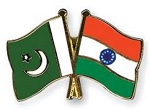 Forbes: Important but overlooked news this week: the U.S. command in Afghanistan has asked India to step up military aid to Afghan forces. India provided four attack helicopters to the Afghan military in Dec. 2015; the U.S. and the Afghans want more, as well as spare parts for Russian-made military equipment, to be used in part against the Islamist network built up by Pakistan called the Haqqanis. Click here to read more (external link).
Afghanistan political crisis: Entitlement vs democracy

Ghani
Al Jazeera: The growing political crisis within the Afghan National Unity Government is compounding the ongoing security and economic crises in the country. President Ashraf Ghani sees himself as a saviour destined and determined to restore the Ghilzai Pashtuns’ lost political mastery against the Durrani Pashtuns and non-Pashtuns. Ghani’s strategy has been sidelining his electoral rival Abdullah Abdullah, favouring Ghilzai Pashtuns in political life by using the means of patronage and charm-offensive of the West. Click here to read more (external link).
Related
Pakistan Hopeful, Afghanistan Skeptical of Reviving Taliban Peace Talks
 VOA News
August 13, 2016
Hasib Danish Alikozai
A top Pakistani official is expressing optimism about restarting the stalled Afghan peace talks, but there are no signs that Kabul is ready to rejoin the process.
Sartaj Aziz, the foreign policy adviser to Pakistan’s Prime Minister Nawaz Sharif, told reporters on Friday that the peace talks, which were scuttled in 2015 by news of Taliban leader Mullah Omar’s death and subsequently by Mullah Mansoor’s death in 2016, could resume in the coming weeks.
When asked about Aziz’s assessment Saturday, Dawa Khan Menapal, a deputy spokesperson for Afghan President Ashraf Ghani, said that Pakistan still must demonstrate its commitment to the peace process by taking action against militants that launch attacks in Afghanistan.
“Pakistan needs to act on the promises it made in the quadrilateral meetings. Unless and until that happens, we will continue to pursue our current stand in regards to peace talks,” said Dawa Khan Menapal, President Ghani’s deputy spokesperson.
The last quadrilateral meeting was held in May and included representatives from the U.S., Afghan, Pakistani and Chinese governments. Taliban representatives refused to join.
During the talks, Pakistan pledged to crack down on militant groups that launch attacks in Afghanistan. For many years, Afghan authorities have accused Pakistan of differentiating between “good terrorists” who launch attacks against Afghan and foreign troops, and “bad terrorists” who also attack Pakistani targets.
“Pakistan must prove it by action that it’s against all militants and it no long differentiates between good and bad terrorists,” said Dawa Khan Menapal.
He indicated that until that happens, the Afghan government will not participate in the talks.
Trust deficit
Last month Afghan President Ashraf Ghani told leaders at a NATO Summit in Warsaw that all regional countries are on board to bring stability to Afghanistan — except Pakistan.
“Our regional initiatives with neighbors are beginning to yield significant cooperative dividends. The exception is with Pakistan. Despite clear commitments to a quadrilateral peace process, their dangerous distinction between good and bad terrorists is being maintained in practice,” Ghani told the summit.
Upon assuming power in 2014, President Ghani vowed to start a new chapter in relations with Islamabad, one based on mutual trust and confidence building.
In July 2015, that appeared to be on track with the so-called “Murree Talks”, which marked the first ever direct official talks between Taliban and the Afghan government. The talks were hosted in Pakistan, and were viewed as the fruit of the new attitude by leaders in Islamabad and Kabul. The second round of talks were planned in July of 2015, but when the news of Mullah Omar’s death broke, they were postponed.
In 2016, Afghanistan, Pakistan, China and the United States launched new efforts to restart the stalled peace talks. The so-called Quadrilateral Coordination Group met five times in Kabul and Islamabad, without Taliban representatives present.
Pakistani Crackdown Sufficient?
Retired General Talat Masood believes that Pakistan has done enough in tackling militant groups and the country can only do so much without endangering its own security.
“Pakistan’s view point is that we are doing more than what we could and if we do anything more than that, we will have to fight them all,” said General Masood. “That we [Pakistan] do not want because we are already engaged with our own war. We do not want to fight the Afghan war in any case.”
Masood added that should Pakistan increase its pressure on Afghan Taliban and the Haqqani network, they will join hands with the Pakistani Taliban (TTP) and that will pose greater risk to both Pakistan and Afghanistan.
Anthony H. Cordesman from the Center for Strategic and International Studies believes that while Pakistan has not illustrated any meaningful efforts, it is also important to remember that Taliban have continuously denied peace talks and talks have over time become an extension of the fighting verses a solution.
” It is critical to note that the new head of the Taliban has specifically rejected peace negotiations and in many cases like this peace negotiations have simply become an extension of the fighting — not a solution,” Cordesman said.
General Masood believes that with Taliban capturing territory in Afghanistan and having made military gains in recent months and years, Pakistan no longer has much influence on them.
“They [Taliban] think that they are quite independent. They have territory within Afghanistan. They can launch attacks from Afghanistan. They have the support of certain segments of the Afghan people and they can keep fighting,” Masood said.
But Afghan analyst General Atiqullah Amarkhil believes that Pakistan risks becoming isolated by declining to aggressively confront all militant groups.
“Pakistan ought to cease its covert support to insurgents in Afghanistan and continue its crackdown on terrorists and extremists in its soil or else the country will risk a total isolation from the international community,” Amarkhil said.
Long Road for Crucial Peace Process
The peace process has long been seen as a way to end the war in Afghanistan that all sides see as essentially stalemated.
After nearly 15 years of war, Afghanistan’s military still requires significant assistance from U.S. and NATO troops, its government depends on foreign financial support, and the Taliban insurgency continues to grind away at government control in pockets across the country.
Rebecca Zimmerman of Rand Corporation says the peace process has been slow, but that is not unusual.
“The road to any peace agreement in any country has steps forward and steps backward. That’s a natural part of the process and it has to be,” Zimmerman said.
Zimmerman added “I by no mean think that the future of peace talks in Afghanistan is completely gone, but in the form of the quadrilateral coordination group, I think they are gone for the foreseeable future.”
Afghan attacks claim lives of four civilians, wounds four in single day
 KABUL, Aug. 13 (Xinhua) — The ongoing militancy and violent incidents have claimed the lives of at least four civilians including three children and injured four others in a single day on Saturday, officials said.
In the latest bloody incident, a rocket allegedly fired by Taliban militants struck a house in Baghlan-e-Markazi district of the northern Baghlan province on Saturday afternoon, killing at least two innocent civilians and injured three others, according to a local official.
“A rocket fired by Taliban rebels struck a house in Shahi Khil village of Baghlan-e-Markazi district today afternoon killing two innocent civilians including a child and injured three others,” Hajji Mohammad Tawab told Xinhua.
All the victims, which include women and children, belonged to one family, the official asserted.
An army spokesman in the province, Abdul Khalil in talks with Xinhua confirmed the bloody incident and said the deadly attack occurred amid ongoing fighting between security forces and the Taliban militants in the area.
Blaming Taliban outfit for the deadly attack, Khalil said the Taliban without care about human rights fired blind rockets to harm and terrorize the civilians.
Taliban militants fighting government forces in parts of the northern Baghlan province are yet to comment on the report.
In a similar violent incident which happened earlier in the day, a mortar fired by warring sides in the southern Uruzgan province struck a residential area outside provincial capital Lashkar Gah killing two children and wounding another, according to local officials.
Those who lost their lives, according to doctors at Trinkot hospital, are two 10-year-old boys and the injured one whose condition is not life threatening is also of the same age.
No group has claimed responsibility for the attack.
Civilians often bear the brunt of war in Afghanistan as more than 1,600 civilians had been killed and over 3,560 others injured in the first half of the current year, said a report of the United Nations Assistance Mission in Afghanistan (UNAMA) released here last month.
Other Security News