The Washington Post: The accusation is that Ghani has surrounded himself with advisers from his Pashtun ethnic group and clan, while shutting out those from other backgrounds. Both of his vice presidents are from ethnic minorities, but several of his closest confidants, such as the national security adviser, Hanif Atmar, are fellow Ghilzai Pashtuns. He has also alienated influential Durrani Pashtuns, whose tribe ruled the country for centuries. Click here to read more (external link).
Attack in Afghanistan Shutters its School for the Blind
Human Rights Watch: A horrific attack on August 25 in Kabul targeted the American University of Afghanistan, leaving 13 civilians dead and dozens injured after a harrowing 10-hour siege. It also claimed another vital educational institution – the country’s sole high school for blind people. The High School for the Blind’s students, 70 girls and 150 boys who studied textbooks printed on the school’s Braille printing press, are no longer in class. The attack destroyed that press, along with the school’s clinic. Click here to read more (external link).
Suspected Taliban Suicide Bomber Hits Court Complex in Pakistan
Ayaz Gul
VOA News
September 2, 2016
ISLAMABAD — Authorities in northwestern Pakistan say a suicide bombing attack on a court complex has killed at least 12 people and wounded about 50 others.
The violence happened Friday in the city of Mardan in the Khyber Pakhtunkhwa province.
District mayor Himatyat Ullah told reporters an armed attacker threw a hand grenade at security guards at the gate before detonating the explosives strapped to his body.
Authorities and hospital sources say a number of lawyers are among the victims and the death toll is likely to increase.
The bombing occurred hours after Pakistani troops killed four suicide bombers before they could detonate their devices in a Christian neighborhood in the provincial capital of Peshawar. The attack prompted authorities to step up security around churches in the province and elsewhere in Pakistan.
A military statement said the firefight with the attackers wounded two soldiers, a police guard and two civilians.
A spokesman for the breakaway faction of the extremist Pakistani Taliban namely Jamaatul Ahrar (JuA) told VOA it was behind the two attacks, though it was not immediately possible to independently verify the claim.
A suicide attack outside a hospital in southwestern city of Quetta last month killed more than 75 people, mostly lawyers. JuA had also claimed responsibility for that bombing. The United States recently designated the group as a global terrorist organization.
Pakistani officials allege JuA operates out of Afghanistan’s border areas and is being supported by the neighboring country’s intelligence agency, charges Kabul rejects.
Friday’s violence happened a day after the Pakistan military announced it has cleared northwestern semiautonomous tribal districts of militant networks and “forestalled” Islamic State’s attempts to establish a footprint in the country. The tribal areas are located on the Afghan border and have traditionally been condemned as a hub of local and international militant outfits.
Army spokesman Lt. General Asim Bajwa said Thursday security forces have arrested more than 300 IS-linked militants, including Syrians and Afghans. He said they were plotting attacks on government, diplomatic and other civilian facilities, including media houses.
“They tried to make an ingress, and they failed and they have been apprehended so far,” Bajwa told reporters.
The general said that since the military launched a counterterrorism offensive against the Pakistani Taliban and its allied groups near the Afghan border two years ago, more than 3,500 militants around 540 soldiers have been killed. Additionally, Bajwa noted the war has also cost Pakistan an estimated $107 billion.
He released the details in response to U.S. and Afghan criticism that Pakistan has been fighting anti-state militants but sparing the Haqqani Network and the Afghan Taliban allegedly using Pakistani soil for deadly attacks in Afghanistan.
“Terrorists of all organizations, including Haqqanis, including Afghan Taliban, have been killed and some apprehended … so if you say that you know actions have not been taken or (are) not being taken, that is wrong,” he said.
Other Security News
40 Percent of Afghans Are Food Insecure, WFP Warns
Ayaz Gul
VOA News
September 2, 2016
ISLAMABAD — The U.N. World Food Program (WFP) has warned that 40 percent of Afghanistan’s population — or 11.3 million people — are food insecure, while chronic malnutrition affects more than 40 percent of Afghan children under five years old.
WFP Executive Director Ertharin Cousin issued the warning Friday at the conclusion of her four-day maiden visit to the war-ravaged country, the first by a WFP chief in 13 years, to “implore” the donor community to continue their support despite the squeeze on funding because of new global crises.
“This not the time for the international community to turn away from the needs of the people of Afghanistan,” she told reporters in Kabul.
While WFP has already reached almost two million of the most vulnerable Afghans with food and cash assistance, Cousin said, the organization needs $50 million in donor funding to reach another 1.6 million people through the end of this year.
“It is the funding challenges and a turning away of the international community, or reduction in support by the international community for the activities here in Afghanistan, which will limit our ability to perform the work that is required,” Cousin said, when asked what was the biggest concern for WFP’s Afghan mission.
She noted that the 3.6 million Afghans who the WFP is trying to help do not include thousands of refugee families who have returned or are in the process of returning home from neighboring Pakistan this year.
“Many of them come across with nothing, without the ability to meet the food-assistance needs of their families,” said the WFP head, adding that her organization is working with other partners to meet the needs of returnees.
Cousin admitted that increased instability and conflict in some Afghan areas has forced WFP to suspend program operations periodically throughout the year.
“The answer to terrorism and conflict is hope and opportunity provided by sustainable, durable economic opportunity and prosperity where every parent can access the food that they required to feed their children,” she said.
Afghanistan’s northern provinces are traditionally inaccessible for aid deliveries during winter months, and the spread of fighting to those areas in recent months has added to the challenges facing aid groups.
U.S. Pursues Trilateral Containment of Pakistan
Michael Hughes: U.S. Secretary of State John Kerry, from Indian soil on August 30, boldly promoted “trilateral” dialogue among the United States, Afghanistan and India while calling out Pakistan to abandon its pro-terror policies. Meanwhile, back in Washington, Pentagon chief Ashton Carter struck a base-sharing arrangement with his Indian counterpart Manohar Parrikar. Both moves mark a departure from America’s typical reluctance to affront Islamabad’s sensibilities, and might herald the dawn of a containment strategy to blunt Pakistan’s use of jihadists as foreign policy tools. However, critics say the real purpose is aimed at checking Chinese influence under the pretext of regional stability. But, who is to say both are not true? Click here to read more.
Pakistan: Afghan Apology Prompted Reopening of Busy Border Crossing
Ayaz Gul
VOA News
September 1, 2016
ISLAMABAD — Pakistan says it reopened a busy border crossing with Afghanistan for routine traffic after Kabul apologized over the burning of the Pakistani flag by angry Afghan protesters.
The southwestern Chaman crossing was closed two weeks ago after the anti-Pakistan rally on the Afghan side of the border turned violent and demonstrators attacked the entry gate, setting fire to the flag.
“We are all aware Afghanistan has already tendered an apology and the Chaman gate has been opened today,” Pakistani Army spokesman Lt.-General Asim Bajwa said Thursday in Rawalpindi.
The border closure stranded thousands of travelers and trade convoys, causing heavy financial losses to Afghan and Pakistani traders. Bajwa explained the delay in reopening the facility for traffic.
“It was a very sad incident and the reasons being given [by Afghan officials] were not, I think, sufficient enough to be accepted,” Bajwa said in Rawalpindi, where Pakistan’s military is headquartered.
The general also said authorities have increased efforts to strengthen security along the Afghan border to prevent extremists linked to the Taliban and Islamic State terrorist group from entering the country.
He added that Pakistan is building gates at 18 crossings on what he referred to as the porous 2,600-kilometer-long frontier with Afghanistan. Immigration and other required staff also will be deployed there as part of Pakistan’s border management system, Bajwa said.
Afghan officials opposed Pakistani border construction plans because Kabul traditionally does not recognize the frontier as an international boundary.
The government in Kabul also alleges covert support Taliban insurgents receive from the Pakistani military spy agency has enabled them to prolong the war in Afghanistan.
Bajwa rejected as incorrect U.S. and Afghan assertions that Pakistan’s counterterrorism operations spare Afghan Taliban and militants linked to the Haqqani Network, which are accused of using Pakistani soil for staging deadly attacks in Afghanistan and India.
“There is no concept of good or bad Taliban,” General Bajwa reiterated while responding to U.S. Secretary of State John Kerry’s skepticism of Pakistan’s counterterrorism operations.
During his trip to neighboring India, Kerry said Islamabad has made progress in the fight against terrorism, but urged Pakistan to push harder against the Haqqanis and other militants.
But Bajwa said, “Terrorists of all terrorist organizations, including Haqqanis, including Afghan Taliban, have been killed and some apprehended and their disposal of course has been worked out with Afghan authorities, or with [NATO’s] Resolute Support mission [in Afghanistan]. So, if you say that actions have not been taken, or not being taken, [it] is wrong.”
He also said Pakistani forces have arrested more than 300 militants linked to the Syria-based Islamic State, including its senior leader to “forestall for the time being” the threat the group poses to the country.
He noted that presence of IS militants in border regions of Afghanistan is a cause of concern for his country. IS is active in at least two eastern Afghan provinces, namely Nangarhar and Kunar, and both are adjacent to the Pakistani border.
The border tensions and mutual allegations of supporting terrorist attacks on each other’s soil are primarily responsible for the deterioration in bilateral ties between Afghanistan and Pakistan.
Award-Winning Afghan Movie Director Forced To Film Abroad
Tolo News: Shahrbano Sadat, the young Afghan female film maker and director of Wolf and Sheep, which won a Cannes Film Festival prize earlier this year, has said that insecurity in the country was the reason she filmed the movie outside of the country. She says that with every film she works on there are dozens of job opportunities for Afghans but because of insecurity she cannot afford to make movies in the country – and is therefore forced to hire foreigners. Sadat is the first Afghan film director to have won a Cannes Film Festival award. Click here to read more (external link).
De Spinghar Bazan and Oqaban Hindukush Draw 0-0
Tolo News: In the second match of the second week of the Roshan Afghan Premier League, De Spinghar Bazan on Thursday drew their match with rival Oqaban Hindukush 0-0. The match was played at the Afghanistan Football Federation ground in Kabul where thousands of fans had gathered to support the teams. Click here to read more (external link).
Other Sports News
Funeral For Controversial Former Afghan King Sparks Violence
By Frud Bezhan
Radio Free Europe/Radio Liberty
September 1, 2016
The belated funeral ceremony for a controversial former Afghan monarch turned violent in Kabul on September 1, with at least one person killed and several wounded after gunshots were fired during a procession attended by thousands of members of Afghanistan’s ethnic Tajik minority.
Mourners carrying the purported remains of King Habibullah Kalakani — an ethnic Tajik who ruled Afghanistan for nine months in 1929 — and those of more than a dozen of his companions were confronted by armed militiamen as they made their way to inter the remains at a new burial site.
Witnesses blamed the ensuing violence, in which at least five people were injured, on militiamen affiliated with First Vice President Abdul Rashid Dostum, a former ethnic Uzbek militia leader. The witnesses told RFE/RL’s Radio Free Afghanistan that the militiamen fired on the mourners as they headed to the new burial site on Kabul’s Shahrara Hill after attending a funeral ceremony at the city’s Jami mosque.
The militiamen are alleged to have warned the mourners, some of whom were armed, that they could not bury the remains on Shahrara Hill, which is revered by Afghanistan’s Turkic-speaking minority. After heated exchanges, the eye-witnesses said, gunshots were fired at the crowd.
Historical Tensions
The clashes have thrown the deep historical tensions between Afghanistan’s long-warring ethnic groups into relief. A catastrophic civil war fought along ethnic lines in the 1990s claimed tens of thousands of lives.
For almost a century, the remains of Kalakani and 16 of his companions were kept in an unmarked grave below a hilltop mausoleum of the country’s ethnic Pashtun dynasty. His supporters want to rebury him in a more respected location.
Social media posts showed images of the aftermath of the violence, with some videos and photographs claiming to show young men being dragged away from the scene of the clashes.
Armed men, raising assault rifles in the air, were also pictured, as were apparently injured supporters of King Kalakani.
Afghan security officials said police were deployed to calm the situation and negotiations were under way.
“The hill is part of the history of the Uzbeks and burying Kalakani at the hilltop will erase that history,” said Kanishka Turkistani, a spokesman for Dostum.
The ceremony was attended by some prominent ethnic Tajiks, including former intelligence chief, Amrullah Saleh.
Kalakani — the only ethnic Tajik monarch to have ruled Afghanistan in the kingdom’s 226-year run from 1747 to 1973 — is a controversial figure.
In 1928-29, forces loyal to Kalakani took advantage of the absence of royal troops from the capital to overthrow the reformist king, Amanullah Khan, who is widely regarded as a national hero for his successful war against Britain and his efforts to modernize Afghanistan.
‘Bandit King’
Kalakani’s reign was brief, as he was executed along with his close companions after being deposed less than a year later. Pashtuns, the country’s largest ethnic group, have historically dominated the leadership of the Afghan state.
Among some Afghans, Kalakani is derided as a “bandit king” whose revolt against Amanullah Khan harmed Afghanistan’s modernization efforts. Others, however, see Kalakani as an important figure who broke the Pashtun stranglehold on power.
Observers have drawn parallels with the current struggle for power between President Ashraf Ghani, a Pashtun, and Chief Executive Abdullah Abdullah, who has widespread support among the country’s ethnic Tajik community . They fought a bitter election battle in 2014 and share power in what critics regard as an unwieldy national unity government.
Prior to the ceremony on September 1 a movement had emerged demanding that the government organize an official state burial and gravesite for Kalakani.
The pro-Kalakani movement, whose strength is difficult to gauge but which is supported by some prominent ethnic Tajik lawmakers and former militia commanders, had threatened street protests in Kabul if its demands were not met.
With reporting by RFE/RL’s Radio Free Afghanistan
NOTE: This article has been amended. Atta Mohammad Noor, the ethnic Tajik governor of Balkh Province, did not attend the reburial ceremony as was originally stated.
Copyright (c) 2016. RFE/RL, Inc. Reprinted with the permission of Radio Free Europe/Radio Liberty, 1201 Connecticut Ave NW, Ste 400, Washington DC 20036.
Related
Six Taliban, Two Others Killed During Afghan Attack
By RFE/RL’s Radio Free Afghanistan
September 1, 2016
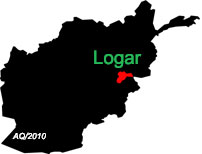
Afghan officials say at least to eight people have been killed — including at least six Taliban fighters — as a result of a militant attack on a district governor’s office in Logar Province.
Logar Province Governor Mohammad Halim Fedayee told RFE/RL that Afghan security forces killed six Taliban fighters during the battle at the Charkh district’s administrative headquarters after an explosives-laden car parked near the compound walls was detonated shortly before dawn on September 1.
Fedayee said one Afghan security officer was wounded in a gunbattle that lasted for two hours after the blast.
Fedayee’s spokesman, Salim Salhe, said the car bomb killed two people.
The Taliban claimed that its fighters killed the district governor and 41 police officers.
Correspondents say the massive explosion shook buildings in the area, which is about 60 kilometers south of Kabul.
With reporting by AP and dpa
Copyright (c) 2016. RFE/RL, Inc. Reprinted with the permission of Radio Free Europe/Radio Liberty, 1201 Connecticut Ave NW, Ste 400, Washington DC 20036.
Other Security News