logo

Daily Updated Afghan News Service

  • Home
  • About
  • Opinion
  • Links to More News
  • Good Afghan News
  • Poll Results
  • Learn about Islam
  • Learn Dari (Afghan Persian/Farsi)

Recent Posts

  • Akhundzada Wants Subordinates, Not Partners In Power, Say Resistance Groups November 18, 2026
  • Taliban Tighten Restrictions in Panjshir as Residents Say Their Movements Are “Under a Microscope” November 18, 2026
  • Tolo News in Dari – November 18, 2026 November 18, 2026
  • Biden says he was told Kabul would hold for six months after US troops left November 18, 2026
  • Afghanistan’s GDP Per Capita Set To Fall For Third Straight Year, Says World Bank November 18, 2026
  • The toxic aftermath of decades of war in Afghanistan November 17, 2026
  • Taliban Force Two Shia Clerics To Abandon Mourning Ceremonies In Exchange For Release November 17, 2026
  • Taliban Leader Offers Government Posts To Opponents For First Time November 17, 2026
  • Tolo News in Dari – November 17, 2026 November 17, 2026
  • Ariana Airlines to launch direct flights between Mazar-e-Sharif and Jeddah November 17, 2026

Categories

  • Afghan Children
  • Afghan Sports News
  • Afghan Women
  • Afghanistan Freedom Front
  • Afghanistan United Front
  • Al-Qaeda
  • Anti-Government Militants
  • Anti-Taliban Resistance
  • AOP Reports
  • Arab-Afghan Relations
  • Art and Culture
  • Australia-Afghanistan Relations
  • Book Review
  • Britain-Afghanistan Relations
  • Canada-Afghanistan Relations
  • Censorship
  • Central Asia
  • China-Afghanistan Relations
  • Civilian Injuries and Deaths
  • Corruption
  • Crime and Punishment
  • Drone warfare
  • Drugs
  • Economic News
  • Education
  • Elections News
  • Entertainment News
  • Environmental News
  • Ethnic Issues
  • EU-Afghanistan Relations
  • Everyday Life
  • France-Afghanistan Relations
  • Germany-Afghanistan Relations
  • Haqqani Network
  • Health News
  • Heroism
  • History
  • Human Rights
  • India-Afghanistan Relations
  • Interviews
  • Iran-Afghanistan Relations
  • ISIS/DAESH
  • Islamophobia News
  • Japan-Afghanistan Relations
  • Landmines
  • Media
  • Misc.
  • Muslims and Islam
  • NATO-Afghanistan
  • News in Dari (Persian/Farsi)
  • NRF – National Resistance Front
  • Opinion/Editorial
  • Other News
  • Pakistan-Afghanistan Relations
  • Peace Talks
  • Photos
  • Political News
  • Reconstruction and Development
  • Refugees and Migrants
  • Russia-Afghanistan Relations
  • Science and Technology
  • Security
  • Society
  • Tajikistan-Afghanistan Relations
  • Taliban
  • Traffic accidents
  • Travel
  • Turkey-Afghanistan Relations
  • UN-Afghanistan Relations
  • Uncategorized
  • US-Afghanistan Relations
  • Uzbekistan-Afghanistan Relations

Archives

Dari/Pashto Services

  • Bakhtar News Agency
  • BBC Pashto
  • BBC Persian
  • DW Dari
  • DW Pashto
  • VOA Dari
  • VOA Pashto

Kabul Protests After Iran Cages Afghan Detainees

10th September, 2016 · admin
iran_afghan_cages

This photo released by the Iranian Students’ News Agency shows ‘foreign nationals’ who were displayed alongside contraband items – including weapons – by police in Shiraz, Iran

VOA News
September 9, 2016

Noor Zahid
Mehdi Jedinia

The Afghan government is protesting Iran’s decision to blindfold several Afghans and put them in cages in the center of Shiraz this week.

Nearly two dozen handcuffed Afghan refugees were displayed in a large metal cage. Police also exhibited confiscated items, including weapons, explosives, drugs, alcohol and smuggled soft drinks.

The deputy police chief of Shiraz, Nasser Keshawarz, said the refugees were among some 200 foreign nationals who entered Iran illegally and were arrested. Pictures of the public detention went viral on the internet, drawing outrage from Afghans and human rights activists, and an official diplomatic protest from Kabul.

“Afghanistan’s Ministry of Refugees and Returnees strongly condemns this inhumane and humiliating treatment and violation of human dignity of Afghan refugees by the Shiraz city police,” the Afghan government said in a statement. “This behavior undoubtedly contradicts Human Rights, the 1951 [Refugee] Convention, and the 1967 Protocol Relating to the Status of Refugees, and stands against the bilateral refugee agreements between the two countries.”

There was no response from Tehran or on official state-run media.

Criticism of Iran

Mohammad Reza Khoshak, an Afghan parliament member from western Herat province, which borders Iran, denounced the Iranian regime.

“In Shiraz, a city well-known for its poet Saadi, who asks for equality for all humans, my fellow citizens are put in cages and mistreated in a way similar to what militants of the Islamic State do to their prisoners,” he told an Afghan newspaper.

Well-known Afghan poet Mustafa Hazara criticized Iran on his Facebook page. “How low a human could go?” he asked. “Look, my Iranian friends, if you travel outside your geographic location [country], you would realize that the value of humans is different than what you think of.”

‘Systematic prejudice’

Roughly 3 million Afghans live in Iran. Most of them settled there after fleeing war and conflict in their homeland, and many lack basic rights and live without a formal status. About 950,000 Afghans in Iran are classified as refugees.

Iran has sent thousands of Afghan refugees, mainly ethnic Shi’ite Hazaras, to Syria to fight alongside forces of Hezbollah and Iran’s elite Revolutionary Guard forces in support of the Syrian government. Dozens of Afghans have died in the Syrian war.

In his online post, Hazara asked educated Iranians to fight what he termed a systematic prejudice by Iran against Afghan refugees.

In general, Afghans living in Iran try to keep a low profile so as to not anger the regime.

“They [Iranian authorities] are very tough on us, and even one of my colleagues got a threatening message to not talk with foreign media about the incident,” Afghan journalist Kazem Sharafuddin told VOA from Mashhad.

The caging of Afghans has angered some Iranians, as well. Former Iranian President Mohammad Khatami’s spokesperson, Abdollah Ramezanzadeh, condemned the move.

“We are ashamed before Afghan people, ashamed before humanity,” Ramezanzadeh said on his Instagram account.

Posted in Human Rights, Iran-Afghanistan Relations, Refugees and Migrants | Tags: Hazaras |

What Defined Ahmad Shah Masud

10th September, 2016 · admin · 7 Comments
Ahmad Shah Massoud

Ahmad Shah Massoud

By Frud Bezhan
September 9, 2016
Radio Free Europe/Radio Liberty

Resistance fighter and anti-Taliban leader Ahmad Shah Masud was killed by Al-Qaeda assassins on September 9, 2001, ushering in a chain of events that would place Afghanistan at the center of the global war on terrorism.

Two days after his death, Al-Qaeda operatives would carry out the 9/11 terrorist attacks on U.S. soil. Within a month, the United States military was leading a bombing campaign and invasion of Afghanistan with the intention of overthrowing the Taliban and capturing Al-Qaeda leader and 9/11 orchestrator Osama Bin Laden.

In life and as in death, the military strategist who had made his name as a commander of anti-Taliban forces would have a significant impact on life in Afghanistan. Here are some stories behind the man whose battlefield exploits earned him the moniker “The Lion of Panjshir.”

Northern Alliance Founder

He was a key leader of the Northern Alliance, a combination of Afghanistan-based forces that aligned in 1996 to counter the Taliban’s takeover of Kabul. After the U.S-led invasion in October, 2001, those forces would play a key role as a coalition partner until a new government could be formed.

Larger-Than-Life Figure

Numerous books, films, and articles have been written about Masud, and to this day he is revered as a national hero in Afghanistan. Posters of the 48-year-old — wearing his trademark woolen hat, the pakol — still dot the capital, Kabul, where monuments have been erected and streets named in his honor.

Camera Bomb

Masud was killed in Khwaja Bahauddin, a far-flung area in northeast Afghanistan near the Tajikistan border that served as his base of operations.

His assassins were identified as Abdessater Dahmane and Bouraoui el-Ouaer — two men of Tunisian descent who posed as journalists and traveled on Belgian passports. They killed Masud by setting off a camera bomb as they interviewed Masud in his office.

One of the attackers died immediately, while the second was shot dead after he attempted to escape. Masud was mortally wounded and died while he was being flown by helicopter to Tajikistan for treatment.

Assassins Spent Time In Molenbeek

The Al-Qaeda militants who killed him were believed to have transited through the Brussels neighborhood of Molenbeek, which has since become notorious for being home to several suspects linked to recent terrorist attacks in Brussels and Paris.

In 2005, a court in Paris found four men guilty of offering logistical support to Masud’s killers. The four Islamic militants were sentenced to between two and seven years. Those convicted were captured by French authorities, who traced passports found on Masud’s killers to a Brussels-based militant cell run by Tarek Maaroufi, who was sentenced to six years in prison in 2003.

Revered In Neighboring Tajikistan

Masud, an ethnic Tajik, is widely revered in neighboring Tajikistan. In a sign of his enduring popularity, Masud has become a popular name for boys.

Masud received arms and financial backing from the Tajik government during the Taliban’s rule from 1996-2001. Some of his wounded fighters were taken to hospitals in Tajikistan. Masud’s own stronghold in northeast Afghanistan bordered Tajik territory and he often visited Tajikistan.

After his death, Masud’s family briefly moved to Dushanbe, where the family still owns a home. His family eventually moved to Iran.

Warned Of Attack On U.S. 

“If President Bush doesn’t help us, these terrorists will damage the U.S. and Europe very soon.”

Masud gave this warning in an address at the European Parliament in Brussels in April, 2001. He also told EU leaders that he had gathered evidence about an imminent terrorist attack by Al-Qaeda on the U.S. homeland.

His words proved prophetic. Months later, Al-Qaeda operatives hijacked four passenger planes with the intention of flying them into U.S. targets. Two brought down the twin towers of the World Trade Center in New York. A third hit the Pentagon in Washington, D.C. The fourth went down in a field in Pennsylvania. Altogether, the attacks claimed the lives of nearly 3,000 people, and injured more than 6,000.

Cold Warrior

A 1992 editorial in the Wall Street Journal described Masud as the “Afghan who won the Cold War.”

Panjshir was a bastion of resistance to the 1979-89 Soviet invasion of Afghanistan, and the last stronghold of the anti-Taliban Northern Alliance.

Masud’s Jamiat-e-Islami political party and military wing was the most successful Mujahedin group fighting against the invading Red Army. From his base in the Panjshir Valley, Masud’s men led a successful guerrilla fight against the Soviet forces, which launched several failed operations to claim control of the valley.

Panjshir still bears the scars of Masud’s fight against the Soviet Union and the Taliban. Hundreds of destroyed Soviet tanks are littered throughout the valley, as are weapons left by the Taliban in their failed attempts to conquer the area. Vast tunnel networks are carved into the mountains that the Mujahedin used to escape Soviet and Taliban bombardments, and dozens of mine-clearing operations continue on the rocky hilltops surrounding the picturesque valley.

French Connection

Masud spoke some French, having studied at the French-language Lycee Esteqlal school in Kabul, and was admired in France. In 2001, European Parliament President Nicole Fontaine invited Masud to address the parliament.

Masud was also friends with French intellectual Bernard-Henri Levy, who visited Masud in the Panjshir Valley in the 1990s. Masud was known to have said that French President Charles De Gaulle was one of his political heroes.

French audiences got to know Masud after the release of a documentary — The Valley Against An Empire — by French journalist Christophe de Ponfilly in 1981, just two years after the Soviet invasion of Afghanistan.

Reza Deghati, an Iranian-French photojournalist, traveled to Afghanistan and followed Masud from the 1980s until his death. His iconic photographs helped build the legend of Masud.

Posted in Al-Qaeda, Heroism, History, Taliban, US-Afghanistan Relations | Tags: Ahmad Shah Masood, Assassination, Jamiat-e-Islami, Panjshir |

Pakistan Extends Stay For Afghan Refugees By Three Months

9th September, 2016 · admin · 4 Comments

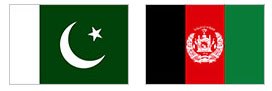
afg_and_pak

Radio Free Europe/Radio Liberty
September 9, 2016

Pakistani Prime Minister Nawaz Sharif has extended the stay for Afghan refugees in the country until March 2017, pushing back the previous deadline by three months.

Sharif approved this decision at a September 9 cabinet meeting.

A government statement quoted Sharif as saying that Afghan refugees were “guests” of Pakistan and that measures will be taken to ensure their safety.

The announcement comes as Afghan refugees accuse Pakistani authorities of harassment before the expiration of the previous December 31 deadline.

Pakistan is hosting at least 1.5 million refugees. An additional 1 million unregistered Afghans have been staying in the country since the 1980s, when they fled the violence at home.

In a June statement, the Pakistani government said Sharif had ordered the authorities to work with the UN refugee agency and the Afghan government to gradually relocate the refugee camps from Pakistan to Afghanistan.

Islamabad says a number of militants are hiding in the camps.

Based on reporting by RFE/RL’s Radio Mashaal and AP

Copyright (c) 2016. RFE/RL, Inc. Reprinted with the permission of Radio Free Europe/Radio Liberty, 1201 Connecticut Ave NW, Ste 400, Washington DC 20036.
Posted in Pakistan-Afghanistan Relations, Refugees and Migrants |

Afghanistan-Iran railway construction kicks off near Herat

9th September, 2016 · admin · 2 Comments

afg_and_iran

Khaama Press: The construction of a railway line between Afghanistan and Iran officially kicked off near the western Herat province of Afghanistan on Wednesday. According to the local officials, the construction work of the railway line in Afghanistan launched as 90 percent of the railway work inside the Iranian soil has been completed. The railway line will be established from Iran to Ghoryan district and will further go towards Zindjan district and Herat Airport. Click here to read more (external link).

Posted in Economic News, Iran-Afghanistan Relations, Reconstruction and Development | Tags: Herat |

Ghani warns to close transit route for Pakistan to Central Asia

9th September, 2016 · admin · 1 Comment
Ghani

Ghani

Khaama Press: Afghan President Mohammad Ashraf Ghani has warned to close transit route for Pakistan to Central Asian countries as the Wagah port has been closed for the Afghan traders for import and export. President Ghani made the remarks during a meeting with the UK’s special envoy for Afghanistan and Pakistan Owen Jenkins in Kabul. He said Afghanistan is no more a landlocked country as several other options and transit routes are available for Afghanistan for the import and export of commodities of the Afghan traders. Click here to read more (external link).

Posted in Central Asia, Economic News, Pakistan-Afghanistan Relations | Tags: Ashraf Ghani |

Taliban Pushed Back As Clashes Ongoing In Trinkot

9th September, 2016 · admin · 1 Comment

uruzganTolo News: Taliban fighters have been pushed back in the ongoing battle with Afghan security forces in Trinkot city in Uruzgan province, local officials said Friday. Reports indicate that the Trinkot war is being led by Kandahar Police Chief Gen. Abdul Raziq after he entered the province with his troops on Thursday. Click here to read more (external link).

More Security News

  • Gen. Raziq joins Afghan forces in the front line in Uruzgan province
  • Afghanistan likely to get more attack helicopters and artillery from India
  • 8 killed, 14 wounded in rocket attack in North of Afghanistan
Posted in Security, Taliban | Tags: Abdul Raziq, Uruzgan |

9/11’s First Victim: Son Recalls Dream Of Afghanistan’s ‘Lion Of Panjshir’

9th September, 2016 · admin · 4 Comments

masood_and_son

By Ron Synovitz and Hamid Mohmand
Radio Free Europe/Radio Liberty
September 9, 2016

KABUL — Ahmad Masud was 12 years old when his father, the legendary anti-Taliban military commander known as the “Lion of Panjshir,” was killed by two Al-Qaeda suicide bombers in northern Afghanistan on September 9, 2001.

The assassination of Ahmad Shah Masud, who also fought for a decade against Soviet invaders, removed a natural U.S. ally from Taliban-ruled Afghanistan. Two days later, Al-Qaeda carried out the September 11 terrorist attacks against the United States.

The tumultuous events thrust the young Masud into the public eye — making his first public appearance at his father’s funeral in the Panjshir Valley north of Kabul, a historic event attended by hundreds of thousands of the slain ethnic-Tajik commander’s supporters.

Standing beside his father’s coffin with poise and dignity in one of the few parts of Afghanistan that was not under Taliban control at the time, the 12-year-old Masud provoked an outburst of hysterical grieving by announcing: “I want to follow in my father’s footsteps. I want to secure our country’s independence. I want to be my father’s successor.”

Since then, alongside his father’s status as an iconic national hero, the young Masud has been revered by many Afghans who see him as a symbol of hope for Afghanistan’s future.

Today, 15 years later, he says he remains committed to his vow of making his father’s dreams become reality — to make Afghanistan a “united and free country” with leaders chosen by the Afghan people through democratic elections.

Now 27, Masud has nearly completed a degree in international relations at King’s College London.

But he returns to Afghanistan each year to be with his family as the country commemorates Masud Day, a national holiday, on September 9 that launches Martyrs Week, honoring Afghan victims of more than three decades of war.

Criticism

Ahmad Masud refers to his father as “the Martyr,” telling RFE/RL that at least one of the assassinated commander’s dreams for Afghanistan is starting to come true.

“The elections that were held in the past several years — regardless of their results, just the fact that there were elections — that’s one of the key factors of a democracy, and it demonstrates that one of the wishes of the Martyr is slowly coming true,” he told RFE/RL.

But Ahmad is critical of the failure of Afghanistan’s government to safeguard people from militant attacks, ethnic strife, and sectarian violence or to create the economic opportunities needed to prevent young Afghans from fleeing the country.

“Without any doubt, these circumstances and the emigration are frustrating,” he told RFE/RL.

“Our young generation considers the situation so dire that they do all they can to leave,” he said. “It’s really frustrating and disturbing.”

Masud said he thinks refugees who flee Afghanistan “still love their country.”

But he says the government must do more to “fight insecurity and work to bring security and stability” if it is going to end an exodus that already has been joined by millions of Afghans refugees.

“I hope the government comes up with a plan to create jobs,” he told RFE/RL. “One of the important reasons for the emigration is that people are looking for a better life, a more stable future. It all goes back to the issue of employment and security.”

As for himself, Masud says he will return to Afghanistan permanently after he completes his education in London.

He says the reason for his university studies is to “come back” and fulfill the vow he made at his father’s funeral.

He insists that he is “completely devoted” to Afghanistan and has no property outside of the country.

Asked about his political ambitions, Masud said he would take on the duties of public office “if it is the will of the Afghan people.”

If he failed to be elected, Masud said, he would still stay in Afghanistan and work as a teacher.

Written by Ron Synovitz with reporting by RFE/RL’s Radio Free Afghanistan correspondent Hamid Mohmand in Kabul

Copyright (c) 2016. RFE/RL, Inc. Reprinted with the permission of Radio Free Europe/Radio Liberty, 1201 Connecticut Ave NW, Ste 400, Washington DC 20036.
Posted in Al-Qaeda, History, Political News, Taliban | Tags: Ahmad Masud, Ahmad Shah Masood, Assassination |

US military admits to failure in saving hostages in Afghanistan

9th September, 2016 · admin · 1 Comment
Pentagon

Pentagon

Press TV
September 9, 2016

The United States military has admitted to its failure in rescuing two universality professors held hostage in Afghanistan.

Two professors at the American University — an American and an Australian — were kidnapped in the heart of the Afghan capital Kabul last month.

“In August, at the recommendation of Secretary Carter, President Obama authorized US forces to conduct a mission in Afghanistan, aimed at recovering two civilian hostages,” Pentagon spokesman Peter Cook said in a statement on Thursday. “Unfortunately, the hostages were not at the location we suspected.”

Without mentioning the identities of the hostages, Cook added that US forces “engaged and killed a number of hostile forces.”

Unnamed Pentagon officials with knowledge of the incident told Fox News, however, that the country’s military had been unsuccessful in saving the professors, adding seven militants had been killed in the operation.

“We will not provide further information on this mission in order to protect the safety of hostages and operational security,” Cook said. “Military hostage rescue operations are inherently sensitive and dangerous and careful deliberation went into this mission.”

This is not the first time they have been unable to conduct a successful rescue operation, previously failing to obtain approval from the White House over intelligence concerns.

“They turned back that first night because they didn’t have authority. They could have gone without permission if they thought hostages’ lives were in imminent danger,” one official said.

The operation itself, carried out after an approval by President Obama the next day, “didn’t go the way it was supposed to go,” according to one official.

It was not clear whether the professors were ever inside a compound near Jalalabad in eastern Afghanistan or they were transferred to a different location prior to the arrival of the US military forces.

According to Fox News, the Haqqani network is suspected to be behind the abduction, which took place as the two professors were driving in Kabul.

“If the hostages are… in imminent danger, we go… That was not the case this time, so we went the next day,” another official said.

Posted in Haqqani Network, US-Afghanistan Relations | Tags: Kidnapping |

Afghans Commemorate Death Of Anti-Taliban Commander Massud

8th September, 2016 · admin · 5 Comments
Ahmad Shah Massoud

Ahmad Shah Massoud

Radio Free Europe/Radio Liberty
September 8, 2016

Afghans are commemorating the 15th anniversary of the death of Ahmad Shah Massud, the revered Northern Alliance leader and anti-Taliban commander who was assassinated by Al-Qaeda militants on September 9, 2001.

September 8 marks the start of Martyrs Week, which is observed every year in Afghanistan to remember Massud and other national heroes who have died in the past 30 years of war.

Following his death by Al-Qaeda suicide bombers posing as a television crew, Massud was conferred the title of National Hero of Afghanistan.

Thousands of supporters of Massud, who hailed from the country’s ethnic Tajik community, are expected to take part in a march. Government dignitaries will also assemble in the Afghan capital to pay their respects.

Security has been tightened around Kabul ahead of the celebrations, which come amid escalating tensions among the country’s long-warring ethnic and factional groups.

Despite the precautions, one person was killed and three injured in an explosion in Kabul.

Based on reporting by Reuters and Tolo News

Copyright (c) 2016. RFE/RL, Inc. Reprinted with the permission of Radio Free Europe/Radio Liberty, 1201 Connecticut Ave NW, Ste 400, Washington DC 20036.
Posted in Al-Qaeda, History, Political News | Tags: Ahmad Shah Masood |

Taliban militants enter Afghan city

8th September, 2016 · admin

uruzganPress TV
September 8, 2016

Taliban militants have reportedly entered the capital of Afghanistan’s central province of Uruzgan in an attempt to take control of the city and free fellow militants from a prison there.

“The Taliban have entered the city and are fighting to take over police and NDS (intelligence agency) headquarters, and we fear they will storm the prison to free captured insurgents,” said Haji Bari Daad, a tribal elder in the city of Tarin Kot, on Thursday, in reference to the prison in the city that is holding captured Taliban militants.

According to provincial police chief, Wais Samim, the militants have pushed their way to within a few hundred meters of the governor’s compound and police headquarters. The sound of gun battles can reportedly be heard across the city.

Meanwhile, Karim Khademzai, the head of Uruzgan’s provincial council, has said that the streets were empty and shops were closed, adding that the 70,000 inhabitants of the city had nowhere to flee as it had been besieged by the militants.

Late on Wednesday, the Taliban had said in a statement that they ‘would not harm’ government forces provided that they surrendered peacefully.

The militant group also claimed that it had overrun 15 government outposts, including a “strategic military base” in Uruzgan, adding “all the surrounding areas of the capital are under tight siege and attacks” of its fighters.

Defense Ministry spokesman Mohammad Radmanish, however, had rejected what he called the Taliban’s “propaganda campaign” shortly after the release of the statement, promising that the militant group would be pushed back from the city’s outskirts, a prospect that seemed increasingly unlikely on Thursday.

The city officials had earlier appealed to the government in Kabul to send them reinforcements and air support — apparently not forthcoming yet.

Over the past few months, Afghan security forces have focused on foiling Taliban attacks in the southern province of Helmand and the northern city of Kunduz, besides battling Takfiri Daesh terrorists in the eastern province of Nangarhar.

The militant group lost its grip over the country in 2001 in a US-led military invasion and has since retreated to rural areas, resorting to hit-and-run attacks on cities.

Its major achievement came last year when it managed to briefly capture Kunduz, the capital of Kunduz Province.

The possible fall of Tarin Kot will be a new alarm to the central government in Kabul to boost its security forces against the growing threat of the militant group.

More Security News

  • Kandahar’s Raziq To Take Control Of Trin Kot Battle
  • Explosion in Kabul city leaves at least 3 wounded
  • Militants planning attacks during Martyrs Week in Kabul: Officials
Posted in Security, Society | Tags: Uruzgan |
Previous Posts
Next Posts

Subscribe to the Afghanistan Online YouTube Channel

---

---

---

Get Yours!

Peace be with you

Afghan Dresses

© Afghan Online Press
  • About
  • Links To More News
  • Opinion
  • Poll