The National Interest: “If fundamentalism comes to Afghanistan, war will continue for many more years. Afghanistan will be turned into a center for terrorism.” These words, spoken on March 10, 1992, through an overwhelmed translator, stand in time as the final plea of a man at the helm of a dying regime. Click here to read more (external link).

Afghanistan conflict fuels desperate journeys
The Interpreter: As planting season started in the northern Afghan province of Baghlan this spring, so did the fighting. One farmer, Ibrahim (he uses only one name), and his family had barely tilled their land when they had to leave. Fighting had been close by for most of the past year, but now it was in their village. With mortar shells falling on their fields. Ibrahim told me he and his family abandoned everything and fled for their lives. Click here to read more (external link).
NY Bombing Shakes Up Afghan-American Community
Masood Farivar
VOA News
September 20, 2016
After the Orlando, Florida, nightclub shooting in June, many Afghan-Americans distanced themselves from attacker Omar Mateen, the New York-born man whose parents immigrated from Afghanistan in the 1980s.
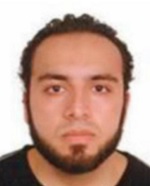
After the weekend bombings in New York and New Jersey in which Afghan-born Ahmad Khan Rahami has been implicated, some say they can no longer maintain the fiction that the perpetrator is not one of their own.
“We can’t just say he’s not part of us,” said Manizhah Naderi, a community leader and a member of Masjid Dar al-Taqwa, an Afghan-American mosque in Flushing, Queens — home to one of the original Afghan immigrant communities in America. “We have to take responsibility somehow that he is an Afghan-American, and how can we make sure that others in the community don’t get radicalized.”
Rahami, 28, was apprehended Monday morning after a shootout with police in Linden, New Jersey — six kilometers from Elizabeth, New Jersey, where he lived and worked at his family-owned First American Fried Chicken restaurant.
New York City Mayor Bill de Blasio said Rahami is the only person believed to be involved in the New York and New Jersey blasts. At least 29 people were injured in the New York explosion.
Akbar Sherzad, the imam of Masjid Dar al-Taqwa who lives in the nearby town of Somerset, New Jersey, said he talked to several Afghans in New Jersey, and no one in the community seemed to have heard of the Rahamis.
Sherzad condemned the bombings, saying they had shaken up the Afghan-American community of greater New York, with an estimated 30,000 to 50,000 members.
“Now that these incidents have been repeated, I hope we can step up our efforts to engage the families to prevent such incidents in the future,” he said in a phone interview.
Fighting against radicalization
While some Muslim-American youth have become radicalized through their association with mosques, Sherzad said the problem lies outside the community.
“Unfortunately, children of families that are distant from their communities and mosques have become victims” of radicalization, he said. “The children make contacts with the [extremist] groups at work or in college without the knowledge of their families.”
A person at Dar ul-Islam mosque in Elizabeth — which counts many Afghans among its members — said Rahami was not a congregant. The New York Times reported that Rahami became religious after a trip to his native Afghanistan four years ago, and he prayed in the back of his family’s store.
Imams at Afghan-American mosques in New York and Virginia, with large immigrant communities from Afghanistan, say they run youth engagement programs and warn their congregants during Friday services against extremist encroachments in their midst.
“Those individuals that are, unfortunately, brainwashed and radicalized, their families have to be very careful,” said Mohammad Nader Hussaini, head of the Mustafa Center, an Afghan-American mosque in Annandale, Virginia.
To prevent “such incidents,” Imam Sherzad said, the Dar al-Taqwa in New York last year launched monthly “family evenings” where families and youth come to discuss extremism.
“We’d listen to them,” Sherzad said. “We’d observe them and we’d counsel them lest they become victims of groups that are trying to brainwash them. We tell families to be vigilant about what kind of people their children interact with.”
Fear of backlash
Still, he said, mosques need to do more to rein in radicalization, adding that he plans to convene his mosque’s board and meet with other local religious leaders “to do something jointly.”
Meanwhile, fear of a violent public backlash against the Afghan-American and the larger Muslim community runs high, with imams and community leaders advising members to keep a low profile in the coming days.
“We’re definitely cautious,” Naderi said. “We’ve told the community to stay cautious, to stay away from the streets for a few days until this dies down.”
Related
US airstrikes kill 8 police officers in Afghanistan
Press TV
September 19, 2016
At least eight police officers have been killed in US airstrikes in Afghanistan’s embattled central province of Uruzgan, officials say.
A military commander said Monday one officer was killed in an initial airstrike targeting police checkpoint in the Saki area of Tirin Kot while seven others were killed in a follow-up strike.
Uruzgan deputy police chief Mohammed Qawi Omari put the death toll at six but said the police were killed by a foreign airstrike. Afghan officials said they were investigating the attack.
The US military command in Kabul confirmed that its warplanes had conducted an airstrike in the area, but said they targeted individuals firing on, and posing a threat to security forces.
The Taliban militant group also said a number of policemen had been killed in American raids in Tirin Kot.
According to provincial officials, Taliban militants briefly entered Tirin Kot in early September before being pushed back by security forces.
Afghanistan has been gripped by insecurity since the US and its allies invaded the country as part of Washington’s so-called war on terror in 2001. Many parts of the country still remain plagued by militancy despite the presence of foreign troops.
The military invasion removed Taliban, but militants still seek to wrest control over the war-ravaged country.
Other Security News
Sanjay Dutt’s next film to be about Afghanistan
Khaama Press: The famous Indian film star Sanjaty Dutt’s next film will be about Afghanistan to focus on the use of children in suicide attacks. Sanjay Dutt is due to shoot for the movie by signing the contract of the film six months after he was released from the jail. Click here to read more (external link).
Afghan U-14’s Through To Semis After Punjab Team Refuse To Play
Tolo News: Afghanistan’s Under -14 team was scheduled to play the Punjab team in the last round of Group D matches in the Suborto Cup Championship 2016 in India on Monday, but Punjab refused to play the Afghan boys. This secured the Afghan’s a place in the semi-finals after organizers ruled the game a 3-0 win in favor of Afghanistan. Click here to read more (external link).
Other Sports News
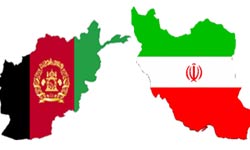
Iran Prisoner Exchange May Ease Tensions Over Mistreatment of Afghan Minority
Noor Zahid
Mehdi Jedinia
VOA News
September 18, 2016
A recent exchange of prisoners between Iran and Afghanistan may signal Tehran’s willingness to repair strained relations between the two countries over the regime’s internal treatment of Afghans, analysts say.
Kabul has lodged several protests in recent months over Iran’s conduct toward Afghans inside Iran, including its caging of several Afghan prisoners in a city square and sending thousands of Afghans to fight on the front lines of the Syrian war.
Around 200 chained Afghan prisoners arrived Thursday on Iranian buses at the Islam Qala checkpoint in western Herat province. The transfer occurred after Kabul handed over approximately two dozen Iranian nationals who had been serving jail terms in Afghanistan.
“Tehran expedited this exchange … to divert attention from the previous events and news of its systematic mistreatment of Afghan citizens,” said Mostafa Hazareh, a Kabul-based Afghan journalist who follows Iranian affairs.
The two countries agreed to a prisoner exchange in 2012, but only two have occurred since then. Sixteen Afghan prisoners were transferred in 2014.
Roughly 3 million Afghans live in Iran, with most settling there after fleeing war and conflict in their homeland. But many lack basic rights and live without citizenship or residency status. About 950,000 Afghans in Iran are classified as refugees.
Iran has sent thousands of Afghan refugees, mainly ethnic Shi’ite Hazaras, to Syria to fight alongside forces of Hezbollah and Iran’s elite Revolutionary Guard forces in support of the Syrian regime. Dozens of Afghans have died in the Syrian war.
Iran’s treatment of Afghans has stirred up diplomatic tension between the two capitals.
Hundreds of Afghans last week protested in front of the Iranian consulate in Herat city to condemn the caging of Afghan detainees in Iran’s Shiraz city.
Economic and infrastructure initiatives
Analysts see the prisoner exchange as an attempt by Iran to repair ties as several economic initiatives and the implementation of power and water management projects kick off in Afghanistan.
A new rail corridor, under construction between Iran and Afghanistan, will greatly expand the flow of materials from Asia to Iran through Afghanistan. The port will provide an alternative for trade between Afghanistan and India.
“Iran is looking forward to the transit of goods from its southeastern Chabahar seaport to Afghanistan and Central Asian states,” said Wadir Safi, a Kabul University professor of law and political science.
The port will provide Tehran with a strategic advantage and links with central Asian states through Afghanistan.
“Iran is looking for regional and international connectivity after years of sanctions,” analyst Safi said, referring to international trade bans imposed over Iran’s controversial nuclear program.
Water issues
Iranian authorities also have been hunting for a larger share of water supplies from Afghanistan. It has voiced concerns that Herat province’s new Indian-funded hydroelectric and irrigation Salma Dam, recently renamed as the Afghan-India Friendship Dam, may reduce the flow of water into Iran.
“Iran’s efforts to revive the Hamoun wetlands on the Iran-Afghanistan border are intensifying,” economic analyst Fatemeh Aman told VOA.
The Afghan government has downplayed Iranian concerns and said the dam will not affect the amount of water flowing into Iran.
“And if Iran wants more water, it should revert to international laws governing water resources,” law professor Safi said, adding that Iran could consider buying additional water from Afghanistan, beyond the amount agreed in the 1973 water-sharing treaty between the two countries.
Iran sees increasing trade with Afghanistan as vital to reviving its economy.
“Strengthening our regional cooperation with Afghanistan is a priority and a major pathway to consolidate peace and economic in the region,” Gholamali Khoshroo, Iran’s ambassador to the United Nations, said last week.
Complaints over conditions
But even as trade between the countries increases, whether the prisoner exchange results in softened treatment for Afghans inside Iran remains in doubt, analysts say.
“Afghan prisoners receive mistreatment in Iranian prisons. They live in poor conditions,” said Shamsoddin Rahnama, An afghan activist in Khorasan province which borders Afghanistan.
Human rights groups estimate that roughly 5,000 Afghans are imprisoned in Iran. Activists accuse the Iranian judiciary of bias; many Afghans say they have not received due process.
Human rights groups have also expressed concerns over how Afghan refugees are treated in Iran.
“The estimated 2.5 to 3 million Afghan refugees and migrant workers in Iran face barriers to receiving social services. They are at higher risk than the general population of being arbitrarily questioned and sometimes detained by authorities, with little recourse to the law when abused by government officials or private parties,” Human Rights Watch said earlier this year.
Rafiuallah Baidar, a spokesman for the Afghanistan Independent Human Rights Commission, told VOA the commission “expects that Iranian authorities would treat Afghan refugees with dignity and in accordance with the international Refugee laws. Their human rights must not be violated.”
The Iranian regime says it is improving life for Afghans inside Iran.
“We continue our support to hundred thousands of Afghan refugees, especially in fields of education and medical services,” said Khoshroo, the Iranian envoy to the United Nations.
Afghan analysts say the Iranian regime will continue to use Afghans inside the country as a political bargaining asset with Kabul.
Although Iran publicly denounces militant insurgency in Afghanistan, Tehran has reportedly been in communication with the Taliban battling the Afghan government. The group’s supreme leader, Mullah Akhtar Mansoor, died in a U.S. drone strike after holding meetings in Iran.
NY Authorities Seek Person of Interest in Bombing
VOA News
September 19, 2016
NEW YORK — Authorities in New York are searching for a 28-year-old man in connection with the bomb that exploded Saturday night in Manhattan.
An FBI statement says Ahmad Khan Rahami, a U.S. citizen of Afghan decent, is wanted for questioning. It says his last known address was in Elizabeth, New Jersey.
New York Mayor Bill de Blasio told CNN authorities are confident they “need to get this guy in” right away. Earlier Monday, New York Governor Andrew Cuomo reiterated that Saturday’ bombing was an “act for terrorism,” and said they may be a “foreign link.” A day earlier, Cuomo had said he didn’t believe there was a connection to “international terrorism.”
The FBI and police in New York have been searching for suspects and possible links between the Saturday blast and another explosive device found nearby.
Authorities stopped a “vehicle of interest” on a highway in the Brooklyn section of New York late Sunday, and the FBI said it questioned five people inside, but that no one had been charged with any crime.
Chelsea blast
The blast Saturday in the Chelsea neighborhood wounded 29 people, all whom have been released from the hospital.
The second device, recovered a short time after the first went off, involved a pressure cooker with a cell phone attached to it. Police were able to safely remove it from the area and said Sunday they blew it up in a controlled explosion.
FBI technicians are examining evidence from both of the bombs at a lab near Washington.
Tom Sanderson, director of the Transnational Threats Program at the Washington-based Centers for Strategic and International Studies (CSIS), told VOA he expects investigators will learn a good amount from those tests.
“Someone’s DNA is going to be on some component of that pressure cooker bomb,” Sanderson said.
He put the chances of a jihadist group being responsible at 50 percent, but said that in a diverse area like New York others such as a white supremacist group could have placed the bombs.
Many questions remain
New York City Mayor de Blasio cautioned Sunday a lot of work remains to figure out the motivation behind the bombing.
“Was it a political motivation, a personal motivation, what was it? We do not know that yet,” he told reporters.
New York Governor Cuomo said an extra 1,000 police and National Guard troops would patrol the New York subway system as a precaution.
Both leaders also said there was no evidence yet linking the New York bombs with a pipe bomb that exploded Saturday morning in a trash can in a New Jersey beach town 135 kilometers south of the city. No one was hurt in that blast.
Authorities said yet more devices were found late Sunday in a backpack in a trash can at a train station in Elizabeth, New Jersey, located just outside New York. Elizabeth Mayor Chris Bollwage said one of the devices exploded as police tried to disarm it with a robot.
The mayor also said that given the station’s location and where the bag was found, it is “very possible” someone put it in the trash can in order to get rid of it instead of intending for it to blow up there.
Busy time in NYC
New York is especially busy with hundreds of world leaders and dignitaries visiting this week for the U.N. General Assembly.
U.N. spokesman Stephane Dujarric told VOA that officials assess security needs inside the U.N. complex on a daily basis.
“Outside of the gates, we are in the hands of the host country, at the federal and local levels,” he said. “We appreciate their work and, no doubt, they are doing their utmost to keep everyone safe,” he added.
Chelsea resident Michelle Katz told VOA she was in bed when something sounded “like a bomb exploding or a truck driving into a building.” Two minutes later, “there were endless sirens,” Katz told VOA.
Another witness, Denise Coles, said the bomb went off as she was pulling into a parking place. “I turned the car off and that’s when we heard the explosion. It was like you could feel it inside of you. I looked down the block and I saw the smoke coming out.”
“We’re fortunate that this didn’t happen during the week, like a work day, a Monday or Tuesday,” said Steven Faria, who works at a nearby veterans’ hospital. “With all the people that work in this area, I think the casualties would have been twice as many people.”
VOA reporters Margaret Besheer, Esha Sarai, Ramon Taylor, Steve Herman, and Celia Mendoza contributed to this report from New York.
U.S.-Fueled Corruption Dooms Efforts to Rebuild Afghanistan
Michael Hughes: The U.S. reconstruction watchdog’s latest report assessing corruption in Afghanistan reads like something ripped from the pages of a Ludlum spy thriller, replete with malign actors, drug kingpins, predatory warlords, and crooked politicians. Archetypal CIA agents are seen running around with bags – literally bags – of cold hard cash, paying off a slew of unsavory characters to do the U.S. government’s bidding. Unfortunately, this was no work of fiction but a grim picture of reality, amounting to one of the most comprehensive and scathing indictments of America’s role in breeding and propagating the endemic corruption that continues to plague Afghanistan. Click here to read more.
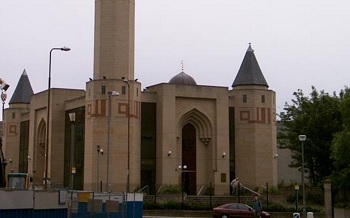
Police investigating hate crime against Edinburgh mosque
Press TV
September 18, 2016
Police in the Scottish capital of Edinburgh have launched a hate crime investigation after a mosque was damaged by fire.
The incident happened in the early hours of Sunday, when an object was thrown at the Central Mosque in Potterrow, causing damage to an entrance door.
The attack caused no injuries but burned parts of the garden area surrounding the place of worship.
Chief Inspector Mark Rennie, local area commander for south east Edinburgh, described the move as a “despicable and reckless act” and urged people with knowledge of any suspicious behavior around the mosque or in the Potterrow area to come forward.
“Fortunately no-one was injured as a result of this incident, but the consequences could have been far worse had the fire taken hold and spread,” said Detective Inspector John Kavanagh.
Police said their prime suspect was a man believed to be in his early 30s, who reportedly spoke to a group of females in George Square before the attack.
Edinburgh and Lothians Regional Equality Council (ELREC) condemned the attack, with chairman Foysol Choudhury calling it an attack against “our freedom of religion and expression.”
“Edinburgh cannot tolerate any action that aims to spread hate and division within its society,” he said, calling on possible eyewitnesses to help with police investigations.
According to the National Police Chiefs’ Council (NPCC), hate crime rates in the UK– England, Scotland, Wales and Northern Ireland — have surged by 500-percent following the recent vote to leave the European Union (EU).
On June 23, nearly 52 percent of the British voters partaking in an EU referendum voted to leave the 28-member bloc.
UK police saw an increase of 42 percent in hate crime claims in the weeks before and after the polling day, with some 3,198 filed between June 16 and 30.