logo

Daily Updated Afghan News Service

  • Home
  • About
  • Opinion
  • Links to More News
  • Good Afghan News
  • Poll Results
  • Learn about Islam
  • Learn Dari (Afghan Persian/Farsi)

Recent Posts

  • Akhundzada Wants Subordinates, Not Partners In Power, Say Resistance Groups November 18, 2026
  • Taliban Tighten Restrictions in Panjshir as Residents Say Their Movements Are “Under a Microscope” November 18, 2026
  • Tolo News in Dari – November 18, 2026 November 18, 2026
  • Biden says he was told Kabul would hold for six months after US troops left November 18, 2026
  • Afghanistan’s GDP Per Capita Set To Fall For Third Straight Year, Says World Bank November 18, 2026
  • The toxic aftermath of decades of war in Afghanistan November 17, 2026
  • Taliban Force Two Shia Clerics To Abandon Mourning Ceremonies In Exchange For Release November 17, 2026
  • Taliban Leader Offers Government Posts To Opponents For First Time November 17, 2026
  • Tolo News in Dari – November 17, 2026 November 17, 2026
  • Ariana Airlines to launch direct flights between Mazar-e-Sharif and Jeddah November 17, 2026

Categories

  • Afghan Children
  • Afghan Sports News
  • Afghan Women
  • Afghanistan Freedom Front
  • Afghanistan United Front
  • Al-Qaeda
  • Anti-Government Militants
  • Anti-Taliban Resistance
  • AOP Reports
  • Arab-Afghan Relations
  • Art and Culture
  • Australia-Afghanistan Relations
  • Book Review
  • Britain-Afghanistan Relations
  • Canada-Afghanistan Relations
  • Censorship
  • Central Asia
  • China-Afghanistan Relations
  • Civilian Injuries and Deaths
  • Corruption
  • Crime and Punishment
  • Drone warfare
  • Drugs
  • Economic News
  • Education
  • Elections News
  • Entertainment News
  • Environmental News
  • Ethnic Issues
  • EU-Afghanistan Relations
  • Everyday Life
  • France-Afghanistan Relations
  • Germany-Afghanistan Relations
  • Haqqani Network
  • Health News
  • Heroism
  • History
  • Human Rights
  • India-Afghanistan Relations
  • Interviews
  • Iran-Afghanistan Relations
  • ISIS/DAESH
  • Islamophobia News
  • Japan-Afghanistan Relations
  • Landmines
  • Media
  • Misc.
  • Muslims and Islam
  • NATO-Afghanistan
  • News in Dari (Persian/Farsi)
  • NRF – National Resistance Front
  • Opinion/Editorial
  • Other News
  • Pakistan-Afghanistan Relations
  • Peace Talks
  • Photos
  • Political News
  • Reconstruction and Development
  • Refugees and Migrants
  • Russia-Afghanistan Relations
  • Science and Technology
  • Security
  • Society
  • Tajikistan-Afghanistan Relations
  • Taliban
  • Traffic accidents
  • Travel
  • Turkey-Afghanistan Relations
  • UN-Afghanistan Relations
  • Uncategorized
  • US-Afghanistan Relations
  • Uzbekistan-Afghanistan Relations

Archives

Dari/Pashto Services

  • Bakhtar News Agency
  • BBC Pashto
  • BBC Persian
  • DW Dari
  • DW Pashto
  • VOA Dari
  • VOA Pashto

Kerry Urges Taliban To Strike Peace Deal With Kabul

5th October, 2016 · admin
John Kerry

John Kerry

Radio Free Europe/Radio Liberty
October 5, 2016

U.S. Secretary of State John Kerry has urged the Taliban to follow the recent example of an Afghan warlord and strike its own peace deal with the Kabul government.

Speaking in Brussels at an international donors conference for Afghanistan on October 5, Kerry said that “there is a path toward an honorable end to the conflict that the Taliban have waged — it is a conflict that cannot be won on the battlefield.”

He said that a peace deal signed last week by Gulbuddin Hekmatyar, who heads the Hezb-e Islami group and was a key figure in Afghanistan’s civil war in the 1990s, was a “model for what might be possible.”

Kerry added that a peace deal is the only way for the Taliban to end the fighting, ensure lasting stability, and “achieve a full drawdown of international military forces, which is their goal.”

“Let me repeat it,” he said. “The [Taliban’s] goal of ridding Afghanistan of external forces will not occur by the demand or by the continued insurgency. It will come through peace.”

Last week’s agreement requires Hekmatyar to cease violence, cut all ties with international militant groups, and accept the Afghan Constitution, including its guarantee of rights for women and minorities.

“In return for keeping these commitments, Hekmatyar’s group will be able to emerge from the shadows to rejoin Afghan society,” Kerry said.

The agreement grants Hekmatyar amnesty for past offences and the release of certain Hezb-e Islami prisoners. The Kabul government also agreed to press for the lifting of international sanctions on Hekmatyar.

However, the two sides agreed to disagree over Hezb-e Islami ‘s continuing demand that all foreign soldiers immediately leave the country.

There has been no immediate reaction from the Taliban to Kerry’s remarks. The Taliban penetrated the center of the northern city of Kunduz on October 3, and is testing the defenses of two other provincial capitals in the south of the country.

The Brussels conference, which includes representatives of more than 70 countries and dozens of agencies and nongovernmental organizations, is expected to see pledges of more than $3 billion a year of development aid to the Afghan government through 2020.

EU foreign policy chief Federica Mogherini announced that the 28-nation bloc would pledge 1.2 billion euros ($1.5 billion) a year and said that “I would expect similar levels of engagement from our partners.”

On the eve of the conference the EU and Kabul announced they had reached a deal to speed up Afghanistan’s taking back of migrants from Europe. Under the deal, Kabul is to accept the return of 80,000 Afghan asylum-seekers now in EU states.

Addressing the conference on October 5, Afghan President Ashraf Ghani pledged that his government would continue efforts to rein in corruption and reduce poverty in Afghanistan — two issues considered to be strong recruitment cards for insurgents.

“We are going to be relentlessly focused on reduction and elimination of poverty as our central task,” he said, noting that 39 percent of the Afghan population lives on less than $1.35 a day.

‘Encouraging Dividends’

Kerry said international support for Afghanistan has already produced “encouraging dividends” since the United States and its allies toppled the Taliban in 2001. The United States invaded Afghanistan after the Taliban refused to expel Al-Qaeda’s leadership from the country following the 9/11 attacks.

“Since 2001, maternal mortality in childbirth in Afghanistan has gone down by 75 percent” Kerry said. “Average life expectancy has risen from 42 years to 62 years. Access to basic health care has skyrocketed from nine percent to 67 percent.”

The top U.S. diplomat also called on Afghanistan’s regional neighbors to do more to help it make peace with the Taliban and build on its economic progress.

“There are several countries that actually could help come together, and I urge Russia, China, Pakistan, India, and Iran to think about the special role that they could play in this region in order to help make a major difference not only in the long-term economy and future social structure of Afghanistan but in reaching peace with the Taliban,” he said.

He added that the more integrated Afghanistan is with its neighbors, the “more expansive economic growth will be and the more jobs that will be created.”

The EU sought hosted the United States, China, India, and Pakistan at a dinner as the conference opened October 4 in an effort to build cooperation between them. Washington and New Delhi say Pakistan continues to harbor Afghan Taliban leaders and must do more to bring them to the negotiating table.

Mogherini said on October 5 that there was an understanding “to work on a common basis for regional political support for the peace and reconciliation process in Afghanistan.”

With reporting by AFP, AP, and Reuters

Copyright (c) 2016. RFE/RL, Inc. Reprinted with the permission of Radio Free Europe/Radio Liberty, 1201 Connecticut Ave NW, Ste 400, Washington DC 20036.
Posted in Peace Talks, Security, Taliban, US-Afghanistan Relations |

EU holds donors conference for Afghanistan

5th October, 2016 · admin

euPress TV
October 5, 2016

The European Union (EU) is holding a fund-raising conference for the cash-strapped government in Afghanistan, which has to tackle with a host of issues, including rampant militancy in the country.

Leaders from more than 70 countries and 20 international organizations and agencies have gathered in the EU’s de facto capital on Tuesday to take part in the two-day EU-led donors conference, which is titled “The Brussels Conference on Afghanistan: realizing Afghanistan’s economic potential and reinforcing the role of women.”

The EU has said the overall aim of the conference is “generating international support for the Afghan reform process and ensuring continued international political and financial support to bolster Afghanistan’s economic stability, development and state-building processes over the next four years.”

The Afghan government is expecting the international community to allocate an annual four billion dollars to it for programs to rebuild the country, as pledged at the last donors conference in Tokyo in 2012.

Eighty percent of Afghanistan’s budget is financed by international aid.

EU foreign policy chief Federica Mogherini said on Wednesday that the EU “will pledge 1.2 billion euros (1.3 billion dollars) and we would expect a similar level engagement from our partners.”

The United States in one of the countries attending the conference.

EU officials had warned ahead of the meeting that it was unclear whether the target of four billion dollars would be achieved, with media speculating that the meeting would only drum up three billion dollars annually to keep the government running until 2020.

The US and the EU each currently provide about a third of all international aid to Afghanistan, with Japan being the next most generous donor.

Years of insecurity and conflict since the US invasion of Afghanistan in 2001 have left the country in tatters.

Several international conferences have been held to plan and review ways to end the militancy and insecurity in the country and build a prosperous Afghanistan. However, little has been achieved and the country continues to be plagued by militancy and a shortage of funds.

On the eve of the conference, London-based Amnesty International issued a statement warning that the EU may impose a potential deal similar to the refugee deal the bloc has signed with Ankara.

“It would be inadmissible that any agreement forged in Brussels makes financial assistance for Afghanistan conditional on the Afghan government’s cooperation to accept the mission and return of asylum seekers,” Amnesty says.

Mogherini on Wednesday denied that such a scenario would occur.

However, European Commission spokeswoman Maja Kocijancic told a news briefing in Brussels on Monday that, “The European Union and Afghanistan reached an important political arrangement yesterday, the so-called Joint Way Forward on migration issues,” adding, there would be further “intense” work to implement the arrangement over the next few days.

While the details of that “arrangement” were not revealed, a leaked EU memo in March had suggested that financial pledges would be made in return for Afghanistan accepting 80,000 asylum seekers deported from EU countries.

Also in March, the EU signed a controversial deal with Turkey based on which Brussels promised billions of dollars in aid to Turkey, among other promises, in return for Greece accepting refugees reaching Greece’s shores via Turkish space.

Just days ago, Turkey’s president complained that despite Turkey’s commitment to the deal, and a stop of refugees entering the EU from the Turkish side, the EU had not paid the money it pledged.

Related

  • Ghani at Brussels: Afghan women no longer passive victims
  • Enlightenment Movement organize demo in Brussels amid ongoing major conference
  • World Powers Seek More Dollars to Keep Afghanistan Running
Posted in Economic News, EU-Afghanistan Relations, Human Rights, Refugees and Migrants | Tags: Asylum |

US soldier killed in Afghanistan bomb blast: Pentagon

5th October, 2016 · admin
Pentagon

Pentagon

Press TV
October 5, 2016

The US military says one of its service members has been killed in a bomb blast in Afghanistan’s eastern province of Nangarhar.

“The service member was killed conducting operations with Afghan forces when the patrol triggered an Improvised Explosive Device,” the Pentagon said in a statement on Tuesday.

According to Pentagon spokesman Peter Cook, the soldier, whose name and personal details are yet to be released, was killed in a “combat situation” while on foot patrol.

Cook said an investigation into the matter was under way, adding that he was not aware of any other casualties in the incident.

Afghanistan is still suffering from insecurity and violence years after the United States and its allies invaded the country in 2001 as part of Washington’s so-called war on terror. The military invasion removed the Taliban from power, but their militancy continues to this day.

Last October, US President Barack Obama announced plans to keep 9,800 US troops in Afghanistan through 2016 and 5,500 in 2017, reneging on his promise to end the war there and bring home most American forces from the Asian country before he leaves office at the end of 2016.

Over the past several months, Taliban militants have intensified their pressure with numerous offensives on other key Afghan provinces, including Kunduz and Takhar.

About 2,300 US troops have been killed in Afghanistan since the US-led invasion in 2001.

Posted in Security, US-Afghanistan Relations | Tags: Nangarhar |

UNHCR: More Than 100,000 Afghan Refugees Repatriated in 5 Weeks

5th October, 2016 · admin

unhcrVOA News
October 4, 2016

ISLAMABAD — The United Nations says more than 200,000 Afghan refugees have returned to their war-torn country from Pakistan this year, more than half of them within the past five weeks, despite intensification in Taliban-led hostilities in Afghanistan.

The overall figures represent the highest number since 2007 when more than 360,000 refugees went back to Afghanistan under the UNHCR-sponsored voluntary repatriation program, officials noted.

Several factors are contributing to the unusual rise in the number of Afghan families choosing repatriation, but the exodus is “largely voluntary,” says Dunya Khan, a UNHCR spokesperson in Pakistan.

In addition she says Pakistan introduced a new border management system in early June to regulate movement and discourage illegal crossers on its nearly 2,600-kilometer porous frontier with Afghanistan.

Khan says the new border controls require Afghans to carry valid travel documents and visas to enter Pakistan, prompting around 6,000 Afghans to go back every day.

“There were many (refugee) families who were split in Pakistan and Afghanistan. Many heads of the families were working in Afghanistan and coming to Pakistan to visit their families. Since the travel has been regularized, therefore, the majority of the Afghans think that for every trip it is not really possible to get a visa, and they have decided to go back to Afghanistan,” Khan explained.

Pakistan still hosts about 1.5-million registered Afghan refugees, while another estimated one million are living illegally.

For decades, Afghans were moving across the border on special permits, without any restrictions or Pakistani visas.

But rising tensions between the two countries over mutual terror allegations have prompted Islamabad to tighten the cross-border movement, saying it will help deter terrorist infiltration and ease bilateral tensions.

The undocumented Afghans are currently subjected to a Pakistani police crackdown, apparently to push them to go back to their country.

Authorities say the illegal Afghan community, and in some cases even registered refugee populations, are being used by anti-state elements to plot terrorist attacks in Pakistan.

Khan says the UNHCR decision to double the cash grant for voluntary returnees from $200 to $400 per person in mid-June, and a newly-launched campaign by the Afghan government to encourage its displaced citizens to return to their country are also contributing factors for speeding up the voluntary repatriation process.

“The government of Afghanistan, for the first time, has proactively started advocating for Afghan refugees to come back to their country and take part in the nation-building process, and many Afghan people now feel that connection and the warm welcome which is being extended to them,” Khan noted.

The Pakistan government has been pushing Kabul to arrange for the return of nearly all Afghans because it insists their presence has put pressure on infrastructure and the local economy, which has increasingly upset host communities.

Under the policy, Islamabad has declined to agree to an Afghan request for extending the legal stay of refugees for two years. The government has only recently given the registered Afghans until next March to go back to Afghanistan, a long delayed deadline.

Khan says the delayed announcement increased anxiety and insecurity among Afghan refugees, prompting many families to rush back to their country.

She added while UNHCR has not documented any significant instances in which registered refugees have faced police harassment and coercion, but such actions against undocumented Afghans have generally scared the displaced community.

U.N. officials estimate more than one million people will be on the move in Afghanistan by the end of this year because of displacements the Afghan conflict is causing and because of the large number of refugee families returning to Pakistan and Iran.

The Afghan government is also under pressure from the European Union to take back tens of thousands Afghan migrants seeking asylum there.

Posted in Pakistan-Afghanistan Relations, Refugees and Migrants, UN-Afghanistan Relations | Tags: Asylum |

In Kunduz, Afghan Forces Battling Taliban For Second Day

4th October, 2016 · admin

kunduzRadio Free Europe/Radio Liberty
October 4, 2016

Fighting between Afghan security forces and Taliban militants has moved into a second day in the northern city of Kunduz.

Taliban fighters launched an assault on Kunduz early on October 3, about a year after briefly capturing the city.

Officials said on October 4 that fighting was still going on in the outskirts of Kunduz but that its center had been cleared of militants.

Interior Ministry spokesman Sediq Sediqqi said gunmen were hiding in residential homes, making progress slow and difficult.

Kunduz police chief Mohammad Qasim Jangalbagh reported that “hundreds” of militants and three members of the government security forces had been killed in the fighting.

It was not immediately possible to confirm the toll.

The Taliban assault came ahead of an international donor conference starting in Brussels later on October 4, where Afghanistan’s international partners will discuss aid to the country.

Based on reporting by dpa, AP, and AFP

Copyright (c) 2016. RFE/RL, Inc. Reprinted with the permission of Radio Free Europe/Radio Liberty, 1201 Connecticut Ave NW, Ste 400, Washington DC 20036.

More Security News

  • Taliban turning Kunduz to another front line: Journalist
  • Vice President Dostum takes charge of operations in Kunduz
  • Clashes Ongoing in Kunduz, Governor Says Situation Improving
  • 40 militants killed in northern Afghan city, Taliban retreats from many areas
  • Khanshin district in S. Afghanistan falls to Taliban
Posted in Security, Taliban | Tags: Kunduz |

Afghanistan’s rare earth minerals

4th October, 2016 · admin

afghanistanThe Diamond Back: Afghanistan’s minerals, which are instrumental in every technological enterprise from surface-­to­-air missiles to automobiles, are primed to provide an alternative to the Chinese monopoly that currently holds more than 90 percent of the world’s supply.  Click here to read more (external link).

Posted in Economic News, Environmental News | Tags: rare minerals |

Afghanistan Appeals for Aid to Keep Afghan Migrants at Home

4th October, 2016 · admin

euMasood Farivar
VOA News
October 3, 2016

Afghanistan is appealing to European donors to open their wallets at an international donors’ conference Wednesday, arguing that jobs created through development projects will help stem the tide of migrants that is destabilizing the European continent.

High unemployment combined with growing insecurity drove nearly 200,000 Afghans to Europe last year, exacerbating the global migrant crisis.

European nations have struggled to cope with the flood of young Afghan asylum seekers, and exerted pressure on Afghanistan to roll back the human exodus.

“If we hesitate to address the migration issue, public opinion in European countries will change, and this could impact aid,” Eklil Hakimi, Afghanistan’s finance minister, told Afghan lawmakers Sunday.

Salahuddin Rabbani, the Afghan foreign minister, added that European nations have warned Afghanistan that it risked a reduction in aid if it did not act on migration.

“The migrant crisis has changed politics in the host countries,” Rabbani told members of Afghanistan’s lower house of Parliament. “They have put forward strict immigration laws and repeatedly asked Afghanistan to take responsibility for its asylum seekers.”

Afghan officials say they can stop the migration to Europe, but they need international support to create jobs that will keep the youth in the country.

Support for Afghanistan

The two officials are accompanying President Ashraf Ghani and CEO Dr. Abdullah Abdullah to the Brussels conference where Afghanistan will present its new national peace and development framework — a five-year reform, governance and economic development plan.

Afghanistan and the European Union are co-hosting the conference, which will be attended by representatives from more than 70 countries and 20 international organizations and agencies. U.N. Secretary General Ban Ki-moon and U.S. Secretary of State John Kerry are among conference speakers.

The development framework, which aims to “achieve self-reliance and increase the welfare of [the Afghan] people,” requires billions of dollars in funding.

Hakimi estimated that donors will pledge $3.5 billion toward financing the development plan.

Among major donors, Britain said this week it would provide almost $1 billion in development aid to Afghanistan over the next five years.

A State Department spokesman declined to say how much the U.S. planned to commit and referred questions to the conference organizers.

James Cunningham, who served as U.S. ambassador to Kabul from 2012 to 2014, said there is wide support for continued commitment to Afghanistan.

“Another cause for optimism is it’s pretty unprecedented to have that degree of international agreement on almost anything,” Cunningham said Monday, speaking on a panel about Afghanistan at the Brookings Institution in Washington.

Creating jobs

While asking for billions of dollars in funding, Afghanistan is also pledging to wean itself off foreign aid through economic growth and job creation. The development plan envisions Afghanistan’s reliance on foreign aid dropping from 70 percent of government expenditure to 40/50 percent by 2020, as domestic revenue grows from 10.3 percent of GDP to about 14.0 percent of GDP.

Job creation will be key not only to reducing reliance to foreign aid, but also to stopping the mass migration from the country.

Without “a big increase in jobs, Afghans will continue to resort to desperate measures such as illicit narcotics production, out-migration, and joining violent criminal networks,” according to a draft of the development plan.

The plan will take time to bear fruit and will require sustained donor support.

“The sustainable development that will help Afghanistan meet its many challenges, bring an end to poverty, and ensure security and stability for our country will take longer than a single generation to realize,” the plan says.

The Brussels conference comes less than three months after NATO leaders met in Warsaw and agreed to fund Afghanistan’s security forces for the next four years, to the tune of $3 billion.

The U.S. provides roughly $3.5 billion annually in support of the 350,000 members of the Afghan armed forces, in addition to about $1 billion in development aid.

The United States and its partners have a shared interest in supporting Afghanistan’s reform and development agenda, Cunningham said.

“The planks are already in place to demonstrate there is going to be long-term international engagement in Afghanistan,” he said.

VOA’s Afghanistan Service contributed to this report.

Posted in Economic News, EU-Afghanistan Relations, Refugees and Migrants | Tags: Asylum |

Taliban flushed out of northern Afghan city of Kunduz

4th October, 2016 · admin

kunduzPress TV
October 3, 2016

Afghan commandos have repelled a Taliban attack on Kunduz after the terrorists briefly took control of the northern city’s center.

“Government controls Kunduz City and Afghan security forces are in control of the main square with additional troops coming,” said NATO forces stationed in Afghanistan on Monday.

Afghan special forces and government helicopters were brought in earlier in the day to back up local forces who were battling the militants.

“The city center is now in our hands and not in their hands. We are launching an attack to clean up the area,” said Kunduz police chief Kassim Jangal Bagh.

Pentagon spokesman Navy Captain Jeff Davis also noted that the militant attack had been repelled, adding that the US had carried out several airstrikes in support of Afghan forces.

“The situation there remains fluid, we are continuing to watch it closely and to work with our Afghan partners,” he said.

In the early hours of Monday morning, Taliban militants reached the center of the Kunduz following fierce clashes with government forces.

Over the past few months, Afghan security forces have focused on foiling Taliban attacks in Helmand and Kunduz.

On September 28 last year, the Taliban militant group overran Kunduz in a lightning advance. The city was the only provincial capital to have fallen into their hands since the 2001 US-led invasion.

They remained in full control of the city for two days and eventually announced they were withdrawing from its outskirts on October 15.

The militant group lost its grip over Afghanistan in the US-led military invasion, but security has not been delivered to the country despite the presence of foreign boots on Afghan soil.

In July, UN monitors tallied 1,601 civilian deaths and 3,565 injuries in Afghanistan in the first half of 2016. The records, it said, showed an unprecedented rise in civilian casualties.

More Security News

  • Taliban videos purportedly shows capture of key parts in Kunduz city
  • US air power in position and prepared to assist in Kunduz: NATO
  • Taliban Increases Attacks on Baghlan As Battle Intensifies In Kunduz
  • Taliban Seize Helmand’s Nawa District As Leaders Leave For Brussels
Posted in Civilian Injuries and Deaths, Security, Taliban | Tags: Kunduz |

Afghanistan face long period of international downtime

3rd October, 2016 · admin
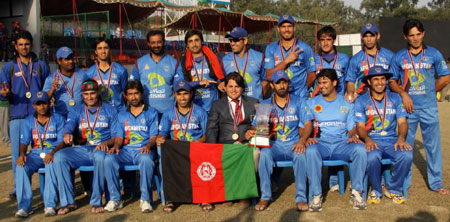
Afghanistan's National Cricket Team

Afghanistan’s National Cricket Team

ESPNCricinfo: Afghanistan will have to wait till June next year for their next international assignment against a Full Member, when they travel to the West Indies. Neither of the teams will be part of the Champions Trophy, which will also take place at that time of the year in England. In the interim, Afghanistan will take part in a training camp at home, play in this season’s Ahmad Shah Abdali four-day domestic tournament and wait for confirmation on a T20 tournament in Dubai involving other Associate nations. Click here to read more (externa link).

Related

  • Nabi, Shahzad to play in BPL 2016-17
Posted in Afghan Sports News | Tags: Cricket |

Taliban Launches Attack on Kunduz

3rd October, 2016 · admin

kunduzAyaz Gul
VOA News
October 3, 2016

ISLAMABAD — Fighting erupted in northern Afghanistan after Taliban insurgents staged a pre-dawn coordinated offensive on the strategically important city of Kunduz, which they briefly overran a year ago.

Local officials say the Islamist insurgency assaulted the provincial capital from four directions and fought their way into the city.

Residents told VOA that when they woke up Monday they saw Taliban fighters in the streets of Khakani, a western neighborhood of the provincial capital, where insurgents had taken up positions in civilian houses and were firing at Afghan security forces.

Afghan national security forces launch counter-offensive

Afghan Defense Ministry spokesman Dawlat Waziri told VOA national security forces backed by air power in a counter offensive pushed back the insurgents and fighting was still raging on the outskirts of Kunduz.

“Their (Taliban) attacks have been repulsed and they have suffered heavy casualties and there is no serious threat to the Kunduz city,” Waziri asserted.

The United States military backed the government claims, saying it is closely monitoring the situation in Kunduz and coordinating with Afghan partners to assist, but it also played down reports of any immediate threat to the city.

“At this point, we are not observing evidence via our internal means to support the reports that Kunduz is under significant attack,” U.S. military spokesman Brigadier General Charles Cleveland told VOA.

He said that both the NATO-led Resolute Support mission and the U.S. military continue to train, advise and assist Afghan forces and “will continue to do so and position our capabilities, to include air support, throughout the area as needed.”

Taliban claims heavy casualties

For its part, a spokesman for the Taliban, Zabihullah Mujahid, claimed its fighters inflicted heavy casualties on Afghan forces and were still in control of parts of Kunduz.

Separately, the Taliban also launched attacks on the Nawa district of the largest Afghan province of Helmand where insurgents are in control of several districts.

The provincial government in a statement confirmed killing of the district police chief in the fighting but denied reports any state installation was overrun by the Taliban. Afghan forces, it said, killed at least 45 insurgents, including their district commander in the fighting.

Defense ministry spokesman Waziri acknowledged intense fighting in the southern province has been raging but dismissed concerns its capital city, Lashkar Gah, is on the verge of collapse to the Taliban.

The Taliban captured Kunduz in late September, 2015, dealing a blow to internationally-trained Afghan forces. This was the first time the Islamist group had overrun a provincial capital after it was ousted from power by a U.S.-led military coalition in 2001.

Ghani heads to Brussels

The latest fighting comes as President Ashraf Ghani and his governing partner Chief Executive Abdullah Abdullah left for Brussels to participate in Tuesday’s conference on Afghanistan to secure financial aid from the international community for next four years to support reconstruction efforts in their war-torn nation.

The European Union and Afghanistan are co-hosting the conference focusing on conflicts in Syria and Iraq as well as the worst migration crisis in decades is driving international attention from the Afghan problem.

Afghan leaders plan to brief the gathering on progress they have achieved in addressing challenges of security, corruption, economic and human development.

While efforts to engage the Taliban in peace talks have not yet produced results, Ghani is expected to present last week’s peace deal he signed with the second largest Afghan insurgent group, Hizb-e-Islami, as a major step towards ending the conflict.

Other Security News

  • Powerful blast kills 6 in northern Afghanistan [Jowzjan province)
  • No consensus in Afghanistan on how to deal with Taliban
Posted in Security, Taliban | Tags: Kunduz |
Previous Posts
Next Posts

Subscribe to the Afghanistan Online YouTube Channel

---

---

---

Get Yours!

Peace be with you

Afghan Dresses

© Afghan Online Press
  • About
  • Links To More News
  • Opinion
  • Poll