
 Reuters: The Afghan Taliban has sought to reassure the United Arab Emirates that it was not behind an attack in the southern city of Kandahar that killed five UAE diplomats and injured the ambassador, senior Taliban officials said on Thursday. Click here to read more (external link).
Afghan girl attacks gender inequality in society one kick at a time
 KABUL, Jan. 19 (Xinhua) — “My prime objective is gender equality between men and women in Afghanistan and that’s why I’m calling on all girls to break down the cultural barriers and join me in promoting Wushu to achieve this goal,” Wushu martial artist, Seema Azimi, 20, told Xinhua recently. Click here to read more (external link).
Related
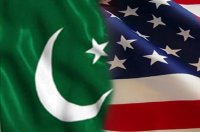
Pakistan Upbeat About US Ties Under Trump; Critics Skeptical
 Ayaz Gul
VOA News
January 19, 2017
ISLAMABAD — While misgivings and distrust marred and further complicated Pakistan’s relations with the United States over the past eight years, officials in Islamabad appear upbeat about a more “substantive” and mutually “advantageous” engagement with the incoming administration of Donald Trump.
President Barack Obama’s administration provided billions of dollars in economic and military assistance to Pakistan for its cooperation in securing volatile tribal regions on the Afghan border.
But persistent allegations that anti-Afghanistan and anti-India militant groups continue to operate out of Pakistan, with not enough action taken against them, have strained Islamabad’s relations with Washington.
Pakistan’s allegedly fast-growing nuclear weapons capability has also deepened frictions and hampered progress in moving forward bilateral ties.
For their part, Pakistani officials complained that the Obama administration’s “ambiguous” Afghan policy and “undue favors” to boost India’s defense and nuclear capabilities ignored Islamabad’s concerns the actions would disturb the strategic imbalance in South Asia.
However, Pakistan now feels the opportunity for bilateral cooperation to achieve shared objectives “is much better today than it was in the past eight years,” said Sartaj Aziz, chief foreign policy adviser to Pakistani Prime Minister Nawaz Sharif.
First steps
Aziz’s optimism stems from “a very pleasant and useful” phone conversation Sharif had with the U.S. president-elect in late November, followed by Islamabad’s direct contacts with the Trump team.
“So, we look forward to a very constructive and positive engagement with the new [U.S.] administration as we go along,” he told VOA on the eve of Trump’s inauguration.
Trump’s Defense Secretary nominee James Mattis, at his confirmation hearing earlier this month, vowed to “incentivize” Pakistan’s cooperation on issues critical to America’s national interests, though he too reiterated the need for Islamabad to expel or neutralize “eternally-focused” militant groups. Mattis, however, noted Pakistan’s progress in the fight against terrorism.
But Aziz welcomed the praise of Mattis, asserting that Pakistani forces have uprooted the bases of all militant groups on their soil and removed a major irritant in bilateral relations, laying the foundation for a “constructive” cooperation with the Trump presidency.
“Our success in counterterrorism in the last three years is a very good starting point for these relations because that was one of the bone of contentions how far and fast we can move. So, now, I think that is done. We are going to deal with all terrorist groups as we go along. So it is basically work in progress. It is not something that they [U.S.] are asking us to do and it is not in our priorities. We are I think decisively moving in that direction,” he said.
He added that his government hopes the Trump administration, unlike its predecessor, will take steps to ease Pakistan’s persistent tensions with India and encourage New Delhi to resolve differences with Islamabad through dialogue. Aziz reiterated Pakistan’s concerns over deepening U.S. military and nuclear cooperation with India.
“The strategic stability in South Asia is very important and we have been emphasizing to US that if you start your defense cooperation and arms agreement in such a way that disturbs our strategic stability then we will have no option but to respond and that is not good for the peace in the region or world,” he said.
Frequent exchanges of fire across the dispute Kashmir border in recent months have raised military tensions and led to an apparently unending war of words between nuclear-armed India and Pakistan who have already fought four wars.
Challenges remain
Despite Pakistan’s optimism about establishing a good working relationship with the incoming U.S. administration, critics are skeptical and unclear about how Trump will approach the complexity of the issues facing bilateral relations because he has not talked about the policy during his election campaign.
During recent public talks at U.S. Institute of Peace, or USIP, in Washington, former U.S. and Pakistani officials anticipated an increasingly tense partnership between the Trump presidency and Islamabad, though they cautioned against any “deep rupture.”
Former U.S. Assistant Secretary of State Robin Raphel noted that it was important for the Trump admiration “to stay engaged” with Pakistan.
“Most likely scenario, I think, is that the new administration will have a re-look and will tighten up, harden up on the issues,” such as the Afghan Taliban’s use of Pakistan as a safe haven, said Raphel.
She added that Pakistan will probably, at least in the short term, “pull up its socks, as we say, and … accelerate plans that it might have to deal with some of these groups.”
Former State Department advisor Lisa Curtis observed that Pakistan’s crackdown on the Afghan Taliban and the terrorist Haqqani network fighting U.S.-led forces in Afghanistan is key to achieving Washington’s counterterrorism objectives.
“But it is certainly not in the U.S. interest to make an enemy out of Pakistan,” she added.
Ex-governor of the State Bank of Pakistan, Ishrat Hussain, warned the dialogue between the two countries “will continue and we all muddle through” if Afghanistan, terrorism and nuclear issues remain the U.S focus.
“If this [Trump] administration de-hyphenates Pakistan from Afghanistan that will become a more enduring and positive relationship for Pakistan and the United States,” said Husain, currently a public policy fellow at the Woodrow Wilson Center.
At a subsequent debate at the USIP, analysts emphasized the need for the incoming administration to develop clearer policies to ease strains between India and Pakistan amid fears of another direct military conflict in the region. However, they agreed the India-Pakistan conflict has never been a priority in U.S. foreign policy and it is unlikely to become one for the Trump administration.
Pakistan Wants Afghan Leaders to Review ‘Fragmented’ Approach to Taliban Peace Talks
 Ayaz Gul
VOA News
January 18, 2017
ISLAMABAD — Pakistan has called on Afghan leaders to review their “fragmented” approach to peace talks with the Taliban on containing and ending the resilient insurgency, instead of blaming Islamabad for the deteriorating security situation in Afghanistan.
Sartaj Aziz, chief foreign policy advisor to the Pakistani prime minister, in an exclusive interview with VOA, says that a lack of political consensus and prevailing ambiguity in Afghanistan about whether to treat Taliban insurgents as terrorists or stakeholders in national politics has blocked internationally-backed efforts to start peace talks between warring Afghan sides.
“Their approach to talks with the Taliban is very, very fragmented. We want the (Afghan) government of national unity to succeed, to establish its writ, we want them to send a clear signal to the Taliban and other groups that the whole world wants them (insurgents) to talk (to Kabul) and solve the problem because nobody wants fighting in Afghanistan to continue. ,” Aziz told VOA.
The clarity in the Afghan approach coupled with Pakistan’s resolve to prevent the use of its soil against Afghanistan and international pressure may send “right signals” to the Taliban and they may come to the table for peace talks.
“I think they will come under greater pressure and so, if serious negotiations begin in 2017 that will be our best hope for peace in Afghanistan,” Aziz said.
He said that years of reliance on the use of military power to resolve the Afghan conflict has so far not yielded results and instead strengthened the Taliban.
“The Taliban may not be able to capture (the) bulk of Afghanistan or the capital or any other (major urban) place but they can carry on insurgency for a very long time and the people of Afghanistan do need peace as early as possible… In the meanwhile, of course, ISAF (international) forces are trying to help Afghanistan to make sure that they (the Taliban) don’t gain much territory because if they start gaining (more territory) then obviously they will be reluctant to negotiate,” cautioned Aziz.
While the Afghan government controls about two-thirds of the country, the insurgents are in control of roughly 10 percent and the rest is contested, according a U.S. military assessment.
War of words
Continued Taliban battlefield attacks and last week’s deadly bombings in different Afghan cities have refueled a war of words between the two uneasy neighbors.
President Ashraf Ghani has alleged that planners of recent terrorist attacks in his country “live, move freely and recruit people in Pakistan,” a reiteration of a long-running official stance that Taliban sanctuaries on the other side of the border are prolonging the Afghan war.
Pakistani officials refute the charges as unfounded, politically motivated and an attempt to divert attention from internal Afghan problems.
Aziz says Pakistan has repeatedly assured Ghani that space has been squeezed on anti-Afghan insurgents and those hiding on the Pakistani side of the border have mostly gone back to Afghanistan.
“So, that commitment we are gradually honoring. Through operation Zarb-e-Azb, North Waziristan was cleared. The infrastructure of all the terrorist groups was destroyed so they can no longer operate as forcefully and as frequently as they used to but remnants are still scattered. The cleaning up operations are going on,” Aziz said.
He was referring to the military-led counter-terrorism offensive underway in traditionally volatile tribal districts near the Afghan border.
Border security
The de-facto Pakistani foreign minister says his government has also intensified efforts to boost security along its 2,600-kilometer long porous border with Afghanistan. He called for Afghan authorities to make a matching response on their side, saying unlike the decades old tradition of free cross-border movement, travelers are now required to show valid identity documents to move in either direction.
“This (new policy) will enable us to monitor the movement of all kinds of people and so this documentation travel has to be (introduced) on both sides. So far they (Afghanistan) aren’t (implementing it on their side)…and that is the best way to ensure that undesirable elements do not go (to Afghanistan) and this is the only way we can ensure that our commitment of not allowing our soil to be used can be observed,” Aziz asserted.
Allegations that Taliban insurgents operate out of Pakistani safe havens have long strained Pakistan’s relations with the United States, which is leading the international peace and stability efforts in Afghanistan.
Optimistic about Trump
Advisor Aziz, however, sounded upbeat about maintaining “a very constructive and positive” engagement with the incoming Donald Trump administration for achieving what he said was shared peace and security objectives of a peaceful Afghanistan and the region in general.
“So, I think here both U.S. and Pakistan agree that a peaceful solution through negotiations and through an Afghan-led and Afghan-owned process is the way forward. So, we hope that because of this convergence of views on this subject we will be able to move forward together to seek a peaceful solution to the Afghan crisis.”
Related
An Afghan agenda for Trump

Aimal Faizi
Aimal Faizi: For Afghanistan and the Afghans, Mr. Obama was a President of contradiction whose Afghan policy proved markedly disastrous. He wrongly believed that he would win the War on Terror militarily and by appeasing the military establishment in Pakistan. His successor, Donald Trump, should change course in Afghanistan. For Mr. Trump’s administration, it is imperative to limit the impact of the conflict in Afghanistan on the Afghan people, and compel Pakistan to squeeze those who harm Afghanistan and nurture, shelter and finance forces of terror. The new U.S. President must address Pakistan’s treacherous role in Afghanistan at full tilt. Click here to read more (external link).
Tough times ahead for India in Afghanistan

Live Mint: Pakistan has managed to sell the flawed theory that the Taliban can be used to fight the Islamic State – After the recent terrorist attacks in Afghanistan, including the one which killed five UAE diplomats, Russia has “(urged) the warring parties in Afghanistan, primarily the leaders of the Taliban movement, to renounce violence and to take urgent action to launch intra-Afghan dialogue”. Even if the Taliban has denied any role in the killing of diplomats—because, many Afghans say, its benefactors in Pakistan want to avoid the UAE’s wrath—the verbiage of the spokesperson of the Russian ministry of foreign affairs is interesting. It recognizes the Taliban as just one among multiple warring parties in Afghanistan, and emphasizes its inclusion in the peace process. Click here to read more (external link).
Analysis: Iran’s game plan in Afghanistan
 Al Arabiya: In order to implement its long-term strategy in Afghanistan, Iran has increased its military support to Taliban and at the same time, counts on its own militia proxy, the Fatemiyoun Division which is made up of Afghan Shiites which was founded by Revolutionary Guards in 2013 to fight in Syria. This battle-experienced force is estimated to have more than 15,000 members and could potentially be used as an important tool to secure Iranian influence in Afghanistan. Click here to read more (external link).
Afghanistan’s first female orchestra set to take Davos by storm
 AFP: In the face of death threats and accusations that they are dishonouring their families by daring to perform, the women of Afghanistan’s first all-female orchestra are charting a new destiny for themselves through music. The group is set to be catapulted onto the world stage with a performance at the World Economic Forum in Davos. Click here to read more (external link).
U.S. Confirms 10 More Guantanamo Prisoners Sent To Oman
 Radio Free Europe/Radio Liberty
January 18, 2017
The United States on January 17 confirmed that 10 prisoners had been released from the military prison at Guantanamo Bay, Cuba, and transferred to Oman.
Oman’s Foreign Ministry said on January 16 that it had accepted the prisoners at U.S. President Barrack Obama’s request and that they had already arrived in the sultanate on the Arabian Peninsula. It did not name them.
“In consideration of their humanitarian situation, 10 persons have been released from detention and arrived in the sultanate today for a temporary residence,” Oman said.
Released Guantanamo prisoners often undergo a reeducation program upon transfer from the military prison.
Two of the men are from Afghanistan, while the others were from Yemen, U.S. authorities said. The Pentagon did not release the prisoners directly to Yemen because of the ongoing civil war in that country.
White House spokesman Josh Earnest acknowledged on January 17 for the first time that Obama’s goal to close the prison during his administration would not be met before he left office on January 20.
The release of the 10 prisoners leaves 45 at the prison, U.S. authorities said.
Based on reporting by AP and dpa
Copyright (c) 2017. RFE/RL, Inc. Reprinted with the permission of Radio Free Europe/Radio Liberty, 1201 Connecticut Ave NW, Ste 400, Washington DC 20036.
Heavy Snowfalls Cut Off Access To Badakhshan Capital
 Tolo News: Heavy snowfalls have closed roads in nine districts of Badakhshan province – shutting off access to the provincial capital of Faizabad for the past few days, local officials said on Tuesday. The deputy head of Badakhshan provincial council, Ziauddin Wasiq, said roads have been closed for days and people living in remote areas are stranded. The roads in this northern province are largely dirt tracks which in winter turn into mud tracks that end up being completely snowed over. Click here to read more (external link).