logo

Daily Updated Afghan News Service

  • Home
  • About
  • Opinion
  • Links to More News
  • Good Afghan News
  • Poll Results
  • Learn about Islam
  • Learn Dari (Afghan Persian/Farsi)

Recent Posts

  • Akhundzada Wants Subordinates, Not Partners In Power, Say Resistance Groups November 18, 2026
  • Taliban Tighten Restrictions in Panjshir as Residents Say Their Movements Are “Under a Microscope” November 18, 2026
  • Tolo News in Dari – November 18, 2026 November 18, 2026
  • Biden says he was told Kabul would hold for six months after US troops left November 18, 2026
  • Afghanistan’s GDP Per Capita Set To Fall For Third Straight Year, Says World Bank November 18, 2026
  • The toxic aftermath of decades of war in Afghanistan November 17, 2026
  • Taliban Force Two Shia Clerics To Abandon Mourning Ceremonies In Exchange For Release November 17, 2026
  • Taliban Leader Offers Government Posts To Opponents For First Time November 17, 2026
  • Tolo News in Dari – November 17, 2026 November 17, 2026
  • Ariana Airlines to launch direct flights between Mazar-e-Sharif and Jeddah November 17, 2026

Categories

  • Afghan Children
  • Afghan Sports News
  • Afghan Women
  • Afghanistan Freedom Front
  • Afghanistan United Front
  • Al-Qaeda
  • Anti-Government Militants
  • Anti-Taliban Resistance
  • AOP Reports
  • Arab-Afghan Relations
  • Art and Culture
  • Australia-Afghanistan Relations
  • Book Review
  • Britain-Afghanistan Relations
  • Canada-Afghanistan Relations
  • Censorship
  • Central Asia
  • China-Afghanistan Relations
  • Civilian Injuries and Deaths
  • Corruption
  • Crime and Punishment
  • Drone warfare
  • Drugs
  • Economic News
  • Education
  • Elections News
  • Entertainment News
  • Environmental News
  • Ethnic Issues
  • EU-Afghanistan Relations
  • Everyday Life
  • France-Afghanistan Relations
  • Germany-Afghanistan Relations
  • Haqqani Network
  • Health News
  • Heroism
  • History
  • Human Rights
  • India-Afghanistan Relations
  • Interviews
  • Iran-Afghanistan Relations
  • ISIS/DAESH
  • Islamophobia News
  • Japan-Afghanistan Relations
  • Landmines
  • Media
  • Misc.
  • Muslims and Islam
  • NATO-Afghanistan
  • News in Dari (Persian/Farsi)
  • NRF – National Resistance Front
  • Opinion/Editorial
  • Other News
  • Pakistan-Afghanistan Relations
  • Peace Talks
  • Photos
  • Political News
  • Reconstruction and Development
  • Refugees and Migrants
  • Russia-Afghanistan Relations
  • Science and Technology
  • Security
  • Society
  • Tajikistan-Afghanistan Relations
  • Taliban
  • Traffic accidents
  • Travel
  • Turkey-Afghanistan Relations
  • UN-Afghanistan Relations
  • Uncategorized
  • US-Afghanistan Relations
  • Uzbekistan-Afghanistan Relations

Archives

Dari/Pashto Services

  • Bakhtar News Agency
  • BBC Pashto
  • BBC Persian
  • DW Dari
  • DW Pashto
  • VOA Dari
  • VOA Pashto

Afghan Lawmakers Call for Stoning of Fellow Parliamentarian

4th April, 2017 · admin
Pedram

Pedram

Ayaz Gul
VOA News
April 3, 2017

ISLAMABAD — Lawmakers in Afghanistan have called for stoning to death of a fellow parliament member for stating the country’s long border with Pakistan is an international boundary.

Afghan commentators and newspaper editorials have also slammed the parliament member for speaking against “the national interest,” with some demanding Abdul Latif Pedram’s ouster from Wolesi Jirga, the lower house of parliament, for committing treason.

“You chant ‘God is Great’ through this microphone and I will stone him to death right here on the floor of this representative house,” a member urged the house speaker while taking part in an evidently furious debate Monday.

The parliamentary proceedings were being televised live, as usual.

“For God’s sake Mr. Speaker, if you don’t take this action you will solely be held responsible,” the angry lawmaker went on to warn Speaker Abdul Rauf Ibrahimi.

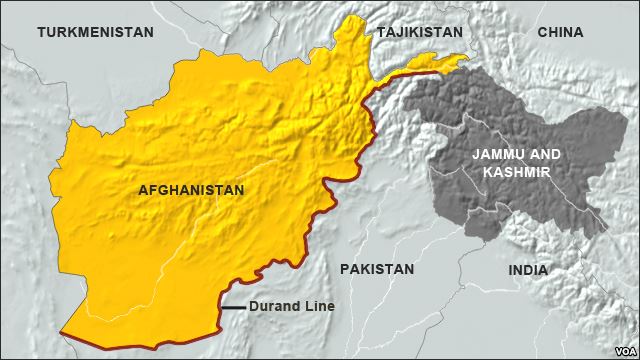
The punishment to the “spy,” he said, will send a strong message to the people in Pakistan that any “agent” on Afghan soil will meet the same fate for even discussing the status of the Durand Line, the border between Afghanistan and Pakistan.

Pedram, head of his Afghanistan National Congress party, told a news conference in Kabul during the weekend that his party recognizes the Durand Line as the official border with Pakistan. He went on to say that most of the problems plaguing bilateral relations stem from Afghanistan’s failure to publicly acknowledge it.

Pedram is an ethnic Tajik, who hails from the northeastern Afghan province of Badakhshan, and was a candidate in the October 2004 presidential election. He was present in the house during Monday’s proceedings.

Taking part in the debate, another lawmaker condemned Pedram as ignorant of Afghan “sensitivities.”

“I swear to God that, from today onward, if any will dare indulge in such illegal statements and debates about the Durand Line, the nation would break his jaw,” he said.

Controversial Durand Line

Speaker Ibrahimi, while responding to the demands, reiterated the Durand Line is a national issue and “no individual, certain tribe or a specific group” can decide on its status. He emphasized that the authority to make any decision with regard to the frontier rests only with Afghanistan’s traditional assembly of elders, called the Loya Jirga.

Afghan leaders, mainly ethnic Pashtuns, have from the outset disputed parts of the nearly 2,600-kilometer, largely porous border demarcated in 1893 during the British rule of the Indian subcontinent and named after the then-Foreign Secretary Mortimer Durand.

Pakistani officials dismiss Afghan objections and maintain their country inherited the international border after gaining independence from Britain in 1947.

Islamabad has lately stepped up efforts to fence off the Durand Line and has built new security outposts as well as forts along the border in addition to fortifying five regular crossings, despite protests from Kabul.

Officials in Pakistan defend the border management measures, saying they will help deter terrorist infiltrations in both direction.

Mutual allegations of sponsoring terrorist attacks against each other are at the center of recent tensions between Afghanistan and Pakistan.

“Pedram should be questioned inside the parliament as well as in the court of public opinion, because this is a vital matter for the Afghan territory and nation,” wrote the Afghanistan Times newspaper in an editorial. “Statements in favor of recognition to the Durand Line as a permanent border with Pakistan would be an insult to our martyrs. Territorial history and integrity cannot be compromised at any cost,” it added.

Posted in Ethnic Issues, Pakistan-Afghanistan Relations, Political News | Tags: Abdul Latif Pedram, Durand Line, Parliament, Pashtuns, stoning, Tajiks |

Afghans stage anti-Kabul rally in Canberra

3rd April, 2017 · admin · 1 Comment
Ghani

Ghani

Press TV
April 3, 2017

Hundreds of Afghans in Australia have staged a rally in protest at Kabul’s discriminatory policies, as Afghanistan’s president is visiting the capital Canberra.

The peaceful protesters gathered outside the Government House on Monday, calling on Afghan President Ashraf Ghani’s government to end discrimination against the Hazara ethnic minority and to refuse accepting the repatriation of Afghan refugees in Australia who have been rejected by Canberra.

The Afghan government signed a Memorandum of Understanding with Canberra in 2011 to accept the repatriation of Afghan refugees whose asylum requests have been turned down by Australia.

“We are seeking that our President Ghani take practical, concrete steps to protect the rights of all ethnic groups in Afghanistan, including the Hazaras,” said protest organizer Najeeba Wadzefost.

Wadzefost also urged Canberra not to grant financial aid to the current Afghan government, saying the money would end up in the hands of militant war lords.

Wahid Akbary, an Afghan refugee living in Australia since 2008, who had driven 300 kilometers from Sydney to Canberra to take part in the protest, said the Taliban militants in Afghanistan were being allowed to kill Hazaras with impunity.

Hazara protester Barat Ali Batoor said the security situation in Afghanistan for members of the Hazara community was so bad that it would be dangerous if refugees from the community were returned to Afghanistan.

“There needs to be a moratorium on any more forced repatriations,” Batoor said.

Meanwhile, inside the Government House, President Ghani, who arrived in Canberra late Sunday to review security and development cooperation between the two countries, met with Governor-General Peter Cosgrove, Australia’s figurehead leader.

Later in the day, the Afghan president, who will be leaving on Wednesday, is scheduled to meet with Prime Minister Malcolm Turnbull.

Turnbull said earlier in a statement that the Afghan leader’s visit to Australia reflected a strong bond between the two countries.

“During this visit, discussions will focus on our ongoing security and development cooperation to help Afghanistan in its efforts to become more prosperous, secure, and self-reliant,” Turnbull said.

“In particular, we will seek to enhance partnership between our nations in a number of fields including women’s and girls’ empowerment, public sector capacity building, and agricultural productivity,” he added.

Ghani is the first Afghan president to visit Australia, which has military forces stationed in the Asian country.

Australia is part of the US-led coalition that invaded Afghanistan to topple the Taliban regime in 2001. Australia has lost 41 troops in Afghanistan since the US-led invasion began.

Posted in Australia-Afghanistan Relations, Ethnic Issues, Refugees and Migrants | Tags: Descrimination, Hazaras |

Afghanistan Plans to Double Special Op Forces, Use Drones

3rd April, 2017 · admin · 1 Comment

ministry_of_defense_smallNoor Zahid
VOA News
April 2, 2017

WASHINGTON — As Afghan security forces continue their military operations against the Taliban and Islamic State-backed militants in the country, the government plans to improve its security forces in the next few years to help beat the growing threat posed by militant groups, Afghan officials said.

As part of a four-year security plan, Kabul plans to beef up the country’s elite Special Forces, and efforts are underway to improve its air force.

“Our commando forces would be further strengthened and they should receive more arms, new and sophisticated equipment,” General Dawlat Waziri, the spokesperson for the Afghan Ministry of Defense told VOA.

The plan would double the special operation forces currently serving in the capacity of a military division of 17,000 troops. A new military corps is to be created within the Afghan National Army structure to accommodate the growing number of elite forces.

Given the nature of the warfare, Afghanistan has shifted its focus from conventional warfare to special operations in an effort to help defeat a growing insurgency that has become potent in recent years and an emerging Islamic State threat that has made inroads in various parts of the country.

Currently, Special Forces conduct 70 percent of the country’s military operations. The elite forces are trained as quick reaction forces and conduct regular night raids against militants in various regions of the country.

NATO has confirmed that more commandos will soon join the Afghan national security and defense forces. Captain Bill Salvin, spokesperson for Resolute Support headquarters in Kabul, said recruitment and training for more commandos is already underway.

Growing Air Force capabilities

The Afghan government also wants to increase its air force capabilities to provide logistic and close air support to Afghan forces on the ground.

Spokesperson Waziri told VOA the country’s air force is expected to soon receive up to 200 helicopters and other aircraft.

Afghan security forces have also been provided with surveillance drones for use in restive regions.

“We do use drones to collect intelligence on militant groups as part of our military tools in the fight against terrorism,” General Mohammad Radmanesh, the deputy spokesperson for the Afghan Ministry of Defense told VOA.

According to Radmanesh, the Afghan army received 10 drones from the U.S. for surveillance purposes last year which are being used in several provinces including Helmand, Nangarhar and Kunduz.

“The surveillance drones that we have started using are very helpful in monitoring militant activities in the northeastern zone,” Lt. Gen. Sher Aziz Kamawal, commander of the Spinzar Corps in northeastern Kunduz province told VOA.

Kamawal added that drones are operated by Afghan military personnel, trained by NATO forces.

NATO’s combat role

Despite successes, Afghan security forces continue to struggle against a potent insurgency and an emerging threat posed by Islamic State.

Afghan officials say continued training, support and equipment will turn the tide of the war in favor of the Afghan government.

Currently, around 13,000 NATO troops, including 8,400 Americans, are part of the Resolute Support Mission, which is tasked with training Afghanistan’s 300,000 national security and defense forces.

“NATO’s train, advise, and assist mission is essential to our shared goal of ensuring that Afghanistan develops the capability to contribute to regional stability and prevail over terrorist threats, including al-Qaida and ISIS,” U.S. secretary of State Rex Tillerson told a NATO foreign ministers meeting in Brussels on Friday.

As planned, U.S.-led NATO forces ended their combat mission in Afghanistan at the end of 2014. Under a new mission, NATO troops have kept a rather passive role, but they continue to take part in combat missions from time to time to help the Afghan security forces.

Last month, U.S. Army General John Nicholson, the current NATO commander in Afghanistan, asked U.S. officials to send a few thousand more U.S. troops to Afghanistan to break what he termed a “stalemate” in the fight against the Taliban and Islamic State.

The Afghan government welcomed Nicholson’s call for additional troops, citing the country’s ongoing war on several fronts against different militant groups, which has stretched the country’s security forces increasingly thin.

Corruption charges

Besides battling an emboldened insurgency, Afghan security forces also face rampant corruption in their ranks.

The U.S. Special Inspector General for Afghanistan Reconstruction (SIGAR) has repeatedly warned that corruption and mismanagement could lead to military failure in the country.

President Ashraf Ghani has vowed to crack down on corruption in the government and the country’s security sector.

Last week, the Afghan Defense Ministry dismissed nearly 1,400 of its officials over corruption charges over the past year. A senior general leading a military corps in the restive Helmand province, Moheen Faqiri, was fired and arrested on charges of corruption last week.

Despite challenges, NATO officials in Kabul seem optimistic about the long-term prospects of the Afghan national security forces.

“We can see a gradual improvement in the Afghan security services and we believe that we will see additional improvements this year,” Captain Salvin told VOA last week. “It takes a while to build an institution like an army or a police corps.”

Posted in Corruption, Drone warfare, NATO-Afghanistan, Security | Tags: Air Force |

Afghanistan will be ready for Test cricket in 2-3 years: Rajput

2nd April, 2017 · admin
Lalchand Rajput

Lalchand Rajput

PTI: Ecstatic about two Afghan cricketers bagging IPL contracts, the country’s chief coach Lalchand Rajput believes the gradually-improving team from the war-torn nation will be ready to play Tests in another two-three years. Click here to read more (external link).

Related

  • Cricket needs Afghanistan as much as Afghanistan need cricket
  • Rashid In Training With Sunrisers Ahead Of IPL Season
Posted in Afghan Sports News | Tags: Cricket |

Clashes Leave 10 Civilians Dead in Southern Afghanistan

2nd April, 2017 · admin

helmand_aq_mapAyaz Gul
VOA News
April 2, 2017

ISLAMABAD, PAKISTAN — Witnesses and relatives in southern Afghanistan say a pre-dawn bomb blast killed at least 10 civilians, mostly children and women, in an area where Afghan national security forces were conducting anti-Taliban operations.

It was not immediately clear whether an airstrike by government forces or an insurgent armed retaliation caused the deadly explosion Sunday in Baba Ji, a volatile portion of Lashkargah, the capital of the embattled Helmand province.

The blast destroyed a house, causing the civilian deaths, residents said.

A regional military spokesman, General Wali Mohammad Ahmadzai, confirmed that a search operation had been underway in the area to clear it of Taliban insurgents.

“We are aware of the reported civilian casualties and a special commission has been tasked to investigate them,” he told VOA, without giving further details.

Opium poppy-growing Helmand is Afghanistan’s largest province and is mostly under the control or influence of the Taliban. The insurgents also are entrenched in areas around Lashkargah and have made several attempts in recent months to overrun the city.

Provincial Governor Hayatullah Hayat told VOA last week that Afghan forces have launched clearing operations to push back insurgents from areas in and around Lashkargah, as well as other districts.

“We are undertaking these operations to strictly avoid civilian casualties and destruction of houses and shops,” Hayat asserted.

The offensive went into action shortly after the Taliban captured the administrative center of the key district of Sangin late last month.

The United Nations documented a record number of Afghan civilian casualties in 2016 and repeatedly has called on warring sides to avoid harm to non-combatants.

Other Security News

  • Three members of Afghan security forces killed in car bombing
  • Over 200 rebels surrender to Afghan government
Posted in Civilian Injuries and Deaths, Security, Taliban |

Senate Strikes Back At Pedram Over Durand Line Remarks

2nd April, 2017 · admin
Durand Line

Durand Line

Tolo News: Members of Meshrano Jirga (senate) on Sunday said that the Durand Line was an imaginary line and recognizing it as an international border will not be acceptable to the people of Afghanistan. The senate’s retaliation comes a day after Abdul Latif Pedram, the leader of the National Congress Party (NCP) said his party recognizes the Durand Line between Afghanistan and Pakistan as an official border and that most of the tension between the two countries is rooted in Kabul’s failure to publicly acknowledge this. Click here to read more (external link).

Posted in Pakistan-Afghanistan Relations, Political News | Tags: Abdul Latif Pedram, Durand Line, Meshrano Jirga, National Congress Party |

Seven Afghan nationals killed in traffic accident in SW Pakistan

2nd April, 2017 · admin

pakistanISLAMABAD, April 2 (Xinhua) — At least seven Afghan nationals were killed and three others injured in a road accident in Pakistan’s southwest Balochistan Province Sunday afternoon, local Urdu media reported.

A van carrying Afghan nationals hit into a truck coming from opposite direction in the province’s Chagai district, located near Pakistan-Iran border, the Express News said.

The injured people have been shifted to a nearby hospital, whereas the bodies were shifted to a hospital in the provincial capital of Quetta.

Details about the identities of the Afghan nationals have not been revealed yet.

Posted in Other News, Pakistan-Afghanistan Relations |

White House Strays From Pentagon Script on Sangin Rout

1st April, 2017 · admin

whitehouse_sealMichael Hughes: The White House seems to be singing from a different song sheet about the situation in Sangin than America’s military brass, evidenced by its reluctance to rubber stamp the Pentagon’s position that the key district in southern Helmand province was not overrun by the Taliban recently. This could be a case of simple miscommunication or a sign that – hopefully – Donald Trump will have the common sense to question dubious marching orders from his generals. Click here to read more.

Posted in Opinion/Editorial, Security, Taliban, US-Afghanistan Relations | Tags: Helmand |

Russia Says Trying To Push Afghan Taliban To Join National Reconciliation

1st April, 2017 · admin

russiaRadio Free Europe/Radio Liberty
April 1, 2017

Russia says it is in contact with the Taliban in Afghanistan to push the militant group toward national reconciliation and to ensure the security of Russian citizens.

Speaking to reporters in Brussels on March 31, Russia’s ambassador to NATO, Aleksandr Grushko, denied that Moscow is providing aid to the Taliban and said “many countries” maintain contacts with the group.

“The consultations we hold, the work we do, we do it with the participation of Afghanistan’s central government,” Grushko said.

Earlier, in London, U.S. Defense Secretary Jim Mattis expressed concern over Russia’s interaction with the Taliban, which is fighting the U.S.-backed government and U.S. forces in Afghanistan.

“I am not willing to say at this point if that is manifested into weapons and that sort of thing, but, certainly, what they are up to there in light of their other activities gives us concern,” Mattis said.

The comments came after U.S. General Curtis Scaparrotti, NATO’s supreme allied commander in Europe, said on March 23 that he had seen evidence of increasing Russian efforts to influence the Taliban “and perhaps even to supply” the militant group.

Based on reporting by TASS and Interfax

Copyright (c) 2017. RFE/RL, Inc. Reprinted with the permission of Radio Free Europe/Radio Liberty, 1201 Connecticut Ave NW, Ste 400, Washington DC 20036.

Related

  • Russia Backs Taliban Call to Withdraw Foreign Troops
Posted in Peace Talks, Russia-Afghanistan Relations, Security, Taliban, US-Afghanistan Relations |

Will Pakistan Fence Stop Cross-border Terrorism?

1st April, 2017 · admin
Durand Line

Durand Line

Paul Alexander
VOA News
April 1, 2017

Pakistan’s unilateral decision to build a wall along the de facto border with Afghanistan is proving popular at home while fanning emotions on the other side that were enflamed by Islamabad’s decision to close border crossings.

In both cases, the stated reason was to halt terror attacks in Pakistan that it has blamed on terrorists operating from havens in Afghanistan, although it remains unclear how effective that restricting travel along the porous border can be.

Pakistan’s army chief, Gen. Qamar Javed Bajwa, announced last Saturday that work has begun, with the first priority on border areas in Bajaur and Mohmand agencies because they are considered “high threat zones.”

Trench half done

Comparisons were immediately drawn with President Donald Trump’s promise to build a wall along the Mexico border to prevent illegal immigration and keep out drug traffickers and other criminals. Sections of the 2,500-kilometer Pakistan-Afghan border wind their way around and over mountainous terrain that will be hard to close off.

Pakistan finished a trench along about half the length last year that did nothing to prevent a recent string of terrorist bombings that ended a relatively quiet period brought about by an ongoing military operation.

Afghanistan also accuses Pakistan of allowing terrorists to operate from the tribal areas. Both Washington and Kabul believe the Haqqani network, al-Qaida and the Taliban Shura either carry out or plan terrorist attacks in Afghanistan from Pakistan’s soil.

Afghan Defense Ministry spokesman Daulat Waziri told a news conference Tuesday that Pakistan can be a good friend of Afghanistan “if Pakistan ends support to terrorists.”

Both sides deny allowing terrorists to use their territory for cross-border attacks.

Fencing inevitable

Islamabad closed all border crossings with landlocked Afghanistan a month ago but reopened the crossings earlier this week to allow legal travelers and thousands of stranded Afghanistan-bound shipping containers to resume their journeys.

Brig. Mahmood Shah, the former security chief for the Federally Administered Tribal Areas, said the repeated attacks made fencing inevitable and that Prime Minister Nawaz Sharif has committed $115 million to the project.

“Proper securing of borders with mutual consultation will put an end to allegations of cross-border incursions of militants that has vitiated the relations between the brotherly neighbors Pakistan and Afghanistan,” former Pakistani President Asiz Zardari added in a statement.

Pakistani defense analyst Maria Sultan said the fence also will help tamp down drug trafficking.

“Better border management is also in the interest of Afghanistan and Kabul should cooperate,” Sultan said.

Popular in Islamabad

Sentiment on the streets of Islamabad backed the decision, too.

“I think, on the Pak Afghan border, security measures need to be taken” said Khalid Mahmood. “Because from there, the wrong kind of people — terrorists — come into our country. I think it’s a very good thing. It should already be in place. I think we are already late. No country allows anyone to enter in his or her country without a visa.”

Added Muhammed Ali: “Many people cross the border from there (Afghanistan), spread terror and go back. Many of our Pak Army men and innocent people are killed in these incidents. This is unacceptable.”

But not in Kabul

Feelings ran just the opposite in Afghanistan, which never has accepted the so-called Durand Line drawn by Britain at the turn of the 20th century as an official border.

“Neither the Afghan government nor the people living on both sides of the imaginary Durand Line can allow Pakistan’s unilateral actions,” said Javed Ahmed Wafa, a spokesman for Afghanistan’s ministry for tribal affairs and border regions.

Last June, at least four people were killed when Pakistan and Afghanistan exchanged artillery fire over Pakistan building a formal border control mechanism at Torkham, the main border crossing between the two countries.

“This will affect lots of people on both sides of the Durand Line,” Syed Ishaq Gillani, the head of the National Solidarity Movement of Afghanistan and a member of the Afghan Parliament, told VOA’s Urdu service. “It will create division among families. Pakistan should have not done this in haste. Both Pakistan and Afghanistan should have resolved this issue through dialogue.”

“It will also affect tribesmen (on both sides). The Durand Line passes through villages,” where families live straddling the border.

Amin Akbar Haswani, saw it both ways.

“If we invest in security, it’s a long-term investment.… It will have better impact on business,” Haswani said. “But this fencing should not have an impact on people-to-people contacts and bilateral businesses.”

Related

  • Leader of Pakistani Taliban Urges Followers to Kill ‘Blasphemers’


Posted in Pakistan-Afghanistan Relations, Security, Taliban | Tags: Durand Line |
Previous Posts
Next Posts

Subscribe to the Afghanistan Online YouTube Channel

---

---

---

Get Yours!

Peace be with you

Afghan Dresses

© Afghan Online Press
  • About
  • Links To More News
  • Opinion
  • Poll