logo

Daily Updated Afghan News Service

  • Home
  • About
  • Opinion
  • Links to More News
  • Good Afghan News
  • Poll Results
  • Learn about Islam
  • Learn Dari (Afghan Persian/Farsi)

Recent Posts

  • Akhundzada Wants Subordinates, Not Partners In Power, Say Resistance Groups November 18, 2026
  • Taliban Tighten Restrictions in Panjshir as Residents Say Their Movements Are “Under a Microscope” November 18, 2026
  • Tolo News in Dari – November 18, 2026 November 18, 2026
  • Biden says he was told Kabul would hold for six months after US troops left November 18, 2026
  • Afghanistan’s GDP Per Capita Set To Fall For Third Straight Year, Says World Bank November 18, 2026
  • The toxic aftermath of decades of war in Afghanistan November 17, 2026
  • Taliban Force Two Shia Clerics To Abandon Mourning Ceremonies In Exchange For Release November 17, 2026
  • Taliban Leader Offers Government Posts To Opponents For First Time November 17, 2026
  • Tolo News in Dari – November 17, 2026 November 17, 2026
  • Ariana Airlines to launch direct flights between Mazar-e-Sharif and Jeddah November 17, 2026

Categories

  • Afghan Children
  • Afghan Sports News
  • Afghan Women
  • Afghanistan Freedom Front
  • Afghanistan United Front
  • Al-Qaeda
  • Anti-Government Militants
  • Anti-Taliban Resistance
  • AOP Reports
  • Arab-Afghan Relations
  • Art and Culture
  • Australia-Afghanistan Relations
  • Book Review
  • Britain-Afghanistan Relations
  • Canada-Afghanistan Relations
  • Censorship
  • Central Asia
  • China-Afghanistan Relations
  • Civilian Injuries and Deaths
  • Corruption
  • Crime and Punishment
  • Drone warfare
  • Drugs
  • Economic News
  • Education
  • Elections News
  • Entertainment News
  • Environmental News
  • Ethnic Issues
  • EU-Afghanistan Relations
  • Everyday Life
  • France-Afghanistan Relations
  • Germany-Afghanistan Relations
  • Haqqani Network
  • Health News
  • Heroism
  • History
  • Human Rights
  • India-Afghanistan Relations
  • Interviews
  • Iran-Afghanistan Relations
  • ISIS/DAESH
  • Islamophobia News
  • Japan-Afghanistan Relations
  • Landmines
  • Media
  • Misc.
  • Muslims and Islam
  • NATO-Afghanistan
  • News in Dari (Persian/Farsi)
  • NRF – National Resistance Front
  • Opinion/Editorial
  • Other News
  • Pakistan-Afghanistan Relations
  • Peace Talks
  • Photos
  • Political News
  • Reconstruction and Development
  • Refugees and Migrants
  • Russia-Afghanistan Relations
  • Science and Technology
  • Security
  • Society
  • Tajikistan-Afghanistan Relations
  • Taliban
  • Traffic accidents
  • Travel
  • Turkey-Afghanistan Relations
  • UN-Afghanistan Relations
  • Uncategorized
  • US-Afghanistan Relations
  • Uzbekistan-Afghanistan Relations

Archives

Dari/Pashto Services

  • Bakhtar News Agency
  • BBC Pashto
  • BBC Persian
  • DW Dari
  • DW Pashto
  • VOA Dari
  • VOA Pashto

On Afghanistan, It’s Bannon vs. Almost Everybody

15th May, 2017 · admin
Steve Bannon

Steve Bannon

The Weekly Standard: Bannon has been expressing skepticism toward increasing military action in the region, criticizing McMaster’s “quiet effort” earlier this year to convince Trump to send troops into Syria. And although Bannon did not speak up at the NSC meeting where the president decided to bomb the Syrian airfield where the Assad regime had launched a chemical attack in April, Bannon, according to one administration source, was privately against the strike and told others in the White House so.  Click here to read more (external link).

Related

  • US announces new policy for Pakistan, Afghanistan
Posted in US-Afghanistan Relations |

Afghan President Speaks Out In Support Of Women’s Education

15th May, 2017 · admin

backofwomanRFE/RL’s Radio Free Afghanistan
May 15, 2017

Afghan President Ashraf Ghani says women are the biggest victims of the ongoing war in Afghanistan, which he says has prevented millions of girls and women from getting an education.

“The number of women deprived of literacy in Afghanistan is three times more than men and the reason behind this is the imposed war that we are facing,” Ghani said on May 15 at a symposium called Afghan Women: Messengers of Peace.

The three-day gathering is being hosted by Afghan first lady Rula Ghani.

In a statement, the UN Assistance Mission in Afghanistan (UNAMA) expressed hope that the government will achieve its goal of increasing the proportion of women in government institutions to 30 percent by 2020.

According to the Education Ministry, most of the estimated 3.5 million children who do not attend school are girls.

Afghanistan’s female literacy rate is among the lowest in the word at around 17 percent, according to a 2015 UNESCO report.

With reporting by Tolo News

Copyright (c) 2017. RFE/RL, Inc. Reprinted with the permission of Radio Free Europe/Radio Liberty, 1201 Connecticut Ave NW, Ste 400, Washington DC 20036.

Related

  • Afghan women have an important role to play in achieving peace in Afghanistan
Posted in Afghan Women, Education | Tags: literacy |

Five children killed in mortar shelling attack in Afghan province

14th May, 2017 · admin

laghmanMEHTARLAM, Afghanistan, May 14 (Xinhua) — Five children were killed and two others wounded after a mortar shell struck a residential area in Afghanistan’s eastern province of Laghman on Sunday, the provincial government said.

“One mortar round fired by armed opponents landed in Omarzai locality in provincial capital Mehtarlam city roughly at mid-day. The blast killed five innocent children on the spot and injured two other kids,” it said in a statement.

The wounded were shifted to a hospital in the city some 90 km east of Afghan capital Kabul.

The provincial authorities met with the victims’ families shortly after the incident and ordered the security forces to bring to justice the perpetrators behind the in-human act, the statement reads.

No group has claimed responsibility for the incident so far.

More than 715 civilians were killed and over 1,460 others injured in conflict-related incidents across Afghanistan in the first three months of the year, according to figures released by the United Nation mission in the country.

The mission has attributed 62 percent of the civilian casualties over the period to the Taliban and other insurgent groups, 21 percent to security forces while the rest 17 percent were unattributed to or caused by explosive remnants of war.

More Security News

  • Premature blast kills 4 Afghan militants
  • Infighting among Afghan Taliban groups claim 8 lives: official
Posted in Afghan Children, Civilian Injuries and Deaths, Security, Taliban |

Who Would Help Defend Central Asia From Insecurity In Afghanistan?

14th May, 2017 · admin

central_asia_smallBruce Pannier
Radio Free Europe/Radio Liberty
May 14, 2017

These are certainly tense times for security officials in Central Asia.

Barely halfway through this spring, the violence in northern Afghanistan, in provinces just across the border from Central Asia, has already reached levels not seen since the late 1990s.

The April 21 attack on a military base in Balkh Province, just across the border from Uzbekistan, left more than 130 Afghan soldiers dead, and the Taliban has besieged Kunduz city, the capital of Kunduz Province, which borders Tajikistan, for the third time in less than two years.

There are also the battles in the Zebak district of Badakhshan Province, which also borders Tajikistan. The Ghormach district in Faryab Province, adjacent to Turkmenistan, has been solidly under militant control for weeks and in other areas of Faryab, and Jowzjan Province to the east, control of villages passes back-and-forth between government forces and militants.

Officials in the Central Asian capitals north of the Afghan border are surely weighing their options at the moment, including who they might call upon for aid if some element of instability currently present inside Afghanistan makes its way over the northern border.

That was the topic of the latest Majlis, or panel discussion, RFE/RL arranged that looked at parties the Central Asians could be expected to call upon should some problem from Afghanistan destabilize their own governments.

Moderating the discussion was RFE/RL Media Relations Manager Muhammad Tahir. From the RFE/RL studio, Dr. Stephan Blank, senior fellow at the American Foreign Policy Council, joined the discussion. From Britain, our old friend Dr. David Lewis, senior lecturer in politics at Exeter University, took part.

Blank noted, “Everybody in Central Asian establishments is always concerned that whatever happens in Afghanistan will not be confined to Afghanistan.”

That has generally been the view of Central Asian governments for the last 25 years.

The most immediate fear in Central Asia, as the panel made clear, is not the Taliban. The Taliban has never been able to exert control over all of Afghanistan, even in the late 1990s, so the group has never been in a position to consider expansion beyond Afghanistan’s borders.

Even now, when the Taliban is resurgent, the militants are a very long way off from conquering Afghanistan.

Lewis said, “Even if the Taliban itself has not been particularly interested in spreading into Central Asia, it’s acted as an umbrella, sort of like a protector for groups, which may well have security designs on Central Asia.”

Lewis said for Central Asian governments “the bigger problem [in Afghanistan] is…this array of other groups that may be in conflict with the Taliban or at least have different goals from the Taliban, particularly various offshoots of groups that somehow are linked to forms of Islamic State [militant group].”

Citizens of Central Asia are present in many of the militant groups currently active in northern Afghanistan.

Fighting along or near the Tajik border has been in the news a lot recently. Tajikistan is unique among the three Central Asian states that border Afghanistan (Uzbekistan and Turkmenistan being the other two). Tajikistan has clear agreements for receiving outside military help to defend the country.

Tajikistan is a member of the Collective Security Treaty Organization (CSTO), along with Armenia, Belarus, Kazakhstan, Kyrgyzstan, and Russia.

As the security situation in northern Afghanistan has deteriorated over the last three years, the CSTO has offered numerous pledges of rapid military support to the Tajik government if problems from Afghanistan spill across the border.

But Blank said, “There are real question marks about the actual readiness of the CSTO as a military alliance.”

He pointed out, “Formally speaking there’s the Collective Security Treaty Organization, in practice that really means the Russian Army.”

And Blank added that Russia is “already involved in three wars, in the North Caucasus, Ukraine, and Syria, the economy is very constrained, military spending has had to be cut, and the last thing they need is a fourth protracted war.”

Blank suggested that was one of the reasons Moscow had entered into talks with the Taliban because “Russia has decided that ISIS is the greater threat,” and the most likely to destabilize the situation in Central Asia.

Russia has the 201st Division stationed in Tajikistan. Russia commands the CSTO base at Kant, Kyrgyzstan, also.

But Lewis explained, “Tajikistan’s been very cautious about its military relationship with Russia,” and “there’s a lot of sensitivity in the region about Russian involvement in Central Asia, and that’s certainly the case for Uzbekistan and Turkmenistan.”

Uzbekistan is no longer a CSTO member. The first time Uzbekistan withdrew from the CSTO was in 1999, shortly after Tashkent invoked the CSTO mutual-defense treaty when the Taliban arrived at the Uzbek border (Uzbekistan rejoined the CSTO in 2006 but pulled out in 2012). At that time Belarusian President Alyaksandr Lukashenka said he would not send even one soldier to defend Central Asia.

Uzbekistan is a member of the Shanghai Cooperation Organization (SCO), along with Kazakhstan, Kyrgyzstan, Tajikistan, Russia, and China, but Blank said, “The Shanghai Cooperation Organization cannot be relied on, it has never…developed the capability to function as a hard security organization.”

Lewis suggested there was another option that would probably be particularly unpalatable to the Kremlin. “I think from a Russian perspective, the kind of nightmare scenario is that if Uzbekistan or Turkmenistan come under pressure they turn not to Russia for help but to other countries, maybe even to the West,” Lewis said.

There is another issue here and that is the definition of an internal versus external security threat.

It was noted in the Majlis that when interethnic violence erupted in southern Kyrgyzstan in June 2010, the CSTO did not intervene, deeming that an internal problem.

But Lewis said, “It seems to me the real problem is if you get some internal dissention or state collapse in Central Asia.” And Blank noted that in Tajikistan’s case, “I’m not altogether certain the Tajik government is strong enough to fight off an internal challenge.”

Should Central Asian militants currently located in northern Afghanistan be able cross into Central Asia and wage a terrorist campaign how would the CSTO, SCO, or others view that situation?

Copyright (c) 2017. RFE/RL, Inc. Reprinted with the permission of Radio Free Europe/Radio Liberty, 1201 Connecticut Ave NW, Ste 400, Washington DC 20036.
Posted in Central Asia, Security |

Senators Question UN Report On Kandahar Police Chief

14th May, 2017 · admin
Gen. Abdul Raziq

Gen. Abdul Raziq

Tolo News: A number of lawmakers at Meshrano Jirga (Upper House of Parliament) on Sunday lent their support to Kandahar Police Chief General Abdul Raziq following a report by the United Nations Committee against Torture, calling Raziq a “patriotic and champion” police officer.  The UN committee alleged that Gen. Raziq had used different methods of torture against prisoners such as suffocation, crushing the testicles, pumping water into stomach and administering electric shocks. Gen. Raziq has denied all the allegations and has termed the report unprofessional and unauthentic. Click here to read more (external link).

Posted in UN-Afghanistan Relations | Tags: General Abdul Raziq, Kandahar, Meshrano Jirga, Torture |

Afghan forces kill 12 Daesh terrorists in Nangarhar

13th May, 2017 · admin
ISIS trainees

ISIS trainees

Press TV
May 13, 2017

Afghan security forces have killed at least a dozen militants affiliated with the Takfiri Daesh terrorist group operating in the country’s troubled east.

Police sources said at least 12 terrorists had been killed during security operations conducted with air power support in eastern Nangarhar Province on Saturday.

No further details have been released regarding the report so far.

The operations are underway since a month ago in response to the growing threats posed by the Takfiri group and its affiliates in the eastern province.

Daesh has expanded its activities in nearly a dozen Afghan provinces, particularly Nangarhar, despite the presence of thousands of foreign boots on the ground in the war-torn country.

The terrorist group, mainly active in Syria and Iraq, has been using a sophisticated social media campaign to woo the local militants, who defect from the main Taliban group.

The rise of Daesh in Afghanistan has raised concerns in a country already torn apart by decades of Taliban-led militancy and the 2001 invasion of the US and its allies.

Although Taliban leaders have warned Daesh against “waging a parallel insurgency in Afghanistan,” the latter has been trying to expand its outreach there and is reported to have between 1,000 to 3,000 terrorists on its payroll.

In an exclusive interview with the US-based Fox News network published earlier this month, former Afghan president Hamid Karzai held the United States accountable for the rise of Daesh in his homeland, saying Washington was in cahoots with the notorious terrorist group it had created.

“Daesh is a US product,” Karzai said. “Daesh — which is clearly foreign — emerged in 2015 during the US presence.”

The US currently maintains nearly 8,400 soldiers in Afghanistan with nearly 5,000 more troops from NATO allies.

Washington and its allies first invaded the country nearly 16 years ago as part of the so-called war on terror. The invasion removed Taliban from power, but militancy continues to this day.

Reports say the US and NATO are seeking to build up their military presence in the war-torn country again.

More Security News

  • Kunduz Governor Gives Taliban Deadline To End War
  • No Decision Yet By Trump On Additional Troops: McMaster
  • Escalating the war in Afghanistan would be the wrong decision
  • Will Hekmatyar’s return to Kabul bring peace in Afghanistan?
  • Afghan forces kill three senior Taliban militants in north
Posted in ISIS/DAESH, Security, US-Afghanistan Relations | Tags: Nangarhar |

China to Extend ‘Silk Road’ Plan to Afghanistan

13th May, 2017 · admin

china_flagVOA News
May 12, 2017

China is extending its Belt and Road Initiative to include Afghanistan.

The development plan refers to the historic Silk Road between China and the West. It aims to link more than 60 countries from Asia to Europe, through land and maritime trade routes.

Chinese President Xi Jinping introduced the plan in 2013.

The extension plan would involve extending the China Pakistan Economic Corridor, known as CPEC, to neighboring Afghanistan. The CPEC is a program within the larger Belt and Road Initiative.

China is now preparing for the first Belt and Road Forum, a meeting of countries involved in the development project. The two-day event begins Sunday in Beijing. More than 25 heads of state will attend the meeting.

The Unites States also is sending a delegation to the meeting. It will be led by Matthew Pottinger, an adviser to President Donald Trump and a National Security Council official for East Asia.

China welcomed the move, which was first planned when Trump met with Xi last month in Florida.

China expanding its Belt and Road project

The decision to include Afghanistan has caused some observers to question whether China is trying to expand its influence in this area of Asia.

Ahmad Bilal Khalil is a researcher with the Center for Strategic and Regional Studies in Kabul, Afghanistan. He recently spoke with VOA about China’s development plans.

He said that the aim is to create a road linking Pakistan’s Peshawar to the Afghan capital of Kabul and to Kunduz, and then deeper into Central Asia.

Khalil said having projects in Afghanistan will help China with its $50 billion project in Pakistan. He says the effort will bring “more Pakistani and Chinese economic interests into Afghanistan.”

“If there is insecurity in Afghanistan, (it) can also affect CPEC and One Belt, One Road,” Khalil said. One Belt, One Road is another name for the Belt and Road Initiative.

David Kelly is with China Policy, a consulting company based in Beijing. He said that China hopes its investments in Afghanistan will reduce tensions there.

However, he said that reducing the religious and ethnic conflict in the country has been, in his words, “something that the Americans and before them the Soviets were unable to do.”

China has invested in the copper mines of Afghanistan. It wants to improve access to the country’s mineral resources.

M.K. Bhadrakumar is an author and an Indian diplomat. He said that extending the Belt and Road project to Afghanistan will help China in those efforts.

“One trillion dollars’ worth of mineral resources are available in Afghanistan,” he said.

Some observers note that China also may aim to be involved in Afghanistan’s building industry in the future.

But China’s main goal, some experts say, is to improve regional security through development and economic cooperation.

That is a difficult task. Recent clashes on the border between Pakistan and Afghanistan killed more than 50 people in two days.

Ahmad Bilal Khalil said, “There is also a huge possibility that terrorism and extremism will also be exported to central Asia.”

Researchers at the Stockholm International Peace Research Institute noted in a recent report that the Belt initiative can do little to improve relations between Pakistan and Afghanistan. But, they wrote, “there may be prospects for this over the medium to long term.”

David Kelly with China Policy said China believes it can reduce religious extremism through offering economic benefits.

However, this policy has been proven wrong in the past, he said.

Saibal Dasgupta reported this story for VOA News. Ashley Thompson adapted it for Learning English. Mario Ritter was the editor.

Posted in China-Afghanistan Relations, Economic News, Pakistan-Afghanistan Relations | Tags: Natural Resources, rare minerals, Silk Road |

Saleh Accuses Hekmatyar Of ‘Insulting’ War Victims

12th May, 2017 · admin
Amrullah Saleh

Amrullah Saleh

Tolo News: The state minister for reforms in security sector, Amrullah Saleh, at a gathering in Kapisa province on Friday, criticized the recent remarks of Hizb-e-Islami leader Gulbuddin Hekmatyar and said he had ‘insulted’ Afghanistan’s war victims when he made his first speech after 20 years at the Presidential Palace one week ago. Click here to read more (external link).

Related

  • Afghan Forces Face Challenge of Absorbing Former Insurgents
Posted in Political News | Tags: Amrullah Saleh, Hekmatyar, Hezb-e Islami, War Crime |

U.S. Intelligence Official Says Afghan Security Likely To ‘Deteriorate’

12th May, 2017 · admin

us_militaryRadio Free Europe/Radio Liberty
May 12, 2017

The U.S. national intelligence director says the security situation in Afghanistan will “almost certainly” continue to “deteriorate” over the next 18 months.

Dan Coats’ comments on May 11 to the Senate Intelligence Committee come as the U.S. military has announced plans to send 3,000 additional troops to bolster the fight against the Taliban and other Islamist militants in Afghanistan.

U.S.-led forces have been fighting in Afghanistan for 16 years after driving the Taliban from power.

U.S. combat operations officially ended in 2014, with a smaller force of 13,000 NATO troops, including about 8,400 Americans, remaining.

But the Taliban has been resurgent in recent years and controls large portions of the country.

“The political and security situation in Afghanistan will also almost certainly deteriorate through 2018, even with a modest increase in the military assistance by the U.S. and its partners,” Coats told senators.

In another regional matter, Coats said it appears Iran is respecting the terms of the nuclear agreement it struck with six world powers in 2015.

He said the deal — under which Iran significantly limited its nuclear program in exchange for sanctions relief — extended the amount of time Iran would need to produce sufficient material for a nuclear weapon and increased the transparency of its nuclear activities.

Coats also said Russia and other countries, including China, North Korea, and Iran, are using cyberspace to target the United States and its allies and will do so in future.

Coats said Russia is a threat to U.S. government, military, diplomatic, business, and critical infrastructure.

Coats said Iran also is making use of its high-tech capabilities, and China is targeting the U.S. government and American businesses. He says such activity has diminished since U.S.-China cybercommitments in 2015.

With reporting by AP, Reuters, and AFP

Copyright (c) 2017. RFE/RL, Inc. Reprinted with the permission of Radio Free Europe/Radio Liberty, 1201 Connecticut Ave NW, Ste 400, Washington DC 20036.

More Security News

  • Pak-Based Terrorists ‘Planning To Attack’ Afghanistan, India
  • Will Sending More US Troops to Afghanistan Turn Back Taliban?
  • US Afghan Policy Awaits a White House Decision
  • More Afghanistan troops as West digs in for long haul
  • Afghan Forces Retake Northeastern District From Taliban
  • Taliban ‘Safe Zone’ Established In South
Posted in ISIS/DAESH, Security, Taliban, US-Afghanistan Relations |

Hekmatyar’s Fighters Refuse To Lay Down Arms In Afghanistan

11th May, 2017 · admin
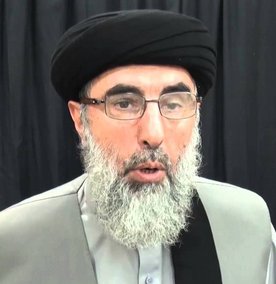
Gulbuddin Hekmatyar

Gulbuddin Hekmatyar

RFE/RL’s Radio Free Afghanistan
May 11, 2017

Afghan warlord Gulbuddin Hekmatyar’s Hezb-e Islami group said on May 11 that it will not hand over its weapons, despite pledging to do so as part of a peace deal signed with the government in September.

The decision prompted a rebuke from President Ashraf Ghani’s office, with a spokesman urging the militant group to adhere to the agreement, under which Hezb-e Islami pledged to lay down its arms and end its insurgency.

The deal also said Hezb-e Islami fighters interested in joining government forces would be integrated into the Afghan security forces.

Hezb-e Islami spokesman Qareem ur Rahman said on May 11 that it was “necessary” for the group’s 3,500 militia fighters to keep their weapons for protection from extremist organizations such as the Taliban and Islamic State (IS).

“Our [fighters] have come under attacks from militants,” said Rahman. “If they put down their weapons who will guarantee their safety?”

A spokesman for Ghani, Dawa Khan Menapal, said the security of the country was the government’s “responsibility” and that Hezb-e Islami’s concerns were “unwarranted.”

Hekmatyar, one of the country’s most notorious warlords, returned to Kabul last week following more than two decades in self-imposed exile.

Copyright (c) 2017. RFE/RL, Inc. Reprinted with the permission of Radio Free Europe/Radio Liberty, 1201 Connecticut Ave NW, Ste 400, Washington DC 20036.
Posted in Peace Talks, Political News, Security | Tags: Hekmatyar, Hezb-e Islami |
Previous Posts
Next Posts

Subscribe to the Afghanistan Online YouTube Channel

---

---

---

Get Yours!

Peace be with you

Afghan Dresses

© Afghan Online Press
  • About
  • Links To More News
  • Opinion
  • Poll