Radio Free Europe/Radio Liberty: After millions have been displaced by conflicts in Afghanistan, hundreds of thousands more now face a life-threatening drought.

Radio Free Europe/Radio Liberty: After millions have been displaced by conflicts in Afghanistan, hundreds of thousands more now face a life-threatening drought.
 RFE/RL’s Radio Mashaal
October 24, 2018
Islamabad has dismissed the Afghan president’s “baseless and unfounded” allegations that last week’s killing of a powerful provincial police chief in southern Afghanistan was planned in Pakistan.
“No hard evidence or intelligence related information has been shared to date with Pakistan to substantiate such claims,” the Foreign Office said on October 24, a day after Afghan President Ashraf Ghani alleged that the attack on a gathering of security chiefs in the city of Kandahar was orchestrated in Pakistan.
On October 18, a gunman wearing a uniform of the Afghan security forces opened fire on the gathering, killing Kandahar Province’s powerful police chief, General Abdul Raziq, provincial intelligence head Abdul Momin Hassankhail, and a journalist.
U.S. Brigadier General Jeffrey Smiley was among 13 people wounded in the attack.
The top U.S. and NATO commander in Afghanistan, General Scott Miller, also attended the meeting but was not injured.
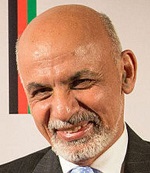
“I want to say that this conspiracy was plotted in Pakistan,” Ghani said during a trip to Kandahar on October 23. “So Pakistan should give us the criminals so that we can bring them to justice.”
Kabul and Washington have both repeatedly accused Pakistan of providing safe havens for militants, a claim Islamabad has denied and countered with charges that Pakistani insurgents have found sanctuary in Afghanistan.
Related

Steven Mnuchin
Radio Free Europe/Radio Liberty
October 23, 2018
A seven-country group set up to combat the international financing of terrorists has blacklisted nine individuals associated with Afghanistan’s Taliban, including two Iranian military officers and several men accused of “facilitating Iranian support to bolster the terrorist group.”
The announcement by the U.S. Treasury Department on October 23 says the Terrorist Financing Targeting Center (TFTC) blacklisted the individuals in order to “expose and disrupt [the] Taliban…and their Iranian sponsors that seek to undermine the security of the Afghan government.”
Other TFTC member countries joining the action include Saudi Arabia, Bahrain, Kuwait, Oman, Qatar, and the United Arab Emirates.
U.S. Treasury Secretary Steven Mnuchin said in a statement on October 23 that the blacklist targets “Taliban members who are involved in suicide attacks, and other lethal activities.”
“We are also targeting key Iranian sponsors providing financial and material support to the Taliban,” Mnuchin said. “Iran’s provision of military training, financing, and weapons to the Taliban is yet another example of Tehran’s blatant regional meddling and support for terrorism.”
Mnuchin said Iran’s support to the Taliban “epitomizes the regime’s utter disregard for fundamental international norms.”
The assets of those on the blacklist are to be frozen in the United States and the six Gulf states that are members of the TFTC.
Two officers of Iran’s Islamic Revolutionary Guards Corps’s Quds Force — Muhammad Ebrahim Owhadi and Esmail Razavi — were designated on the list.
Six senior members of the Afghan Taliban on the blacklist are Abdullah Samad Faroqui, Mohammad Daoud Muzzamil, Abdul Rahim Manan, Naim Barich, Sadr Ibrahim, and Hafiz Majid.
Businessman Abdul Aziz, described by the U.S. Treasury Department as “a Pakistan-based narcotics trafficker,” was blacklisted on allegations of setting up international firms to carry out illegal smuggling operations that finance the Pakistan-based Taliban — including the Quetta-based leadership of Afghan Taliban known as the Quetta Shura.
Meanwhile, Saudi Arabia and Bahrain on October 23 added Iran’s Islamic Revolutionary Guard Corps and senior officers from its Quds Force to their lists of people and organizations suspected of involvement in terrorism.
Saudi security services said Qassem Soleimani, commander of the Quds Force, was on the list together with Quds Force officers Hamed Abdollahi and Abdul Reza Shahlai.
In 2011, the U.S. Treasury Department imposed sanctions on the three amid allegations that Soleimani, Abdollahi, and Shahlai were linked to a failed plot to assassinate Saudi Arabia’s former ambassador to the United States, Adel Al-Jubeir.
Jubeir is now the Saudi Arabia’s foreign minister.
Iran at the time dismissed the accusations as false and demanded an apology from Washington.
The terrorist listing of the three IRGC officers is separate from the blacklisting of nine individuals on October 23 by the United States and six Gulf countries in the TFTC.

Imran Khan
Ayaz Gul
VOA News
October 23, 2018
ISLAMABAD — Pakistani Prime Minister Imran Khan appeared upbeat Tuesday about the recently launched U.S.-led dialogue with the Taliban, saying it “hopefully” would lead to peace in Afghanistan and pave the way for regional economic connectivity and prosperity.
Speaking at an investment conference in Saudi Arabia, Khan was referring to a meeting the U.S. special envoy for Afghan reconciliation, Zalmay Khalilzad, held earlier this month with Taliban political negotiators in Qatar.
The prime minister noted peace in the neighboring country is critical for stability in Pakistan. He said “the low amount of terrorism” his country is still experiencing comes from Afghanistan.
“That’s why we are hoping that these peace talks … between the Taliban and the Americans, we hope that once Afghanistan settles not only will there be no terrorism within Pakistan but then we have this access [for trade] all the way to Central Asia [through the Afghan territory],” Khan said.
Khan noted that his country’s partnership in the U.S.-led “war on terrorism” in Afghanistan prompted retaliatory militant attacks in Pakistan, leaving thousands of people dead and inflicting more than $100 billion in economic losses over the past decade.
“Thanks to our security forces, our intelligence agencies, Pakistan has controlled terrorism. Within Pakistan now we have really clamped down on terrorism. We still have problems, terrorists and terrorism coming from Afghanistan,” Khan said.
Islamabad supports an early negotiated settlement to the war because it maintains that “ungoverned” Afghan areas have encouraged Islamic State militants to establish bases there and plot terrorist attacks on both sides of the border.
For their part, U.S. and Afghan officials allege that Taliban insurgents operate out of sanctuaries in Pakistan, charges Islamabad rejects as baseless.
The Trump administration held its first publicly known direct meeting with Taliban officials in Qatar in late July. That interaction followed persistent insurgent demands it would hold face-to-face talks only with the U.S. and not its “puppet” Afghan government.
The October 12 meeting in the Gulf state was believed to be a follow up of the previous “preliminary” talks.
The Taliban said in a statement issued after the latest meeting with Khalilzad that both sides discussed withdrawal of U.S.-led foreign “occupation” forces from Afghanistan and exchanged views on finding a peaceful settlement to the war.
The nascent peace process apparently suffered a serious blow in the wake of a deadly attack last Thursday on a high-profile security meeting of local and top American officials in the southern Afghan province of Kandahar.
The Taliban-claimed violence killed Gen. Abdul Raziq — a powerful, though controversial, regional police chief — along with the provincial spy chief, and wounded a senior American military commander, Army Brigadier General Jeffrey Smiley. The U.S. commander of NATO’s Afghan military mission, General Scott Miller, also was present at the meeting, but was unharmed.
Taliban spokesman Zabihullah Mujahid has told VOA the insurgent group remains committed to the peace dialogue with the U.S. He defended the attack on the security meeting in Kandahar, saying no understanding has so far been reached with the U.S. or any other party to end the war or observe a cease-fire.
“General Raziq was one of our biggest targets that was finally eliminated. It has no link to peace talks because they are being held with the Americans and our war is also with the Americans. We will continue to target Afghans who are supporting America’s invasion of the country,” Mujahid said.
Ashraf Ghani
Ariana: Afghan President Ashraf Ghani says last week’s shooting in Kandahar which killed the provincial police chief Gen. Raziq was planned in Pakistan, asking the country to hand over the plotters of the attack to Kabul. As a move to honor the general, Ghani named a police academy in the province to General Raziq and stressed that some roads in Kandahar, Kabul and some provinces will also be marked to his name. Click here to read more (external link).
 Tolo News: The Independent Election Commission (IEC) said they will start counting votes from this weekend’s parliamentary elections on Wednesday in Kabul. On Tuesday, election commission officials said all election materials, including the preliminary results, have been transferred from polling centers to the provincial capitals. Click here to read more (external link).
Related
 1TV: The World Bank will provide Afghanistan with $403 million to support education and women’s empowerment in the country. The agreement was signed between World Bank country director and Afghan finance minister in Kabul. Click here to read more (external link).

US Marine (file photo)
The National Review: Our tax dollars, sweat, and blood must lead to peace in Afghanistan, and we need to hear clearly from the administration to determine how we get there. The American people hear more about increased Taliban attacks than they do progress after 17 years of the war in Afghanistan. Click here to read more (external link).
 Tolo News: Defending champions Shaheen Asmayee beat De Maiwand Atalan in their semi-final match of the 2018 Rahmani Foundation Afghan Premier league (RFAPL) on Monday night. Shaheen beat Atalan 1-0 to book their spot in the finals. Click here to read more (external link).