
HPC Questions Structure Of High Advisory Board For Peace

Habiba Sarabi
Tolo News: A senior member (Habiba Sarabi) of the High Peace Council (HPC) on Wednesday questioned the structure of the high advisory board for peace by the Afghan government, saying women’s presence in the board has been “unfair and unjust”. Click here to read more (external link).
FIFA Suspends Afghan Football Chief Over Abuse Accusations

Keramuudin Karim, the president of the Afghanistan Football Federation
RFE/RL’s Radio Free Afghanistan
December 12, 2018
FIFA has temporarily suspended the head of Afghanistan’s Football Federation (AFF) over the alleged physical and sexual abuse of players on the country’s women’s football team.
The suspension of AFF president Keramuudin Karim applies to all football-related activities at national and international level, and expires in 90 days.
World soccer’s governing body, FIFA, said the sanction was imposed “in connection with ongoing investigations concerning AFF officials, as reported by local authorities and published by some media.”
The former head of the women’s football department Khalida Popal, team coach Kelly Lindsey, and players Mina Ahmadi and Shabnam Mobarez accused federation officials of abuse in a report published last month by Britain’s The Guardian newspaper.
They told The Guardian that abuse occurred inside Afghanistan and at a training camp in Jordan in February.
Afghan President Ashraf Ghani said the revelations were “shocking to all Afghans.”
The AFF has denied the claims.
Afghanistan’s attorney general placed six AFF members under suspension on December 9.
Fazel Fazly, a top adviser to Ghani, said the six included Karim.
Copyright (c) 2018. RFE/RL, Inc. Reprinted with the permission of Radio Free Europe/Radio Liberty, 1201 Connecticut Ave NW, Ste 400, Washington DC 20036.
Other Sports News
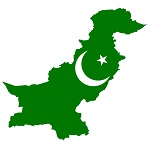
Pakistan Tightens Coverage of Pashtun Nationalist Movement
 Ayesha Tanzeem
VOA News
December 11, 2018
ISLAMABAD — Pakistani authorities are scrutinizing media coverage of a Pashtun nationalist movement, blocking VOA websites and filing police cases against journalists covering local rallies.
Sailaab Mehsud of RFE/RL’s Mashaal radio and Zafar Wazir of a local TV channel were identified in a police report as participants in a protest rally Saturday in Dera Ismael Khan in Khyber Pakhtunkhwa province along with nearly 20 other people. Police alleged they were chanting slogans against state institutions and inciting the public to violence.
Mehsud said he and Wazir were covering the Pashtun Tahaffuz Movement rally as journalists.
About a week earlier, Pakistan ordered internet service providers to block the website of Voice of America’s Urdu language service. VOA’s Deewa news website, which primarily caters to the Pashto-speaking audience in the region around the Afghan border, has already been blocked for months.
Information Minister Fawad Chaudhry claimed the sites were blocked for “false and prejudiced reporting.”
“The stories they were doing were only projecting a particular narrative without any impartial view. There are many things happening in our country and most are positive,” he said.
While Chaudhry did not elaborate, an intelligence source told a VOA reporter on condition of anonymity that the decision to block the website was triggered by VOA’s coverage of PTM. The rights movement has a tense relationship with Pakistan’s military.
Rights violations alleged
Leaders of PTM contend that Pakistan’s military is involved in human rights violations linked to its efforts to rid the Afghanistan-Pakistan border region of militant groups. Around 200,000 Pakistani troops are deployed in the region to “secure and control militant violence,” according to military spokesman Maj. Gen. Asif Ghafoor.
PTM also says that the military supports and protects certain militant groups even as it carries out clearing operations against others — a charge the military strongly denies. One of the movement’s slogans, chanted often in its rallies, “yeh jo dehshat gardi hai, iss ke peechai wardi hai,” which means “The military uniform is behind this terrorism.”
U.S. and Afghan officials routinely accuse Pakistani officials of supporting banned terror groups, but such accusations are rarely voiced by Pakistanis. That partly accounts for the close scrutiny of the group, which was warned again last week by Pakistan’s military spokesman.
In a news conference Ghafoor said the state had so far taken a soft stance on PTM because of a realization that its members had suffered from 15 years of war. However, he warned PTM leaders to not cross “the line where the state may have to use force to control the situation.” He did not specify what constituted that line.
Nafees Takar, the head of VOA’s Deewa service, defended his service’s coverage of PTM activities as journalistically warranted and balanced.
“We bring in ministers, government officials and military statements on Twitter and the official website of ISPR [the public relations wing of the military] for balancing the PTM coverage,” he said.
Urdu service chief Kokab Farshori said PTM was an important story for his audience as well, but denied that the coverage was prejudiced.
“We regularly interview government officials and ministers. A recent press conference by the military spokesman was our lead story. So, to say we have not been balanced is not true,” he said.
PTM event
Internet users in Pakistan started reporting they could not access VOA Urdu’s website a day after a news conference held by PTM leader Mohsin Dawar that the service covered and streamed live on Facebook.
PTM’s activities seem to receive little news coverage in the otherwise vibrant Pakistani media.
Even though the government did not give specific examples of what it means to say VOA has been projecting a “particular narrative,” the international broadcaster has occasionally drawn criticism from some independent journalists.
Zarrar Khuhro, the co-host of a television news show known for its independent and often critical reporting, went on Twitter to criticize VOA Deewa’s coverage of a small protest in Washington this year. He accused the broadcaster of acting as “a propaganda outlet” after reporters covered a protest by what he called “four people and a placard” who named themselves the Free Karachi Movement.
Other Twitter users defended Deewa’s coverage and Khuhro himself praised the broadcaster for its reporting on other issues.
“There is of course a great deal of stuff that they cover that the mainstream media in Pakistan for one reason or the other cannot cover,” he said.
VOA is funded by the U.S. government, often creating a perception that the government dictates the news organization’s editorial decisions. However, VOA is required by law to report objectively and is protected by an editorial “firewall” from government interference.
Freedom of expression in Pakistan
The government’s order blocking VOA websites comes at a time when activists say freedom of expression in Pakistan is under attack.
A Committee to Protect Journalists report issued in September noted that “measures to stomp out terrorism in the country have gone hand in hand with increased pressure on the media. The military bars access to certain areas, uses direct and indirect acts of intimidation, and even allegedly instigates violence against reporters to prevent critical reporting.”
The report acknowledged that fewer journalists had been killed in retaliation for their work in recent years.
A study produced this year by Pakistani rights group Media Matters for Democracy found that “almost 88 percent of the journalist respondents claimed they had committed self-censorship in their professional news reporting. Around 79 percent said they had also self-censored their personal expression online.”
The military spokesman denied that his office wanted critics silenced. Information Minister Chaudhry denied there was any censorship, self or otherwise.
“Media in Pakistan is responsible and independent rather more than many other countries,” he said. He called media the “fourth pillar” of state and said, “They are doing a great job.”
Senior Pakistani journalist Imtiaz Alam disagreed with the minister, saying the role of the military had expanded significantly. “They are now minutely monitoring the media with very detailed instructions,” he said.
“I know because I worked there. They used to monitor our show. It happens to other TV channels as well as newspapers. My friends are editors — they give me all the details,” he added.
Rights activists complain that space for freedom of expression is shrinking outside mainstream media as well.
Last month, controversy erupted at a literary festival in Lahore when several panelists were dropped at the last minute. Responding to queries about the decision, one of the organizers, Salima Hashmi, said:
“We left an empty chair on the stage to remind people that when Zia-ul-Haq was the president of this country and there was censorship, the newspapers … published empty columns on the pages where the news should’ve been. And the inference is quite clear.”
Haq, a military dictator, held power in Pakistan from 1977 to his death in 1988.
A digital platform called safenewsrooms.org that was launched by Pakistani journalist Taha Siddiqui, who was forced to flee Pakistan after an attempted abduction, was blocked within weeks of its launch. Siddiqui is a strong critic of Pakistan’s military.
Related
1TV Afghanistan Dari News – December 11, 2018
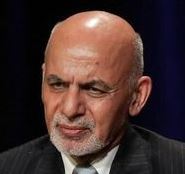
The Afghan government should not be sidelined in peace talks
Ashraf Ghani
Safiullah Taye via Al Jazeera: If the peace process proceeds along the unilateral paths that the US and Russia have taken up, this would result in a weaker Afghan government (whether Ghani-led or not) which would undermine whatever peace agreement is eventually reached. Afghanistan needs a strong state to ensure stability and security, not a weak one. Click here to read more (external link).
Related
Suicide Attack On Afghan Security Forces Kills At Least 12

Najib Danish
RFE/RL’s Radio Free Afghanistan
December 11, 2018
KABUL – The death toll in a suicide attack targeting members of Afghanistan’s security forces on the outskirts of the capital, Kabul, has risen to 12, officials say.
Interior Ministry spokesman Najib Danish said four security forces and eight civilians were killed on December 11 when a suicide car bomber struck a security convoy in the Paghman district in western Kabul.
Six security forces and three civilians were also wounded, Danish said.
Taliban spokesman Zabihullah Mujahid said the militant group was behind the blast, saying the attacker was driving a vehicle full of explosives.
Officials said the early morning attack in western Kabul came hours after an overnight Taliban assault on a checkpoint in the southern province of Kandahar.
Provincial police spokesman Zia Durani told RFE/RL that eight police officers and 11 militants were killed in the battle in the Arghistan district.
Afghan security forces have struggled to counter attacks from the Taliban, Islamic State, and other militant groups since the withdrawal of most NATO combat troops in 2014.
Copyright (c) 2018. RFE/RL, Inc. Reprinted with the permission of Radio Free Europe/Radio Liberty, 1201 Connecticut Ave NW, Ste 400, Washington DC 20036.
Related
1TV Afghanistan Dari News – December 10, 2018
US invaded Afghanistan to exploit its vast mineral resources: Scholar
 Press TV
December 10, 2018
The 2001 invasion of Afghanistan and following occupation by the United States was largely to protect the country’s opium cultivation and exploit its vast mineral resources, particularly the deposits of lithium, according to James Henry Fetzer, an American academic who has been studying the events of 9/11 since late 2001.
Fetzer, who is also a journalist with Veterans Truth Network and a retired professor in Madison, Wisconsin, told Press TV on Sunday that “Afghanistan had nothing to do with 9/11.”
Speaking at an event organized by the Washington Post on Thursday, Chairman of the Joint Chiefs General Joseph Dunford warned the United States should continue its military presence in Afghanistan if it wishes to prevent future attacks similar to what happened on September 11, 2001.
He added that pulling American and NATO forces out of Afghanistan was not a good idea.
“Leaving Afghanistan in my judgment would give the terrorist groups the space with which to conduct operations against the American homeland and its allies,” Dunford said.
“It is our assessment that in a period of time… [the terror groups] would have in the future the capability to do what they did on 9/11,” he said.
Professor Fetzer said that it “is ridiculous, beyond belief. Afghanistan had nothing to do with 9/11 which was brought to use complements of the CIA, the neocons and the Department of Defense, and the Mossad. Although the government has spun fanciful stories that the country was attacked by 19 Islamic terrorists under the control of a guy in a cave of Afghanistan, it was complete poppycock, fabricated, or had no relation to reality.”
“While 15 of the hijackers were from Saudi Arabia none of them were from Afghanistan. The idea that Osama bin Laden was conducting this operation against the United States was a fantasy. When he was initially informed about the attack, he explained that he had nothing to do with it, that murdering innocent women and children were contrary to the tenets of the Quran, and that there appeared to be a government within the government of the United States that wanted to blame this on Muslims. On all points on which he was completely correct,” he added.
“The United States would launch an invasion of Afghanistan, virtually immediately, which appeared to have been to exploit its vast mineral resources, including one of the world’s largest deposits of lithium, which is used to trigger atomic weapons, in computers, and for electric car batteries which are becoming very popular in the United States…and of course to guard the poppy crop where the Taliban had all but extinguished the poppy fields which now since the United States has returned to Afghanistan are thriving and are in abundance, where a many military have returned from Afghanistan and discussed explaining his role there was to protect poppies from the destruction,” noted Fetzer, the founder of Scholars for 9/11 Truth.
The September 11 attacks, also known as the 9/11 attacks, were a series of strikes in the US which killed nearly 3,000 people and caused about $10 billion worth of property and infrastructure damage.
US officials assert that the attacks were carried out by al-Qaeda terrorists but many experts have raised questions about the official account, saying it was a false-flag operation and that bin Laden was just a bogeyman for the US military-industrial complex.
They believe that rogue elements within the US government orchestrated or at least encouraged the 9/11 attacks in order to accelerate the US war machine and advance the Zionist agenda.
Related
Afghanistan beat Oman by 112 runs in Emerging Teams Asia Cup
 1TV: Afghanistan defeated Oman by 112 runs in their last match of Emerging Teams Asia Cup in Sri Lanka on Monday. The win was first for Afghanistan in the tournament after defeats against India and Sri Lanka. Click here to read more (external link).
Related