
 Tolo News: The Taliban in unofficial meetings with Iranian officials said they recognize the Helmand River Treaty signed between Afghanistan and Iran in 1973, an official from Iran’s foreign ministry has said. According to the treaty, Afghanistan is committed to sharing the water from the Helmand River with Iran and will supply 26 cubic meters of water per second, or 850 million cubic meters per annum. Former president Ashraf Ghani had repeatedly said Afghanistan would not give water free of charge to any country, especially to Iran. Click here to read more (external link).
Tolo News in Dari – October 29, 2021
Taliban Takeover Spurs Central Asian Diplomatic Activity

Navbahor Imamova
VOA News
October 29, 2021
TASHKENT, UZBEKISTAN — Central Asian republics are stepping up their diplomatic activity in the face of the Taliban takeover of Afghanistan, seeking to balance fears of increased extremist activity in the region against the risk of an economic collapse that could send refugees flooding across their borders.
Three of those republics — Uzbekistan, Tajikistan and Turkmenistan — joined Russia, China, Iran and Pakistan in issuing a joint statement from Tehran on Thursday, expressing support for the Afghan people while urging the nation’s new Taliban rulers to form an inclusive government representing all social and ethnic groups.
The issue is particularly sensitive for Uzbekistan and Tajikistan, both of which have large ethnic populations in northern Afghanistan hugging their borders. Uzbek Foreign Minister Abdulaziz Kamilov has recently visited Kabul and met with key Taliban players.
The call for an inclusive Afghan government has been a common global refrain, but where Western governments have sought to pressure the Taliban by withholding aid and access to the nation’s fiscal reserves, regional foreign ministers are stressing respect for Afghanistan’s sovereignty, independence and territorial integrity, as well as non-interference in its internal affairs.
The enhanced diplomatic engagement is driven in part by political calculation. Central Asians want the Taliban to suppress potential acts of terrorism against them and dampen the spread of extremism.
“Obviously, the Taliban takeover is not the most pleasant development,” said Dauren Abayev, deputy chief of staff to Kazakhstan’s president, in a public forum this week. “But if you compare them with other groups, it is the not the worst case.”
Afghanistan’s neighbors take some comfort from verbal reassurances delivered to Uzbekistan and others. Last week in Moscow, Taliban Foreign Minister Amir Khan Muttaqi said: “Afghanistan will never allow its soil to be used to threaten the security of another country.”
But the neighbors are equally concerned about the nation’s economic stability. For weeks, Uzbek, Kazakh and Kyrgyz officials have urged international partners to help avoid a humanitarian catastrophe that would destabilize the region further.
Talgat Kaliev, Kazakhstan’s special representative, told Euractiv, a pan-European media network, that his country is continuing to provide humanitarian aid
“It is necessary to create conditions for dialogue with the new government, regardless of its political attitudes and ideologies,” he said.
Kyrgyzstan, too, has delivered humanitarian aid, with Taalatbek Masadykov, deputy chairman of its Security Council, telling Kabul that his country wants peace and stability.
Turkmen officials are in Kabul this week, discussing a prospective pipeline project that, when completed, will link their natural gas-rich country through Afghanistan to Pakistan and India. Under construction in Afghanistan since 2018, the so-called TAPI project could carry 33 billion cubic meters of natural gas per year from Galkynysh, Turkmenistan, to Fazilka, India.
Mohammad Issa Akhund, the Taliban’s acting minister of mines and petroleum, said in a statement that Kabul has been “working hard for some time” and takes pride in the project. Afghanistan would take 5% of the gas, with the rest equally divided between Pakistan and India. Kabul hopes to earn transit fees.
One outlier in the regional diplomacy is Tajikistan, which has been openly critical of the Taliban while expressing support for Afghanistan’s ethnic Tajiks.
But Temur Umarov of the Carnegie Moscow Center writes that despite President Emomali Rahmon’s harsh rhetoric, Tajikistan has been extremely cautious, “limiting their criticism to the fact that Afghanistan’s new government is not inclusive enough of the country’s ethnic minorities.”
This summer Rahmon promised to accept up to 100,000 refugees, a pledge his interior minister Ramazon Rahimzoda later walked back, blaming the international community for failing to assist.
Dushanbe says there are some 15,000 Afghan refugees in Tajikistan. The State Committee for National Security recently reported up to 600 Afghans trying to cross the border daily.
Uzbekistan takes pride in opening the first channel of communication with the Taliban in the region and refers to it as Afghanistan’s “interim government.”
“Dialogue is key,” said Furkat Sidikov, Uzbekistan’s deputy foreign minister, while expressing confidence to VOA that even Tajikistan is in synch on Afghanistan and that disagreements can be worked out. “We will not leave any country in fear or concern … We are closely working with each other on Afghanistan.”
For Uzbekistan, Afghan policy is not about the Taliban but “the people of Afghanistan,” officials in Tashkent reiterate. Yet it is about Uzbekistan’s self-interest too.
“Peace there is essential for us,” said Sidikov.
Tashkent has opened the border town of Termez to the international community to serve as a hub for humanitarian assistance to Afghanistan — a temporary and ad hoc arrangement.
UNHCR, the United Nations refugee agency, this month conducted three emergency airlifts to Termez, delivering more than 100 metric tons of shelter materials, blankets, plastic sheeting and supplies. The aid is trucked from Termez across the border to Mazar-i-Sharif while Afghan airports remain closed to commercial traffic.
“The border is peaceful. We are not doing this for propaganda… We don’t want our neighbors to suffer,” Sidikov said.
The deputy foreign minister confirmed that Uzbekistan will help Afghanistan repair the Mazar-e-Sharif airport and continue to supply the nation with electricity. Afghanistan can no longer pay, but Tashkent has deferred payment assuming the Taliban will eventually win financial support. To that end, Uzbekistan has called on international financial institutions and donors to unfreeze funds.
In forums ahead of Uzbekistan’s recent presidential election, the Mirziyoyev administration showcased regional diplomacy as its signature foreign policy success.
“Cooperation with Central Asian partners is the top priority,” said Sidikov. “Uzbekistan’s trade within the region nearly doubled from $2.7 billion in 2016 [when President Shavkat Mirziyoyev took power] to $5.2 billion this year.” Afghanistan comprises nearly one-fifth of this commerce.
In Tehran, Uzbek Foreign Minister Kamilov urged the world not to isolate Afghanistan, saying, “The international community needs a post-conflict strategy.”
“Uzbekistan is the driver of connectivity in Central Asia,” said Sidikov, Kamilov’s deputy. “We can build a common future, respecting each other’s interests. The interim government in Afghanistan wants this, too.”
Bakhtiyor Mustafayev, deputy head of Tashkent’s Central Asia International Institute, is encouraged by the fact that all the Central Asian governments, which long acted as rivals, now endorse the idea of connectivity, taking advantage of each others’ unique strengths, “from human capital to natural resources.”
Mustafayev argues that the region has learned lessons from 30 years of independence since the breakup of the Soviet Union: It needs to act and speak collectively and “every state has political will to create that regional space.”
Sherzod Muhammad Ashraf, an ethnic Uzbek from Afghanistan currently based in Tashkent, is happy with this intensified Central Asian focus. “I like that Uzbekistan and others see Afghans as one nation, but minorities have struggled and yearned for respect.
“I hope our neighbors take that into account with the Taliban, because they don’t represent us,” said Ashraf. “I’m happy with calls for inclusive government that involve all ethnic groups.”
This story originated in VOA’s Uzbek Service.
US to Provide $144 Million to Afghanistan in Humanitarian Aid
 Ayaz Gul
VOA News
October 28, 2021
ISLAMABAD — The United States announced Thursday it is providing nearly $144 million in new humanitarian assistance to Afghanistan, where millions of people could face acute hunger this winter unless aid arrives soon.
National Security Council spokesperson Emily Horne said in a statement the U.S. assistance will be directed through independent organizations that provide support directly to more than 18.4 million vulnerable Afghans, including Afghan refugees in neighboring countries.
“Our partners provide lifesaving protection, shelter, livelihoods support, essential health care, winterization assistance, emergency food aid, water, sanitation, and hygiene services in response to the growing humanitarian needs exacerbated by health care shortages, drought, malnutrition, and the impending winter,” Horne said.
She noted that the additional funding brings the total U.S. humanitarian aid in Afghanistan and for Afghan refugees in the region to nearly $474 million in 2021, the largest amount of assistance from any nation.
The United Nations said more than four decades of deadly conflicts and recurrent natural disasters have resulted in a protracted food crisis in Afghanistan.
Humanitarian needs have grown to unprecedented levels, and more than half of the conflict-torn country’s estimated 40 million population, a record 22.8 million people, will “face acute food insecurity” from November, U.N agencies warned earlier this week.
Among those at risk are 3.2 million children under age 5 who are expected to suffer from acute malnutrition by the end of the year, they said.
U.S. and Western troops withdrew from Afghanistan in August after 20 years of involvement in the fighting, leading to the fall of the Afghan government to Taliban insurgents.
The return of the Islamist Taliban to power has triggered financial sanctions on Kabul by the United States and other nations over human rights and terrorism concerns.
The sanctions have blocked the group’s access to about $10 billion in Afghan assets parked largely with the U.S. Federal Reserve, raising prospects of an economic meltdown in Afghanistan.
How Pakistan Won in Afghanistan

Pakistan Army chief General Qamar Javed Bajwa (L) and Inter-Services Intelligence (ISI) chief Lt General Faiz Hameed (R).
Javid Ahmad via WSJ: The collapse of the Afghan republic was no accident. It was the culmination of many collective failures, but at the heart of the tragedy was the role played by one country: Pakistan. Pakistan has long followed a dual-track approach in Afghanistan, hosting the Taliban on its soil while ostensibly working as a U.S. counterterrorism partner. Click here to read more (external link).
1TV Afghanistan Dari News – October 28, 2021
Russia: Afghanistan’s Neighbors Must Avert US Military Presence on their Soil

Lavrov
8am: The foreign minister of Russia, Sergey Lavrov, has warned of the military presence of the United States in the region, calling on the neighboring countries of Afghanistan not to permit US military base and NATO on their soil. Click here to read more (external link).
Rashid Khan says team is ready to take on Pakistan in T20 WC match

Rashid Khan
Ariana: One of Afghanistan’s star cricket players, Rashid Khan, was upbeat this week about the national team’s chances against Pakistan in Friday’s Super 12 match in the T20 World Cup in the UAE. Afghanistan will play Pakistan in Dubai on Friday. The match starts at 2.30pm Kabul time and will be broadcast live on Ariana Television. Click here to read more (external link).
Related
Kidnapping Cases Surge in Afghanistan
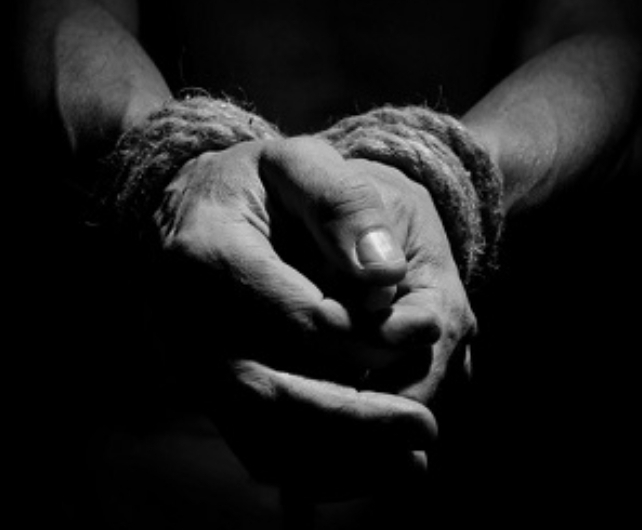 Tolo News: More than 40 business people have been abducted in the city of Kabul and across the country over the past two months. The Afghanistan Chamber of Commerce and Industries (ACCI) said these traders have been kidnapped in Kabul, Kandahar, Nangarhar, Kunduz, Herat and Balk provinces. Click here to read more (external link).
CPJ: Afghanistan’s ‘Culture Of Impunity’ For Crimes Against Journalists To Worsen Under Taliban
 Radio Free Europe/Radio Liberty
October 28, 2021
The Committee to Protect Journalists (CPJ) says justice for 17 Afghan journalists murdered over the past decade is likely to remain elusive after the Taliban’s takeover and the collapse of state institutions.
“Taliban leaders appear even less likely than Afghanistan’s previous government to respond to local and international calls to end the country’s culture of impunity for crimes against journalists,” the New York-based media rights group said on October 28 with the release of its 2021 Impunity Index.
As in the past two years, Afghanistan ranked fifth on the index designed to spotlight countries where journalists are murdered and their killers go unpunished.
But the situation for journalists has deteriorated since the Taliban took control in mid-August as U.S.-led international forces withdrew from Afghanistan, with hundreds of media workers fleeing the country out of fear of the fundamentalist group’s harsh record against the media.
“Promises made by the Taliban’s leadership to protect press freedom rang hollow within days of the takeover as its fighters carried out scores of violations against media workers, including beatings and arbitrary detentions,” the CPJ said.
Overall, over the past decade, 226 of the 278 journalists targeted around the globe have been murdered with impunity, according to the index.
Somalia topped the list for a seventh straight year, followed by Syria, Iraq, and South Sudan.
Mexico, the Philippines, Brazil, Pakistan, and Russia rounded out the top 10 countries on the index, which calculates the number of unsolved journalist murders as a percentage of each country’s population to determine a ranking. This index does not include cases of journalists killed in combat or while on dangerous assignments.
In Afghanistan, 17 local journalists were murdered over the past 10 years — including five in 2020 alone — and their killers walked free.
At least two of those killed last year — RFE/RL’s Radio Azadi reporter Elyas Dayee and freelancer Rahmatullah Nikzad — had received threats from the Taliban prior to their deaths, leading CPJ to conclude that there “seems little chance that Afghanistan’s new Taliban government will seek out the killers.”
Meanwhile, Afghanistan’s judicial system is collapsing, signaling that impunity for killers may now become further entrenched.
The CPJ said that Afghan journalists also remain at risk of being targeted by the local affiliate of the Islamic State extremist group, which claimed responsibility for an April 2018 suicide bomb attack that killed at least nine journalists as well as the retaliatory murder of journalist Malalai Maiwand in late 2020.