
 Ariana: Recently a group of 11 tourists from Thailand visited historical sites in the province and were able to experience Afghan culture and local cuisine. This group was just one of many as residents report they have had many foreigners from across the world visit their city and province. But one Thai visitor expressed delight at being able to visit the country. “Actually, I like to see people and visit historical places, especially Bamiyan Buddha. I really like the people here. Afghanistan is a very beautiful country and has good people,” he said. Click here to read more (external link).
CARE: Monthly Income of 78% of Afghans Has Decreased
 Tolo News: The organization conducted a survey of 381 people in 9 provinces and asked them about their monthly income, and 73% of them said that their monthly income is less than 5,000 afghani, or 59 US dollars. “78% of people say they are earning less than they were in September 2022. 73% of people are earning less than 5,000 AFN ($59) per month.” Meanwhile, some Kabul residents said that they are currently facing economic problems and the Islamic Emirate [Taliban] should pay attention to this. Click here to read more (external link).
Taliban Detain 24 Bamiyan Residents Based on Claims by Another Individual
 8am: Local sources in Bamiyan are reporting that the Taliban have detained 24 residents from one of the villages in the center of this province, based on the claim of ownership by another individual. According to sources, on Wednesday, September 13th, Taliban security forces in Bamiyan detained at least 24 residents of the village of Righshad in this province at the request of an individual named Alam Shah, who belongs to the Pashtun ethnic group. Sources state that Alam Shah has falsely claimed ownership of this village, and for nearly a month, he has blocked transportation routes for 500 families from the Righshad village. Click here to read more (external link).
Taliban Press for Extraction of Copper Despite Worries About Mes Aynak Historical Site
 Roshan Noorzai
VOA News
September 13, 2023
WASHINGTON — The Taliban government has been pressing for the extraction of copper from Afghanistan’s Mes Aynak mine as an additional revenue source, but the mine is located at an ancient historical site, which worries some archaeologists.
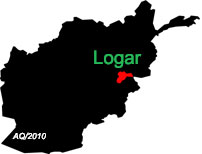
The mine is more than 40 kilometers southeast of Kabul in the Logar province. The area is considered one of the largest untapped copper mines in the world, with deposits worth at least $50 billion.
The Mes Aynak mine is at the site of an ancient Buddhist city of the same name along the Silk Road. Structures and artifacts uncovered at the site lead archeologists to believe that 2,000 years ago, the residents mined copper, with evidence of ancient smelting workshops.
But the Taliban are eager for the mine to start operating to offset international sanctions, observers say. The Taliban are “in need of money,” Azarakhsh Hafizi, an economist and former head of the international relations committee at Afghanistan’s Chamber of Commerce and Industries, told VOA.
Afghanistan has been dependent on international aid since the 1920s when development and modernization started in the country, Hafizi said, but now that international funding is cut off, the Taliban are looking for new revenue sources.
“Afghanistan’s export was worth $2 billion in the past year, which mainly came from the minerals,” Hafizi said.
The artifacts hurdle
During a recent visit to Afghanistan by an official from the Metallurgical Corporation of China, the Taliban minister for mines and petroleum, Shahabuddin Delawar, described the project as “important and vital,” and said the extraction of the mine’s copper is “one of the top priorities” for the Taliban.
The Taliban are “committed to beginning the work on the project as soon as possible so jobs can be created for the people,” the Pajhwok News Agency, an independent news outlet, reported Delawar saying last month.
The MCC official told the Taliban the “presence and relocation” of the historical objects at the site is the main hurdle in the exploitation of the mine, according to Pajhwok and a post by the Ministry of Mines and Petroleum of the Taliban on X, the platform formerly called Twitter.
The Taliban said they formed a committee to work on the relocation of the artifacts. However, concerns remain about the preservation of the historical site.
“It is impossible,” said Noor Agha Noori, the former director of Afghanistan’s Institute of Archaeology, adding that “It is an ancient city; how can the city be moved and relocated? … It has its own structures, walls, graveyard and water system.”
Noori told VOA that the objects discovered in the site belong to the Buddhist era from the 1st to 7th century, but “there are signs that show some of the artifacts can go back 1500 BC.”
“Archaeologists would need decades to discover all the artifacts,” he added.
Noori and other archeologists are concerned about the proper protection of the artifacts because when the Taliban were in power in 2001, they blew up two giant Buddha statues in the central Bamiyan province and destroyed many statues and artifacts in the Kabul Museum.
Noori said 15 years ago when the contract to extract the mine was signed, only a preliminary survey was conducted, and “it was not clear that there would be many historical artifacts or an ancient city.”
In 2007, the former Afghan government signed a $3 billion contract with a Chinese consortium, consisting of MCC and the Jiangxi Copper Corporation, to extract the Mes Aynak copper.
In addition to paying royalties to the Afghan government, the contract stipulated that the Chinese consortium needed infrastructure, including a railway and a power plant.
But the work never started because of security issues in the province and the discovery of the artifacts.
Mes Aynak recommendations
Noori said that based on a survey by national and international archaeologists conducted over years, some recommendations were made to the former government to bring changes to the contract to preserve the site while paving the way for the extraction of the copper.
“We recommended that the central part of the mine should be extracted via underground mining to preserve the ancient city. In the western part, there were not that many artifacts so it can be extracted from an open pit,” Noori said.
He added that in the case of open-pit extraction, “about 50% of the artifacts could get destroyed.”
The Chinese company prefers open-pit extraction of the mine, said Ainuddin Sadaqat, the Afghanistan National Museum’s chief curator.
He told VOA the recommendations to do underground extraction were shared with the Chinese officials in a meeting last year, but the company’s delegation said that “it was costly.”
Sadaqat said government agencies and some NGOs that are working to protect the historical site are preparing for the relocation of the artifacts.
“The preliminary work is underway, but it is still not clear when the relocation of the historical artifacts would take place,” he added.
Sadaqat said while many of the smaller artifacts, such as jewelry and dishes, have already been transported to the National Museum, the larger objects are going to be moved to a local museum in the area.
Taliban response
In the past two years, the Taliban government has taken steps to protect the historical sites, Mohammad Hasib Nasimi, Director of Preservation and Restoration of Historical Monuments in the Ministry of Information and Culture of Afghanistan, told VOA.
“There are positive changes. We have been working on the restoration and protection of the historical sites,” Nasimi added.
Haroon Hakimi from VOA’s Afghan Service contributed to this report, which originated in VOA’s Afghan Service.
Afghanistan’s mineral wealth must be responsibly managed
 Arab News: There are reports that the revenues from mines, besides helping the Taliban run its government machinery, are also partially being channeled into the private pockets of some of the Taliban leaders. If true, this could be another chapter in the long history of thefts of the national assets of Afghanistan. Another example is the illegal timber mafia that has led to continuous logging and deforestation in the country’s eastern Kunar province. Afghanistan cannot afford a new mining mafia as the country struggles to confront the declining economy in the wake of the political developments of August 2021. Click here to read more (external link).
US Envoy: Taliban Kill 8 Key Islamic State Leaders in Afghanistan
 Ayaz Gul
VOA News
September 13, 2023
ISLAMABAD — The Taliban’s “successful” offensive against the Islamic State branch in Afghanistan, IS-Khorasan, has “significantly degraded” its capability and steadily decreased large-scale attacks against civilians, according to a senior US envoy.
Tom West, the U.S. special representative for Afghanistan, shared the assessment during a Tuesday seminar at the nonpartisan Stimson Center think tank in Washington.
“They have a very aggressive violent offensive ongoing that has significantly degraded ISKP capability,” West said, using an acronym for IS-Khorasan. “I think it’s notable that since early 2023, Taliban raids in Afghanistan have removed at least eight key ISKP leaders, some responsible for external plotting.”
West said the counterterrorism actions had led to a “steady decrease” in attacks against Afghan civilians.
“There were horrific attacks largely against the Hazara population, but we have not seen a return to those sorts of attacks since then,” he added.
But the American envoy warned the Tehrik-i-Taliban Pakistan, TTP, “is posing the greatest threat” to regional stability. “We see a very significant increase in (TTP) attacks directed at Pakistan,” West said.
The militant group, also known as the Pakistani Taliban, is listed as a global terrorist organization by the United States. It is waging terrorist attacks in neighboring Pakistan and operating out of Afghanistan sanctuaries.
Pakistani officials say TTP has intensified cross-border attacks since the Taliban returned to power in Kabul two years ago. The violence has become a daily routine and has reportedly killed more than 1,500 Pakistanis, including civilians and security forces, mostly in districts near or on the Afghan border.
The TTP leadership has publicly pledged allegiance to Hibatullah Akhundzada, the reclusive supreme leader of the Afghan Taliban. The militant group emerged in Pakistani border areas in 2007 and fought alongside the Taliban against the U.S.-led NATO troops in Afghanistan.
“They became allies of the Taliban during the war. They were financial supporters, logistical supporters, and operational allies as well. I think the ties between them are quite tight,” West said.
The U.S. envoy declined to comment on Pakistani allegations that TTP attacks are taking place with the approval of Afghanistan’s Taliban authorities.
“As far as whether the Taliban are supporting TTP attacks against Pakistan, that’s a tough one and probably gets beyond what I am able to talk about publicly. It’s no secret that this is the issue that dominates Pakistan’s engagement with the Taliban at the moment,” West stated.
The Taliban reject allegations they are allowing any group, including TTP, to use Afghan soil to threaten the security of Pakistan or the region at large.
For their part, officials in Islamabad say they have formally shared evidence with Kabul about the presence of TTP leaders and fighters in Afghanistan and their use of the country to launch terrorist attacks against Pakistan.
The tensions over rising terrorism were partly behind Pakistan’s decision to shut the main border crossing with landlocked Afghanistan a week ago.
The busy Torkham transit point for trade and travelers remains closed, stranding hundreds of trucks carrying commercial goods and thousands of passengers on both sides and deteriorating relations between the two countries.
West also noted at Tuesday’s seminar that al-Qaida was at its “historical nadir” in Afghanistan and Pakistan.
“Their ability to threaten the U.S. from Afghanistan and Pakistan is probably at its lowest point since the group relocated to Afghanistan from Sudan in 1996.”
The United States and its allies withdrew all their forces from Afghanistan in August 2021, just days after the then-Taliban insurgents took control of the country from a U.S.-backed government in Kabul. The foreign troop departure ended nearly two decades of U.S. involvement in the Afghan war.
Tolo News in Dari – September 13, 2023
World Cup 2023: Afghanistan announces 15-member squad
 Ariana: Afghanistan World Cup squad: Hashmatullah Shahidi (c), Rahmanullah Gurbaz, Ibrahim Zadran, Riaz Hassan, Rahmat Shah, Najibullah Zadran, Mohammad Nabi, Ikram Alikhil, Azmatullah Omarzai, Rashid Khan, Mujeeb ur Rahman, Noor Ahmad, Fazalhaq Farooqi, Abdul Rahman, Naveen ul Haq. Afghanistan will open its World Cup campaign against Bangladesh in Dharamsala on October 7. Click here to read more (external link).
Other Sports News
Taliban accepts credentials from new Chinese envoy
 Ariana: In a ceremony held at ARG, in which Amir Khan Muttaqi, Acting Minister of Foreign Affairs was also present, the [Taliban] Prime Minister welcomed the new Chinese ambassador. This is the first diplomatic step at this level in Afghanistan in the past two years. Click here to read more (external link).
Related
Resistance Against the Taliban: From Ahmad Shah Massoud to His Heirs

Ahmad Shah Massoud
8am: September 9th marks the anniversary of the assassination of Ahmad Shah Massoud, the charismatic leader of the resistance against the Taliban in the 1990s. With the resurgence of the Taliban in Afghanistan, Massoud’s legacy has gained renewed attention, underscoring the enduring relevance of his ideals. Discussing justice and equality in society serves as an indicator that these values are at risk, prompting the need to emphasize their significance. The extensive discourse surrounding Massoud’s life and career on social media and in foreign media outlets today underscores the precarious state of these values, making it imperative to invoke Massoud to underline their importance. Recently, a viral video featuring Massoud’s speech seemingly describes the plight of individuals under Taliban control. In a friendly yet earnest tone, he emphasizes, “If a person possesses bread, water, and shelter, but finds himself imprisoned or devoid of dignity and authority, none of these comforts bring true satisfaction. Freedom, personal authority, and independence hold far greater value, enabling individuals to endure even poverty and hunger.” Click here to read more (external link).