
 8am: Bibi Gul, a participant in a street protest, was detained by the Taliban in Kunduz in late September 2021. During her harrowing two-day captivity, she endured torture, as disclosed by the source. Upon her release, Bibi Gul faced escalating pressure and restrictions from her family, which included being prohibited from communicating with her friends, according to the source. The 21-year-old aspiring university student found herself on the brink of taking her entrance exams when the Taliban assumed control of Afghanistan, thwarting her educational aspirations. A member of the Unity and Solidarity Women’s Movement in Kunduz lamented that Bibi Gul’s case is not isolated, emphasizing that the Taliban has systematically imprisoned and tortured numerous girls, leaving them to grapple with severe psychological issues. Click here to read more (external link).
Taliban’s Hijab Arrests Further Alienate Afghan Women, Activists Say
 Zheela Noori
Samiullah Jalalzai
VOA News
January 5, 2024
The Taliban have arrested women for the first time in Kabul for wearing “bad hijab,” which women’s rights activists in Afghanistan say is an effort by the group to restrict women further and shut them out of public life.
“This is an excuse for putting further restrictions on women,” said Sanam Kabiri, a member of the rights group Unity and Solidarity of Afghan Women, adding that “they aim to stop women from going out even when they need to go.”
Abdul Ghafar Farooq, the Taliban’s spokesperson for their Ministry of Vice and Virtue, told The Associated Press on Thursday that the women were arrested three days ago over their “bad hijab.”
However, he did not provide details on the number of women arrested and how they violated the Taliban’s dress code.
Kabiri told VOA that the women in Afghanistan are wearing hijab, but that they could have been arrested simply for “wearing jeans, tight clothes, or color scarf.”
In May 2022, the Taliban issued a decree calling for women to wear the head-to-toe burqa and to only show their eyes.
“Despite depriving women of their rights, they are now arresting women over hijab,” said Kabiri, adding that the Taliban “aim to omit women from public life and make their lives hell.”
Since seizing power in 2021, the Taliban have imposed repressive measures against women in Afghanistan.
Under the Taliban, women are now barred from attending secondary schools and universities, working with government and nongovernment organizations, traveling more than 45 miles, leaving the country without a close male relative, or going to parks and gyms.
Richard Bennett, the United Nations special rapporteur on human rights in Afghanistan, in a post on X, said the arrests “regrettably [signify] further restrictions on women’s freedom of expression and undermine other rights.”
Bennett called on the Taliban to release the women “immediately and without conditions.”
The Taliban’s government has continued its crackdown on women and women’s rights activists in Afghanistan.
“In general, we are witnessing the Taliban’s continued violence [against women] in the past two and a half years,” said Deeba Farahmand, an Afghan women’s rights activist.
She added that the Taliban have arrested, imprisoned and tortured women’s rights activists.
In November, Human Rights Watch reported that detainees are kept in “abusive conditions, and sometimes tortured.”
“It is not clear where they [the Taliban] took them [girls] and what is going to happen to these young girls,” said Taranom Seyedi, the head of the Women’s Political Participation Network, a group coordinating activities of women activists in Afghanistan.
The U.N. Assistance Mission in Afghanistan, in a post on X on Wednesday, expressed concern over the “arbitrary detention” of the Afghan girls’ education activists.
“UNAMA urges [an] end to arbitrary arrests. Rights to family, lawyers, care, fair trial must be upheld.”
The Taliban’s spokesperson, Zabihullah Mujahid, however, rejected the U.N. statement, saying that “no arbitrary arrests have been made and their actions are lawful and based on the Sharia law.”
On Wednesday, U.S. State Department spokesperson Matthew Miller said the United States “remained concerned about the Taliban’s repressive edicts against women and girls and its unwillingness to foster inclusive governance.”
The international community has called on the Taliban to respect its commitment to uphold women’s rights and form an inclusive government.
Seyedi said that by arresting women over how they wear a hijab, the Taliban are trying to make the lives of women in Afghanistan “more difficult.”
She called on the international community to raise its voice against the detention of women and officially acknowledge the Taliban’s actions in Afghanistan as “gender apartheid.”
Roshan Noorzai of VOA’s Afghan Service contributed to this story, which originated in VOA’s Afghan Service.
Iran Moves To Seal Borders With Afghanistan And Pakistan After Deadly Blasts
 By RFE/RL’s Radio Azadi
January 5, 2024
Iran said it is shutting its vast borders with neighboring Afghanistan and Pakistan to increase security after the twin bombing that killed at least 89 people in the southeastern city of Kerman on January 3.
The Iran Students News Agency (ISNA) quoted Interior Minister Ahmad Vahidi as saying his government was prioritizing border crossings along borders with Afghanistan and Pakistan, both of which range for almost 1,000 kilometers.
The bombings in Kerman targeted people attending ceremonies to mark the fourth anniversary of the assassination of the late military commander General Qasem Soleimani, who was assassinated in Iraq in 2020 by a U.S. drone.
The Islamic State (IS) extremist group has claimed responsibility for the blasts saying that two of its members detonated explosive belts in the crowd that had gathered for Soleimani’s memorial. IS has in the past claimed responsibility for some terrorist attacks in Iran.
On January 5, Vahidi told state TV that the country’s intelligence agencies “have found very good clues regarding elements involved in the terrorist explosions in Kerman.”
He said that a number “of those who had a role in this incident have been arrested,” but did not elaborate.
Afghanistan’s Taliban-led government and Pakistan’s Ministry of Foreign Affairs have yet to react to the announcement of the border closures. Both condemned the attack on January 3.
In the past, Tehran has accused both countries of allowing illegal immigrants, and sometimes terrorists, to slip across the border and harming Iran’s national security.
“Iran is indirectly accusing Afghanistan by insinuating that terrorists come from that country,” Aziz Ma’araj, a former Afghan diplomat who had served in Tehran, told RFE/RL’s Radio Azadi.
Ahmad Khan Andar, an Afghan security expert, warned against blocking landlocked Afghanistan’s borders.
“The two countries should jointly fight terrorists along their shared border,” he told Radio Azadi.
In Afghanistan, the Taliban has been fighting against the Islamic State-Khorasan (IS-K), a local branch of IS, since it first emerged in 2015.
Since seizing power in August 2021, the Taliban has tried to launch an intense crackdown on the IS-K, but many analysts say the mountainous border regions remain porous and it is far from eliminating the hard-line Salafist group that considers Shi’ites apostates.
Iran and Afghanistan’s northern central Asia neighbors and Russia consider the IS and IS-K to be a significant threat to security.
Copyright (c) 2024. RFE/RL, Inc. Reprinted with the permission of Radio Free Europe/Radio Liberty, 1201 Connecticut Ave NW, Ste 400, Washington DC 20036.
Tolo News in Dari – January 5, 2024
Twelve Afghans among those killed in Iran’s Kerman blasts
Ariana: Twelve Afghan citizens are among those who were killed in explosions at a ceremony in Iran’s Kerman city on Wednesday to commemorate commander Qassem Soleimani, Tasnim news agency reported. Nearly 100 people were killed and 284 others were injured in the attack that was claimed by Daesh. Click here to read more (external link).
Taliban Arrests Scores Of Women In Dress-Code Crackdown
 By RFE/RL’s Radio Azadi
January 4, 2024
Afghanistan’s Taliban-led government has arrested dozens of women for failing to observe its strict dress code, which requires women to wear head-to-toe coverings, including over their faces.
Several eyewitnesses and some of the women detained told RFE/RL’s Radio Azadi that officials from the Taliban’s Ministry for the Promotion of Virtue and Prevention of Vice have been making the arrests in various neighborhoods of the capital, Kabul, since January 1.
“There have been several incidents today in which the Taliban detained several women and took them to an unknown destination,” one eyewitness who requested anonymity said on January 3.
In May 2022, a decree by the Taliban, who seized power in August 2020 as international troops were withdrawing from the country, called on Afghan women to only show their eyes in public.
The order reinstated restrictions during the Taliban’s previous rule between 1996 and 2001. It is even stricter than neighboring Iran, where authorities have enforced the mandatory hijab, or Islamic head scarf, for decades, prompting widespread unrest.
The AP quoted the country’s Vice and Virtue Ministry as saying women are being arrested for wearing “bad hijab,” the first official confirmation of a crackdown on women who don’t follow the dress code.
A young woman who witnessed some detentions in Kabul said she managed to escape arrest after an older man intervened.
“He told me to run to run towards my house because the Taliban had just arrested several women in the neighborhood of Dasht-e Barchi in western Kabul,” she told Radio Azadi.
Some of the women detained were released on bail, while others are still being held by the Taliban.
The crackdown is the latest blow to women and girls in Afghanistan, who are already being marginalized in the country by Taliban bans on education, employment, and restrictions in access to public spaces.
Ruqiya Saee, a women’s rights activist, said Afghan women are no longer able to dress the way they like.
“The situation in Afghanistan is becoming dire daily,” she told Radio Azadi.
The arrests come days after the UN Security Council called for a special envoy to engage with the Taliban, especially on gender and human rights.
The Taliban, however, criticized the idea, saying that special envoys have “complicated situations further via the imposition of external solutions.”
On January 3, the United States supported the new UN special envoy for Afghanistan.
Matthew Miller, a spokesman for the U.S. State Department, said Washington remained concerned about the Taliban’s “repressive edicts against women and girls and its unwillingness to foster inclusive governance.”
He added that the decisions made by the Taliban risk irreparable damage to Afghan society and move the Taliban further away from normalizing relations with the international community.
With reporting by the Associated Press
Copyright (c) 2024. RFE/RL, Inc. Reprinted with the permission of Radio Free Europe/Radio Liberty, 1201 Connecticut Ave NW, Ste 400, Washington DC 20036.
Farid Basharat doubts UFC will OK carrying Afghanistan flag despite new rule from Dana White

Basharat
MMA Fighting: UFC CEO Dana White recently declared fighters in the promotion will once again be allowed to walk out with flags from their home countries. But it doesn’t appear that rule will apply to bantamweight prospect Farid Basharat or his older brother, Javid. The Basharat siblings hail from Afghanistan, a country now led by the Taliban, which introduced a new flag in 2021. The new Islamic Emirate of Afghanistan features a different flag from the Islamic Republic of Afghanistan, which was internationally recognized until the current regime took over. As a result, fighters from Afghanistan have not been able to walk out with a flag from their home country, and Basharat doesn’t expect that rule to change. Click here to read more (external link).
Tolo News in Dari – January 4, 2024
Pakistan Says 541,000 Afghans Have Left Amid ‘Undocumented’ Campaign
 By RFE/RL’s Radio Azadi
January 4, 2024
Pakistan’s Foreign Ministry says 541,000 Afghans have left for Afghanistan as Islamabad’s campaign to repatriate some 1.7 million “undocumented foreigners” continues, despite international concerns for their safety and means to shelter upon their return. Since its push began in October, Pakistan has extended a December deadline to February 29, with fines of $100 per month threatened for violators. Caretaker Prime Minister Anwar ul-Haq Kakar linked the expulsions to the Afghan Taliban government’s inability to prevent the Tehrik-e Taliban Pakistan (TTP) from launching deadly attacks in Pakistan. The UN World Food Program says 15 million Afghans face food insecurity this winter.
Copyright (c) 2024. RFE/RL, Inc. Reprinted with the permission of Radio Free Europe/Radio Liberty, 1201 Connecticut Ave NW, Ste 400, Washington DC 20036.
Taliban Maintain Poppy Crackdown, US Fears Farmers’ Return to Cultivation
Yaqoob
Akmal Dawi
VOA News
January 3, 2024
Afghanistan’s Taliban government is touting major strides in combating drug production and trafficking over the past year.
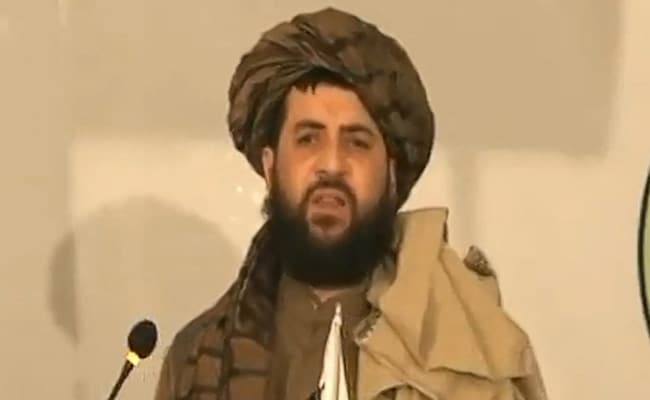
Acting defense minister Mohammad Yaqoob Mujahid announced at a Kabul press conference on Sunday that 4,472 tons of narcotics had been destroyed, 8,282 individuals involved in production and smuggling were arrested, and 13,904 hectares of poppy crops were cleared.
“Smuggling of all contraband has been prevented by 99 percent,” Mujahid claimed.
The United States and the United Nations have confirmed a massive reduction in poppy cultivation in Afghanistan since the Taliban supreme leader, Hibatullah Akhundzada, banned the crop in April 2022.
Afghanistan’s poppy cultivation plummeted so dramatically after the Taliban ban that the country no longer holds the title of top global opiate supplier, ceding it to Myanmar, according to a 2023 report by the U.N. Office on Drugs and Crime, or UNODC.
For nearly two decades, despite billions of dollars poured into counter-narcotics by Western donors, Afghanistan remained the world’s opium kingpin, supplying more than 80% of the world’s illicit market.
Opium is used to produce heroin, a highly addictive and dangerous drug.
Unsustainable initiative
Eradicating opium cultivation remains a monumental challenge for the Taliban, despite their declared commitment to a permanent, rigorously enforced ban and a drug-free Afghanistan.
Experts say extreme poverty in rural and agricultural communities haunts the Taliban’s vow, threatening to lure farmers back to poppy cultivation.
“Despite the apparent initial impact of the Taliban’s narcotics ban, farmers will likely again turn to poppy cultivation unless there is a plan to address the potential loss of over 400,000 livelihoods linked to opium cultivation,” an official at the U.S. Department of State wrote VOA in emailed comments.
The Taliban’s poppy cultivation ban has dealt a harsh blow to Afghanistan’s illicit narcotics economy, causing an estimated $1 billion loss for those involved, as reported by the U.N. and independent experts.
“In 2023, the farmers’ income from selling opium to traders declined by 92% from an estimated $1.36 billion in 2022 to $110 million in 2023,” the UNODC reported in November.
As the Taliban pursue their counter-narcotics goals, finding sustainable alternative livelihoods for affected communities will be crucial to prevent unbearable hardships and even potential conflicts.
“The economic consequences of the ban so far may have been somewhat muted by large existing inventories of opium from previous harvests, but smaller farmers, sharecroppers, and wage laborers suffer the most since they don’t have stocks of opium,” William Byrd, an expert at the U.S. Institute of Peace, told VOA.
The opium economy in Afghanistan has been a complex and controversial issue, annually pumping between $1.8 billion and $2.7 billion into the Afghan economy, accounting for 6% to 11% of GDP according to the U.N.
US aid
U.S. officials have long argued that the global narcotics trade serves as a shadowy financier, fueling terrorism, organized crime, and corruption across the globe.
From 2003 to 2021, while engaged in counter-insurgency operations against the Taliban in Afghanistan, the United States also invested upwards of $9 billion in programs aimed at curbing the illicit drug trade.
Following the Taliban takeover, the U.S. cut development aid to Afghanistan, focusing solely on U.N.-administered humanitarian assistance. Alternative livelihood programs for poppy farmers were among the casualties.
While official diplomatic relations remain on hold, U.S. officials have explored avenues for communication with the Taliban on issues like counter-narcotics through occasional, unofficial talks outside Afghanistan.
Sanctions imposed on Taliban leadership and entities currently prevent direct U.S. engagement in their counter-narcotics programs.
“Unfortunately, countries and organizations that have huge budgets and resources to prevent the cultivation and smuggling of poppy opiates do not help Afghans with alternative livelihoods,” said Mujahid, the Taliban defense minister whose father, Mullah Mohammad Omar, the founding Taliban leader, nearly eliminated poppy cultivation in 2000.
Omar’s poppy ban was disrupted by the U.S. invasion of Afghanistan in October 2001.
Related