

Torkham border area between Afghanistan and Pakistan
By RFE/RL’s Radio Mashaal
January 13, 2024
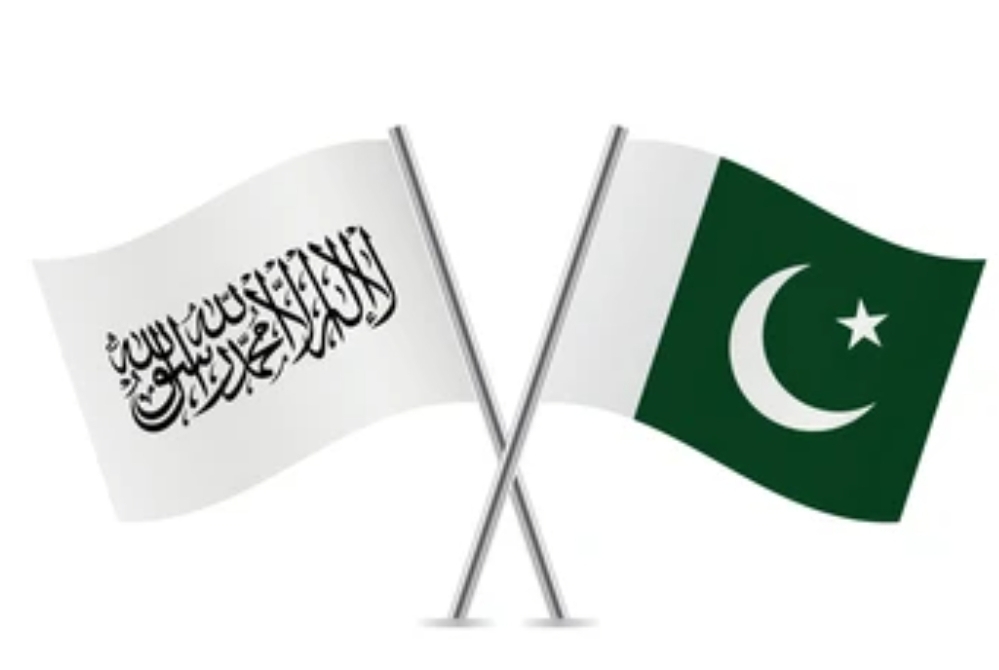
Hundreds of trucks and other cargo vehicles have been stranded at the Torkham border crossing between Afghanistan and Pakistan after Pakistan implemented a requirement for passports and valid visas for Afghan drivers beginning early on January 13.
A countermove by authorities of the Taliban-led Afghan government appears to be compounding the chaos.
A Pakistani official at Torkham told RFERL’s Radio Mashaal that Afghan drivers without passports were now barred from entering the country.
Hundreds of goods-laden trucks were stranded on the Afghan side of the heavily trafficked border as a result of the measure’s implementation.
The Afghan Taliban authorities have also stopped Pakistani cargo vehicles from entering Afghanistan in response.
“Pakistan has repeatedly extended and given time on the valid visa and passport condition,” a Pakistani official told RFERL.
Afghan Taliban security officials had called for Afghan drivers’ exemptions from the passport and visa requirement.
The Taliban was said to have regarded the tightening as a unilateral decision.
The federal government of Pakistan implemented a border-control policy in 2016, known as Border Management, that does not allow anyone without a passport or visa to travel through the Torkham border crossing.
Copyright (c) 2024. RFE/RL, Inc. Reprinted with the permission of Radio Free Europe/Radio Liberty, 1201 Connecticut Ave NW, Ste 400, Washington DC 20036.
Related


 Ayaz Gul
 Ms. Magazine: In Afghanistan, the term ‘madrassa’ refers to religious schools. Historically they focus on religious studies, including the Quran and Islamic law. Since the Taliban’s return, madrassas have focused heavily on promoting religious education. Currently, the Taliban is planning a vast network of madrassas across the country’s 34 provinces; some are reporting that they plan special ‘super’ madrassas that will focus on jihad and defending the Taliban’s regime. This is a “new abnormal” that de-prioritizes traditional subjects. By focusing on an education that closes off the outside world, Afghan students are being excluded from public life. Contemplating the viability of a madrassa as a substitute for modern education is not just surprising; it’s deeply concerning. Running modern institutions necessitates a contemporary educational framework which madrassas cannot provide. Managing a hospital, operating a business, becoming a teacher, piloting an airplane or even driving a car with a madrassa education is simply unfeasible. This educational approach falls short of empowering girls and women with the skills essential for active participation in the economy. In essence, it poses a serious threat to progress and prosperity.
 Ariana: Turkish Foreign Minister Hakan Fidan said on Thursday that no promise was made to grant visas and residence permits to Afghan migrants. Fidan’s comments came in response to a parliamentary question by Deniz Demir, Ankara deputy of Türkiye’s main opposition, the Republican People’s Party (CHP), Anadolu Agency reported. The question concerned allegations that “legalization of Afghan migrants and work visas for Afghans” were discussed during a meeting between the Afghan Refugee Minister Khalil-ur-Rahman Haqqani and Cenk Unal, Chargé d’Affaires and Head of Mission of the Turkish Embassy in Kabul.
 Katherine Gypson
 Radio Free Europe/Radio Liberty