
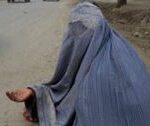
 8am: The Taliban regime in the past one or two years has attempted to gather beggars and prevent their roaming in the streets and markets. However, the main issue is that without addressing the root cause of the problem, it is impossible to combat this social issue through coercion and force. Currently, poverty and destitution have become pervasive and distressing, affecting the lives of many individuals, from seventy-year-old men to seven-year-old children. Without tackling poverty, it is impossible to address the phenomenon of begging and find a solution. Click here to read more (external link).
Related
 Ayaz Gul
 Al Jazeera: Poor nutrition is rife in a country plagued by economic, humanitarian and climate crises two and a half years since the Taliban returned to power. Ten percent of children under five in Afghanistan are malnourished and 45 percent are stunted, meaning they are small for their age in part due to poor nutrition, according to the United Nations. Afghanistan has one of the world’s highest rates of stunting in children under five, said Daniel Timme, communications chief for UNICEF. “If not detected and treated within the first two years of a child’s life, the condition [stunting] becomes irreversible, and the affected child will never be able to develop mentally and physically to its full potential,” he said.
 8am: Abdul Hakim Shar’ee, the acting head of the Taliban-controlled Ministry of Justice, stated that “there is no place for parties in the regime of this group, and mentioning a party name is a crime.” He made these remarks two days ago at a meeting in Kabul, referring to recent tensions between the Taliban and Gulbuddin Hekmatyar, the leader of the Islamic Party. This comes as, following the fall of the previous government to the Taliban, dozens of political movements and their key members have left Afghanistan due to fear of the Taliban. Of the 72 political parties registered in the previous government’s Ministry of Justice, currently, no party is active in Afghanistan, and the Taliban do not allow any political or civil activities in the country.

 Ariana: Russia is considering removing the Islamic Emirate [Taliban] from Moscow’s list of terrorist organizations, but the final decision must be made by the country’s top political leadership. The IEA [Taliban] was recognized in Russia as a terrorist organization in 2003, after it was included in the UN Security Council’s list. Russia has discussed the removal of this status before: in 2020, Kabulov said that this could happen after the UN Security Council made a similar decision.
 Khaama: The Special Representative of the United Nations in Afghanistan says that the forced expulsion of Afghan migrants by neighbouring countries is against international migration laws. This comes as, over the past year, the process of forced expulsion of Afghan migrants from neighbouring countries, especially Pakistan and Iran, has intensified, with hundreds of thousands of migrants returning to Afghanistan forcibly and voluntarily from these two countries. In addition, Pakistan intends to proceed with the second phase of forced expulsion of Afghan migrants from its provinces in the near future.
 Ayaz Gul