

Zabihullah Mujahid
Ayaz Gul
VOA News
May 31, 2024
ISLAMABAD — The Taliban government Friday dismissed the findings of a Pakistan probe that attributed a recent fatal attack against Chinese workers in the country to militants operating from Afghanistan.
Zabihullah Mujahid, the Taliban’s chief spokesman, told an Afghan television station that his country had nothing to do with the March 26 attack on Chinese nationals in northwestern Pakistan, insisting it was an internal issue for the neighboring country to address.
“The report published by Pakistan is an attempt to damage the trust between Afghanistan and China. We have repeatedly denied this report as illogical,” Mujahid told TOLO TV in his audio remarks.
The response came a day after a Pakistani delegation visited Kabul on Thursday and shared with Taliban counterparts the results of Islamabad’s investigation into the killings of five Chinese nationals, along with their local driver, in a suicide car bombing. The victims were working on a China-funded hydropower project in northwestern Pakistan.
The Pakistani Foreign Ministry spokesperson told a weekly news conference in Islamabad on Friday that its delegation also had requested assistance from Afghan authorities to apprehend the perpetrators of the terrorist attack on Chinese workers based on the “concrete evidence” Pakistan had shared with them.
“The Afghan side has committed to prevent the use of their soil for any terrorist activity, and they have agreed to examine the findings of the investigation and to work with Pakistan to take the investigation to its logical conclusion,” Mumtaz Baloch said.
Pakistani military and civilian officials maintain that the Tehrik-i-Taliban Pakistan, or TTP, a globally designated terrorist group also known as the Pakistani Taliban, orchestrated the attack on Chinese personnel from Afghan sanctuaries.
The militant group has for years waged deadly attacks in Pakistan, targeting security forces and civilians.
Officials in Islamabad maintain that fugitive TTP leaders and combatants relocated to sanctuaries in Afghanistan after the Taliban retook control of the country nearly three years ago, and they have since intensified cross-border attacks with “greater operational freedom.”
The Taliban have consistently denied that foreign extremist groups have a presence in Afghanistan and are using their territory to threaten outside countries. Critics, however, have questioned those claims.
This month, a U.S. government quarterly report to Congress noted that the ruling Taliban continued to allow senior al-Qaida leaders, the TTP, and other insurgent groups to operate in Afghanistan.
Russian Defense Minister Andrey Belousov said Friday that the situation in Afghanistan “remains the main source of instability” in the region.
“Numerous radical groups have gained a foothold there, stepping up attempts to promote their ideas in the neighboring countries,” the Russian state-run Tass news agency quoted him as telling a regional defense ministers meeting in Kazakhstan.
“The risk of gangs and terrorism spilling outside the country is growing,” Belousov said. He stressed the need for “constant monitoring and prompt measures” to ensure regional stability.
A United Nations report published earlier this year said the Taliban continued to be “sympathetic” to the TTP and supplied it with weapons and equipment, and some Taliban members reportedly joined the TTP in conducting cross-border raids against Pakistan.
The Taliban government has not been formally recognized by the international community.
China has steadily improved relations with Afghanistan, though, since the fundamentalist Taliban regained power in Kabul in August 2021. Beijing was the first to appoint a new ambassador to Kabul and the first to officially accept a Taliban ambassador.
 Ariana: Afghanistan defeated Scotland by 55 runs in their final warm-up match on Friday ahead of the T20 World Cup. The T20 World Cup will kick off on Sunday at 5:00 a.m. (Afghanistan Time) with USA facing Canada. Afghanistan’s first match will be against Uganda on Tuesday.
 RFE/RL’s Radio Azadi: The only technocrat in the Taliban’s cabinet has been dismissed and replaced by a hard-line cleric. Taliban chief Mullah Haibatullah Akhundzada on May 28 removed Health Minister Qalandar Ebad, a trained doctor, and named Noor Jalal, a former deputy interior minister, as his successor. The Taliban’s theocratic regime is dominated by senior Taliban veterans and loyalists, most of them clerics from the Pashtun ethnic group.
 Tolo News: Abdul Qayum Karzai, brother of former Afghan President Hamid Karzai, passed away yesterday (Thursday) at the age of 77 in the state of Maryland, USA. He was born in 1957 in the village of Karz in Kandahar. Abdul Qayum’s father, Abdul Ahad Karzai, was an influential tribal elder and served in the National Assembly of Afghanistan during the reign of King Zahir Shah.
 Ariana: With the rise in security incidents in Badakhshan province, authorities have installed more than 20 security cameras in crowded places of the provincial capital Faizabad. Provincial police say that they have installed 23 security cameras in Faizabad, which are active round the clock.

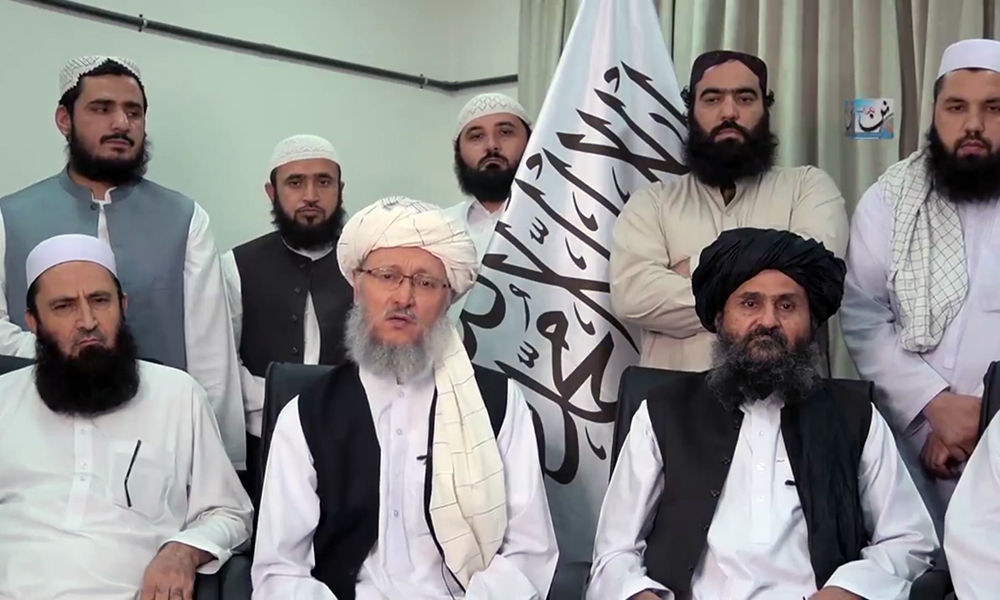
 8am: Taliban leaders have spoken of suppressing ISIS over the past three years, yet they have simultaneously denied the presence of ISIS in Afghanistan. Now, some officials within the regime express concerns about ISIS’s presence in the country. Sources from within the Taliban report that hundreds of ISIS Khorasan (IS-K) fighters, who were released from prisons during the fall of Afghanistan to the Taliban, have resumed their activities.