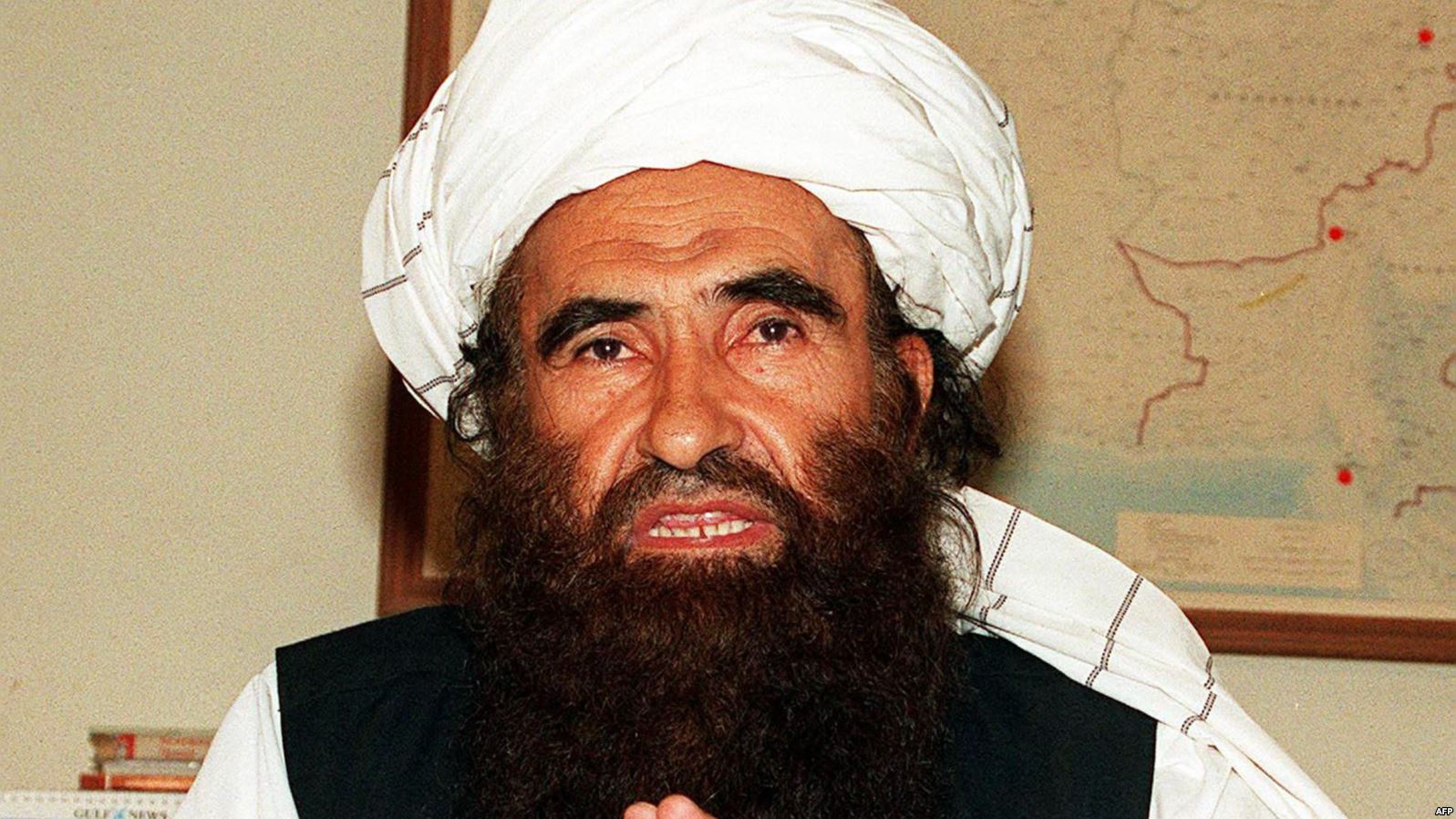
Associated Press: In the past, Khalilzad has called on the U.S. to declare Pakistan a terrorist state, saying it harbors insurgents. The Trump administration has embraced a similar position, recently suspending $300 million in aid to Pakistan, saying it isn’t doing enough to eliminate Taliban safe havens on its territory. Click here to read more (external link).
1TV Afghanistan Dari News – September 5, 2018
At Least 20 People Reported Killed, Including Two Journalists, In Kabul Twin Blasts
RFE/RL’s Radio Free Afghanistan
September 5, 2018
Twin bombings at a wrestling training center in a predominately Shi’ite neighborhood of Afghanistan’s capital has killed at least 20 people and wounded 70 others, the Interior Ministry says.
Officials said a suicide bomber on September 5 blew himself up inside the sports hall, which is located in Dasht-e Barchi in western Kabul.
A car bomb went off nearby less than an hour after, as journalists and security forces gathered at the scene.
A reporter and a cameraman from Afghanistan’s largest broadcaster, Tolo News, were among those killed and four other local television crew were wounded, according to NAI, a group supporting open media in the country.
“An attack on civilians and media workers of the country is an attack on freedom of speech and crime against humanity,” President Ashraf Ghani said in a statement.
At least seven police were also among those wounded, according to Kabul’s police chief, General Daud Amin.
The extremist group Islamic State (IS), which often targets Afghanistan’s Shi’a community, claimed responsibility for the twin bombings on its affiliated Amaq news agency.
On August 15, a suicide bombing at an education center in Dasht-e Barchi killed dozens of students in an attack also claimed by IS militants, who view Shi’a as apostates deserving death.
On August 15, a suicide bombing at an education center in Dasht-e Barchi killed dozens of students.
IS militants, who view Shi’a as apostates deserving death, claimed responsibility for that attack.
Journalists have paid a heavy price covering the 17-year-old war in Afghanistan.
At least 11 were killed in the first six months of the year, according to the Afghan Journalists Safety Committee.
A suicide bombing killed nine journalists in Kabul on April 30, in what became the deadliest single day for reporters in the country since the 2001 U.S. invasion.
With reporting by AP, AFP, and Reuters
Copyright (c) 2018. RFE/RL, Inc. Reprinted with the permission of Radio Free Europe/Radio Liberty, 1201 Connecticut Ave NW, Ste 400, Washington DC 20036.
More Security News
Mattis: Afghan Peace Process Gaining Steam
William Gallo
VOA News
September 5, 2018
NEW DELHI — Attempts to end the 17-year-old U.S.-led war in Afghanistan are gaining traction, U.S. Defense Secretary Jim Mattis insists.
“Right now we have more indications that reconciliation is no longer just a shimmer out there, no longer just a mirage. It now has some framework,” Mattis told reporters on his plane en route to India.
Though he referred to “open lines of communication,” Mattis did not formally acknowledge the preliminary U.S.-Taliban talks reported to be held in Qatar. If confirmed, they would be the first direct U.S. talks with the Taliban in several years.
“Reconciliation reinforced by the State Department — it’s put additional staff into the embassy with that sole effort — you’re seeing this now pick up traction,” Mattis said.
Mattis did not say what, if any, new developments led to his assessment. But he mentioned the three-day, overlapping cease-fires declared unilaterally earlier this year by the Taliban and the Afghan government.
He also cited increased Afghan military capability and the “steadfast nature” of international support under the White House’s new South Asia strategy.
New phase of conflict?
The comments come as Army General Scott Miller takes over as top U.S. commander in Afghanistan, the ninth U.S. general to lead the 17-year-old war.
Miller will attempt to guide the conflict into a reconciliation-focused phase, even as heavy fighting continues.
Through the first half of the year, the U.S.-led coalition is on pace to drop a record number of bombs on Afghanistan, according to a VOA analysis of Pentagon data.
The Taliban has also increased its attacks, in what some see as an attempt to gain leverage ahead of more substantive peace talks.
“Violence is leverage… for all sides, but probably more so for the Taliban,” said former Pentagon adviser Christopher Kolenda, who helped set up the U.S.-Taliban talks.
“So in these exploratory phases, the Taliban can be perfectly serious about peace, but still engaging in these major operations,” Kolenda told VOA last month.
Pakistan’s role
The uptick in violence coincides with the one-year anniversary of the Trump administration’s new strategy for Afghanistan.
U.S. officials insist the strategy is working, but continue to express frustration at what they see as Pakistan’s lingering support for Taliban militants on their side of the border.
The U.S. last week withheld $300 million from Pakistan “due to a lack of Pakistani decisive actions in support of the South Asia Strategy.”
The issue is sure to come up during U.S. Secretary of State Mike Pompeo’s visit to Islamabad Wednesday.
Pakistan, which denies sheltering Taliban militants, has a new government, led by former cricketer Imran Khan.
Mattis on Tuesday appeared to hold out hope the new government would change its policies on Afghanistan.
“We do expect that Pakistan will be part of a community of nations that gives no haven to terrorism,” he said.
Mattis spoke before landing in India, where he is expected to push for greater Indian economic and development assistance in Afghanistan.
U.S. Appoints Veteran Diplomat Khalilzad As Special Adviser On Afghanistan
Radio Free Europe/Radio Liberty
September 5, 2018
U.S. Secretary of State Mike Pompeo said late on September 4 that he has appointed former U.S. Ambassador to Afghanistan Zalmay Khalilzad to be his special adviser on Afghanistan.
“Ambassador Khalilzad is going to join the State Department team to assist us in the reconciliation effort, so he will come on and be the State Department’s lead person for that purpose,” Pompeo told reporters traveling with him on a visit to Pakistan and India.
Khalilzad’s appointment signals that the administration is putting a renewed focus on the Afghan peace process. He has experience working for four U.S. presidential administrations and has knowledge of Afghanistan’s main languages, culture, and politics. He is from Afghanistan’s ethnic Pashtun majority.
As an aide to President George W. Bush, Khalilzad helped plan the U.S. invasion of Afghanistan in 2001 that led to the ouster of the Taliban’s government and set off a 17-year war for control of the country.
Pompeo said that during his visit to Islamabad, he will emphasize that the United States wants Pakistan to help more in ending Afghanistan’s 17-year war.
U.S. and Afghan officials claim that Afghan militants fighting against the government have found safe havens in Pakistan where they can plot deadly attacks and regroup after their yearly offensives across the border. Pakistan denies that it harbors terrorists.
“We need Pakistan to seriously engage to help us get to the reconciliation we need in Afghanistan,” Pompeo said.
In a policy shift in June, Washington said it would “support, facilitate, and participate” in any Kabul government-led peace talks with the Taliban.
The Taliban has spurned the Afghan government’s offers for talks, however, and instead has staged a surge in violence around the country this year.
Based on reporting by AP and Reuters
Copyright (c) 2018. RFE/RL, Inc. Reprinted with the permission of Radio Free Europe/Radio Liberty, 1201 Connecticut Ave NW, Ste 400, Washington DC 20036.
Related
Haqqani’s Deadly Legacy Continues To Shape The War In Afghanistan
Frud Behzan
Radio Free Europe/Radio Liberty
September 4, 2018
Elderly, ill, and partially paralyzed, the founder of one of Afghanistan’s most notorious and brazen extremist organizations had been out of the insurgency game for years. But Jalaluddin Haqqani leaves behind a legacy of deadly violence that threatens to live on for decades.
Haqqani, whose death at the age of 72 was announced on September 4, was a key mujahedin commander in the war against Soviet forces in Afghanistan in the 1980s. Following the U.S. invasion of Afghanistan in 2001, he founded the eponymous Haqqani network, which quickly earned a reputation for brazen, high-profile attacks. And he ensured long ago that his fight would continue by handing the reins of his organization over to his son, Sirajuddin, who today also serves as the deputy leader of a key ally, the Afghan Taliban.
Experts say Haqqani’s far-reaching legacy is secure and that neither his network’s military might nor strategy are likely to be affected by his death.
Indiscriminate Attacks
The Haqqani network is notorious for its heavy use of suicide bombers in complex, urban attacks, indiscriminately killing civilians and Afghan and foreign security forces alike.
The group was blamed for the horrific truck bomb in the capital, Kabul, in May 2017 that killed around 150 people, although Sirajuddin later denied involvement.
The network was also blamed for some of the deadliest attacks carried out against foreigners, including a suicide bomb attack at a CIA base in the eastern province of Khost in 2009 that killed seven agents and wounded six.
“Haqqani helped the Taliban recalibrate after the U.S. invasion in 2001 because they had the setup and local support in Pakistan’s tribal areas to mount significant attacks across the border in Afghanistan,” says Hameed Hakimi, a research associate at the London-based think tank Chatham House.
“By having a suicide brigade, Haqqani also helped the Taliban create a much fiercer image. The complexity of the insurgency and the complexity of the attacks would not have happened without the alliance with the Haqqanis,” he adds.
During the 1990s, Haqqani was a minister in the Taliban regime, which took power in Kabul in 1996. The Taliban, which brought its own fundamentalist brand of Sunni Islam to the scene and emerged victorious from the Afghan civil war, embraced Haqqani for his military skills, according to a declassified 1998 cable from the U.S. Embassy.
He was the only major mujahedin leader to join the Taliban and forged a close relationship with the late Taliban founder, Mullah Mohammad Omar.
‘Close Buddies’ With Arab Fighters
Al-Qaeda’s influence on the network materialized in the post-2001 insurgency.
“What made Haqqani unique was his special relationship with non-Afghan, foreign terrorist organizations, including Al-Qaeda,” says Omar Samad, an analyst and former Afghan ambassador who has advised senior Afghan officials.
“This relationship played a role in sharing new tactics and cross-training with those who used and justified suicide attacks as part of what they consider ‘jihad,’ or holy war,” he says, describing the tactic as “an imported phenomenon that was not used in Afghanistan prior to 2001.”
During the Soviet occupation of Afghanistan in the 1980s, Haqqani used his Arabic language skills to forge close ties with Arab jihadists, including Al-Qaeda founder Osama bin Laden, who came to the region during the war.
With funds from bin Laden, Haqqani established dozens of radical religious schools along the Afghan-Pakistan border, spreading a fundamentalist Islamic ideology. Haqqani also established training camps for Arab fighters that were later used by Al-Qaeda during the Taliban regime.
Many of the Arab fighters that still remain in Afghanistan and Pakistan, including Al-Qaeda chief Ayman al-Zawahri, are believed to be protected by the Haqqani network in Pakistan’s tribal belt.
A declassified 1998 cable from the U.S. Embassy said Haqqani “is close buddies with many Arab and Pakistani Islamists.”
‘Veritable Tool’ For Pakistan
The Haqqanis have long been suspected of links to Pakistan’s shadowy military establishment and its notorious spy agency, the Inter-Services Intelligence agency (ISI).
Much of the group’s ties with Pakistan were forged by Haqqani during the 1980s, when the guerrilla leader was one of the main beneficiaries of Pakistani and CIA money and weapons.
Haqqani’s prowess during the jihad against the U.S.S.R.’s occupation of Afghanistan earned him praise from Washington. Haqqani was hailed by the late U.S. congressman Charlie Wilson as “goodness personified.” He also visited the White House, and President Ronald Reagan once described him as a freedom fighter.
The Haqqani network was described by U.S. Admiral Mike Mullen in 2011 as a “veritable arm” of Pakistani intelligence that has provided safe havens for militant groups fighting foreign and Afghan forces in Afghanistan.
Designated a terrorist group by Washington in 2012, the Haqqanis are believed to have been operating from Pakistan’s restive tribal region since 2001. The Haqqani family hails from eastern Afghanistan, near the border with Pakistan.
“The Haqqanis have been a veritable tool and valuable asset for Pakistan in the past four decades,” says Haroun Mir, a Kabul-based political analyst. “This is the reason why the Pakistani military has never abandoned them, even in the face of tremendous pressure from the United States.”
Mir says Haqqani will be remembered as a “resistance hero in the 1980s and later [as] someone who strictly followed the Pakistani directive against the interests of his own people.”
Copyright (c) 2018. RFE/RL, Inc. Reprinted with the permission of Radio Free Europe/Radio Liberty, 1201 Connecticut Ave NW, Ste 400, Washington DC 20036.
Tolo News in Dari – September 4, 2018
UK Increases Support to NATO Mission in Afghanistan by 100 Troops – Government
MOSCOW, September 4 (Sputnik) – The United Kingdom sent 100 Welsh Guards to Afghanistan as part of a larger pledge to boost NATO mission in the country, the UK government said on Tuesday in a statement.
“100 Welsh Guards arrived in Afghanistan last week. They travelled with Defence Secretary Gavin Williamson who was in the country for a three-day visit,” the government said in a statement.
The 100 soldiers are only the first group of additional 440 troops that the United Kingdom has pledged to send to Afghanistan. The new troops will be added to those on a mission with the UK-led Kabul Security Force (KSF). They will also continue mentoring the Afghan National Defense and Security Forces.
NATO is maintaining a multinational training mission in Afghanistan, helping and mentoring the local forces on the fight against terrorism.
Ghani appoints team to investigate fraud in ID distribution
1TV: This comes after the Grand National Coalition of Afghanistan put on display thousands of ‘fraudulent’ ID papers that it said were meant to be used in the upcoming parliamentary elections. Click here to read more (external link).
Related
Founder Of Feared Haqqani Network Dies From Illness, Taliban Says
Radio Free Europe/Radio Liberty
September 4, 2018
The founder of the Haqqani Network, one of Afghanistan’s most dangerous and feared militant groups, has died after a long illness, the network’s ally, the Afghan Taliban, announced early on September 4.
Jalaluddin Haqqani, whose son Sirajuddin Haqqani now heads the brutal group and is also the Taliban’s deputy leader, died “after a long battle with illness,” the Taliban said in a statement in English on Twitter.
Jalaluddin “was from among the great distinguished Jihadi personalities of this era,” the Taliban said.
He was an Afghan militia commander fighting the Soviet occupation of Afghanistan in the 1980s with the help of the United States and Pakistan.
Jalaluddin also fostered close ties with Arab extremists, including the now-deceased Al-Qaeda leader, Osama Bin Laden, who set up militant camps in Afghanistan before being run out of the country into hiding in Pakistan after a U.S.-led invasion in 2002.
Jalaluddin was also once a minister in the Taliban’s government, which ruled Afghanistan before the U.S. invasion.
Based on reporting by AFP and Reuters
Copyright (c) 2018. RFE/RL, Inc. Reprinted with the permission of Radio Free Europe/Radio Liberty, 1201 Connecticut Ave NW, Ste 400, Washington DC 20036.
Related