logo

Daily Updated Afghan News Service

  • Home
  • About
  • Opinion
  • Links to More News
  • Good Afghan News
  • Poll Results
  • Learn about Islam
  • Learn Dari (Afghan Persian/Farsi)

Recent Posts

  • ICC Must Reconsider Closure Of Afghanistan War Crimes Case, Say Afghan Rights Groups November 16, 2026
  • Tolo News in Dari – November 16, 2026 November 16, 2026
  • Nangarhar: Poverty and Unemployment Drive Women and Children to Beg November 16, 2026
  • Taliban Bans Cricket Coverage On Radio Stations In Kandahar November 16, 2026
  • Barred By The Taliban, Afghan Girls And Women Now Shut Out Of School In Iran And Pakistan Too November 15, 2026
  • Tolo News in Dari – November 15, 2026 November 15, 2026
  • France agrees to receive Taliban diplomats, source says November 15, 2026
  • Turkey detains 35 Afghan migrants attempting to reach Greece November 15, 2026
  • Afghanistan Freedom Front Reports Killing and Wounding Three Taliban Fighters in Kabul November 14, 2026
  • Young Man in Panjshir Dies by Suicide After Being Tortured by the Taliban November 14, 2026

Categories

  • Afghan Children
  • Afghan Sports News
  • Afghan Women
  • Afghanistan Freedom Front
  • Afghanistan United Front
  • Al-Qaeda
  • Anti-Government Militants
  • Anti-Taliban Resistance
  • AOP Reports
  • Arab-Afghan Relations
  • Art and Culture
  • Australia-Afghanistan Relations
  • Book Review
  • Britain-Afghanistan Relations
  • Canada-Afghanistan Relations
  • Censorship
  • Central Asia
  • China-Afghanistan Relations
  • Civilian Injuries and Deaths
  • Corruption
  • Crime and Punishment
  • Drone warfare
  • Drugs
  • Economic News
  • Education
  • Elections News
  • Entertainment News
  • Environmental News
  • Ethnic Issues
  • EU-Afghanistan Relations
  • Everyday Life
  • France-Afghanistan Relations
  • Germany-Afghanistan Relations
  • Haqqani Network
  • Health News
  • Heroism
  • History
  • Human Rights
  • India-Afghanistan Relations
  • Interviews
  • Iran-Afghanistan Relations
  • ISIS/DAESH
  • Islamophobia News
  • Japan-Afghanistan Relations
  • Landmines
  • Media
  • Misc.
  • Muslims and Islam
  • NATO-Afghanistan
  • News in Dari (Persian/Farsi)
  • NRF – National Resistance Front
  • Opinion/Editorial
  • Other News
  • Pakistan-Afghanistan Relations
  • Peace Talks
  • Photos
  • Political News
  • Reconstruction and Development
  • Refugees and Migrants
  • Russia-Afghanistan Relations
  • Science and Technology
  • Security
  • Society
  • Tajikistan-Afghanistan Relations
  • Taliban
  • Traffic accidents
  • Travel
  • Turkey-Afghanistan Relations
  • UN-Afghanistan Relations
  • Uncategorized
  • US-Afghanistan Relations
  • Uzbekistan-Afghanistan Relations

Archives

Dari/Pashto Services

  • Bakhtar News Agency
  • BBC Pashto
  • BBC Persian
  • DW Dari
  • DW Pashto
  • VOA Dari
  • VOA Pashto

Ghani Says Nearly 29,000 Afghan Troops Killed Since 2015

17th November, 2018 · admin · 5 Comments

afghansoldierRadio Free Europe/Radio Liberty
November 17, 2018

The death toll among Afghanistan’s security forces since 2015 is close to 29,000, Afghan President Ashraf Ghani has revealed, providing a figure far higher than anything previously acknowledged by the government.

Ghani disclosed the figure during a video appearance this week before the Johns Hopkins School of Advanced International Studies in Washington, a school where he once taught as a professor of anthropology.

Ghani said that since the start of 2015, when Afghan police and army units took over primary responsibility for Afghanistan’s security after a partial withdrawal of NATO troops, “28,529 of our security forces have lost their lives and become martyrs for our freedom.”

In the same time frame, 58 Americans were killed, he said.

“I would like to salute the patriotism of the Afghan security forces, every single one of whom is a volunteer,” Ghani said.

“We have no conscription, nobody is forced, and if there was not a patriotic impulse, I don’t think that people would sacrifice their lives for a pay of $200.”

The Afghan government has previously provided casualty figures only for individual incidents of clashes between Afghan troops and militants, but the figures it has provided have suggested the overall death toll might be large.

In one incident alone last year, the government reported that a Taliban attack on a military compound in Balkh Province left more than 130 army personnel dead.

The Afghan government and U.S. military have previously been reluctant to disclose the full extent of Afghan soldiers killed, apparently out of concern that acknowledging the large death toll would undermine confidence and underscore the country’s fragile security situation.

Previous estimates given for the total Afghan security forces killed in 2015 were around 5,000, with another 15,000 wounded.

Since that time, estimates have suggested the death toll was accelerating despite claims of progress in the war against the Taliban by both U.S. and Afghan leaders.

A year ago, the U.S. commander in Afghanistan General John Nicholson said casualty rates among Afghan security forces were starting to drop as the United States increased its air strikes against the Taliban and Afghan forces adopted military reforms.

But a recent report from the U.S. Special Inspector General for Afghanistan Reconstruction cited the NATO mission in Kabul as saying the toll between May and October was worse than ever for Afghan forces, without providing specific figures.

U.S. Defense Secretary Jim Mattis this month said more than 1,000 “Afghan lads” were killed or wounded just in August and September.

After more than 17 years of war, the administration of U.S. President Donald Trump has stepped up efforts to settle the conflict peacefully.

U.S. special envoy for Afghanistan Zalmay Khalilzad was appointed to start a peace process with the Taliban. He met with Ghani on November 10 after meeting with a Taliban delegation in Doha in October.

With reporting by AFP

Copyright (c) 2018. RFE/RL, Inc. Reprinted with the permission of Radio Free Europe/Radio Liberty, 1201 Connecticut Ave NW, Ste 400, Washington DC 20036.

Other Security News

  • Govt Forces Advancing In Ghazni: Officials
  • Iranian-trained Fatemiyoun Division an ‘extraordinary threat’: ex-Afghan security official


Posted in Security, Taliban, US-Afghanistan Relations | Tags: Afghan Army, Ashraf Ghani |

1TV Afghanistan Dari News – November 17, 2018

17th November, 2018 · admin

Posted in News in Dari (Persian/Farsi) |

Jamiat Warns Against ‘Forming Another’ HPC

17th November, 2018 · admin

Tolo News: A key member of Jamiat-e-Islami party and former minister of energy and water, Mohammad Ismail Khan, says the representatives of the party have asked the president not to dissolve the High Peace Council and to ensure a peace negotiations team is not a parallel body to the HPC. According to the Presidential Palace, President Ashraf Ghani has started consultations with political parties and former jihadi leaders over the formation of a negotiations team on peace. Click here to read more (external link).

Posted in Peace Talks, Political News | Tags: Ashraf Ghani, High Peace Council, Ismail Khan, Jamiat-e-Islami |

Taliban ‘Optimistic’ About Dialogue With U Son Afghan Peace

17th November, 2018 · admin
Khalilzad

Khalilzad

Ayaz Gul
VOA News
November 17, 2018

ISLAMABAD — The U.S. special representative for Afghanistan reconciliation, Zalmay Khalilzad, has held another round of marathon discussions with Qatar-based Taliban officials to push for a politically negotiated settlement to the 17-year war.

Khalilzad’s three days of meetings with the Islamist insurgency concluded on Friday and both sides were “optimistic about the dialogue process,” multiple Taliban sources said Saturday.

Neither side, however, has officially confirmed or released details of this week’s talks in Doha, the capital of the Gulf nation, which houses the so-called “political office” of the Afghan Taliban.

This was Khalilzad’s second interaction with the Taliban in more than a month. The Trump administration appointed him to the office in September with the goal of bringing the Afghan government and the insurgent group to the negotiating table.

Insurgent sources noted that former prisoners of the U.S. Guantanamo Bay detention center, Mullah Fazal and Mullah Khairkhaw, also joined the Taliban delegation in talks with the U.S. team.

The Taliban says its dialogue process with Washington is aimed at securing a timetable for the withdrawal of all American and NATO troops from Afghanistan to pave the way for an intra-Afghan dialogue.

“When we reach a solution about the pullout of all their forces then we enter a second phase (of discussions) among Afghans (themselves) on how to bring about peace and form a government in Afghanistan,” Sohail Shaheen, who speaks for the Taliban’s Qatar office, told reporters in Moscow last week.

Shaheen was in the Russian capital as part of a five-member Taliban delegation that attended for the first time an international conference Russia hosted to discuss Afghan peace efforts.

The insurgent group says in meetings with the U.S., it also is seeking the release of its prisoners and the removal of international travel restrictions on senior Taliban leaders.

After last month’s meetings with Afghan officials and Taliban representatives, Khalilzad had called for both sides to form their respective authorized teams for peace talks.

Since then, the Taliban has inducted into its Doha “political office” five senior insurgent leaders, who were swapped for the freedom of an American hostage in 2014. The United States released the men from its Guantanamo detention center to authorities in Qatar, in exchange for Sgt. Bowe Bergdahl, the only American soldier taken prisoner by the Taliban in Afghanistan.

For his part, Afghanistan’s president, Ashraf Ghani, has been holding discussions with leaders and representatives of Afghan political parties, as well as civil society organizations for the formation of an “advisory council and a negotiating team.”

Ghani’s office said Saturday the meetings will continue for several more days and the government is determined to proceed with a peace process based on national consensus.

It quoted the president as cautioning “the route to peace is full of obstacles, and we need to be ready to employ all available tools for gaining a positive outcome.”

Speaking this week via video link to an audience in Washington, the Afghan president appeared upbeat about the prospects of peace talks. Responding to domestic critics that the U.S. has not taken Kabul into its confidence before opening talk with the Taliban, Ghani noted that many of the ideas and the plans Khalilzad is discussing with the Taliban actually have come from the Afghan government.

“The U.S. engagement (with the Taliban) is to ensure that talks with the Taliban result not in negotiations with (the) Taliban but direct talks between the Afghan government and (the) Taliban,” Ghani said.

The president said his government is prepared to tackle all the issues on the negotiating table to try to bring an end to the deadly war in Afghanistan. He disclosed in his speech that since 2015, his government security forces have lost more than 28,500 personnel in the battle with the Taliban but Ghani denied the insurgents were in a winning position on the battlefield.

A senior Afghan peace negotiator who met Khalilzad during his recent trip told reporters in Kabul the American envoy has been given six months to produce an outcome for the U.S. administration.

Khalilzad’s office has neither commented on these assertions nor on engagements with the Taliban.

Related

  • Peace Cannot Be Achieved By Soft Policies, Says Ibrahimi
  • Path to peace full of obstacles: Ghani
  • U.S. Likely Agreed to Set Timetable for Troops Withdrawal – HPC
  • Afghan Politicians Concerned of U.S.-Taliban Recent Peace Talks: Spanta
  • Karzai Welcomes U.S.’s Recent Approach Towards Afghan Peace Process
Posted in Peace Talks, Security, Taliban, US-Afghanistan Relations | Tags: Ashraf Ghani, Zalmay Khalilzad |

Concerns Raised Over Growing Number Of Female Addicts In Kandahar

17th November, 2018 · admin

drug_addictionTolo News: Kandahar officials have raised concern over the increasing number of female drug addicts in the province. According to local officials, there are currently nine women being treated for drug addiction at a rehabilitation center in the Kandahar.  The women said that poverty and insecurity have driven them to using drugs.  In March, public health ministry officials raised concerns about the alarmingly high number of female drug addicts in the country. According to them at least one million women and 100,000 children are addicts. Click here to read more (external link).

Posted in Afghan Women, Drugs, Health News | Tags: Drug Addiction |

Wushu Tournament Gets Underway In Kabul

17th November, 2018 · admin

sports

Tolo News: The 10th round of the Wushu qualification tournament for the Kabul A team started in the capital on Saturday. Out of 564 athletes taking part, 80 will be selected in two categories for the team but will fight in 11 weight categories.  The tournament is being held by the General Directorate of Physical Education and Sport and is expected to last for five days. “The best athletes who will get first and second positions will participate at a national level tournament which will be held in the near future,” said Shaida-ul-Rahman Yurish, head of National Wushu Federation. Click here to read more (external link).

Posted in Afghan Sports News | Tags: Martial Arts, Wushu |

1TV Afghanistan Dari News – November 16, 2018

16th November, 2018 · admin

Posted in News in Dari (Persian/Farsi) |

Mujahideen Hit Moscow: Exploring Russia’s ‘Great Game’ Gamble

16th November, 2018 · admin

lavrov_russia_taliban_talks

“We have no eternal allies, and we have no perpetual enemies.
Our interests are eternal and perpetual, and those interests it is our duty to follow.”

-Lord Palmerston, speech in House of Commons, 1848

Michael Hughes
November 16, 2018

The Russian government escalated its involvement in the 21st Century’s version of the Great Game by hosting a Taliban delegation for talks in Moscow on November 9. The Soviet Union withdrew from Afghanistan in 1989 after a brutal and bloody war of nearly a decade and many Taliban, in fact, took part in the conflict as members of the mujahideen. Which is why the imagery of Russian Foreign Minister Sergey Lavrov hand-in-hand with long bearded Taliban mullahs discussing a road map for Afghanistan was a surreal sight to behold indeed. Click here to read more.

Related

  • Karzai Sees Moscow Summit As A First Step Towards Peace
Posted in AOP Reports, History, Opinion/Editorial, Peace Talks, Security, Taliban |

US has spent six trillion dollars on wars that killed 500,000 people since 9/11: Study

16th November, 2018 · admin · 15 Comments

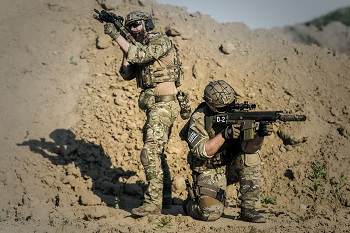
us_army-soldiersPress TV
November 16, 2018

A study has revealed that the United States has spent nearly $6 trillion on wars that directly contributed to the deaths of about half a million people since the September 11, 2001 attacks.

The “Costs of War” study was conducted by Brown University’s Watson Institute for International and Public Affairs. It was published on Wednesday. A brief summary of this study was released last week.

The report takes stock of the US military spending and its Overseas Contingency Operations account, as well as “war-related spending by the Department of State, past and obligated spending for war veterans’ care, interest on the debt incurred to pay for the wars, and the prevention of and response to terrorism by the Department of Homeland Security.”

“The United States has appropriated and is obligated to spend an estimated $5.9 trillion (in current dollars) on the war on terror through Fiscal Year 2019, including direct war and war-related spending and obligations for future spending on post 9/11 war veterans,” the study said.

“In sum, high costs in war and war-related spending pose a national security concern because they are unsustainable,” the report concluded. “The public would be better served by increased transparency and by the development of a comprehensive strategy to end the wars and deal with other urgent national security priorities.”

The United States — under Republican George W. Bush’s presidency – launched the war on terror by invading Afghanistan on October 7, 2001 following the September 11, 2001 terrorist attacks which killed nearly 3,000 people in New York.

US officials assert that the attacks were carried out by 19 al-Qaeda terrorists but many experts have raised questions about the official account. They believe that rogue elements within the US government, such as former Vice President Dick Cheney, orchestrated the 9/11 attacks in order to accelerate the US war machine and advance the Zionist agenda.

Following the 9/11 attacks, the US and its allies invaded and occupied Afghanistan, and Washington also started intermittent drone strikes inside neighboring Pakistan. In early 2003, the US invaded Iraq under the pretext that the regime of Saddam Hussein possessed weapons of mass destruction. No such weapons, however, were ever found in Iraq.

The “Costs of War” study found that the “US military is conducting counter-terror activities in 76 countries, or about 39 percent of the world’s nations, vastly expanding [its mission] across the globe.” In addition, these operations “have been accompanied by violations of human rights and civil liberties, in the US and abroad.”

According to researchers, America’s so-called war on terrorism has killed up to 507,000 people in Iraq, Afghanistan and Pakistan.

They estimated that “between 480,000 and 507,000 people have been killed in the United States’ post-9/11 wars in Iraq, Afghanistan, and Pakistan.” This toll “does not include the more than 500,000 deaths from the war in Syria, raging since 2011” when US-sponsored militants started terrorist activities against the Syrian government.

The study acknowledged that the actual death toll is likely higher.

The death toll in Afghanistan, as of October 2018, stood at about 147,000 people, including Afghan security forces, civilians and Taliban fighters. The figure also included the 6,334 American fatalities.

The war on terrorism also left 65,000 people dead in Pakistan, including 90 American contractors, nearly 9,000 local security personnel and more than 23,000 civilians. The rest of the casualties were militants, according to the report.

From 268,000 to 295,000 people died in Iraq following the US-led invasion and occupation, the study said.

Related

  • Afghan Military Deaths Since 2015: More Than 28,000
Posted in Security, Taliban, US-Afghanistan Relations |

‘From One Grave To Another’: Afghan Hazara Fleeing Taliban Find Little Solace In Escape

16th November, 2018 · admin · 10 Comments

By Freshta Shikhani and Frud Bezhan
Radio Free Europe/Radio Liberty
November 15, 2018

The mountain paths leading out of Jaghori, a district in the remote highlands of central Afghanistan, teem with trucks and cars crammed with men, women, and children. Despite freezing conditions, others make the journey by foot, trudging alongside the hastily formed convoys with their meager possessions slung over their shoulders.

They are escaping the Taliban, which launched a major attack last week to seize control of Jaghori and Malistan, districts in Afghanistan’s central Ghazni Province heavily populated with members of the country’s beleaguered Hazara minority.

Those who successfully make the hazardous journey — many head to the provincial capital, Ghazni city, others all the way to Kabul — find little solace in their new surroundings.

No Food, Medicine

Arrivals to Ghazni city, where Taliban fighters are clashing with government forces on the outskirts of town, say the government has failed to provide them with basic necessities.

“We have gone from one grave to another,” says Abdullah, a resident of Jaghori who fled to Ghazni city on November 13 with his family of nine. “We don’t have any food or blankets. Two of my children are sick from the cold, and there’s no medicine.”

“We left in the middle of the night in a crowded truck,” adds Abdullah, who only goes by one name. “People left any way they could.”

Abdul Khaleq Ahmadi, the head of the provincial department for refugees, says that more than 1,000 families from Jaghori and Malistan have escaped to Ghazni city in the past week. Most families are living in schools, mosques, and hostels in the city, while others are staying with relatives.

The government and aid agencies are scrambling to set up temporary accommodation for the displaced and supply them with basic provisions. Many of the new arrivals say the response has been slow.

“I came here with my wife and children,” says Mohammad Ali, whose family found shelter in a mosque in Ghazni city on November 11 after leaving their home in Sang-e Masha, the main town in Jaghori district. “There’s no food. People are getting sick.”

Taliban Threat

The Taliban still pose a threat to many who have fled to Ghazni city, which itself was briefly overrun by the militants following a massive offensive in August. Hundreds of people were killed in the ensuing fighting that destroyed parts of the city. While the militants were beaten back, they have continued to attack government forces on the outskirts of the city.

The militants are estimated to control more territory than any time since the U.S.-led invasion in 2001 that ousted the Taliban regime.

The Afghan government this week sent air and ground reinforcements to help Afghan special forces and Hazara militiamen fighting the Taliban in Jaghori and Malistan. The ongoing clashes have killed hundreds on both sides.

Many people have expressed anger and frustration over the government’s slow response in sending reinforcements. The fighting prompted demonstrations in Kabul and Ghazni city by Hazara, who have complained of official neglect after their community was targeted in a string of militant attacks. A suicide attack close to where demonstrators had been gathering in Kabul killed at least six people on November 12.

The Taliban terrorized Hazara during its oppressive 1996-2001 rule, when the militants seized control of central Afghanistan through brute force and a campaign of targeted killings. The current fighting in Ghazni between the mostly Pashtun Sunni Taliban and Shi’ite Hazara has heightened fears of ethnic and sectarian violence, even as the Taliban has denied it is specifically targeting Hazara.

‘We Don’t Have Anything’

While many have sought refuge in Ghazni city, others have made the hazardous road journey through Taliban-controlled areas to the capital, Kabul.

“We travelled for three days and nights by truck until we finally arrived in Kabul,” says Fatima, a resident of the town of Anguri in the Jaghori district, adding that they used back roads to avoid Taliban checkpoints in the region.

“There was fierce fighting in our area,” adds Fatima, who only goes by one name.

She says she fled after the Taliban overran her town. She arrived in the capital on November 12 with several other families from the same town. She says she left with only a few pieces of extra clothing.

“We’re staying here with relatives, but we don’t have anything,” she says. “We don’t have any money.”

Nesar Ahmad arrived in Kabul on November 13 with more than 20 family members and relatives. He is staying with relatives in Dasht-e Barchi, a predominately Hazara area that has been hit by a series of deadly suicide bombings claimed by the Islamic State (IS) extremist group.

Ahmad acknowledges the threat of staying in Dasht-e Barchi, but he says staying in Jaghori was not an option.

“Everyone fled in every direction to stay alive,” says Ahmad, who adds that people escaped to Bamiyan and Dai Kundi, Hazara-majority regions that neighbor Ghazni.

“The government should know its responsibility,” says Ahmad with a sigh of frustration. “There are hundreds of people here like me that need help. We don’t have money or food. The government needs to clear out the Taliban so we can go back to our homes.”

Copyright (c) 2018. RFE/RL, Inc. Reprinted with the permission of Radio Free Europe/Radio Liberty, 1201 Connecticut Ave NW, Ste 400, Washington DC 20036.


Posted in Civilian Injuries and Deaths, Ethnic Issues, Security, Taliban | Tags: Ghazni, Hazaras |
Previous Posts
Next Posts

Subscribe to the Afghanistan Online YouTube Channel

---

---

---

Get Yours!

Peace be with you

Afghan Dresses

© Afghan Online Press
  • About
  • Links To More News
  • Opinion
  • Poll