
Will be ‘merciless against enemies’: Amrullah Saleh

Amrullah Saleh
1TV: Amrullah Saleh, a former Afghan intelligence chief who was recently appointed as acting interior minister, on Tuesday vowed that he would be “merciless against criminals and enemies of the country.” “I hope when I leave the post, people would attach two attributes to me: a sincere servant of the people and a merciless minister against criminals and enemies of the country,” Saleh said speaking at take-over ceremony. Click here to read more (external link).
Related
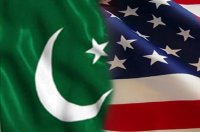
Pakistan, US Military Leaders Review Afghan Peace Efforts
 Ayaz Gul
VOA News
December 27, 2018
ISLAMABAD — The U.S. commander of foreign forces in Afghanistan traveled to Pakistan Thursday to discuss Afghan reconciliation efforts with Pakistan’s military chief, officials said.
Gen. Austin Scott Miller’s visit came amid reports of a possible U.S. troop drawdown in Afghanistan and a renewed push to negotiate peace with Taliban insurgents for ending the 17-year-old Afghan war.
An army announcement said Pakistani General Qamar Javed Bajwa told Miller that Islamabad is committed to Afghan peace efforts.
“Both expressed unanimity of views on importance of political resolution of [the] Afghan situation and underlined that only an Afghan-owned and Afghan-led inclusive process can lead to peace in Afghanistan,” the statement noted.
Pakistan, which is accused of sheltering Afghan Taliban leaders, took credit for organizing two-day direct “peace talks” between U.S. and insurgent officials earlier in December in the United Arab Emirates. Representatives of Saudi Arabia, Pakistan and the host country were also in attendance.
The Taliban says its representatives at the negotiating table sought “a date or timeline” from U.S. interlocutors for a complete withdrawal of international forces from Afghanistan, citing their presence is the “biggest obstacle” in the way of peace.
It is not clear whether U.S. President Donald Trump’s reported orders for pulling out half of the more than 14,000 U.S. troops in Afghanistan stemmed from the meeting in Abu Dhabi and officials in Washington have not confirmed reports of the potential drawdown.
The Taliban and Zalmay Khalilzad, the leader of the U.S. negotiating team, have both described their discussions in the UAE as “productive,” and pledged to meet again soon at the same venue.
The dialogue is said to be aimed at seeking direct talks between the Taliban and the Washington-backed government in Kabul. The insurgent group, however, continues to reject calls for engaging in negotiations with Afghan envoys. The group dismisses the Afghan government as puppets installed by the U.S. and considers Washington as its main adversary in the conflict.
Also Thursday, the Taliban demanded the U.S. withdraw from Afghanistan. The renewed demand was made following the anniversary of the 1979 military invasion of Afghanistan by the-then Soviet Union. The insurgent group claimed U.S.-led foreign forces are “facing the exact same fate” that Soviet troops suffered in the shape of a forced withdrawal.
“It [Taliban] advises the American invaders to adopt rational and understanding by withdrawing from Afghanistan and maintaining any future relations based on sound diplomatic and economic principles instead of testing might,” the insurgent statement said.
The reported withdrawal plans have worried Afghan military officials, prompting Gen. Miller earlier this week to assure them of continued U.S. support.
“You have seen the same rumors I have, from the newspapers, but all I would assure you is first of all I have no orders, so nothing changed. But if I do get orders, I think it is important for you to know that we are still with the security forces,” Miller said.
Separately, Afghan authorities Wednesday said they are considering postponing for several months the presidential elections that were originally scheduled for April 20. The announcement has triggered speculation the delay would support the U.S.-led effort to strike a peace deal with the Taliban that would lay the groundwork for a credible non-controversial Afghan election process.
Related
- Ex-Taliban Leader Urges Direct Talks Between Govt, Taliban
- Afghan Gov’t, Taliban Agree to Hold Talks – Report
IS Spokesman In Afghanistan Killed In Drone Strike
 Radio Free Europe/Radio Liberty
December 27, 2018
The Afghan National Army says a leading spokesman for the affiliate of the extremist group Islamic State (IS) in Afghanistan has been killed in a drone strike.
An army statement on December 27 said Sultan Aziz Azam was killed the day before in an “IS hideout” in the Pachiragam district of the eastern province of Nangarhar.
The statement said that “acting upon intelligence reports, unnamed planes targeted” Azam, “the mouthpiece of the hard-liner group for Afghanistan.”
Nasrat Rahimi, deputy spokesman for the Interior Ministry, said Azam was also in charge of recruiting militants for high-profile attacks in urban areas.
There was no immediate statement from IS or from U.S. forces in Afghanistan.
Nangarhar is the stronghold of IS militants, who are active on Afghanistan’s porous eastern border with Pakistan.
The U.S. military estimates that there are about 2,000 IS militants in Afghanistan.
The hard-line Sunni group has targeted minority Shi’ite civilians and government security forces in deadly attacks since it emerged around 2015.
Based on reporting by 1TV, Khaama, and Xinhua
Copyright (c) 2018. RFE/RL, Inc. Reprinted with the permission of Radio Free Europe/Radio Liberty, 1201 Connecticut Ave NW, Ste 400, Washington DC 20036.
1TV Afghanistan Dari – December 26, 2018
Afghanistan Postpones Presidential Election
 AP: Afghanistan’s presidential election, initially scheduled for April, will be postponed for several months to allow time to fix technical problems that surfaced during October’s parliamentary elections, officials said Wednesday. Click here to read more (external link).
Confirmed: Iran talking to Taliban ‘to aid Afghan security’
 Press TV
December 26, 2018
Iran’s top security official has confirmed that the country has been holding talks with the Afghan Taliban in coordination with Kabul to help relieve rampant insecurity in Afghanistan.
“The series of contacts and talks with the Taliban group have taken place with the knowledge of the Afghan government,” Ali Shamkhani, the Secretary of Iran’s Supreme National Security Council (SNSC), said on Wednesday. “That trend will continue.”
Shamkhani made the announcement during a one-day visit to Afghanistan at the invitation of Hamdullah Mohib, the Afghan president’s national security adviser.
Addressing the Geneva Conference on Afghanistan on November 28, Iranian Foreign Minister Mohammad Javad Zarif called on the international community to facilitate “inclusive” dialog between the Afghan Taliban and the Afghan government in a bid to restore peace to the war-torn country.
The United States led an invasion of Afghanistan in 2001. The invasion toppled a Taliban government that ruled over much of the country at the time; and while US-led forces continue to occupy Afghanistan, they have failed to restore security.
Zarif, who in a previous capacity famously helped with the establishment of a post-invasion government in Afghanistan in the Bonn conference in 2001, said in the Geneva conference that there was no military solution for Afghanistan and that the time had come for national reconciliation.
Elsewhere in his remarks, Shamkhani emphasized the need to establish “mechanisms based on constant consultations” and “the active participation of regional countries in security processes” to guarantee sustainable stability and growth for regional nations.
Shamkhani also hailed the constructive agreements arrived at during a one-day security conference among Iranian, Russian, Chinese, Indian, and Afghan security chiefs and advisers in Tehran in September. The security chief voiced Iran’s support for the holding of the summit’s next edition in Afghanistan.
‘Daesh expansion a serious threat’
Shamkhani also described the threat of the expansion of the Takfiri terrorist group of Daesh in Afghanistan as “serious.” He called for practical measures to stop that from happening.
The SNSC chief, who is being accompanied by a delegation of ranking political, military, and security officials, will be meeting with various Afghan authorities, including President Ashraf Ghani, during his stay in Afghanistan.
US officials said last Thursday that President Donald Trump had ordered a withdrawal of nearly half of the American forces stationed in Afghanistan, although the US commander in Afghanistan later said no order had been officially received to begin such a withdrawal.
‘Iran pillar of security’
Mohib, the Afghan presidential national security adviser, said the Islamic Republic had always been “one of the main pillars of security in the region.”
“The cooperation of the two countries will undoubtedly be very effectual in resolving Afghanistan’s current security problems,” he said.
Afghanistan is Iran’s neighbor to the east, and the two countries have a long common border.
Related
Russia Hails Reported US Troop Reduction Plan in Afghanistan

Maria Zakharova
Ayaz Gul
VOA News
December 26, 2018
ISLAMABAD — Russia has hailed the reported U.S. plans to pull some troops from Afghanistan as “a step in the right direction” but cast doubt on whether Washington really intends to do so.
Foreign Ministry spokeswoman Maria Zakharovav told reporters in Moscow Wednesday that the potential military drawdown could boost renewed efforts aimed at finding a negotiated end to the war between the U.S.-backed Afghan government and the Taliban.
“We have also noted a statement by the U.S. leadership about the upcoming withdrawal of up to 50 percent of the U.S. forces from Afghanistan. We consider this a step in the right direction, capable of bringing the start of the peace process close,” she said.
Officials in Washington last week were quoted in media reports as saying that President Donald Trump has verbally ordered military commanders to withdraw 7,000 of the more than 14,000 troops currently stationed in Afghanistan. The drawdown reportedly could begin as early as next month but neither the White House nor the Pentagon has commented on the reports.
Zakharova said Moscow is still waiting for an official explanation from Washington on the potential drawdown and noted it would be premature to draw any conclusions at this stage.
“The only thing we have to do is to see how it will be implemented in practice… All the statements that we hear from the U.S. president on the withdrawal of U.S. troops usually have nothing to do with the reality. We are still trying to understand what they are talking about at the moment,” she said.
Russia, she noted, has emphasized the need for resorting to political and diplomatic channels to seek a negotiated end to the Afghan war and repeatedly warned the U.S. and its coalition partners that “it is a mistake to stick to the military solution.”
U.S.-Taliban talks in UAE
She praised last week’s peace talks in the United Arab Emirates between the U.S. and the Afghan Taliban where representatives from Pakistan, Saudi Arabia and the host country were also in attendance.
“We welcome these efforts and we believe they should be transparent and reckon with the interest of the Afghan people, the neighbors and the states of the region that are directly affected by this threat rising from Afghanistan,” Zakharova said.
During the meeting with U.S. negotiators in Abu Dhabi, Taliban officials consistently demanded Washington announce a final date or timeline for withdrawing all American and other foreign troops from the country.
Some analysts say the Trump administration’s reported withdrawal plans could have stemmed from the talks with the Taliban.
Officials in neighboring Pakistan, where Afghan Taliban leaders are allegedly sheltering, say they organized the Abu Dhabi peace talks at Washington’s request to help end the war in Afghanistan.
Pakistani Foreign Minister Shah Mahmood Qureshi also visited Moscow on Wednesday for daylong discussions with his Russian counterpart, Sergey Lavrov, to brief him on progress made in the talks in Abu Dhabi.
Qureshi visited Russia after holding discussions on the peace process with leaders in Afghanistan, Iran and China as part of his four-nation trip which started on Monday.
Related
1TV Afghanistan Dari News – December 25, 2018
India Takes Over Iran’s Strategic Chabahar Port

Chabahar Port, Iran (file photo)
Radio Free Europe/Radio Liberty
December 25, 2018
India has formally taken over operations at Iran’s strategic Chabahar Port, a move that could have significant geopolitical ramifications in the region.
The port on the Indian Ocean, inaugurated last year, is being built largely by India and is expected to provide a key supply route for Afghanistan while allowing India to bypass rival Pakistan to trade with Central Asia.
Representatives from India, Iran, and Afghanistan met in Tehran to formally hand over control to state-owned India Ports Global Limited (IPGL).
An Iranian official was quoted by the official IRNA news agency as saying that IPGL had been granted the lease for “a temporary period of 18 months and a ten-year period afterwards.”
The official added that IPGL’s management would include “loading and unloading, supplying equipment and marketing.”
The U.S. State Department in November exempted the Chabahar Port project from sanctions in recognition of its importance to landlocked Afghanistan.
The effort to build up Afghanistan’s economy is also aimed at reducing Kabul’s dependence on foreign aid and putting a major dent in the illicit opium trade that has been a major source of revenue for the Taliban insurgency.
New Delhi has poured $2 billion into development in Afghanistan since the 2001 U.S.-led overthrow of the Taliban’s government.
Based on reporting by Hindustan Times and IRNA
Copyright (c) 2018. RFE/RL, Inc. Reprinted with the permission of Radio Free Europe/Radio Liberty, 1201 Connecticut Ave NW, Ste 400, Washington DC 20036.
Related