logo

Daily Updated Afghan News Service

  • Home
  • About
  • Opinion
  • Links to More News
  • Good Afghan News
  • Poll Results
  • Learn about Islam
  • Learn Dari (Afghan Persian/Farsi)

Recent Posts

  • ICC Must Reconsider Closure Of Afghanistan War Crimes Case, Say Afghan Rights Groups November 16, 2026
  • Tolo News in Dari – November 16, 2026 November 16, 2026
  • Nangarhar: Poverty and Unemployment Drive Women and Children to Beg November 16, 2026
  • Taliban Bans Cricket Coverage On Radio Stations In Kandahar November 16, 2026
  • Barred By The Taliban, Afghan Girls And Women Now Shut Out Of School In Iran And Pakistan Too November 15, 2026
  • Tolo News in Dari – November 15, 2026 November 15, 2026
  • France agrees to receive Taliban diplomats, source says November 15, 2026
  • Turkey detains 35 Afghan migrants attempting to reach Greece November 15, 2026
  • Afghanistan Freedom Front Reports Killing and Wounding Three Taliban Fighters in Kabul November 14, 2026
  • Young Man in Panjshir Dies by Suicide After Being Tortured by the Taliban November 14, 2026

Categories

  • Afghan Children
  • Afghan Sports News
  • Afghan Women
  • Afghanistan Freedom Front
  • Afghanistan United Front
  • Al-Qaeda
  • Anti-Government Militants
  • Anti-Taliban Resistance
  • AOP Reports
  • Arab-Afghan Relations
  • Art and Culture
  • Australia-Afghanistan Relations
  • Book Review
  • Britain-Afghanistan Relations
  • Canada-Afghanistan Relations
  • Censorship
  • Central Asia
  • China-Afghanistan Relations
  • Civilian Injuries and Deaths
  • Corruption
  • Crime and Punishment
  • Drone warfare
  • Drugs
  • Economic News
  • Education
  • Elections News
  • Entertainment News
  • Environmental News
  • Ethnic Issues
  • EU-Afghanistan Relations
  • Everyday Life
  • France-Afghanistan Relations
  • Germany-Afghanistan Relations
  • Haqqani Network
  • Health News
  • Heroism
  • History
  • Human Rights
  • India-Afghanistan Relations
  • Interviews
  • Iran-Afghanistan Relations
  • ISIS/DAESH
  • Islamophobia News
  • Japan-Afghanistan Relations
  • Landmines
  • Media
  • Misc.
  • Muslims and Islam
  • NATO-Afghanistan
  • News in Dari (Persian/Farsi)
  • NRF – National Resistance Front
  • Opinion/Editorial
  • Other News
  • Pakistan-Afghanistan Relations
  • Peace Talks
  • Photos
  • Political News
  • Reconstruction and Development
  • Refugees and Migrants
  • Russia-Afghanistan Relations
  • Science and Technology
  • Security
  • Society
  • Tajikistan-Afghanistan Relations
  • Taliban
  • Traffic accidents
  • Travel
  • Turkey-Afghanistan Relations
  • UN-Afghanistan Relations
  • Uncategorized
  • US-Afghanistan Relations
  • Uzbekistan-Afghanistan Relations

Archives

Dari/Pashto Services

  • Bakhtar News Agency
  • BBC Pashto
  • BBC Persian
  • DW Dari
  • DW Pashto
  • VOA Dari
  • VOA Pashto

‘Hopeful Moment’: What An ‘Afghan-Led, Afghan-Owned’ Peace Process Might Look Like

29th January, 2019 · admin

peaceRon Synovitz
Radio Free Europe/Radio Liberty
January 29, 2019

After six days of talks in Qatar with Taliban representatives, the U.S. special envoy on Afghanistan, Zalmay Khalilzad, announced on January 28 that an agreement had been reached on a “framework” peace process to end the 17-year Afghan war.

Khalilzad said the agreement calls for the Taliban to prevent international terrorist groups from basing themselves in Afghanistan and for the United States to withdraw its forces from the country.

RFE/RL spoke with Graeme Smith, an Afghanistan analyst for the International Crisis Group, about what the implications of the development are for an Afghan-led peace process.

RFE/RL: Despite agreeing to a “framework” for future peace talks, the Taliban has yet to make concessions on two key U.S. demands — implementing a cease-fire and agreeing to negotiate directly with Afghan government representatives as part of an Afghan-led, intra-Afghan peace process. Can these key issues be resolved?

Graeme Smith: The Taliban appears now to be considering whether it is prepared to make such concessions. A major unanswered question is how to structure an intra-Afghan dialogue. It’s also unclear what the Taliban will accept on timing and sequencing. Do they see dialogue with the Kabul government starting before a foreign troop withdrawal? Or only later, after a U.S. troop withdrawal is under way that diminishes the leverage of the Afghan government and the United States?

There’s a lot of anxiety around the peace process. It’s completely understandable. So much is happening. So much could go wrong. But this is, in some ways, a hopeful moment. There is an opportunity here to end the largest war in the world and bring to a conclusion America’s longest war.

RFE/RL: Khalilzad, the U.S. peace envoy, says the Taliban has agreed to prevent Afghanistan from becoming a “platform for international terrorist groups.” Would the Taliban be capable of doing that?

Smith: If there was a peace deal between the Taliban and the Afghan government, it would be extremely bad news for any other militant groups. There are hundreds of battles on an annual basis between the Taliban and the Islamic State [extremist group]. The Islamic State would be very afraid of a Taliban that wasn’t distracted by fighting Americans or Afghan government forces and could focus its attention on slaughtering the Islamic State.

RFE/RL: The Taliban’s complex and secretive structure is not necessarily a unified hierarchy across the local, provincial, regional, and national levels. Does the Taliban’s political office in Qatar have the clout to hold sway over local Taliban commanders in battlefields across Afghanistan?

Smith: We got a hint of how the Taliban works in June of 2018 when there was a three-day cease-fire. It was amazing to see the Taliban put out, essentially, a press release — just a quick statement. It went out over their messaging apps and other channels. Commanders did not know this was coming. Out of the blue, they got instructions from the Taliban leadership for a three-day cessation of violence. Then, all across the country, the guns went silent. It was amazing. From hundreds of kilometers apart, these different Taliban groups all respected their leadership and stopped fighting. Then, at sunset on the third day, when the Taliban leadership said it was time to resume fighting — boom! It was like a thunderclap. The violence came back.

You can argue night and day about how unified the Taliban is. The fact is that their command-and-control works. And the Taliban political commission in Qatar is part of that. So there is an ability to make people follow a cease-fire order if that order comes down.

RFE/RL: Is there a risk that less moderate Taliban might continue fighting or even join other militant groups like Al-Qaeda and the so-called Islamic State?

Smith: The Islamic State is a very small fraction of the militant presence in Afghanistan. Only 2 percent to 5 percent of the violent incidents in Afghanistan are attributable to Islamic State. In other words, if you’re concerned about violence in Afghanistan, you’re not that concerned about the Islamic State. The Taliban is responsible for more than 90 percent of the militant activity. Islamic State has a presence in just a handful of districts in the east — primarily in Nangarhar Province and Kunar Province. And there is just a minor presence of other militant groups. I don’t know why we’re even talking about it.

RFE/RL: The Taliban has been comparing the 1989 Soviet withdrawal from Afghanistan to what it calls recent Taliban “military and political” victories against U.S.-led coalition forces. Are there useful lessons in such comparisons?

Smith: Unfortunately, there’s not a lot that we can learn from all the comparisons being thrown around to the Soviet withdrawal and to the U.S. withdrawal from Vietnam. So much is different now. Things have changed dramatically. The lesson we can learn from the Soviet withdrawal is that you need a peace agreement that sticks. Otherwise, just like we saw in 1992 after the Soviet withdrawal — after the Afghan government was cut off from its subsidies from Moscow — the government collapsed and the country was torn apart by multifactional civil warfare. Nobody wants to go back to that.

So maybe the only useful lesson from that time is the lingering threat that if this peace process doesn’t work, things are going to turn out badly for everybody.

RFE/RL: What is significant about the appointment of a new leader for the Taliban’s “political commission” in Qatar, Mullah Abdul Ghani Baradar?

Smith: Mullah Abdul Ghani Baradar co-founded the Taliban. He’s from southern Afghanistan and he’s part of a tight-knit group of Kandaharis who started the whole movement in the early 1990s. [Like former Afghan President Hamid Karzai,] he is a Popalzai tribesman. So he brings a significant amount of political clout, but also a strong military mind, to the negotiating team.

Baradar was appointed last week as the third deputy leader of the Taliban with special responsibilities for the political office in Qatar. That effectively makes him the chief negotiator on behalf of the Taliban. When you see a party to a negotiation appointing more senior people to a negotiating team, it signals that things are escalating and getting to the next level of talks.

Pakistan had imprisoned Bardar in 2010, and released him only last October as U.S. negotiating efforts began to gain traction. Pakistan’s decision to free Baradar as part of a confidence-building measure and prelude to these talks signals that Pakistan has decided to take a more constructive role in this round of negotiations.

Copyright (c) 2019. RFE/RL, Inc. Reprinted with the permission of Radio Free Europe/Radio Liberty, 1201 Connecticut Ave NW, Ste 400, Washington DC 20036.

Related

  • Taliban believe talking with Afghan govt. would mean giving credit to Ghani: US peace envoy
  • Gov’t Should Accept ‘Interim Administration’ Proposal if It Can Ensure Peace: Ismail Khan
  • Taliban ‘Agrees’ to Talk with Afghan Political Parties
  • Atta Noor Urges President Ghani Not to Victimize Peace for Personal Benefits
  • NATO, U.S. Officials Encouraged By Afghan Peace Talks After ‘Draft Framework’ Agreed
  • Afghans Wary Over Talks With Taliban as US Cites Progress
  • Analysts See Many Obstacles to Peace in Afghanistan
  • Afghan Crisis Will Continue If Khalilzad’s Efforts ‘Fail’
  • Women Concerned Over Their Rights Post Peace Deal
Posted in Pakistan-Afghanistan Relations, Peace Talks, Security, Taliban, US-Afghanistan Relations | Tags: Ashraf Ghani, Ashraf Ghani Government, Mullah Abdul Ghani Baradar, Zalmay Khalilzad |

Half Of Barmal District Residents ‘Hold Pakistani ID Cards’

28th January, 2019 · admin

paktikaTolo News:  The population of Barmal is Pashtun, predominantly from the Kharoti and Wazir tribes. Barmal lies in an area of particularly rugged terrain.  Barmal District Governor Rahmatullah said the issue is “concerning” and that it requires a “thorough investigation”. Click here to read more (external link).

Related

  • Pakistani Visa Can be Acquired with $200 in Kabul’s Black Markets
Posted in Pakistan-Afghanistan Relations, Refugees and Migrants | Tags: Paktika, Pashtuns |

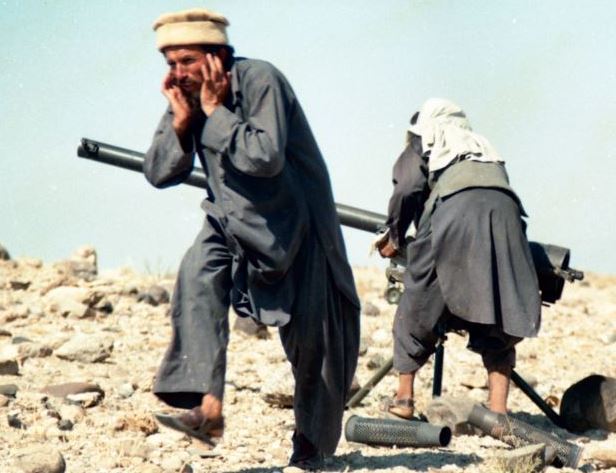
‘Jihad By Camera’: How U.S.-Trained Afghans Photographed The Soviet Invasion

28th January, 2019 · admin

soviet_afghan_war

Rare color photos from the 1980s bring the the U.S.S.R.’s “hidden war” to light.

Radio Free Europe/Radio Liberty
January 28, 2019

Click here to view more (external link).

Copyright (c) 2019. RFE/RL, Inc. Reprinted with the permission of Radio Free Europe/Radio Liberty, 1201 Connecticut Ave NW, Ste 400, Washington DC 20036.
Posted in History, Photos, Russia-Afghanistan Relations, US-Afghanistan Relations | Tags: Soviet-Afghan War |

1TV Afghanistan Dari News – January 28, 2019

28th January, 2019 · admin

Posted in News in Dari (Persian/Farsi) |

Russia’s Special Envoy in Pakistan to Discuss Afghan Peace

28th January, 2019 · admin

peaceAyaz Gul
VOA News
January 28, 2019

ISLAMABAD — A top Russian diplomat is in Pakistan to discuss efforts to promote direct peace talks between warring sides in neighboring Afghanistan.

Russian presidential envoy for Afghanistan Zamir Kabulov is visiting Islamabad after last week’s marathon talks between U.S. special representative for Afghan reconciliation Zalmay Khalilzad and the Taliban in Qatar. Pakistan says it has arranged the ongoing direct peace dialogue between U.S. and Taliban envoys.

“Regional countries have genuine stakes and concerns and would continue to exchange views on the evolving Afghan situation,” a senior Pakistani official told VOA when asked about issues they expected to come under discussions in meetings with Kabulov.

Russia is making its own efforts to try to bring the Taliban and the Afghan government to the negotiating table, fearing continued Afghan instability will threaten central Asian allies that share a border with the war-hit country.

Under the so-called Moscow format conference held in the Russian capital last November, the Taliban for the first time sent its top peace negotiators to attend and publicly interact with participants as well as media. But the insurgent group refused to engage in direct conversations with Afghan representatives present at the table. The Taliban continues to do so even during meetings with Khalizad.

The insurgent group says an intra-Afghan dialogue is something that Afghans themselves have to arrange and promises to engage in such a process once U.S. and NATO forces leave the country.

Russian Foreign Ministry spokeswoman Maria Zakharova told reporters last week her country welcomes Washington’s resolve to launch an Afghan peace process, but Khalilzad’s attempts to convince the Taliban to sit down with the Kabul government have failed.

She touted Russia’s success in bringing under one roof key parties to the conflict, saying the Moscow format was “optimal for consultations” on Afghanistan and it “achieved greater success than the United States alone.”

“We also intend to continue holding Moscow meetings together with our partners and look forward to the United States actively joining them as a full participant, to facilitate the early start of a peaceful dialogue between the Government of Afghanistan and the Taliban Movement,” Zakharova said.

Pakistan and Russia, as well as neighboring Iran maintain contacts with the Taliban, insisting they are meant to encourage the insurgents to resolve the prolonged Afghan war through a peaceful dialogue.

The Taliban and Khalilzad said they made progress in Doha last week, agreeing in principle to the framework of a peace agreement that would require guarantees from insurgents not to allow terrorists to to use Afghan soil for attacks against America. The understanding would bind the United States to withdraw all its troops from Afghanistan provided the Taliban cease hostilities and open talks with Kabul to end the war.

U.S. and Afghan officials have long accused Islamabad of providing sanctuaries and sheltering Taliban leaders, allegations Pakistani official reject as baseless. U.S. military officials lately have also accused Tehran of providing military assistance to the Taliban to fuel instability in Afghanistan, Iranian officials reject the charges.

Russia and Iran worry that continued Afghan instability is encouraging regional affiliate of Islamic State, known as Khorasan Province (ISK-P), to expand its influence in the turmoil-hit nation and threaten territorial boundaries of neighboring countries.

Related

  • NYT: U.S., Taliban Agree In Principle To Peace ‘Framework,’ Envoy Says
  • Key To Peace Lies With Kabul: Khalilzad
  • Ghani Calls On Taliban To Engage In Direct Talks
  • Interim government not discussed with Taliban, Khalilzad tells Ghani
  • Ghani Assures Afghans as US Envoy Reports Progress
  • Social Media Reacts To ‘Progresses’ In US-Taliban Talks
  • NATO expects Afghanistan peace deal will address issue of troops presence
  • Next Round of U.S.-Taliban Peace Talks Tentatively Set for February 25 


Posted in Pakistan-Afghanistan Relations, Peace Talks, Russia-Afghanistan Relations, Security, Taliban, US-Afghanistan Relations | Tags: Zalmay Khalilzad |

U.S. Peace Envoy In Kabul After ‘Significant Progress’ Made In Qatar

27th January, 2019 · admin · 16 Comments
Zalmay Khalilzad

Zalmay Khalilzad

Radio Free Europe/Radio Liberty
January 27, 2019

U.S. special envoy Zalmay Khalilzad is consulting with Afghan government officials following six days of talks with the Afghan Taliban in Qatar aimed at ending the 17-year conflict in Afghanistan.

Khalilzad traveled to the Afghan capital, Kabul, on January 27 after the envoy, U.S. Secretary of State Mike Pompeo, and Taliban officials hailed progress toward peace.

Highlighting the effort in a series of tweets, Khalilzad said on January 26 that the United States and the Taliban had made “significant progress,” adding that the talks in Doha were “more productive than they have been in the past.”

He also emphasized that the sides “have a number of issues left to work out” and that “nothing is agreed until everything is agreed.”

“Encouraging news from [Khalilzad],” the U.S. Secretary of State Mike Pompeo tweeted.

The top U.S. diplomat also wrote that the United States was “serious about pursuing peace, preventing Afghanistan from continuing to be a space for international terrorism & bringing home forces.”

Taliban spokesman Zabihullah Mujahid said that while there was “progress” at the meetings, reports of an agreement on a cease-fire were “not true.”

Mujahid also said in a statement that talks about “unresolved matters” will continue.

Until the withdrawal of international troops was hammered out, “progress in other issues is impossible,” he insisted.

Earlier, unidentified Taliban sources quoted by the Reuters news agency said the two sides had finalized clauses to be included in a draft agreement.

They envisaged foreign forces withdrawing within 18 months of the deal being signed in return for assurances that Al-Qaeda and the extremist group Islamic State (IS) would not be allowed to use Afghanistan as a base to attack the United States and its allies.

The Western-backed government in Kabul has struggled to fend off a resurgent Taliban, as well as IS and Al-Qaeda militants, nearly two decades after a U.S.-led coalition drove the Taliban from power in Afghanistan in 2001.

The Taliban has so far refused to hold direct negotiations with the Afghan government officials, whom they dismiss as “puppets.”

The militants say they will only begin talks with the government once a firm date for the withdrawal of U.S. troops has been agreed.

With reporting by RFE/RL’s Radio Free Afghanistan, AFP, and Reuters

Copyright (c) 2019. RFE/RL, Inc. Reprinted with the permission of Radio Free Europe/Radio Liberty, 1201 Connecticut Ave NW, Ste 400, Washington DC 20036.

Related

  • US, Taliban Agreed on Important Issues: Ex-Taliban Minister
  • Foreign forces to quit Afghanistan in 18 months under draft deal: Taliban officials
  • Afghans Upbeat About Talks, But Warn Against Deal On Gains
  • ‘Sooner or Later’ Taliban Will Talk with Afghan Government
  • Ex-Jihadi Commanders Want Dialogue With Taliban
  • Karzai Welcomes Progress in U.S.-Taliban Peace Talks
Posted in Peace Talks, Security, Taliban, US-Afghanistan Relations |

President Ghani orders merger of counter-narcotics ministry with interior ministry

27th January, 2019 · admin
Ghani

Ghani

1TV: The move is part of efforts for good governance, institutionalization of reforming public administration, facilitation of effectiveness in activities related to preparing counter-narcotics plans, policies and strategies, law enforcement, reduction of drug demand, treatment of drug addicts, promotion of narcotics alternative, implementation of laws against drug smugglers, removal of interference among government institutions and savings in expenditures. Click here to read more (external link).

Posted in Drugs, Political News, Security | Tags: Ashraf Ghani Government |

1TV Afghanistan Dari News – January 27, 2019

27th January, 2019 · admin

Posted in News in Dari (Persian/Farsi) |

Afghan investigators to travel to Europe over abuse allegations in women’s football team

27th January, 2019 · admin
Keramuudin Karim, the president of the Afghanistan Football Federation

Keramuudin Karim, the president of the Afghanistan Football Federation

1TV: Afghan investigators have completed domestic probe over allegations of abuse in women’s football women and are set to travel to Europe for further probe, a spokesman for the country’s attorney general said Sunday. Five officials including AFF president Keramuddin Karim were suspended by Afghan authorities with world soccer governing body FIFA imposing a 90-day ban on Karim. Jamshed Rasooli, a spokesman for the Attorney General’s Office, said on Sunday that the suspension on AFF’s deputy, Mohammad Yousuf Kargar, had been lifted. Click here to read more (external link).

Other Sports News
Afghan female disabled Athlete goes to ParaOlympics

Posted in Afghan Sports News, Afghan Women | Tags: Keramuudin Karim, Sexual Abuse, Women's football |

Husain Bakhsh Safari Wins Fight Night Championship

26th January, 2019 · admin
Husain Bakhsh Safari

Husain Bakhsh Safari

Tolo News: Kabul hosted the sixth round of this season’s mixed martial arts (MMA) tournament on Friday evening with 10 fighters from Afghanistan, Iran and Pakistan. The events of the tournament, nicknamed Fight Night, are held once in every two months. The last and the most important fight was between Husain Bakhsh Safari and Imran Tarakhail in which Safari won the Snow Leopard Fighting Championship (SLFC) championship by defeating his rival in five rounds on points. Click here to read more (external link).

Posted in Afghan Sports News | Tags: Afghan MMA, Husain Bakhsh Safari |
Previous Posts
Next Posts

Subscribe to the Afghanistan Online YouTube Channel

---

---

---

Get Yours!

Peace be with you

Afghan Dresses

© Afghan Online Press
  • About
  • Links To More News
  • Opinion
  • Poll