
The number of armed contractors in Afghanistan has increased more than 65% since Trump took office

Donald Trump
Task and Purpose: The Pentagon’s most recent report on contractor personnel numbers for the first quarter of Fiscal Year 2019 shows there are now 2,847 armed private security contractors supporting the Operation Freedom’s Sentinel mission in Afghanistan, up from the 1,722 armed contractors it reported in Jan. 2017. The use of armed security contractors seemed to be on the decline during President Barack Obama’s last year in office. In Jan. 2016, there were 1,083 armed contractors in Afghanistan, and in the following months, the number fluctuated but never rose above that level before it settled at 813 armed contractors reported in October. Click here to read more (external link).
British army permitted shooting of civilians in Iraq and Afghanistan
 Middle East Eye (MEE): A former Royal Marine says that one of his officers confessed to his men that he had been responsible for the fatal shooting of an Afghan boy, aged around eight, after the child’s father carried his body to the entrance of their forward operating base and demanded an explanation. Another ex-soldier who spoke to MEE alleges that a cover-up was mounted after the fatal shooting of two unarmed teenage boys, which he says he witnessed in Afghanistan. A pair of Soviet-era weapons were removed from a store at the British soldiers’ base, he said, and placed next to the bodies to give the false impression that the teenagers had been armed Taliban fighters. Click here to read more (external link).
1TV Afghanistan Dari News – February 4, 2019
Taliban, Afghan Opposition To Hold Controversial Peace Talks in Moscow
 Ayaz Gul
VOA News
February 4, 2019
ISLAMABAD — Taliban representatives will meet influential Afghan opposition leaders in Moscow for two days of peace building discussions starting Tuesday, but envoys from the Kabul government will not be in attendance.
The controversial huddle, critics say, underscores a deepening political divide in Afghanistan and would further weaken President Ashraf Ghani’s National Unity government.
The so-called “intra-Afghan peace meeting” in Russia comes just days after the United States reported “significant” progress in ongoing talks with Taliban insurgents, though they also excluded the Afghan government.
The Taliban refuses to engage in direct or indirect talks with the Ghani administration, branding them American “puppets.”
A Taliban spokesman has confirmed to VOA a delegation from its Qatar-based “political office” will participate in the Moscow talks under the leadership of senior insurgent negotiator, Sher Mohammad Abbas Stanekzai.
Spokesman Zabihullah Mujahid in a statement Monday said his his group intends use the Moscow conference to open channels to reach an understanding with political groups outside the Afghan government.
“The Islamic Emirate (Taliban) wants to appropriately utilize this opportunity to clarify its Shariah-based and ethical stance to various parties and explain its policy and mechanism about future Afghanistan vis-à-vis end of (U.S.) occupation, enduring peace in homeland and establishment of an intra-Afghan Islamic system of governance,” Mujahid explained.
Russia has distanced itself from the upcoming meeting after criticism from the Afghan government. Critics suggested the disputed Afghan talks could have stemmed from Moscow’s deepening rivalry with Washington.
But the Russian embassy in Kabul has clarified in a statement that the meeting is being arranged by a Russia-based “Council of Afghans Society” to promote peace in Afghanistan.
A 38-member Afghan political delegation, including several women, consists of prominent former leaders, presidential candidates, lawmakers, tribal elders, all of them highly critical of Ghani’s beleaguered National Unity government.
Former president, Hamid Karzai, former national security adviser, Haneef Atmar — who is running against Ghani in the July presidential elections — Mohammad Mohaqiq, former governors Mohammad Ismail Khan and Atta Mohammad Noor, who fought against the Soviets after their 1979 invasion of Afghanistan are part of the delegation.
A joint statement issued on behalf of the Afghan delegation described Tuesday’s meeting in Russia as “the first step towards intra-Afghan peace talks” in the peace process.
“We hope that the Moscow meeting will prove helpful and complementary for encouraging a national and regional consensus and for supporting the U.S. efforts for Afghan peace,” the statement noted. It urged the Afghan government to play “its constructive role” for achieving a sustainable peace in the country.
“Holding such meetings will not help us in reaching peace at all, so it’s little more than a political drama,” Afghan Foreign Ministry spokesman Sebghat Ahmadi told reporters in Kabul when asked for his reaction to the Moscow talks.
U.S. special envoy for Afghanistan reconciliation, Zalmay Khalilzad, and Taliban negotiators are due to hold another round of peace talks in Doha on February 25.
At the end of their six days of uninterrupted talks in the Qatari capital last month, Khalilzad and chief Taliban negotiator Stanekzai, in separate statements announced they are close to a deal on a U.S. troop withdrawal from Afghanistan in exchange for assurances from the Taliban they will not to allow terrorists to use Afghan soil for future attacks against America and its allies.
But Khalilzad has underscored the need for a comprehensive cease-fire and the Taliban’s engagement in intra-Afghan national peace negotiations for further progress.
Related
- Taliban To Join Moscow Talks Without Afghan Government Officials
- Taliban’s Stance Is ‘Main Obstacle’ In Way Of Peace
- Abdullah says not pessimistic about Moscow talks
- Moscow Delegates Dispel Rumors That Talks Will Harm System
- Hopes And Fears Of Young Afghans As Taliban Talks Advance
- Afghan Women ‘Concerned’ As Peace Efforts Stir New Hopes
A Lifetime Ago: The Elegance Of 1920s Afghanistan

Springtime in a garden near Kabul. In the 1920s, Afghanistan was a newly independent country after breaking away from the British Empire. For most of the decade, it was ruled by Amanullah Khan, a secular reformist who sought to modernize the country along Western lines.
Radio Free Europe/Radio Liberty: A set of color photos show Afghanistan in a very different light. Click here to view more (external link).
Ghani Reacts To Taliban Remarks On ‘No Army Needed’

Ghani
Tolo News: President Ashraf Ghani on Saturday said that those forcing people to hold peace talks must avoid discussing the issue of dissolving the country’s army. He said: “Those who are forcefully bringing others to negotiate must not talk about dissolving our “lions” (army); if they are so brave, then they must come and fight on the battlefield instead of carrying out suicide (attacks) and explosions,” Ghani said. Ghani had been referring to a video issued by a senior Taliban member, and former head of the Qatar office, Sher Mohammad Abbas Stanikzai. Stanikzai had been discussing the Doha talks between the Taliban and the United States. In the video, Stanikzai said once the US forces have withdrawn from Afghanistan, there would be no need for an army in Afghanistan. Click here to read more (external link).
Related
1TV Afghanistan Dari News – February 3, 2019
Atmar Calls Moscow Talks ‘A Starting Point’

Mohammad Hanif Atmar
Tolo News: Former National Security Advisor and presidential candidate Mohammad Haneef Atmar has confirmed that he will attend the Moscow talks along with other “leaders of the country”, calling it an important step and a starting point for inclusive intra-Afghan negotiations. Former president Hamid Karzai, former vice president Mohammad Yunus Qanuni, former Balkh governor and Jamiat-e-Islami member Atta Mohammad Noor, Jamiat-e-Islami member Mohammad Ismail Khan, second deputy chief executive and Wahday party member Mohammad Mohaqiq, head of National Islamic Front of Afghanistan Sayed Hamid Gailani, former member of Taliban Abdul Salam Zaeef and Zabihullah Mujaddedi, son of former president Sebghatullah Mujaddedi are Afghan politicians who will reportedly attend the meeting. Click here to read more (external link).
Related
- Atmar Calls Moscow Summit as ‘Important Step’ Towards Intra-Afghan Dialogue
- Afghan Politicians Will Defend ‘National Values’ At Moscow Talks
- Iran reiterates support for Afghanistan peace process led by govt.
- Ghani Says Temporary Peace Not Acceptable
- Afghanistan peace ‘not going to be an easy process’: US official
Pakistan Backs Trump Fast-Tracking US-Taliban Talks
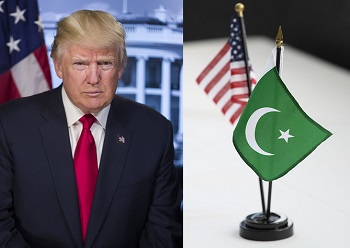
Michael Hughes: The opposing sides of the ethno-nationalist conflict in Northern Ireland had engaged in talks for more than 15 years before reaching a historic peace settlement in 1998. Contrast this with the prospect that – within six days – an Afghan-turned-neoconservative cowboy and a group of Pakistani-backed radical Islamist insurgents negotiated a “framework agreement” that could end the 17-year war in Afghanistan. It is reasonable for one to meet these allegations with a heavy dose of skepticism – if not outright disbelief – and yet in many ways it all makes perfect sense. So far the deal looks horrible for the long-term stability of Afghanistan. Click here to read more.