
1TV: Afghanistan’s President Ashraf Ghani has barred his minister of foreign affairs from visiting the United States to attend an international meeting as he received no response to his letter to US President Donald Trump, sources told 1TV Sunday. According to sources, Ghani called Trump’s inattention to the letter an insult to the Afghan government. Click here to read more (external link).
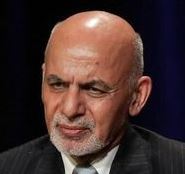
Govt ‘Ready’ To Open Taliban Office In Afghanistan: Ghani
Tolo News: President Ashraf Ghani, who visited Nangarhar province on Sunday, said the Afghan government is ready to allow the Taliban to open an office in Kabul, Kandahar or Nangarhar. Ghani said “a sustainable peace and a peace with dignity” will come to the country and for this, he is ready to even sacrifice his life. But remarks like this are not new as Ghani has made such statements in the past. However, despite these offers, the Taliban has until now refused to hold talks with the Afghan government. Click here to read more (external link).
1TV Afghanistan Dari News – February 9, 2019
US Negotiator: Afghan Peace Possible Before July Elections
VOA News
February 9, 2019
The top U.S. negotiator in peace talks with Afghanistan’s Taliban leaders says he hopes a peace agreement can be achieved before Afghanistan’s next set of elections just five months away.
Zalmay Khalilzad, U.S. special representative for Afghanistan reconciliation, spoke Friday to an audience at the United States Institute of Peace in Washington, apologizing for his scratchy voice.
“This is what 42 hours of talking with the Taliban can do to you,” he joked.
Khalilzad said he was hopeful a peace deal could be finalized before Afghanistan’s presidential elections in July, but warned that there remained “a lot of work” to do.
“We are at the early stages of a protracted process,” he said.
Working toward intra-Afghan talks
In Moscow Wednesday, two days of talks between the Taliban and Afghan political leaders ended, although no representatives from the current government of President Ashraf Ghani were in attendance, sparking anger in Kabul. The Taliban consider the Kabul government a Western puppet and has so far refused to directly negotiate with it.
The 10-member Taliban delegation has instead been meeting with almost 50 influential Afghans, including politicians, former jihadi leaders, civil society activists and former President Hamid Karzai.
The final statement issued after the talks in Moscow declared that a complete withdrawal of U.S.-led foreign forces from Afghanistan is the key to lasting peace in Afghanistan.
Khalilzad said the Russia-backed talks were positive as long as they helped facilitate intra-Afghan talks, not if they “polarize Afghans further.”
“I’m not seeking to monopolize” the Afghan peace process, Khalilzad said, adding that regional countries should play a role in the process.
Khalilzad, a former U.S. ambassador to Afghanistan, said Friday that the Taliban and Afghan government leaders must “sit across the table from each other and come to an agreement about the future of their country.”
He said there were indications that the Taliban could sit down with government representatives in a “multiparty format.”
Next Qatar talks in two weeks
Khalilzad attended a six-day meeting with Taliban leaders in Qatar last month and afterward reported “significant progress” in the negotiations, which culminated in a basic framework for a peace agreement. It called for the Taliban to prevent international terrorist groups from basing themselves in Afghanistan and for the United States to withdraw its forces from the country.
The Taliban have yet to make concessions on two key U.S. demands: implementing a cease-fire and agreeing to negotiate directly with Afghan government representatives as part of an Afghan-led, intra-Afghan peace process.
He and his team are scheduled to meet with the Taliban again in Qatar on Feb. 25 for more discussions.
“All sides have learned lessons from the past. So the time has come, they say, for an inclusive dialogue leading to an inclusive peace. That will not be easy. … But it’s for the Afghans to negotiate with each other and accept each other,” he added.
Radio Free Europe/Radio Liberty contributed to this report.
Related
Have Taliban Turned Tables on Ashraf Ghani?
Ayesha Tanzeem
VOA News
February 8, 2019
ISLAMABAD — When Afghanistan President Ashraf Ghani laid out the red carpet in 2017 for controversial Afghan warlord Gulbuddin Hekmatyar — once known as “the Butcher of Kabul” for his role in the bloody conflict for the control of the capital in the 1990s — many thought he was trying to isolate the central Taliban leadership by luring factions to break away and join the government. It didn’t work.
Today, the Taliban seem to have turned the tables on him — with Russia’s help.
“The real significance of Moscow, in my view, is that it has somewhat isolated the Afghan government,” said Richard Olson, a former special representative for Afghanistan and Pakistan for the United States.
Russia conference
Olson was referring to a two-day conference in Russia this week that included a 10-member Taliban delegation and almost 50 influential Afghans, including politicians, former jihadi leaders, civil society activists and former President Hamid Karzai — but no representative of the Afghan government.
Pictures of the conference showed Sher Mohammad Abbas Stanekzai, the head of the Taliban delegation, standing shoulder to shoulder with Karzai and other Afghan leaders, many of them Ghani’s political rivals.
President Ghani’s anger about the meeting was obvious from various statements, in which he called it an academic exercise by those with “no executive authority.”
Amrullah Saleh, Ghani’s running mate in upcoming presidential elections, in a tweet warned conference attendees of becoming “useful idiots” by reinforcing the narrative that “we are a web of tribes and not a state.”
The Ghani administration has also lodged a complaint with the United Nations against the Russian government for allowing Taliban leaders, some of whom are on a United Nations Security Council sanctions list, to travel.
Those who attended defended the meeting.
“The process here in Russia will further strengthen the negotiation of Khalilzad,” former Balkh province Governor Atta Mohammad Noor told The Washington Post.
U.S. special representative
Zalmay Khalilzad, the U.S. special representative for Afghanistan reconciliation, has been talking to the Taliban for several months. In January, he held a marathon six-day meeting, which both sides termed as positive.
However, despite Khalilzad’s pressure, the Taliban have so far refused to include the Afghan government in the negotiations, or even meet their representatives directly.
Afghan political analyst Mushtaq Rahim said there was a backlash in Afghan civil society against those who attended.
Sami Yousufzai, a journalist who has covered the region for years, said the Taliban have managed to drive a serious blow to the impression that the country was united against them or standing behind Ghani for peace talks. They got “the biggest advantage” out of this meeting, he said, whereas Ghani appeared to be “totally isolated.”
The situation also suited Russia, which for at least the past two years has been trying to exert its influence in Afghanistan.
Russia’s biggest fear, many analysts agree, is the presence of Islamic State in Afghanistan. It sees the Taliban as a hedge against IS, which has a global jihadi agenda and could influence the Muslim population in Russia and the Central Asian states in its backyard.
A day before the Moscow meeting, Russian Foreign Minister Sergey Lavrov accused the U.S. of holding talks in secrecy and leaving the regional countries “in the dark.” He also said Russia wanted an intra-Afghan dialogue that included the Afghan government.
“For Moscow, its initiative represents an effort to get closer to the elusive intra-Afghan dialogue that all sides keep talking about,” said Michael Kugelman, deputy director of the Asia Program at the Washington-based Wilson Center research organization. Although he warned that without bringing in the Afghan government at some stage, this process would only “work against” the rival process between the U.S. and Taliban.
‘Potential spoilers’
Olson was also skeptical of the Russian intentions, calling them “potential spoilers.”
“Their objective, even more than the Taliban’s, is the withdrawal of U.S. forces,” he added.
Thomad Ruttig, of the Kabul-based research organization Afghanistan Analysts Network, agreed, calling the Moscow conference an effort by the Russians to “divide and interfere.”
Technically, the conference was not a Russian government initiative. It was organized by theCouncil of Afghan Society, a Moscow-based organization of the Afghan diaspora.
President Ghani’s administration was invited to a previous conference in Moscow organized by the Russian government, but the Afghan government declined because the Taliban refused to meet their representatives.
The Taliban’s refusal to engage with the administration was more than just stubbornness on their part, said analyst Rahim, who thinks if they sit with the administration, conversation would likely shift to how they can integrate into the system rather than “taking over the system.”
He also thought the Taliban were hoping to undermine the administration so much that in the end they would negotiate on their terms.
Related
Crossing the finish line for polio eradication in Afghanistan
UN Children’s Fund: Afghanistan is one of the three polio endemic countries in the world, alongside Pakistan and Nigeria. In 2018, there were 21 wild poliovirus cases in Afghanistan making it the country with the largest number of cases last year, while 12 cases were reported in Pakistan and zero in Nigeria. It is important to note that those cases were mostly limited to small areas in the southern and eastern regions. In fact, 96% of the country is polio free and the virus is geographically restricted. In this regard, Afghanistan has seen an incredible achievement over the past decade. Click here to read more (external link).
1TV Afghanistan Dari News – February 8, 2019
Karzai Calls for Loya Jirga Following Moscow Talks
Ariana: Former President Hamid Karzai who attended the two-day Moscow Talks has called for convening Loya Jirga (Grand Assembly) to resolve the ongoing crisis in the country. Speaking with Russia’s Sputnik News Agency, Karzai hailed Moscow’s role in facilitating the Afghan politicians meeting with the Taliban representatives. Karzai said the outcomes of the Moscow meeting were beyond their expectation and that he hopes that it could lead to lasting peace in his war-torn country. Click here to read more (external link).
Related
- Explainer: Why There Are Two Competing Tracks For Afghan Peace
- MoFA Criticizes “Blacklisted” Taliban’s Trip To Moscow
- Moscow Talks Participant Sees Change In Taliban’s Views
- Afghan Youths Want Bigger Role In Peace
- The US has ruined Afghanistan. It can’t just walk away now
- Great nations don’t quit wars before they prevail
Shafie Ayar slams Amrullah Saleh for joining Ashraf Ghani’s ticket
HRW: Prosecute Abuse of Women Football Players
HRW: Afghan authorities should fully investigate and appropriately prosecute the sexual assault claims by 20 members of Afghanistan’s national women’s football team, Human Rights Watch said today. The Fédération Internationale de Football Association (FIFA), football’s world governing body, should assist and monitor Afghan government prosecutions and promote justice for the victims, protection of witnesses, and safety of players on the Afghan women’s team. Five players have told the Guardian that Keramuudin Karim and other employees of AFF had sexually assaulted them. The former team captains, Khalida Popal and Shamila Kohestani, both of whom now live outside of Afghanistan, have been advocating justice on behalf of their former team members. Popal has said that sexual abuse of players, both women and men, goes back years and occurred while the team played abroad. Click here to read more (external link).
Other Sports News


