
logo

Daily Updated Afghan News Service

  • Home
  • About
  • Opinion
  • Links to More News
  • Good Afghan News
  • Poll Results
  • Learn about Islam
  • Learn Dari (Afghan Persian/Farsi)

Recent Posts

  • ICC Must Reconsider Closure Of Afghanistan War Crimes Case, Say Afghan Rights Groups November 16, 2026
  • Tolo News in Dari – November 16, 2026 November 16, 2026
  • Nangarhar: Poverty and Unemployment Drive Women and Children to Beg November 16, 2026
  • Taliban Bans Cricket Coverage On Radio Stations In Kandahar November 16, 2026
  • Barred By The Taliban, Afghan Girls And Women Now Shut Out Of School In Iran And Pakistan Too November 15, 2026
  • Tolo News in Dari – November 15, 2026 November 15, 2026
  • France agrees to receive Taliban diplomats, source says November 15, 2026
  • Turkey detains 35 Afghan migrants attempting to reach Greece November 15, 2026
  • Afghanistan Freedom Front Reports Killing and Wounding Three Taliban Fighters in Kabul November 14, 2026
  • Young Man in Panjshir Dies by Suicide After Being Tortured by the Taliban November 14, 2026

Categories

  • Afghan Children
  • Afghan Sports News
  • Afghan Women
  • Afghanistan Freedom Front
  • Afghanistan United Front
  • Al-Qaeda
  • Anti-Government Militants
  • Anti-Taliban Resistance
  • AOP Reports
  • Arab-Afghan Relations
  • Art and Culture
  • Australia-Afghanistan Relations
  • Book Review
  • Britain-Afghanistan Relations
  • Canada-Afghanistan Relations
  • Censorship
  • Central Asia
  • China-Afghanistan Relations
  • Civilian Injuries and Deaths
  • Corruption
  • Crime and Punishment
  • Drone warfare
  • Drugs
  • Economic News
  • Education
  • Elections News
  • Entertainment News
  • Environmental News
  • Ethnic Issues
  • EU-Afghanistan Relations
  • Everyday Life
  • France-Afghanistan Relations
  • Germany-Afghanistan Relations
  • Haqqani Network
  • Health News
  • Heroism
  • History
  • Human Rights
  • India-Afghanistan Relations
  • Interviews
  • Iran-Afghanistan Relations
  • ISIS/DAESH
  • Islamophobia News
  • Japan-Afghanistan Relations
  • Landmines
  • Media
  • Misc.
  • Muslims and Islam
  • NATO-Afghanistan
  • News in Dari (Persian/Farsi)
  • NRF – National Resistance Front
  • Opinion/Editorial
  • Other News
  • Pakistan-Afghanistan Relations
  • Peace Talks
  • Photos
  • Political News
  • Reconstruction and Development
  • Refugees and Migrants
  • Russia-Afghanistan Relations
  • Science and Technology
  • Security
  • Society
  • Tajikistan-Afghanistan Relations
  • Taliban
  • Traffic accidents
  • Travel
  • Turkey-Afghanistan Relations
  • UN-Afghanistan Relations
  • Uncategorized
  • US-Afghanistan Relations
  • Uzbekistan-Afghanistan Relations

Archives

Dari/Pashto Services

  • Bakhtar News Agency
  • BBC Pashto
  • BBC Persian
  • DW Dari
  • DW Pashto
  • VOA Dari
  • VOA Pashto

Afghanistan Protests Pakistan Invitation To Taliban

17th February, 2019 · admin

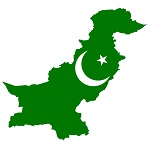
pakistanBy RFE/RL’s Radio Mashaal
February 17, 2019

Afghanistan has expressed concerns to the UN Security Council about a planned visit by Taliban negotiators to Pakistan, asserting that the militant group’s members traveling to Islamabad are under UN sanctions and that Kabul should have been consulted prior to any such meeting.

Taliban negotiators on February 14 announced they will meet U.S. representatives in Pakistan on February 18 as part of ongoing Afghan peace talks and that they will also meet with Pakistani Prime Minister Imran Khan to hold “comprehensive discussions about Pakistan-Afghanistan relations.”

In a letter to the Security Council seen by RFE/RL’s Radio Mashaal, the Afghan UN mission wrote that the Taliban-Pakistan “constitutes a violation of the national sovereignty of Afghanistan.”

“These engagements, which are taking place under the pretext of support for peace efforts in Afghanistan, are void of any degree of coordination and consultation with the government of Afghanistan,” it said.

The letter said that an invitation by Khan for a Taliban delegation to travel to Pakistan for talks “amounts to the official recognition and legitimization of an armed-group that poses a serious threat to the security and stability of Afghanistan, and whose members are sanctioned by provisions of the UN Security Council’s 1988 Committee’s Sanctions Regime.”

Pakistan has not responded to remarks made in the Afghan letter to the Security Council.

The United States has not officially commented on the Taliban’s announcement of a potential meeting in Islamabad.

Tensions run high between Afghanistan and Pakistan. Kabul and Washington have accused Islamabad of providing safe havens for terrorists in its territory, allowing them to cross the border into Afghanistan and attack government troops and Western forces. Pakistan denies the allegations.

The discussions in Islamabad would come a week before previously scheduled February 25 talks in Qatar between U.S. officials and Taliban negotiators.

Talks between U.S. officials — including Zalmay Khalilzad, the special peace envoy for Afghanistan — have intensified in recent months. Khalilzad and Taliban negotiators have both said progress has been made, but U.S. officials caution that much work needs to be done before an agreement can be finalized.

The U.S.-Taliban talks are aimed at finding a negotiated end to Afghanistan’s 17-year war.

The United States has been attempting to bring the Taliban to the negotiating table with officials in Kabul.

The Afghan government has been absent from the U.S.-Taliban talks, prompting anger and frustration in Kabul. The Taliban considers the Kabul government a Western puppet and has so far refused to directly negotiate with it.

U.S. troops have been in Afghanistan since an October 2001 invasion that brought down the Taliban government after it refused to hand over Al-Qaeda terrorists, including Osama bin Laden, blamed for launching the September 11, 2001 attacks in the United States.

Copyright (c) 2019. RFE/RL, Inc. Reprinted with the permission of Radio Free Europe/Radio Liberty, 1201 Connecticut Ave NW, Ste 400, Washington DC 20036.

Related

  • US-Taliban Talks In Islamabad ‘Postponed’
  • Will be delighted to turn power over to Taliban if they’re elected by people: Ghani
  • U.S. Expects Afghan Govt’s Inclusion in Ongoing Peace Talks
Posted in Pakistan-Afghanistan Relations, Peace Talks, Taliban, US-Afghanistan Relations |

Kashmir Conflict Threatens to Undermine Trump’s Afghan Gambit

16th February, 2019 · admin · 8 Comments

kashmir

Michael Hughes: The Jaish-e-Mohammed (JeM) attack on Indian troops in Kashmir could waste some of the goodwill Pakistan had built up with the Trump administration vis-à-vis the Taliban peace talks. Islamabad was on the verge of a major diplomatic coup in Kabul but now may have “snatched defeat from the jaws of victory,” as they say. For, even if there is no clear evidence the Pakistani state played a direct role in the attack, it certainly appears that one of the vipers groomed by the ISI – in one way or another – was set loose. Click here to read more.

Related

  • View: US’ Afghanistan pull out could be driving up terror in Kashmir
Posted in India-Afghanistan Relations, Opinion/Editorial, Pakistan-Afghanistan Relations, Peace Talks, Security, Taliban, US-Afghanistan Relations | Tags: ISI |

Afghan Taliban, Saudi crown prince likely to meet in Pakistan

16th February, 2019 · admin · 1 Comment
Saudi Crown Prince Mohammed bin Salman (L), Taliban chief negotiator Sher Mohammad Abbas Stanikzai.

Saudi Crown Prince Mohammed bin Salman (L), Taliban chief negotiator Sher Mohammad Abbas Stanikzai.

1TV: Saudi Arabia’s Crown Prince Mohammed bin Salman and the Afghan Taliban representatives are likely to meet each other in Pakistan amid stepped up diplomatic efforts for peace in Afghanistan, it was reported on Saturday. The prince’s visit to Pakistan is expected to start on Sunday. Taliban have already confirmed their plan to meet US officials and Pakistan Prime Minister Imran Khan in Islamabad on Monday. Click here to read more (external link).

Related

  • US VP Remains ‘Optimistic’ On Afghan Peace
  • Ghani Says Govt Cannot Be Sidelined In Peace Talks
Posted in Arab-Afghan Relations, Pakistan-Afghanistan Relations, Peace Talks, US-Afghanistan Relations |

1TV Afghanistan Dari News – February 16, 2019

16th February, 2019 · admin

Posted in News in Dari (Persian/Farsi) |

Germany’s Merkel Warns U.S. Against Withdrawing From Syria, Afghanistan

16th February, 2019 · admin · 1 Comment
Angela Merkel

Angela Merkel

Radio Free Europe/Radio Liberty
February 16, 2019

German Chancellor Angela Merkel has warned that a hasty U.S. pullout from Syria runs the risk of strengthening the roles of Russia and Iran in the Middle East.

Speaking at the Munich Security Conference on February 16, Merkel questioned whether the planned U.S. withdrawal was “a good idea.”

“Will it once more strengthen the capacity of Iran and Russia to exert their influence?” she asked.

She also cautioned against a premature U.S. withdrawal of forces from Afghanistan, saying that NATO’s Resolute Support mission in that country was dependent on the U.S. military’s commitment.

The German leader also called on Beijing to join the international disarmament process. Earlier this month, the United States announced it was withdrawing from the 1987 Intermediate-Range Nuclear Forces (INF) Treaty after claiming that Russia was violating it. But Washington is also concerned that the treaty restricts U.S. weaponry in Asia, but does not limit those of China.

Merkel noted that the INF Treaty was negotiated “essentially for Europe” and that without it, Europe would have to push for future disarmament agreements to ensure its own security.

“Disarmament is something that concerns us all and where we would, of course, be glad if such talks were held not just between the United States, Europe, and Russia, but also with China,” she said.

Chinese Politburo member Yang Jiechi told the Munich Conference shortly after Merkel’s speech that the INF Treaty should be saved, but that China would not sign it.

“China develops its capabilities strictly in accordance to its defensive needs and doesn’t pose a threat to anybody else,” Yang said. “So we are opposed to the multilateralization of the INF.”

Merkel also defended the joint German-Russian Nord Stream 2 pipeline project, which Washington is concerned will make Europe overly reliant on Russian gas.

Speaking as Ukrainian President Petro Poroshenko looked on, she said his country would continue to be a transit country for Russian gas even after the pipeline was complete.

Merkel noted that Europe also has enough terminals to receive more liquefied gas from the United States, among other options. “There’s nothing that speaks against getting gas from the United States, but to exclude Russia is the wrong strategic signal.”

With reporting by Reuters, AFP, dpa, and TASS

Copyright (c) 2019. RFE/RL, Inc. Reprinted with the permission of Radio Free Europe/Radio Liberty, 1201 Connecticut Ave NW, Ste 400, Washington DC 20036.

Related

  • Upcoming U.S.-Taliban Qatar Talks to ‘Make a Call’ on Troop Pullout
Posted in Germany-Afghanistan Relations, Security, US-Afghanistan Relations |

Afghanistan Listed As Among Most Dangerous For Infants In Conflict Zones

15th February, 2019 · admin · 1 Comment

war_on_children

Radio Free Europe/Radio Liberty
February 15, 2019

The Save the Children International charity says at least 100,000 babies die every year because of armed conflict and related effects, with Afghanistan listed as among the 10 worst countries to be a child.

“Increasingly, the brunt of armed violence and warfare is being borne by children,” the U.S.-based organization said on February 15 in its report, titled Stop The War On Children.

“Children suffer in conflict in different ways to adults, partly because they are physically weaker and also because they have so much at stake — their physical, mental, and psychosocial development are heavily dependent on the conditions they experience as children.”

It said that “many more children die in conflict as a result of malnutrition, disease, and lack of health care than from bullets or bombs.”

In the five years from 2013-17 in the 10 worst-hit areas, it said, an estimated 550,000 infants died as a result of fighting and the “reverberating impact of conflict.”

The figures “suggest that every year in just 10 conflict-affected countries, at least 100,000 infants die who in the absence of conflict would survive.”

It listed the 10 worst countries for children in conflict areas as Afghanistan, Iraq, Syria, and Yemen, Central African Republic, Democratic Republic of Congo, Mali, Nigeria, Somalia, and South Sudan.

“In Afghanistan alone, the UN verified 3,179 child casualties,” it said, referring to data for infants and older children for 2017.

“Many of these incidents involved improvised explosive devices and unexploded ordnance, accounting for at least 33 percent of those casualties.”

The deaths include “children being used to plant bombs and/or to carry out the attacks themselves,” the report said.

It estimated that nearly 90 percent of children in Yemen, 70 percent of those in Syria, and 60 percent of Somalia’s children were living in close proximity to high-intensity conflict in 2017.

The report noted that the UN Security Council had identified six “grave violations” against children in situations of armed conflict: killing and maiming of children, recruitment and use of children as soldiers, sexual violence against children, abduction of children, attacks on schools and hospitals, and denial of humanitarian access.

Save the Children said that its investigations showed that the number of children directly affected by verified cases of grave violations in 2017 was more than 25,000, the highest ever recorded.

“The nature of conflict has changed, putting children in the front line in new and terrible ways,” said Helle Thorning-Schmidt, the chief executive of Save the Children International.

“Wars are lasting longer. They are more likely to be fought in urban areas among civilian populations, leading to deaths and life-changing injuries, and laying waste to the infrastructure needed to guarantee access to food and water,” she added.

Copyright (c) 2019. RFE/RL, Inc. Reprinted with the permission of Radio Free Europe/Radio Liberty, 1201 Connecticut Ave NW, Ste 400, Washington DC 20036.


Posted in Afghan Children, Civilian Injuries and Deaths, Health News, Human Rights, Landmines |

1TV Afghanistan Dari News – February 15, 2019

15th February, 2019 · admin

Posted in News in Dari (Persian/Farsi) |

U.S. General Says 1,000 Troops Expected To Be Withdrawn From Afghanistan

15th February, 2019 · admin · 3 Comments
Votel

Votel

Radio Free Europe/Radio Liberty
February 15, 2019

The U.S. military is expected to trim troop levels in Afghanistan by more than 1,000 soldiers, a U.S. general told Reuters on February 15.

U.S. President Donald Trump told Congress this month he intended to reduce U.S. forces in Afghanistan as negotiators make progress in talks with Taliban insurgents.

However, U.S. Army General Joseph Votel, the head of the U.S. military’s Central Command, said the decision to reduce some of the 14,000 American forces in Afghanistan was not linked to those negotiations.

Instead, he said it was part of an efficiency drive by the new commander, Army General Scott Miller, who took over in September, to make better use of U.S. resources.

“This is something that he started as he got into the position here and was looking at how we [can] be as efficient and as effective as we can be on the ground,” Votel told Reuters during a trip to Oman.

Asked whether Miller would likely cut more than 1,000 troops from Afghanistan under the efficiency drive, Votel said: “He probably will.”

The U.S.-Taliban talks are aimed at finding a negotiated end to Afghanistan’s 17-year war.

The United States has been attempting to bring the Taliban to the negotiating table with officials in Kabul.

The Afghan government has been absent from the U.S.-Taliban talks, prompting anger and frustration in Kabul.

The Taliban considers the Kabul government a Western puppet and has so far refused to directly negotiate with it.

Based on reporting by Reuters

Copyright (c) 2019. RFE/RL, Inc. Reprinted with the permission of Radio Free Europe/Radio Liberty, 1201 Connecticut Ave NW, Ste 400, Washington DC 20036.

Related

  • U.S. Should Have Gradual, Responsible Withdrawal from Afghanistan: Russian Embassy
  • U.S. Looking To Reduce Kabul Embassy Staff As Afghanistan Mission Changes
  • Turkey Says Will Continue to Support Afghan Security Forces
  • Taliban Extol Trump’s ‘Positive’ Gestures as Helpful for Peace Talks
  • Danish Sees No Results In Peace Talks Without Govt
  • Peace is Not a ‘Personal Project’, Abdullah Says Urging Politicians to Collaborate
Posted in Peace Talks, Security, Taliban, US-Afghanistan Relations | Tags: Ashraf Ghani Government |

Afghans Mark 30th Anniversary Of Soviet Withdrawal

15th February, 2019 · admin
Soviet Troops (file photo)

Soviet Troops (file photo)

Tolo News:  Hundreds of Afghans, who said they are families of war victims, gathered at the Loya Jirga tent in Kabul on Friday to mark the 30th anniversary of Soviet troops withdrawal from Afghanistan. The war lasted nine years and, in that time, an estimated one million civilians, including children, were killed, along with 90,000 Mujahideen fighters, more than 20,000 Afghan troops and over 14,000 Soviet soldiers. Click here to read more (external link).


Posted in Civilian Injuries and Deaths, History, Russia-Afghanistan Relations | Tags: Soviet-Afghan War |

40 Years On, Mystery Still Surrounds Shooting Death Of U.S. Ambassador To Afghanistan

14th February, 2019 · admin · 7 Comments

dubsBy Frud Bezhan
Radio Free Europe/Radio Liberty
February 14, 2019

n February 14, 1979, Adolph Dubs, the U.S. ambassador to Afghanistan, was kidnapped at gunpoint, held hostage in a Kabul hotel, and killed in a botched rescue attempt.

Forty years on, the precise circumstances surrounding the death of the 58-year-old diplomat remain shrouded in mystery. Several questions remain unanswered, including who was behind Dubs’ kidnapping, who fired the fatal shots, and whether the Soviet Union was involved.

The death of Dubs, a former charge d’affaires in Moscow, came at a critical time during the Cold War — it was a year after communists seized power in Kabul and months before the Soviet Union sent in troops to prop up the Marxist government.

The incident prompted international shock and outraged the administration of U.S. President Jimmy Carter, which closed the U.S. Embassy in response, although it did keep a charge d’affaires. Months later, Washington began its covert support to the mujahedin, the Islamist guerrilla fighters who were battling the Kabul regime and would later fight the Soviet Army.

Room 117

On the morning of February 14, Dubs’ car was stopped by four gunmen in Kabul as he was traveling to the U.S. Embassy. There were reports that at least one of the gunmen was dressed as a uniformed Kabul traffic policeman. Dubs’ abductors took him downtown to the Hotel Kabul, now known as the Serena Hotel.

By noon, Afghan security forces had surrounded the hotel. Soon after, Afghan forces stormed Room 117, where Dubs was being held. After a brief exchange of fire, Dubs was found dead. The ambassador had suffered multiple gunshot wounds to his head and chest.

Two of the four gunmen involved in Dubs’ abduction were also killed in the assault.

‘Suppression Of The Truth’

Washington protested to Kabul, saying that Afghan forces stormed the building despite a warning from the U.S. Embassy “in the strongest possible terms” not to attack the hotel or open fire on the kidnappers while attempts were being made to negotiate Dubs’ release.

In 1980, the State Department issued a report on its yearlong investigation into Dubs’ death, attributing blame to Afghan authorities and Soviet advisers assisting them.

The State Department said that at least three Soviet advisers had played an “operational role” during the storming of the hotel.

Moscow acknowledged that its advisers were present but said they had no control over the Afghan decision to storm the hotel room. Kabul said Soviet advisers were not present.​

Washington said it was also not able to reach Foreign Minister Hafizullah Amin for hours, a claim denied by Amin, who would later become the leader of the country.

The State Department report said Dubs died of “at least 10 wounds inflicted by small-caliber weapons.”

The report said physical evidence in the hotel room, including weapons, had disappeared.

Afghan officials produced for the Americans the body of a third kidnapper who had been detained by police. Kabul also provided the corpse of the fourth kidnapper, who U.S. officials did not see at the hotel.

It is still unknown whether Dubs was killed by his abductors, his would-be rescuers, or a combination of both.

The State Department said the Kabul government’s account was “incomplete, misleading, and inaccurate,” with “no mention of the Soviets involved in the incident.” The U.S. report concluded: “Sufficient evidence has been obtained to establish serious misrepresentation or suppression of the truth by the government.”

Cold Case

The identities of Dubs’ kidnappers were never revealed, and Washington, Moscow, and Kabul all have their own take on the incident.

Carter’s national-security adviser, Zbigniew Brzezinski, blamed Dubs’ death on “Soviet ineptitude or collusion,” according to his memoirs. He described the Afghan handling of the incident as “inept.”

In the book Afghanistan: The Soviet Invasion In Perspective, author Anthony Arnold suggested that “it was obvious that only one power…would benefit from the murder — the Soviet Union,” as the death of the ambassador “irrevocably poisoned” the U.S.-Afghan relationship, “leaving the U.S.S.R. with a monopoly of great-power influence over” the Kabul government.

In the months after Dubs’ death, Carter would dramatically draw down America’s diplomatic presence in Afghanistan and cut off economic and humanitarian aid.

In Russia, the kidnapping was blamed on the CIA, which state media said wanted to provide an excuse for U.S. military intervention in Afghanistan.

Kabul claimed the abductors were members of a small Maoist group, while officials at the time also blamed the mujahedin.

The abductors had demanded the release of “religious figures” who they said were being held by the Kabul government.

In a newly published book, Afghanistan: A History From 1260 To The Present, author Jonathan Lee writes that U.S. officials suspected the communist government in Kabul was behind the incident “either in a naïve attempt to discredit the Islamist resistance or to force the U.S.A. and NATO powers to disengage with Afghanistan.”

Copyright (c) 2019. RFE/RL, Inc. Reprinted with the permission of Radio Free Europe/Radio Liberty, 1201 Connecticut Ave NW, Ste 400, Washington DC 20036.
Posted in History, Russia-Afghanistan Relations, US-Afghanistan Relations | Tags: Hafizullah Amin, Soviet-Afghan War |
Previous Posts
Next Posts

Subscribe to the Afghanistan Online YouTube Channel

---

---

---

Get Yours!

Peace be with you

Afghan Dresses

© Afghan Online Press
  • About
  • Links To More News
  • Opinion
  • Poll