
 8am: In a recent development, Taliban officials in Sar-e Pul province have issued alarming threats to teachers, citing their short beards and the absence of turbans as reasons for potential dismissal. According to a formal statement released by the Taliban’s education directorate in Sar-e Pul, sources shared with Hasht-e Subh Daily on October 27th, approximately 200 teachers and staff members have been warned. The statement indicates that 168 individuals within this group received specific warnings regarding their appearance. The warnings were directed at teachers who failed to grow long beards and did not wear turbans, both of which were deemed violations of the Taliban’s strict dress code under the category of “supervision of appearance.” Those who did not comply with these regulations were threatened with immediate dismissal from their positions. Click here to read more (external link).
Tolo News in Dari – October 27, 2023
Pakistan urged to halt Afghan deportations to avoid ‘human rights catastrophe’
 UN News: OHCHR is urging the authorities to halt deportations, which are set to begin on 1 November, Spokesperson Ravina Shamdasani told journalists in Geneva. Currently, more than two million undocumented Afghans are living in Pakistan, at least 600,000 of whom arrived after the Taliban returned to power in August 2021. “We believe many of those facing deportation will be at grave risk of human rights violations if returned to Afghanistan, including arbitrary arrest and detention, torture, cruel and other inhuman treatment,” she said. At particular risk are “civil society activists, journalists, human rights defenders, former government officials and security force members, and of course women and girls as a whole,” she added, recalling “abhorrent policies” banning them from secondary and university education, working in many sectors and other aspects of daily and public life. Click here to read more (external link).
Related
At Least Two Killed, Several Injured By Blast In Shi’ite Neighborhood Of Kabul
 AP: An explosion late on October 26 in a mostly Shi’ite neighborhood of Kabul claimed at least two lives and injured nine, a police spokesman said. According to eyewitnesses and pictures and videos published on social media, the explosion occurred in a sports club in the Dasht Barchi area of Kabul. The cause of the explosion wasn’t immediately known. Social media posts indicate that a fire broke out after the explosion. The Dasht Barchi area has been the scene of deadly explosions in the past two years that have been claimed by Islamic State. Click here for more (external link).
Tolo News in Dari – October 26, 2023
Pakistan Expels Over 12,000 Afghan Refugees in the Past 37 Days
 8am: Local Taliban officials have announced the forced expulsion of more than 12,000 Afghan refugee families from Pakistan within the last 37 days. Mawlawi Samiullah Samoon, the director of the Taliban’s migrant registration at the Torkham border, stated on Thursday, October 26th, that these families were forcibly deported by the Pakistani government. According to him, the returning migrants are registered by the Taliban, and their details are then handed over to humanitarian organizations. Click here to read more (external link).
Related
Kabul beauticians struggle and consider migration amid Salon shutdown
 Khaama: A female representative of beauticians in Kabul reveals that women are experiencing severe economic hardships following the shutdown of beauty salons and the ban on beauticians’ work imposed by the interim government. Many are now considering the option of migrating to seek better opportunities. Click here to read more (external link).
Detained Afghan Education Activist Released, Family Says

Matiullah Wesa
By RFE/RL’s Radio Azadi
October 26, 2023
Taliban authorities in Afghanistan have released education activist Matiullah Wesa after holding him in custody for more than seven months, his family announced. Wesa, the founder of the PenPath nongovernmental organization, had campaigned for girls’ access to education. He was arrested in Kabul in March by the Taliban-led government and accused of “inciting enmity against the regime.” There has been no official announcement about Wesa’s release.
Copyright (c) 2023. RFE/RL, Inc. Reprinted with the permission of Radio Free Europe/Radio Liberty, 1201 Connecticut Ave NW, Ste 400, Washington DC 20036.
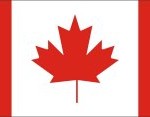
Canada Admits Nearly 40,000 Afghans, Willing to Take More
 Akmal Dawi
VOA News
October 25, 2023
Canada is on the brink of fulfilling its commitment to accept 40,000 Afghans before the end of this year.
The pledge, made by Ottawa in August 2021 when the Taliban seized power in Afghanistan, was driven by concerns for the safety of Afghans who had collaborated with Canadian programs and the former Afghan government.
In the past two years, Canada has successfully assisted the resettlement of at least 39,730 Afghans, as reported by Immigration, Refugees, and Citizenship Canada (IRCC).
More than half of these refugees have been admitted under a humanitarian program specifically tailored for human rights activists, journalists, religious and ethnic minority groups, and LGBTI individuals.
An additional 12,000 Afghans, who had worked for the Canadian government in Afghanistan before 2021, found safety in Canada through a special immigration visa program.
“Canada’s Afghan resettlement commitment is one of the largest on a per capita basis in the world and is second only to that of the United States in overall numbers,” Mary Rose Sabater, IRCC’s communication adviser, told VOA.
Among those resettled across Canada, at least 17,000 are women, many of whom are former government employees, lawmakers and civil society activists.
Afghan women have been disproportionately affected by the Taliban’s rule, which is often referred to as the world’s only gender-apartheid system, denying them fundamental rights such as education and employment.
Even after reaching the commitment of 40,000 Afghan refugees this year, Canada intends to maintain its flexibility in providing shelter to at-risk Afghans in the future.
“Afghans may also be eligible for regular immigration programs, including economic, family reunification and refugee resettlement programs … they may be referred for resettlement by the United Nations Refugee Agency and other organizations. Canadians can also continue to privately sponsor Afghan refugees,” Sabater said.
Canada’s government has earmarked approximately $615 million ($844.3 million Canadian) in resettlement services for the Afghan refugees including a 12-month income support program that pays for accommodation, food and health care.
Permanent residents
One distinctive aspect of Canada’s approach is the ease with which Afghans become permanent legal residents upon their arrival.
“Canada processes refugees overseas before admitting them to Canada,” said Sabater.
After residing in Canada for five years, of which three must be spent within the country, these permanent residents will be eligible to apply for Canadian citizenship.
In contrast, the United States is currently navigating legislative hurdles to approve the Afghan Adjustment Act, which is expected to establish legal pathways for long-term residence and naturalization of tens of thousands of Afghans who entered the U.S. under humanitarian parole in 2021.
While the act is mired in Congressional debates, the U.S. Department of Homeland Security recently extended the parole deadline until May 2025.
The U.S. military airlifted 124,000 individuals out of Kabul in August 2021 of which at least 77,000 were offered a temporary humanitarian parole in the United States.
“After reviewing the country conditions in Afghanistan and consulting with interagency partners, Secretary [Alejandro] Mayorkas determined that an 18-month TPS [temporary parole status] extension and redesignation is warranted because conditions, including armed conflict, that support Afghanistan’s TPS designation are ongoing,” the DHS said in a statement.
Taliban Tout Islamic Rule, Claim ‘General Amnesty’ Reunited Afghans

Zabihullah Mujahid
Ayaz Gul
VOA News
October 25, 2023
ISLAMABAD — The Taliban are pushing back against persistent global criticism of their Islamic governance in Afghanistan, claiming their supreme leader’s decrees, including a general amnesty, have promoted national reconciliation and put the war-torn country on the path to stability.
Zabihullah Mujahid, the chief Taliban spokesman, Wednesday posted a 40-minute promotional video documentary on social media, showcasing some of the decrees and touting their “good” outcomes more than two years into their male-only government, known as the Islamic Emirate.
However, the video did not discuss several other decrees issued by reclusive Taliban supreme leader, Hibatullah Akhundzada, that placed an indefinite ban on Afghan girls’ education beyond the sixth grade and barred most women from workplaces, including the United Nations and other aid groups.
“The general amnesty has reunited Afghans,” Mujahid wrote on X, formerly known as Twitter, with the video. He referred to the decree that reclusive Taliban chief Hibatullah Akhundzada first issued after the then-insurgent group reclaimed power from a U.S.-backed government in August 2021.
The amnesty covered all members and politicians associated with the ousted Afghan government and individuals who worked for the U.S.-led Western troops during their presence in Afghanistan for almost two decades.
While appearing in the documentary, Mujahid said that the amnesty decree was being enforced “effectively and seriously” nationwide by Taliban authorities, saying those found guilty of breaching it in “a few instances” were brought to justice and jailed.
Mujahid’s social media post came a day after a senior U.N. diplomat renewed allegations the Taliban’s “repressive policies and practices” were responsible for a deteriorating human rights situation in Afghanistan.
“There is a culture of impunity for torture and inhumane treatment in detention centers, as well as for human rights violations against former government officials and military personnel, despite promises made to the contrary,” Richard Bennett, the special rapporteur on the situation of Afghan human rights, told a U.N. meeting in New York on Tuesday.
Last August, a U.N. report accused Taliban fighters of committing more than 200 extrajudicial killings since taking power despite the general amnesty. It documented at least 800 alleged offenses, including arbitrary arrests and detention, ill-treatment, torture, and enforced disappearances of former Afghan officials and security personnel.
The Taliban at the time rejected the U.N. findings, declaring them unfounded and propaganda to malign their administration.
While speaking Tuesday, the U.S. representative told the U.N. meeting that the Taliban continue to issue edicts targeting women and girls, human rights defenders, women’s rights activists, journalists, former government officials, and other vulnerable Afghan groups, including religious minorities.
“Until the Taliban honors their word to respect the human rights of all Afghans, the international community must monitor the situation in Afghanistan with vigilance and hold the Taliban accountable,” said David Johnson, U.S. senior advisor for South and Central Asia.
Taliban officials have repeatedly rejected criticism of their policies, saying they are aligned with Afghan culture and Islamic law.
The Taliban documentary hailed Akhundzada’s decree on women’s rights, saying it prohibited forced marriages of women and ensured their right to inheritance, dowry, and fair treatment, among other rights, within Islamic law, or Sharia.
The video also highlighted “among others, the decree outlawing poppy cultivation in Afghanistan, which is known as the world’s largest producer of narcotics.
“Now we believe that we do not have even one percent of poppy cultivation in Afghanistan. God willing, in the coming days, we will have an Afghanistan free of drug cultivation and smuggling,” Mujahid said.
Recent media reports and satellite images backed by the U.N. and the U.S. have concluded that annual poppy cultivation “significantly” decreased in the country. However, critics remain skeptical about whether the gains are sustainable, noting that de facto Afghan authorities have not yet provided an alternative livelihood program for farmers affected by the ban in the impoverished nation.
The U.N. Office on Drugs and Crimes, in its report last month, revealed that Afghanistan had become the world’s fastest-growing producer of methamphetamine. It noted that the highly addictive stimulant is mainly made from legally available substances or extracted from the ephedra plant, which grows in the wild.
The Taliban documentary commentator echoed its government’s assertions that Akhundzada’s decrees “are based on the demands of a healthy and Islamic society and raised the hopes of Afghans for a better future.”
No foreign government has recognized the Taliban government over human rights concerns and their treatment of Afghan women.