
 Mike King: The millions of white Americans who were so quick to “Stand with France” and plaster a French flag over their Facebook profile, and the millions of Christian Conservatives that support an agenda that seeks to turn the U.S. into a reactionary theocratic state, need to be forced to recognize their own persistent failure to condemn the vigilante and state violence that systematically targets Black Americans and women for what it is – material support for terrorism. Click here to read more (external link).
New Wave of Emigration from Afghanistan

Unemployment and security concerns prompt tens of thousands of young people to leave the country.
By IWPR (Institute for War & Peace Reporting) Afghanistan
December 15, 2015
Two months ago, Abdulkhalil Jawid paid a human trafficker 40,000 afghanis (600 US dollars) to ensure his son got to Europe.
“When I heard that the Taleban had taken over Kunduz province and that Islamic State was killing young men on a daily basis, I decided to send my son Rashid abroad for his education so that he could have a better future,” said Jawid, a resident of Samangan province.
The smuggler said it would take two months to get Rashid to Norway, where he could start a new life. But Jawid has no idea what has happened to his son, and bitterly regrets his decision.
Tens of thousands of young Afghans are leaving the country because of a worsening security situation and rising rates of unemployment. According to the United Nations High Commissioner for Refugees (UNHCR), around 80,000 Afghans applied for asylum in Europe in the first half of 2015, a huge increase on previous years.
Participants in IWPR debates this month warned that the Afghan government must take urgent action to address this mass exodus.
Unemployment has risen since international forces withdrew from Afghanistan last year, and speakers at events in Ghor, Parwan, and Samangan provinces said the government had failed to create new jobs.
Many debate participants also warned that security problems, particularly the rise of groups pledging allegiance to the Islamic State in the east of the country, were fuelling migration.
The mass exodus also creates long-term risks for the economy and stability in Afghanistan.
“If the trend continues, it will have very bad consequences for our country,” said Abdul Hamid Natiqi, a provincial councillor in the central province of Ghor. “One of these is that Afghanistan’s reputation in the world and in the region will worsen. Another is anxiety among those who remain in the country, which will result in falling public support for the government.”
Ghor civil society leader Khudayar Waqif said that corruption and bad leadership had made the situation worse.
“Any country which lacks political stability and where people have no confidence in their future will have problems with migration,” he said.
Young people are not only seeking better lives in Europe. Tens of thousands travel illegally to other countries in the region to find work, taking terrible risks in the process.
Alidad Rezaie recently paid people-smugglers to get him across the border to Iran. He said he was abused by the traffickers and saw other migrants die at the hands of the Iranian security services.
“Four months ago, I was brought illegally into Iran. The smuggler put 12 of us into one car. If any of us said a word, they would beat us, and they didn’t give us water or food for several nights. I also saw with my own eyes how Iranian police fired at a passenger vehicle, killing some [migrants] and injuring others.”
Abdul Ghafur Shinch, acting head of the department of for refugees and repatriation in Samangan in the north of Afghanistan, said that about 500 young men from the province had travelled to Europe illegally over the past year.
“Human trafficking is a crime. but our department is unable to take steps to prevent it in this province, because we are a policy-making body,” he said.
Samangan activist Abdujalil Munis said that local civil society groups were trying to inform young people about the dangers of travelling abroad illegally.
“These public awareness campaigns explain that using people-smugglers means risking many problems, including being robbed or even dying,” he said.
Ghulam Mohammad, the secretary of Jabal Saraj district council in Parwan, a province northwest of Kabul, said that other countries were exploiting Afghan migrants.
“Foreign countries attract young people to boost their own economy because they hire them do more work for less money,” he said
Lida Ahmadi – head teacher at a girls’ high school in Jabal Saraj– said that multiple factors were contributing to the exodus.
“Increasing political instability, unemployment and bleak prospects for the future have caused young people to leave the motherland that nurtured them,” she said.
Ahmadi asked her fellow panellist, district government chief Samandar Sikandari, what the government was doing to stop the flood of young people leaving the country.
Sikandari said that efforts to create more jobs were under way.
“Families also have a responsibility to change attitudes,” he added. “Mothers and fathers should tell their sons that leaving the country is a bad choice and that we all have to defend our homeland.”
Agha Shirin Khalil, head of the department for refugees and repatriation in Parwan province, said that 150,000 Afghans had applied for asylum in 44 countries across the world in the course of 2015.
“If you think about it, they are mostly the young workforce that forms the foundations of this country. If young people leave, how will the country develop and who will develop it?” he asked.
This report is based on an ongoing series of debates conducted as part of IWPR’s Afghan Youth and Elections programme.
Afghanistan is a blessing and a curse for India and Pakistan
 Quartz: Indian foreign minister Sushma Swaraj’s arrival in Islamabad last week to deliberate on Afghanistan at the Heart of Asia Conference was both surreal and spectacular. After all, why would Pakistan want to discuss a taboo subject with India at a time when the two rivals are not on talking terms? Click here to read more (external link).
Afghanistan falls down in 2 spots in UN Human Development Index
 1TV: Afghanistan fell down by two positions in 2014 to 171th from 169th a year earlier, according to the 2015 World Human Development Report released by the United Nations. Click here to read more (external link).
Research: Female inmates face abuse in prisons
 Ariana News: Research indicates that female inmates face serious problems in prisons; in addition to sexual harassments, the female prisoners do not have access to the lawyers. Click here to read more (external link).
Interior Minister issues orders to arrest killers of Yousuf’s family
 Khaama Press
December 15, 2015
Minister of Interior has issued orders to arrest a group of gunmen who killed an entire family in eastern Nangarhar province.
Noor-ul-Haq Olomi has ordered the police HQs of Nangarhar and Paktia provinces as well the General Directorate of Counter-Terrorism of the Ministry of Interior to strictly investigate the case and detain those responsible.
Olomi has also urged residents of Behsood District as well as the local government organizations to assist security forces in investigation.
The tragedy took place in Mirza Qala area of Behsood District 2-4 nights before.
Some reports suggest that the family was killed about four nights before but the dead bodies were still bleeding when residents and policemen saw them on Sunday night.
Ataullah Khogyani, spokesman for the governor of Nangarhar province says three guests had visited Yousuf’s house.
According to Khogyani, after the eight-member family fall asleep, guests opened fire at them and killed everybody including a two-month child.
Killers then locked the door from outside and fled the area, Khogyani said, adding that “when neighbors got to know about the incident they informed police about it.”
Other people killed in the incident were Yousuf’s mother, wife, son and four daughters.
Yousuf who was originally from Paktia province had been living in Nangarhar from the past four years.
There is no claim of responsibility for the massacre but Yousuf had worked at Nangarhar Airport which is the main military base of foreign forces in eastern part of the country.
Ambassador Abdali’s brother killed in Kandahar
Abdali
Khaama Press
December 15, 2015
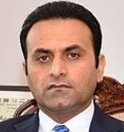
Unidentified gunmen have killed the brother of Afghanistan’s Ambassador to India Shaida Mohammad Abdali in southern Kandahar province.
Abdali’s brother Haji Sardar Mohammad was offering prayers in mosque, located in the third sector of Kandahar city, when unidentified gunmen opened fire on him on Monday.
Samim Khpalwak, spokesman for the governor of Kandahar province confirmed the incident.
He said gunmen fled the area following the murder but security forces are looking for them.
Former President Hamid Karzai has strongly condemned the attack on Haji Sardar Moammad who was also a community elder in Kandahar.
Karzai says the attack was carried out the by enemies of the people of Afghanistan.
Karzai has expressed condolences to the family of the deceased.
No group has claimed responsibility for the attack.
Residents Say Kunduz City Still ‘Insecure’
 Tolo News: Almost three months after the collapse of Kunduz city to the Taliban, and the subsequent clearing operation, residents say insurgents are still active in some parts of the city. This ongoing conflict and insecurity has residents worried. So much so, many have chosen not to rebuild their damaged homes. Click here to read more (external link).
Pakistan’s Waziristan Offensive Seen as Building Trust with Kabul
 VOA News
Ayaz Gul
December 15, 2015
ISLAMABAD—Ahead of a new round of Afghan peace talks, Pakistan is reporting progress in pacifying the Taliban strongholds that have been at the center of long-running tensions with Kabul.
Pakistan army spokesman, Lt. General Asim Bajwa, said that its Zarb-e-Azb anti-terrorism operation launched 18 months ago has helped secure the volatile semi-autonomous North Waziristan border region and eased concerns of neighboring Afghanistan.
Bajwa said that some 3,400 militants have killed in fighting, while the Pakistan army also has lost nearly 500 security personnel in the ongoing ground and air offensive.
Wazirstan district cleared
He told VOA that except for “a couple of pockets” the entire Waziristan district has been cleared of insurgents. He said the troops have only recently established control over the strategically located Shawal valley, protected by thick forests and treacherous mountains, where Afghan Taliban and other foreign militants have had their strongholds.
“We just completed clearing Shawal valley also. We are sitting on the mountaintops overlooking Shawal already. But there a couple of pockets just northwest of Shawal and we are right now busy there,” said Bajwa.
The army’s claims of progress are difficult to verify because journalists have long been barred from the area. But the North Waziristan tribal region for years has been considered a hub of Taliban insurgents and al Qaida linked militants who have been targeted by U.S. drone strikes.
Infiltration into Afghanistan
Afghan authorities allege that a large number of local and foreign militants fleeing the Pakistani onslaught have crossed into Afghanistan and joined hands with the Taliban and other extremist groups to intensify insurgent violence on their side of the border.
Some skeptics say that the Pakistan military waited too long before launching the Waziristan offensive, allowing militants to flee their hideouts.
Speaking at a regional conference in Islamabad last week, Afghan President Ashraf Ghani described the infiltration into Afghanistan as an “unintended consequence” of the army operation.
Bajwa acknowledged there are some militants who fled across the Afghan frontier but he blames the porous border dividing Pakistan and Afghanistan.
“It is a very long border, around 2,600 kilometers and it is humanly impossible to block the entire border. I think there is a lot of deliberation which gone in and we have prepared a border management Standing Operating Procedures and we have shared the document with Afghanistan. I think once it comes into force there will be a lot of improvement on ground, and with better management, better coordination things will improve considerably,” stated Bajwa.
Pakistan’s offensive
General Bajwa said Pakistan’s successes in the so-called Zarb-e-Azb offensive paved the ground for resuming bilateral contacts between Islamabad and Kabul.
When President Ghani visited Islamabad last week, he held extensive discussions with Pakistani, American and Chinese representatives on efforts to end violence and resume the stalled Afghan peace dialogue.
Senior Pakistani officials requesting anonymity told VOA discussions involving all stakeholders are currently underway to finalize a date and venue for the new round of peace talks between the Afghan government and the Taliban.
They said Pakistani military Chief General Raheel Sharif is due to visit Kabul in the coming days to firm up those details. That trip, officials said, will also mark the formal resumption of military-to-military and intelligence contacts between Pakistan and Afghanistan.
Afghanistan to issue multiple entry visas for traders of Khyber Pakhtunkhwa
 Khaama Press
December 15, 2015
Afghanistan will start issuing multiple entry visas for traders of Pakistan’s Khyber Pakhtunkhwa province to improve business between the two countries.
According to Pakistan’s Dawn news, Afghan Consul General in Peshawar Syed Mohammad Ibrahimkhel told the office-bearers of Khyber Pakhtunkhwa Chamber of Commerce and Industry here on Monday that the decision to issue multiple entry visas to traders was taken following a letter to Afghan authorities by the chamber.
The media report further states that Ibrahimkhil has urged the government of Pakistan to remove illegal check posts on Peshawar-Torkham Highway because they create barricades in front of the improvement of trade between the two countries.
Afghanistan gives more facilities to Pakistani businessmen as Afghan traders still face severe difficulties in importing their commercial goods through Pakistan.
Afghanistan Chamber of Commerce and Industries (ACCI) says Pakistan is not abiding by the Afghanistan-Pakistan Trade and Transit Agreement (APTTA).
Pakistani authorities do not allow commercial goods of Afghan traders transit on time and then charge them for the additional period.