
1TV: More than 150,000 Afghans are believed to have left their country this year in search of better life in Europe that is facing unprecedented refugee crisis. According to estimates by Afghanistan’s Refugees and Repatriations Ministry, on an average each asylum seekers had to spend $6,000 to $20,000 for their journey to Europe. Click here to read more (external link).

‘We want to win this championship for our people back home’: Shayesteh
Khaama Press: “We want to win this championship for our people back home. Many of them are not as privileged and it would be great if we can give them some happiness with our win here,” Afghanistan’s national football team’s captain, Faysal Shayesteh, told The Hindu newspaper during an interview. Click here to read more (external link).
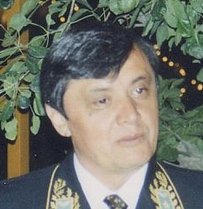
Taliban leadership worried of losing fighters and income to ISIS: Russian envoy
Khaama Press: “The rapid growth of this group [IS] that appeared in Afghanistan in summer of 2014, its intention to ‘swallow’ other extremist groups, draw militants of all kinds into its ranks, in particular Taliban fighters themselves, redistribute sources of income, including such lucrative sources as drug trafficking – all these factors are very worrying for the Taliban leadership,” Russian special presidential envoy on Afghanistan, Foreign Ministry’s second Asian department director Zamir Kabulov was quoted in a report by TASS news agency. Click here to read more (external link ).
Afghanistan, Pakistan Set Up Hotline Between Military Commanders
Radio Free Europe/Radio Liberty
December 30, 2015
The Pakistani military says Pakistan and Afghanistan have established a direct line between their respective military commanders and made first contact on December 30.
“Hot line established between DGMOs (Director Generals of military operations) of both countries. First contact/call just made,” Pakistan Army spokesman Asim Bajwa announced via Twitter.
Bajwa said the hotline was agreed during a recent visit to Kabul by Pakistan’s powerful army chief General Raheel Sharif.
Pakistani media previously reported that the two countries had decided in 2011 to set up a military “hotline” in an effort to ease tensions triggered by cross-border raids and mortar shelling incidents but it hadn’t materialized.
The army chief’s visit followed talks between Afghan President Ashraf Ghani and Pakistani Prime Minister Nawaz Sharif over recent weeks that sought to renew peace negotiations between Kabul and the Taliban.
Pakistan hosted the first round of talks in July but the process was stalled when the Taliban belatedly confirmed the death of longtime leader Mullah Omar.
Based on tweets by @AsimBajwal and reporting by AFP
Copyright (c) 2015. RFE/RL, Inc. Reprinted with the permission of Radio Free Europe/Radio Liberty, 1201 Connecticut Ave NW, Ste 400, Washington DC 20036.
4 Nation ‘Steering Committee’ to Discuss Afghan Peace Process
VOA News / December 30, 2015
ISLAMABAD — Pakistan says it will host next month’s inaugural meeting of a recently set up four-nation “steering committee” to discuss when, how and where direct peace talks between the Afghan government and the Taliban could possibly be resumed.
The quadrilateral committee, which consists of officials from Afghanistan, Pakistan, China and the United States, “is being convened sometimes between January 10 and 15 in Islamabad and not Kabul,” Sartaj Aziz, foreign policy adviser to the Pakistani Prime Minister, told reporters Wednesday.
He said the meeting will discuss ways to resume and sustain Afghan reconciliation talks, adding all stakeholders will have “a shared responsibility” to carry the peace process forward.
The announcement comes a day after reports quoted unnamed Afghan presidential officials as saying the committee would meet in Kabul in the first week of January.
Mullah Omar news scuttles talks
A preliminary round of Afghan reconciliation talks was held in early July in Pakistan. But the process was halted after revelations that longtime Taliban leader Mullah Omar had been dead for more than two years.
The disclosure prompted the Islamist insurgency to pull out of the talks until it resolved the leadership crisis while Afghan leaders felt betrayed and accused Pakistan of hiding the news of Omar’s death.
Islamabad accused elements within the Afghan government for leaking the news only to disrupt the peace process.
The allegations and counter allegations suspended months of improvement in bilateral ties until December when U.S. and Chinese diplomatic interventions convinced President Ashraf Ghani to visit Islamabad for the Heart of Asia regional conference, leading to the revival of bilateral ties.
Separately, top Pakistani and Afghan military commanders on Wednesday spoke for the first time through a newly established direct communication link between them called “hotline”.
Afghanistan, Pakistan relations
Pakistan army spokesman Lt. General Asim Bajwa said director generals of the two countries discussed “military-to-military issues, modalities and dates” for future bilateral meetings between senior military commanders.
Pakistan’s military chief, General Raheel Sharif, traveled to Kabul on Sunday, where he discussed in detail the Afghan peace plans with both President Ghani and Chief Executive Abdullah Abdullah.
Friction-free relations between Islamabad and Kabul are considered key to international-backed peace efforts in Afghanistan.
The Taliban, which has expanded its insurgent activities to unprecedented levels in Afghanistan this year since it was dislodged from power in 2001, has so far refused to say whether it intends to return to the negotiating table.
The insurgent group wants the withdrawal of all NATO-led forces in the country before taking part in the peace dialogue.
But the Taliban has faced challenges to its unity since the death of Omar was made public in July and has splintered into rival factions.
Many senior Taliban commanders have rejected the authority of Omar’s successor, Mullah Akhtar Mansour, though the insurgent group has downplayed the rift as routine disagreements.
Bagram Outcry Obscures Root Causes of US Troubles in Afghanistan
Michael Hughes: Critics of the war in Afghanistan consider the terrorist attack that killed six Americans near Bagram airbase as yet another indication that it is time for the U.S. to withdraw military personnel from the country post-haste, while proponents of a long-term U.S. military presence perceive it as a reason why the United States cannot leave. How does one explain such diametrically opposed interpretations of the exact same event? The problem is both sides are missing the big picture. Click here to read more.
Driving School For Women Launched In Jawzjan
Tolo News: The Women’s Council of the National Islamic Movement in Afghanistan has launched a driving school for women in Jawzjan – the first in the province. Click here to read more (external link).

Pakistani flour losing market in Afghanistan
Khaama Press: Pakistan’s Ministry of Commerce has decided to send a high level delegation comprising officials and businessmen to Afghanistan to address issues that are responsible for Pakistan losing its traditional flour export market in Afghanistan. Click here to read more (external link).
Afghan army defuses 17 improvised bombs in southern provinces
KABUL, Dec. 30 (Xinhua) — Afghan army has found and defused 17 Improvised Explosive Devices (IEDs) in two southern provinces, the country’s Defense Ministry said on Wednesday.
“The Afghan National Army’s 205 Attal Corps personnel launched several cleanup operations in southern Kandahar and neighboring Uruzgan provinces, recovering 17 rounds of landmines and IEDs over the past 24 hours,” the ministry said in a statement.
The Taliban militant group has been using homemade IEDs to target security forces, but the lethal weapons also inflict casualties on civilians, according to military officials.
Afghan security forces have assumed the full security charges from NATO and U.S. forces after the NATO-led troops completed their combat mission in Afghanistan by the end of 2014, after 13 years of military presence in the country.
As U.S. Focuses on ISIS and the Taliban, Al Qaeda Re-emerges
The New York Times: Al Qaeda training camps are sprouting up in Afghanistan, forcing the Pentagon and American intelligence agencies to assess whether they could again become a breeding ground for attacks on the United States. Click here to read more (external link).