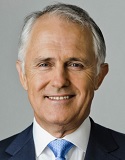
Tolo News: The Attorney General’s Office (AGO) threatened on Monday to disclose the names of Kabul Bank defaulters who have failed to repay their loans and refuse to appear in court. Spokesman for the AGO Abdul Basir Azizi said that more than 60 percent of Kabul Banks debts have however been recovered. Click here to read more (external link).
Progress Reported in Four-way Afghan Peace Talks
VOA News / January 18, 2016
ISLAMABAD – Afghanistan on Monday hosted a meeting of delegates from the United States, China and Pakistan on how to initiate direct peace talks between Afghan government and Taliban representatives.
A joint statement issued after the meeting in Kabul of the so-called Quadrilateral Coordination Group (QCG) said, “The group discussed and made progress on a roadmap towards initiating peace talks with Taliban groups that reflects the shared commitments of the QCG member countries.”
The roadmap, it added, aims to set specific measures that are necessary for creating a conducive environment for the commencement of Afghan-led, Afghan-owned peace talks to reduce and ultimately end “the senseless violence” and establish lasting peace in Afghanistan.
The four-nation contact group has agreed to hold its next meeting in Islamabad on February 6.
Monday’s was the second meeting of the QCG – formed to help bring an end to the war in Afghanistan after Islamabad hosted initial discussions last week.
“…the QCG called on all Taliban groups to enter into early talks with the Afghan government to resolve all differences politically in accordance with the will and aspirations of the entire Afghan nation and the desire and support of the QCG member countries for lasting peace in Afghanistan,” according to the joint statement
The statement went on to assert that participants indicated their commitment to “a robust effort” to eliminate all forms of terrorist groups, regardless of their national origin, operating in their respective territories.
Member countries agreed that friendly, mutually respectful and cooperative relations among the member states of QCG are necessary to create an enabling environment for the peace process in Afghanistan.
Earlier in his inaugural remarks to the meeting, Afghan Foreign Minister Salahuddin Rabbani emphasized the need for “red lines” for an effective road map to peace in Afghanistan.
Hinting at the need for reduction in violence in Afghanistan by the Taliban groups, Rabbani reiterated that the Afghan public would not support an “open-ended process without tangible results.”
‘Call for peace’
Rabbani also called on all Taliban groups to “accept our call for peace through dialogue.” So far none of the Taliban groups has indicated a willingness to engage in the process.
An earlier round of peace talks with the Taliban in July stalled after indicationst that its leader, Mullah Omar, had died. Their new leader, Mullah Akhtar Mansoor, faced internal challenges to his authority, leading to an increase in violence in Afghanistan.
The Afghan government expects Pakistan to use its influence with Taliban groups, whose leaders are reportedly in Pakistan, to bring the level of violence down, and to use force against groups that refuse to come to the table for negotiations.
Pakistan says its influence with the Taliban is “limited” and the use of force would be counterproductive until all other measures have been exhausted.
“Threat of the use of military action against irreconcilables [those unwilling to talk] cannot precede the offer of talks to all the groups and their response to such offers,” said Sartaj Aziz, adviser to Pakistan’s prime minister on foreign affairs, in his opening statement to the first QCG meeting.
Trust deficit
The presence of the United States and China in the process is supposed to help with the trust deficit between Afghanistan and Pakistan.
The Taliban, however, controls more territory today in Afghanistan than it did anytime after it was ousted from power in 2001.
This makes it more difficult to persuade the Taliban to enter peace negotiations with an Afghan government that seems to be on the defensive.
Messages left by Taliban leaders on their websites or social media accounts had called last week’s QCG meeting “useless.”
On the eve of the latest round of discussions, the Taliban accused the U.S. of derailing peace efforts by re-engaging combat troops in Helmand.
Taliban demands
The Taliban also insisted that nothing less than the withdrawal of all foreign forces and implementation of Sharia, or Islamic law, will be acceptable to it.
The Taliban also has recently started calling President Ashraf Ghani’s government a “stooge” of the U.S.
This is a return to the Taliban’s position during the time of former Afghan president Hamid Karzai and can be termed a hardening of its stance against the current government.
Afghan Parliamentary Polls Set for October 15
VOA News / January 18, 2016
ISLAMABAD – Afghanistan’s top election official says postponed parliamentary polls will be held in October, promising mistakes of the bitterly disputed 2014 presidential vote would not be repeated.
Independent Election Commission Chairman Ahmad Yousuf Nuristani announced Monday in Kabul the panel has made “all technical” preparations to ensure “fully transparent” parliamentary and district council elections on October 15.
The Afghan parliament’s five-year term expired last June, but security fears and political squabbling on election reforms to ensure a fair vote prevented the IEC from holding elections to choose a new legislative assembly.
The crisis prompted President Ashraf Ghani to extend the parliament’s mandate, through decree, until a vote could be held. The move drew severe criticism, with many Afghans questioning its legality.
Nuristani said the IEC needed $67 million to cover expenses and ensure the timely holding of the elections, urging the government to make the necessary budget available and provide security for candidates, election staff and ballot boxes.
The 2014 presidential vote was marred by widespread accusations of fraud, in which both Ghani and his election rival Abdullah Abdullah claimed victory.
U.S. intervention ended months of deadlock and negotiated a deal under which the election rivals agreed to form the so-called national unity government, with Abdullah becoming the chief executive officer, a post created under the deal.
Ghani and Abdullah also agreed on electoral reforms as a condition for future elections, but both have made little if no progress, with persisting differences over the appointment of the head of the reform commission.
The political wrangling also forced international donors to cut funding for Afghanistan to undertake electoral reforms.
Addressing Cabinet members in Kabul shortly after the IEC announcement, Abdullah reiterated his demand for holding the future elections under a new election commission.
Electoral reform is an important issue, he said, but “Afghans remain concerned about the flawed management of the previous elections.”
Without the new parliament and district councils in place, the unity government will not be able to convene a constitutional grand assembly or loya jirga, which alone is authorized to amend the constitution and give legal cover to the office of the Afghan chief executive and its actions.
UK Labour Party leader invites Trump to visit London mosque
Press TV / January 18, 2016
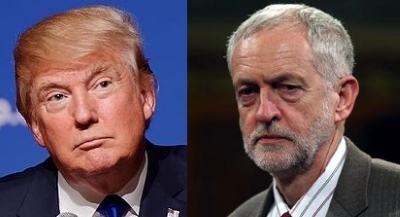
UK Labour Party Leader Jeremy Corbyn has invited US presidential candidate Donald Trump to visit a mosque in London, saying he “might learn something.”
“I decided to invite Donald Trump on his visit to Britain to come with me to my constituency because he has problems with Mexicans and he has problems with Muslims,” Corbyn said on Sunday.
Corbyn made the comments ahead of a British parliamentary debate on whether the Republican candidate should be excluded entry to the country.
He added that it would be better to engage with Trump than bar him entry to the UK.
“As you know, my wife is Mexican and my constituency is very, very multicultural, so what I was going to do was go down to the mosque with him and let him talk to people there,” he noted.
Trump drew widespread condemnation after calling for “total and complete shutdown of Muslims entering the United States until our country’s representatives can figure out what is going on.”
Following the comments, he also claimed that there are “places in London and other places that are so radicalized that police are afraid for their own lives.”
“I think he should come here and he should have lessons in going to all our cities,” said Corbyn.
The decision to debate barring Trump from the UK was made after well over half a million people signed a petition calling for his exclusion.
Apart from Muslims, Trump is also unpopular among US Latinos and African Americans over racist remarks.
Australian PM Announces More Troops For Afghanistan
Radio Free Europe/Radio Liberty
January 17, 2016
During a surprise visit to the Afghan capital, Kabul, Australian Prime Minister Malcolm Turnbull has announced his country will increase its troop commitment to Afghanistan.
Turnbull said on January 18 that his country will add 20 troops to its security mission in Afghanistan, bringing its total presence to 270. The move comes just days after Turnbull rejected a request from U.S. President Barack Obama to commit more Australian troops to the fights against the Islamic State terrorist group in Syria and Iraq.
Turnbull is scheduled to travel on to Washington for talks on January 18 and 19 on security issues in the Middle East and the Asia-Pacific region.
Australia has lost 41 soldiers during its 12-year participation in security operations in Afghanistan.
Based on reporting by AP and AFP
Copyright (c) 2016. RFE/RL, Inc. Reprinted with the permission of Radio Free Europe/Radio Liberty, 1201 Connecticut Ave NW, Ste 400, Washington DC 20036.
Rocket attack rocks Kabul, injuring two
KABUL, Jan. 17 (Xinhua) — At least two people were injured after militants fired two rockets towards Afghan capital of Kabul on Sunday night, sources said.
The rockets struck near Italian Embassy, injuring two security guards, a security source told Xinhua anonymously.
The rockets landed in Shashdarak, a locality which also homes to several diplomatic offices and several residential apartment buildings, he said.
The attack occurred at around 09:40 p.m. local time also caused fire on the building as several fire engines and ambulances were seen there.
Unofficial sources said the stricken building belongs to Italian Embassy.
No group has claimed responsibility yet for the attack, but the Taliban insurgent group routinely claims responsibility for such attacks.
It came as a four-nation meeting on peace in Afghanistan is scheduled to be held in Kabul on Monday.
The first meeting of Quadrilateral Coordination Group (QCG) of Afghanistan, China, Pakistan and the United States on peace and reconciliation process was held in Pakistani capital of Islamabad on Jan. 11.
Video footage from Tolo News
Afghan Peace Talks to Resume
VOA News
Ayaz Gul
January 17, 2016
ISLAMABAD, PAKISTAN—Delegates from Afghanistan, Pakistan, China and the United States are due to meet Monday in Kabul to further a four-way dialogue aimed at urgently seeking a negotiated end to the Afghan war. The Taliban insurgency has not yet indicated whether it intends to join the renewed peace efforts.
The four-way contact group of senior Afghan, Pakistani, Chinese and U.S. diplomats held its initial meeting last week in Pakistan where delegates underscored the need for the immediate resumption of direct talks between Afghan government and Taliban officials.
Afghan Foreign Ministry spokesman, Ahmad Shakeb Mustaghani, said his government would present a plan for initiating talks at Monday’s meeting.
“This road map,” he said, “identifies a clear direction for starting and progress in the peace talks.”
Pakistan’s role is considered important in bringing the Taliban to the negotiating table because its insurgent leaders are allegedly using the country for directing violence in Afghanistan.
Pakistani officials acknowledged having “limited” influence with the Taliban, but they did not support putting pressure on the group to push it to the table, insisting such a move would be detrimental to the peace efforts.
Role of Pakistan
Pakistan’s foreign policy chief, Sartaj Aziz, said the role of his country must be limited to facilitating the process.
“The process has to be Afghan-led and Afghan-owned as an externally imposed settlement is neither desirable nor it would be sustainable,” he said.
Pakistani authorities insisted they have abandoned past policies of siding with the Taliban or other insurgent groups to use them as their proxies.
The government, particularly the military, has come under public pressure to facilitate the Afghan reconciliation process.
The leader of the opposition party ruling in a Pakistani province bordering Afghanistan, Imran Khan, urged the government to do everything possible to help bring peace.
“We would not want [the] Taliban takeover [in Pakistan].If they think that their ideology is good then they should contest elections and win the elections.You cannot impose your ideology through the barrel of a gun,” he said.
Islamabad Institute for Strategic Studies head Masood Khan said Pakistan and Afghanistan needed to put past differences aside.
“It is time to prove the naysayers wrong who claim that the Taliban insurgency will not die down and that the prospects of peace are dim and that Pakistan and Afghanistan are bound to be at odds.Let us continue to make positive affirmations and deliver on them.Our instruments to achieve these goals are resolute diplomacy and statesmanship,” he said.
Chinese, US participation
Outgoing Afghan ambassador to Pakistan, Janan Mosazai, said participation by China and the United States gives assurance to a highly skeptical Afghan nation about the peace process.
“Success will, more than anything else, require continued sincerity, both in words and in actions, to make sure our work remains specific, measurable and time bound and that we do not lose this critical new window of opportunity yet again.The continuation of this recent surge in violence will make sustaining the bilateral Afghanistan-Pakistan rapprochement increasingly difficult to the Afghan people,” said Mosazai.
Pakistani and U.S. officials acknowledged the success in the Afghan peace process would depend on whether the Taliban agrees to rejoin talks with Kabul.
The Islamist insurgency through social media and and pro-Taliban websites has criticized the four-way talks.
‘Air pollution more dangerous than bomb explosions’
Pajhwok: The citizens of Kabul are concerned about growing air pollution in the capital city and doctors have warned if the air pollution is not dealt with in a timely manner, people could be infected with different diseases including cancer. Click here to read more (external link).
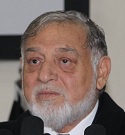
Pakistan: Extend Afghan Refugee Status Through 2017
Human Rights Watch: The Pakistani government should reduce rights violations against Afghan refugees by extending their legal residency status until at least December 31, 2017, Human Rights Watch said today. As Human Rights Watch has documented, the uncertain residency status of Afghan refugees in Pakistan has encouraged police harassment, threats, and extortion of Afghan refugees, particularly since the December 2014 attack on a Peshawar school by the Pakistani Taliban. Click here to read more (external link).
Pakistan detains four Afghans on suspicion of spying
1TV: They were identified as Amanullah, Aziz, Abdul Ghaffar and Hakmimullah who were suspected of being Afghan intelligence officials and who all hailed from Ghazni province. Click here to read more (external link).