logo

Daily Updated Afghan News Service

  • Home
  • About
  • Opinion
  • Links to More News
  • Good Afghan News
  • Poll Results
  • Learn about Islam
  • Learn Dari (Afghan Persian/Farsi)

Recent Posts

  • Ariana Airlines to launch direct flights between Mazar-e-Sharif and Jeddah November 17, 2026
  • Nearly 2 Million People in Afghanistan Living With Diabetes, 71% Unaware November 17, 2026
  • Zimbabwe beat Afghanistan by 57 runs in second Test November 17, 2026
  • Australia’s transparency watchdog orders new search for Afghanistan killing documents November 17, 2026
  • ICC Must Reconsider Closure Of Afghanistan War Crimes Case, Say Afghan Rights Groups November 16, 2026
  • Tolo News in Dari – November 16, 2026 November 16, 2026
  • Nangarhar: Poverty and Unemployment Drive Women and Children to Beg November 16, 2026
  • Taliban Bans Cricket Coverage On Radio Stations In Kandahar November 16, 2026
  • Barred By The Taliban, Afghan Girls And Women Now Shut Out Of School In Iran And Pakistan Too November 15, 2026
  • Tolo News in Dari – November 15, 2026 November 15, 2026

Categories

  • Afghan Children
  • Afghan Sports News
  • Afghan Women
  • Afghanistan Freedom Front
  • Afghanistan United Front
  • Al-Qaeda
  • Anti-Government Militants
  • Anti-Taliban Resistance
  • AOP Reports
  • Arab-Afghan Relations
  • Art and Culture
  • Australia-Afghanistan Relations
  • Book Review
  • Britain-Afghanistan Relations
  • Canada-Afghanistan Relations
  • Censorship
  • Central Asia
  • China-Afghanistan Relations
  • Civilian Injuries and Deaths
  • Corruption
  • Crime and Punishment
  • Drone warfare
  • Drugs
  • Economic News
  • Education
  • Elections News
  • Entertainment News
  • Environmental News
  • Ethnic Issues
  • EU-Afghanistan Relations
  • Everyday Life
  • France-Afghanistan Relations
  • Germany-Afghanistan Relations
  • Haqqani Network
  • Health News
  • Heroism
  • History
  • Human Rights
  • India-Afghanistan Relations
  • Interviews
  • Iran-Afghanistan Relations
  • ISIS/DAESH
  • Islamophobia News
  • Japan-Afghanistan Relations
  • Landmines
  • Media
  • Misc.
  • Muslims and Islam
  • NATO-Afghanistan
  • News in Dari (Persian/Farsi)
  • NRF – National Resistance Front
  • Opinion/Editorial
  • Other News
  • Pakistan-Afghanistan Relations
  • Peace Talks
  • Photos
  • Political News
  • Reconstruction and Development
  • Refugees and Migrants
  • Russia-Afghanistan Relations
  • Science and Technology
  • Security
  • Society
  • Tajikistan-Afghanistan Relations
  • Taliban
  • Traffic accidents
  • Travel
  • Turkey-Afghanistan Relations
  • UN-Afghanistan Relations
  • Uncategorized
  • US-Afghanistan Relations
  • Uzbekistan-Afghanistan Relations

Archives

Dari/Pashto Services

  • Bakhtar News Agency
  • BBC Pashto
  • BBC Persian
  • DW Dari
  • DW Pashto
  • VOA Dari
  • VOA Pashto

‘System of Greed, Control’ Drives US’ Relentless Occupation of Afghanistan

15th August, 2018 · admin
US Marine (file photo)

US Marine (file photo)

Sputnik | August 15, 2018:  Despite the US’ claims that they’re staying in Afghanistan to improve the country, Kathy Kelly, the co-coordinator for Voices for Creative Nonviolence, tells Sputnik that it’s really more about Washington trying to send a message to other countries in the region.

The US-led coalition in Afghanistan finished its combat mission in December 2014, marking the formal end of the longest war in American history. Since then, US troops have remained in the country acting in a supervisory role, training Afghan soldiers and offering their military assistance whenever requested.

But the people of Afghanistan aren’t the ones benefiting from the US acting as the world police, Kelly told Sputnik Radio’s By Any Means Necessary on Tuesday.

​”The beneficiaries are the people selling the weapons,” she told hosts Eugene Puryear and Sean Blackmon. “They are still running to the banks with their portfolios stuffed so they can sell warplanes and drone surveillance and all manner of bombs.”

“It certainly hasn’t in any way created a safer place for people to live in Afghanistan,” Kelly stressed.

Since early Friday, Taliban militants and Afghan security forces have been stuck in a deadly battle in the country’s Ghazni province. At least 90 soldiers and some 200 militants have been killed, according to Afghanistan’s Ministry of Defense. Offering their aid in the matter, the US carried out multiple airstrikes and dispatched military advisers to assist Afghan officials.

Citing the NGO Transparency International, Kelly told Puryear that projects established by the US to help Afghan residents fleeing from Taliban-occupied areas aren’t actually helping said locals.

“It’s a curious situation, because four times a year a report is filed… and they have listed through plenty of documentation… the corruption and mismanagement of the United States’ presence in Afghanistan… where money has gone into projects that have lined the pockets of contractors and not even produced what they were meant to,” she said.

Although locals are also enduring one of the worst droughts in recent years, Washington has focused its millions of dollars in funding on its approximately 18,000-strong troop presence and on airstrikes. “The United States every day is spending millions of dollars to maintain its troop presence, its special operation forces and constant bombing. And you’ve got people who are increasingly facing the terror of death by starvation or thirst.”

According to Toby Lanzer, the United Nations’ humanitarian coordinator in Afghanistan, the war-torn country could “face a calamity” if the international officials don’t step in and offer drought aid, Al Jazeera reported. The last major drought ended after the region was hit with major snowfall.

At the end of the day, Kelly said that “the United States’ desire to remain in the country has nothing to do with humanitarian concern to protect people from the Taliban.”

“It’s a maintenance of a system of greed and control and a desire to send other signals to other countries in the region that the United States isn’t going to go away,” she said.

Related

  • Afghan government and military are more corrupt and incompetent than ever…
Posted in Corruption, Security, US-Afghanistan Relations | Tags: Ashraf Ghani Government |

The Taliban’s weaponization of moral authority in Afghanistan

15th August, 2018 · admin
Taliban fighters (file photo)

Taliban fighters (file photo)

SWJ: Taliban have successfully subjugated villages and regions to their narco-Salafi credendum…We must now come to terms with the fact that both US/NATO forces and traditional Afghan warrior codes (local moral authorities) have been defeated by a Taliban who now promiscuously commingle Salafism and gangsterism (drug-guns-human smuggling, extortion, kidnapping, etc..). Their success is the result of their ability to undermine and largely replace traditional moral authority throughout a country that have deliberately returned to the shatterzone. Click here to read more (external link).

Posted in Society, Taliban |

Ayrana Sayeed: ‘I Am Very Aware of the Danger’

15th August, 2018 · admin
Aryana Sayeed

Aryana Sayeed

Spiegel: Aryana Sayeed, 33, is the only internationally known pop act in Afghanistan. She is adored by youth — and hunted by the Taliban. / Sayeed: “The extremists play with the sexual frustration of young men. On the streets of Afghanistan, 99 percent of the passersby are men. When a woman in burka walks down the street, men stare at her bare hands and feet because the only women they usually deal with are their mothers and sisters. The young people are so hungry, so thirsty to catch even a glimpse of a woman.” Click here to read more (external link).

Posted in Afghan Women, Entertainment News, Interviews, Society | Tags: Aryana Sayeed |

Journalism as jihad in Afghanistan

15th August, 2018 · admin
A mujahid with a videocamera. Photo: Manzoor Shah, 1988. Courtesy of the Afghan Media Resource Center.

A mujahid with a videocamera. Photo: Manzoor Shah, 1988. Courtesy of the Afghan Media Resource Center.

CJR: In 1985… [US] Congress approved a $500,000 grant for the United States Information Agency, a department devoted to “public diplomacy,” to establish a journalism school for Afghan rebels. According to Alvin Snyder, who worked for the agency at the time, arming guerrillas with minicams was a simple, cost-effective way to deliver press attention. “Imagine the pictures they will be able to get!” he wrote in a memo, excerpted in his memoir… Click here to read more (external link).

Posted in History, Media, US-Afghanistan Relations |

Whatever happened to Al Qaeda in Afghanistan?

15th August, 2018 · admin
Al Qaeda leader, Ayman al-Zawahri

Al Qaeda leader, Ayman al-Zawahri

Politico: While most senior Al Qaeda personnel “are trying to hide,” Gen. John Nicholson, the outgoing top commander in Kabul, said last year, the subgroup members are “more active” but are focused on training Taliban members who are fighting the Afghan government… The military insists it has never taken its eye off the Al Qaeda ball in Afghanistan, despite the scarcity of announced strikes against the group and the nearly two years that have passed since it announced the death of a well-known senior operative involved in external plotting. Click here to read more (external link).

Posted in Al-Qaeda, Security, US-Afghanistan Relations |

Afghanistan’s Taliban Withdraws Security Guarantee For ICRC Staff

15th August, 2018 · admin

red_crescentRadio Free Europe/Radio Liberty
August 15, 2018

The Taliban says it has withdrawn from a security agreement with the International Committee of the Red Crescent (ICRC) that guarantees safety for the international organization’s workers across Afghanistan.

In a statement on August 15, the Taliban accused the ICRC of failing to meet its obligations to help Taliban prisoners who are on hunger strike in Kabul’s main prison.

ICRC spokeswoman Andrea Catta Preta said the group was in contact with the militants and was hoping to find a solution so its humanitarian work in the country could continue.

Taliban militants held at Kabul’s Pole-e Charkhi prison, the largest prison in Afghanistan, have been on hunger strike to demand better prison conditions.

In its statement, the Taliban claimed many have fallen into comas, and that the ICRC did not provide them with any medical or legal support.

The militant group said it would restore the security agreement only after the ICRC takes steps “to correct their actions.”

The ICRC has been active in Afghanistan since 1980.

The organization currently has about 1,600 staffers in the country who monitor detention conditions and provide medical aid to communities in need.

The ICRC scaled down its presence in Afghanistan in 2017 after seven employees were shot dead in the northern province of Jawzjan.

There was no claim of responsibility for that attack.

Based on reporting by dpa and the BBC

Copyright (c) 2018. RFE/RL, Inc. Reprinted with the permission of Radio Free Europe/Radio Liberty, 1201 Connecticut Ave NW, Ste 400, Washington DC 20036.


Posted in Security, Taliban |

48 killed in bomb explosion in Shia neighborhood of Afghan capital

15th August, 2018 · admin

kabulPress TV
August 15, 2018

Nearly 50 people have been killed in a bomb attack in front of an educational center in a mainly Shia Muslim area of western Kabul, the capital of Afghanistan.

“We can confirm the attack was caused by a bomber on foot. The bomber detonated himself inside the education center,” said police spokesman Hashmat Stanikzai.

The ministries of interior and health confirmed that at least 60 people were injured in the Dasht-i Barcha neighborhood.

There was no immediate claim of responsibility for the blast. But previous attacks on Shia targets in the area have been claimed by the Daesh Takfiri terrorists.

On August 3, nearly 40 people were killed and dozens more injured in a bombing and shooting attack on Shia worshippers in eastern Afghanistan near Pakistan’s border. The attack was carried out in the city of Gardez, the center of Paktia province.

The Hazara Shia community, the poorest of the country’s ethnic groups, accounts for about 22 percent of Afghanistan’s population. Its members have been targeted in several large-scale kidnappings and killings across Afghanistan in the past, prompting demonstrations and sit-ins in Kabul and elsewhere.

The UN Assistance Mission in Afghanistan (UNAMA) said last year civilian casualties in sectarian attacks across Afghanistan, primarily against Shia mosques, had sharply risen.

Last December, dozens were killed in an attack claimed by Daesh on a Shia cultural center. Daesh has been growing in size and expanding its operations in the country over the past few years.

Daesh terrorists and Taliban militants also massacred dozens of civilians, mostly Shia Hazaras, during an attack on a village in the northern province of Sar-e Pul last August.

The rise of Daesh in Afghanistan has triggered concerns in a country that has already been torn apart by decades of Taliban-led militancy and the 2001 invasion of the United States and its allies.

Daesh, which has been crushed in Iraq and Syria, has reportedly managed to take recruits from Taliban defectors in Afghanistan’s eastern province of Nangarhar, which borders Pakistan.

Posted in Anti-Government Militants, Civilian Injuries and Deaths, ISIS/DAESH, Security | Tags: Hazaras, Shiites |

45 Afghan Security Forces Killed in Baghlan Attack

15th August, 2018 · admin · 2 Comments

baghlanTolo News: At least 45 Afghan security forces were killed in a Taliban attack on a security base in northern Baghlan province on Tuesday night, a security source confirmed on Wednesday. This is the second large-scale attack in two days on a military base after one in Faryab fell to the Taliban on Monday. Click here to read more (external link).

Other Security News

  • Afghanistan Mulls New Cease-Fire Despite Insurgent Attacks
  • Afghan Taliban considering Eid holiday ceasefire: sources
  • At least seven Afghan police soldiers were killed in a clash with Taliban insurgents on Tuesday on the Kabul-Kandahar highway in Zabul province, local officials said Wednesday
Posted in Security, Taliban | Tags: Afghan Police, Baghlan, Zabul |

Afghanistan, The ‘Unintended Casualty’ Of U.S. Sanctions On Iran

15th August, 2018 · admin

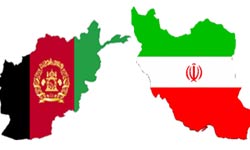
afg_and_iran

Frud Behzan

Radio Free Europe/Radio Liberty
August 14, 2018

As the United States reinstates crippling economic sanctions on Iran, Washington’s ally in the region, Afghanistan, could become collateral damage.

A first wave of U.S. sanctions against Iran that had been eased under a 2015 nuclear deal went back into effect on August 7, targeting the country’s economy.

But Washington’s censures of Tehran will also hurt Afghanistan, which has forged increasingly strong economic links with its western neighbor.

As Iran’s financial woes worsen, an exodus of Afghan migrant workers is expected and an economy in Afghanistan that relies on remittances flowing in from Iran will suffer.

The new U.S. sanctions could also lead to landlocked Afghanistan losing access to Iran’s sea routes and a budding trade could be scaled back.

Analysts also warn that Iran could retaliate to U.S. sanctions by ramping up its covert support for the Afghan Taliban, the militant group that has fought against U.S. forces since 2001.

“Afghanistan is at risk of becoming an unintended casualty of heightening tensions between Washington and Tehran,” says Ahmad Majidyar, the director of the IranObserved Project at the Washington-based Middle East Institute.

In May, U.S. President Donald Trump withdrew from the Iran nuclear deal that eased international sanctions on Tehran in exchange for curbs on its nuclear program. A second wave of U.S. sanctions targeting Iran’s oil sector and financial system will be reinstated in November.

‘Significant Decline’ In Economy

A record 440,000 Afghans migrants left Iran this year, with nearly half of them returning to their homeland voluntarily, according to the International Organization for Migration (IOM).

The IOM says the mass exodus has been largely driven by Iran’s crippling economic crisis, which has sent unemployment soaring and the national currency plummeting, hitting migrant workers particularly hard.

The demand for work in the informal economy, where most Afghans are active, has declined sharply. Iran’s currency, the rial, has weakened against the afghani and is at record lows against the U.S. dollar, which is widely used in Afghanistan.

“As all Afghans [living in Iran] typically send home the main parts of their earnings in the form of monthly remittances, the Afghan economy itself will suffer direct and immediate effects,” says Nick Bishop, emergency-response officer for IOM Afghanistan.

Afghanistan suffers from around 40 percent unemployment, is heavily dependent on dwindling foreign aid, and is in the midst of the worst drought in decades. Humanitarian groups say the returnees from Iran, should they stay, could exacerbate the problems Afghanistan is facing.

“[There will be] less money coming from working males who are instead returning home to [Afghanistan] to few jobs, combined with an ongoing drought and resource competition with other returnees will mean a significant decline in the economy, worsening impacts of the drought linked to migration, and potentially the conflict itself,” Bishop adds.

‘Undercut Regional Connectivity’

Pakistan has historically been Afghanistan’s biggest trading partner but Iran has now taken its place. Afghanistan’s Chamber of Commerce and Industries said in March that trade between the two countries in the past year amounted to nearly $2 billion, an almost 30 percent increase from the previous year. In comparison, trade with Pakistan amounted to $1.2 billion.

Afghanistan’s economic future is also linked with Tehran via Iran’s Chabahar port complex, a project that is part of a new transportation corridor for Afghanistan that could potentially open the way for millions of dollars in trade and cut its dependence on rival Pakistan, its neighbor to the east.

The project is a key part of developing the Afghan economy, a major goal of the U.S. strategy to end the United States’ longest war.

But the project could be derailed by U.S. sanctions. “The return of U.S. sanctions on Iran undercut Afghanistan’s regional-connectivity ambitions, as the sanctions make it harder for India to develop Iran’s Chabahar port,” analyst Majidyar says.

Afghanistan has applied for a sanctions waiver for Chabahar, but Washington has yet to make a final decision.

Washington has indicated that it would not sabotage the Chabahar port project. The Pentagon and the U.S. State Department have encouraged India to use Chabahar to increase its investments in Afghanistan.

“But as U.S. sanctions on Iran are reinstated, many Indian and international companies would be reluctant to be involved in the project, fearing U.S. secondary sanctions,” Majidyar adds.

Those secondary sanctions include existing U.S. sanctions linked to Iran’s human rights record, alleged support for terrorism, and its ballistic-missile program that forbid U.S. and foreign companies from doing most forms of business with Tehran. Secondary sanctions could leave big banks and multinational companies worried they could still be prosecuted for doing business in Iran.

‘Covert Support For Taliban’

Analysts also warn that U.S. sanctions on Iran could have security ramifications for Afghanistan. “The big risk for Afghanistan of U.S. sanctions on Iran is that Tehran could retaliate by ramping up its covert support for the Taliban,” says Michael Kugelman, South Asia associate at the Woodrow Wilson International Center for Scholars in Washington.

Iran has been long been accused of providing support to the Taliban, an allegation it denies. Tehran has confirmed it has contacts with the Taliban but insists that it is aimed at ensuring the safety of its citizens in Afghanistan and encouraging the Taliban to join peace talks.

“Iran has already provided small arms and other support to the insurgents, and the sanctions regime could give it a powerful incentive to increase that support in an effort to strengthen Washington’s enemy,” Kugelman adds.

Rising support from a powerful regional actor would be a blow to Kabul and Washington, who are trying to convince the Taliban to agree to a negotiated end to the 17-year-long war.

Posted in Economic News, Iran-Afghanistan Relations, US-Afghanistan Relations | Tags: Chabahar |

Eid ul Adha will be on Tuesday, August 21st

15th August, 2018 · admin

islamsymbolAbdullah Qazi
AOPNEWS | August 14, 2018

The Hajj authorities have announced that the Day of Arafah will be on Monday, August 20, 2018. Therefore, the first day of Eid will be Tuesday, August 21, 2018.  Eid ul Adha Mubarak!

Related

  • Eid al Adha is Tuesday August 21 According to the Supreme Court in Saudi Arabia
  • Zul Hijjah moon sighted in Saudi Arabia, 11-day Eid Al Adha holiday to begin on August 21
Posted in AOP Reports, Muslims and Islam | Tags: Eid |
Previous Posts
Next Posts

Subscribe to the Afghanistan Online YouTube Channel

---

---

---

Get Yours!

Peace be with you

Afghan Dresses

© Afghan Online Press
  • About
  • Links To More News
  • Opinion
  • Poll