
 Tolo News: The Ministry of Public Health on Monday reported six new positive cases of COVID-19 out of 224 samples tested in the past 24 hours. The total cumulative number of cases in Afghanistan is 39,233, the total number of reported deaths is 1,455, and the total number of recoveries is 32,642. Click here to read more (external link).
Afghan peace negotiator says they hope to finalize agenda soon
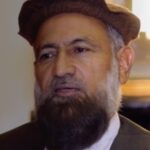
Lodin
Ariana: Afghan Peace Negotiator, Mawlawi Attaullah Lodin said Sunday that the Afghan team and the Taliban peace talks team have not yet reached a consensus on the agenda and framework for negotiations going forward. Click here to read more (external link).
Related
Facing IS, last embattled Sikhs, Hindus leave Afghanistan
 AP: Afghanistan’s dwindling community of Sikhs and Hindus is shrinking to its lowest levels. With growing threats from the local Islamic State affiliate, many are choosing to leave the country of their birth to escape the insecurity and a once-thriving community of as many as 250,000 members now counts fewer than 700. Click here to read more (external link).
1TV Afghanistan Dari News – September 27, 2020
A sombre day as Taliban takeover remembered

Taliban fighters (file photo)
Ariana: Sunday, September 27, marked the 26th anniversary of the takeover by the Taliban of Afghanistan – a day they entered Kabul city flying their white flags, abruptly ending the Burhanuddin Rabbani government. Click here to read more (external link).
Related
Afghanistan: 35 of 267 Cases Test Positive for COVID-19
Tolo News: The Ministry of Public Health on Sunday reported 35 new positive cases of COVID-19 out of 267 samples tested in the last 24 hours. The number of total cases is now 39,227, the number of total reported deaths is 1,453, and the total number of recoveries is 32,642. Click here to read more (external link).
Other Health News
U.S. Envoy For Afghanistan Says Taliban Won’t Accept Permanent Cease-Fire Until Political Agreement

Khalilzad
Radio Free Europe/Radio Liberty
September 26, 2020
Zalmay Khalilzad, the U.S. envoy for Afghanistan, has predicted the Taliban will not accept a permanent truce until a political deal is reached with the Afghan government.
“I think you’re right that the Talibs will not accept a cease-fire, comprehensive and permanent, until there’s a political settlement,” Khalilzad said on September 25.
His comments to the U.S. public broadcaster PBS came as Taliban militants continue to carry out attacks across the country despite taking part in peace talks with the Afghan government in Qatar.
Khalilzad said despite the current spike in violence, it was still at lower levels than the same time last year.
“Compared to the first six months of last year to this year, despite a recent increase in violence, the number of casualties, both military and civilians, are down this year,” Khalilzad, a veteran diplomat, said.
“So, yes, the violence is high at this point. And both sides need to bring down the level of violence. And we’re committed, when I return to work with both sides, to get an agreement on reduction of violence,” he added.
When asked why the militants have not yet publicly cut ties with the terror network of Al-Qaeda as set out in their deal with the United States, Khalilzad said that Washington will assess the situation in the next couple of months after the number of its troops in Afghanistan drop to 4,000-5,000 from the current level of 8,500.
The comments came as dozens of members of the Afghan security forces were killed or wounded across the country in a series of Taliban attacks.
Taliban militants on September 26 claimed to have killed an unspecified number of troops in central Bamyan Province and northeastern Badakhshan Province.
On September 23, the Taliban launched a wave of attacks on security checkpoints in southern Afghanistan overnight, killing a total of 28 Afghan policemen, officials said.
The violence comes even as Taliban leaders and Afghan government-appointed negotiators are holding historic peace talks in Qatar, a Mideast country where the Taliban set up a political office after they were toppled from power in the 2001 U.S.-led invasion of Afghanistan.
The negotiations, which started earlier this month, are meant to end the fighting and establish a roadmap for a postwar society.
In the negotiations in Qatar, the two sides have so far have spent more than a week deciding agendas and the manner in which the two sides will be conducting the negotiations.
With reporting by AP and AFP
Copyright (c) 2020. RFE/RL, Inc. Reprinted with the permission of Radio Free Europe/Radio Liberty, 1201 Connecticut Ave NW, Ste 400, Washington DC 20036.
Related
1TV Afghanistan Dari News – September 26, 2020
Coronavirus: 6 of 103 Cases Test Positive
 Tolo News: The Ministry of Public Health on Saturday reported six new positive cases of COVID-19 out of 103 samples tested in the past 24 hours. The number of total cases is now 39,192, the total number of reported deaths is 1,453, and the total number of recoveries is 32,635. Click here to read more (external link).
Afghan Talks: Despite Initial Hiccups, Hope for Peace Remains
 By Ayesha Tanzeem
VOA News
September 25, 2020
ISLAMABAD – Even as Afghan President Ashraf Ghani reiterated his demand for a cease-fire, few watching the peace talks in Doha expected a positive response from the Taliban.
“[T]he Afghan people have a clear and urgent priority: a cease-fire. An urgent end to the violence will more than anything else give us a chance to progress,” Ghani said in his address to the United Nations Wednesday.
The Taliban response was clear.
“If we stop fighting, then what does there remain to talk about,” a member of the Taliban negotiating team in Doha told NBC News, according to a story published earlier this week.
As the historic negotiations between the Taliban and an Afghan team, including government representatives, enter their third week, the talks are stuck on the most basic of questions, like how to describe the two decades of war in Afghanistan. The Taliban want to call it “jihad.” The other side disagrees.
Yet, those who have watched and analyzed the conflict think of it as a positive development.
“Taliban refusal of an immediate cease-fire, language used to discuss non-Hanafi Sunni Islamic law, women’s rights and future role … these same issues were the reality of the conflict every day for years,” said Andrew Watkins of the International Crisis Group, an independent, non-profit organization working to prevent conflict. The start of difficult discussions on how to change things, he said, was a step forward.
The United States, which prepared the ground for the current peace talks by holding its own 18-month-long negotiation with the Taliban and signing a historic deal with the militant group it once called “terrorists,” understood that the continuing violence may be problematic.
“By any measure, the current levels of violence are too high,” Zalmay Khalilzad, the U.S. official in charge of negotiating with the Taliban, told members of the U.S. House of Representatives this week.
However, Khalilzad also seemed to believe that the best way of reducing the violence was through the current negotiations.
“We hope that the current negotiations will lead to a significant reduction in violence by all sides, reducing the number of Afghans getting killed or wounded. … We, for our part, will continue to press for this objective,” he said.
Even though the Taliban have so far refused to commit to a cease-fire, they say they hope for an end to war.
“Yes, we are hopeful, and that is why we came here. We have a strong will to start the meetings and reach a conclusion,” Mohammad Naeem, the Taliban’s Doha-based spokesman, told VOA’s Afghan Service this week.
Still, the two sides are poles apart when it comes to their aspirations for the country. The Afghan team is trying to safeguard the constitution and all the rights that women, minorities, and others have gained in the last 20 years.
The Taliban, according to Naeem, want to define all rights according to their interpretation of Islam.
“We cannot bring the values of other societies and impose them on our society. For example, we cannot justify women’s rights on the basis of the values that exist in the United States, in Europe, and in other countries. Our nation does not want this at all. Our nation is Muslim,” he said.
This worries women’s rights activists in Afghanistan. The previous Taliban regime in the 1990s was considered a repressive theocracy by most of the world.
While skeptics feel the Taliban may be wedded to the same old ideology, Michael Kugelman, deputy director of the Asia program at the Wilson Center in Washington, said there may be a younger generation of Taliban leaders ready to be flexible.
“By being vague in public comments, the Taliban may be betraying the lack of consensus within the broader organization about what direction it truly wants to take,” Kugelman said.
Watkins of the International Crisis Group said the Taliban have shown that it can be both ideological and pragmatic.
“The Taliban are flexible in interpreting sharia when they are presented with a sufficiently compelling reason to do so. If their reality on the ground changes, or if the benefits that may result become obvious, the group may very well show flexibility even on the issues we assume are its core beliefs,” he said.
Khalilzad seemed to favor Watkins’s view, and U.S. policy seemed to be geared toward compelling a change in Taliban behavior through offers of assistance.
“While we do not seek to impose our system on others, we have made it clear to the negotiators that their choices and conduct will affect the size and scope of future U.S. assistance,” Khalilzad said.
The Taliban have repeatedly said they want a continuation of international aid after the withdrawal of U.S. forces.
According to Watkins, top Taliban figures have “begun to privately admit that their period of governance was rife with flaws and failures.”
Ironically, the biggest challenge to the talks seemed to be emerging not from the Taliban but from internal divisions among Afghan political factions.
The membership of the High Council for National Reconciliation, the body that is supposed to oversee negotiations with the Taliban, is not yet final. When Ghani announced a list of members, it was rejected by his political rival and the Council’s head, Abdullah Abdullah.
“Already, figures such as (Gulbuddin) Hekmatyar (former warlord-politician) have begun openly calling for separate, divided negotiations with the Taliban. And this reflects a much larger number of Afghan leaders who have been quietly communicating with the group,” said Watkins.
The divisions, said Kugelman, did not look good for Kabul, since it appeared its team was pitted against a well-organized and united Taliban negotiating team.
The complex negotiations also face the prospect of the withdrawal of all U.S. forces from Afghanistan, reducing the Afghan team’s leverage even further.
“The U.S.-Taliban deal obliged the Taliban to start peace talks, not conclude them, in order for U.S. troops to depart,” said Kugelman.
Both President Donald Trump and his rival in the presidential election, former Vice President Joe Biden, have expressed their intention to leave Afghanistan.
The last time a foreign army left Afghanistan was the Soviet Union in 1989. Afghanistan fell into a vicious civil war and has not seen peace since.
Khalilzad and other senior U.S. officials hope they can “help Afghanistan seize this historic moment and avoid repeating what happened in the 1990s.” But they also acknowledge that the road ahead is full of challenges.
Najiba Salam of VOA’s Afghan Service contributed to this report.
Related