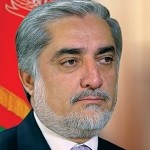
A. Abdullah
By Ayesha Tanzeem
VOA News
September 29, 2020
ISLAMABAD – Afghanistan’s senior leadership has told its team in Doha to be flexible in negotiating with the Taliban in order to seize the opportunity to end the country’s conflict, according to Abdullah Abdullah, the chairman of the High Council for National Reconciliation.
“We’ve asked our own delegation, President (Ashraf) Ghani and myself, to be patient, to be ready to make compromise, and not to miss any other opportunity, not to lose any opportunity, or waste time,” he said during his address at the Institute of Strategic Studies Islamabad, a foreign policy research group.
Abdullah, who is in Pakistan on a three-day visit to discuss the peace process and bilateral relations, seemed hopeful about the future.
“I’m visiting Pakistan at a time when a new future, indeed a peaceful future, is on the horizon,” he told the audience.
The visit reflects a shift in bilateral relations between the two countries that have been rocky for several years. Both sides have accused each other of harboring groups that carry out attacks on each other’s soil.
Both Afghanistan and the United States have long said that the Taliban leadership lives in Pakistan and demanded the South Asian country pressure them to come to the negotiating table.
As talks with the Taliban progressed, first with the United States, culminating in a deal signed on February 29 of this year, and then between the Taliban and other Afghans, relations between Afghanistan and Pakistan also improved.
Abdullah thanked Pakistan for facilitating the talks and said Prime Minster Imran Khan’s call last Friday to Ghani calling for a “significant reduction in violence leading to a comprehensive cease-fire” was important in creating the kind of environment that will help the “spirit of negotiations back in Doha.”
Pakistani Foreign Minister Shah Mahmood Qureshi said his country had gone through a paradigm shift and now wanted to be “friends, not masters” of Afghanistan.
“My message is, we do not have favorites (in this conflict),” Qureshi said, addressing the Afghan delegation and the Afghan public. He said Pakistan wanted to “respect your sovereignty, your independence and your territorial integrity.”
Both Qureshi and Abdullah highlighted the untapped potential in terms of regional trade and development that could be mutually beneficial if Afghanistan had peace and friendly relations with Pakistan.
Abdullah also gave a glimpse of the kind of future he wanted at the conclusion of negotiations with the Taliban:
“A sovereign, independent, democratic country, with people with diverse ideas, maintaining their ideas and competing for, and contesting for the implementation of their ideas but only peacefully, and without using violence.”
Abdullah, however, said his country had changed and it was not the same Afghanistan of the 1990s when the Taliban ruled.
Today’s Afghanistan, he said, was a “young, diverse, connected nation, eager to freely decide its own future form of government corresponding to its unity and diversity.”
 Tolo News: The Ministry of Public Health on Tuesday reported 15 new positive cases of COVID-19 out of 279 samples tested in the last 24 hours. The cumulative number of total cases is now 39,254, the number of total reported deaths is 1,458, and the total number of recoveries is 32,746.
 Tolo News: Kunduz officials said Tuesday that civilian flights between Kabul and Kunduz have resumed after ten years. According to the local officials, there will be two flights a week from Kabul to Kunduz and vice versa. Kunduz Airport was rebuilt around a year and a half ago, but a number of residents of Kunduz province say that a number of facilities at the airport are incomplete and there are problems.
 Radio Free Europe/Radio Liberty
 By Reid Standish