
Two Taliban Members Killed In Attack On Intelligence Compound, Says AFF

Afghanistan International: The Afghanistan Freedom Front (AFF) has claimed responsibility for an attack on a Taliban intelligence facility in Charikar, the capital of Parwan province, on the evening of Monday, 7 July. In a statement released after the incident, the group said two Taliban members were killed and three others wounded in the assault. Local sources in Parwan confirmed the attack took place, though further details remain limited. Click here to read more (external link).
More Resistance News
Taliban’s Closure Of Women’s Shelters Leaves Afghan Women Vulnerable To Abuse
 By Firuza Azizi
Radio Free Europe/Radio Liberty
July 9, 2025
Morsal and her three underage children live in a ramshackle outbuilding in her in-laws’ house in eastern Afghanistan.
With the country’s de facto Taliban rulers cutting off almost all access to jobs for women and no welfare system in place in the country to support families in need, the 40-year-old widow and her children — including a disabled son — have little protection or support.
There was a time when Morsal, whose name has been changed to protect her identity, could turn to one of several women’s shelters in Afghanistan.
But since the Taliban seized power in August 2021 following two decades of relative order overseen by international peacekeeping troops, almost all the 26 women’s shelters that operated during the country’s previous Western-backed government have been shut, exposing women like Morsal to abusive situations.
“My late husband was killed while serving in the [previous government’s] national army and he didn’t own a home,” Morsal told RFE/RL, adding she had nowhere to turn except to her in-laws, a place she describes as a “house of violence.”
“My brother-in-law insults me and is violent toward me. I went to my sister’s house, but her husband didn’t want me to live with them, so I had to return to my in-laws.”
During the Taliban’s lightning capture of Afghan cities during the summer of 2021, many women’s shelters started to close their doors for fear of retribution. In many cases, shelter employees burned sensitive documents and fled along with the women they were sheltering.
Even before the Taliban stormed their way back into power in Afghanistan, women’s shelters faced fierce criticism in the deeply conservative and patriarchal country.
Domestic abuse is routine. Forced marriages are the norm and the female suicide rate in Afghanistan remains among the highest in the world.
Officials at shelters — some of which operated entirely offline to avoid the public eye — said they faced the agonizing choice of remaining open and exposing employees and clients to possible Taliban reprisals, or closing and sending women back to their abusive families.
Morsal and several other women who spoke to RFE/RL from various parts of Afghanistan said the shelters provided a safe place as well as counseling and legal support among other services for women trying to escape abusive husbands and in-laws or forced marriages.
Without the shelters they say they have no choice but to stay with their abusers because “there is simply no life for them outside” in an ultra-conservative society that shuns divorce and expects women to stay with their husbands regardless of abuse.
The United Nation says the Taliban authorities’ “severe discrimination” against women “may amount to gender persecution — a crime against humanity — and be characterized as gender apartheid.”
Even worse, in a report on July 3, the UN said that millions of Afghan refugees being returned home from the countries they fled to to escape the Taliban are putting further pressure on the system.
Since September 2023, more than 2.43 million undocumented Afghan migrants — more than one-third women and girls — have returned from Iran and Pakistan.
“The escalating pace of returns is straining Afghanistan’s overstretched humanitarian system, with women and girls bearing the brunt of the impact,” the UN said.
“Returnees face rising exposure to gender-based violence, early and forced marriage, trafficking and transactional sex — exacerbated by a lack of basic resources.”
Meanwhile, the International Criminal Court on July 8 issued arrest warrants for senior Taliban leaders in Afghanistan, saying there were “reasonable grounds” to suspect Supreme Leader Haibatullah Akhundzada and Chief Justice Abdul Hakim Haqqani of having committed “the crime against humanity of persecution…on gender grounds.”
Women’s Affairs Ministry Closed
In the northern province of Kunduz, a 26-year-old housewife told RFE/RL on condition of anonymity that the abuse she suffers at home — coupled with poverty and a lack of opportunities — left her trapped in a vicious cycle.
The mother of two lives in the same house with her husband and his parents and siblings. Recently her husband of seven years married a second wife.
“This family is extremely restrictive, abusive, and lacks compassion. Their cruel treatment, the abuse has left me with persistent headaches and depression, but I cannot complain to the government about it,” the woman said.
“On top of everything else, I live in extreme poverty, I don’t even have a proper blanket and pillows, there is no job, no opportunities,” she said sobbing.
The woman did not elaborate on why she believes she cannot complain to authorities but the Taliban closed the former government’s Ministry for Women’s Affairs and has replaced it with the Ministry of Vice and Virtue that enforces the hardline group’s strict “morality” code.
“Currently, Afghanistan does not have any agency or institution that women victims of violence could turn to to speak about the problems they’re facing, to seek protection,” said Roya Dadras, who served as a spokesman for the former women’s affairs ministry.
“Therefore, forced and early marriages, domestic violence, and female suicides have reached their peak,” Dadras told RFE/RL, but did not provide statistics.
RFE/RL contacted Taliban officials in Kabul for comment but did not receive a response.
The Ministry of Vice and Virtue announced that it has “rescued” 17 women from domestic violence in recent days. It did not provide details.
In June, the ministry said it addressed women’s issues in 85 cases of inheritance disputes, 101 cases of “cruel treatment,” and 68 instances of forced marriages over the past three months.
The authorities did not give details.
Last Remaining Shelters
Activist Mary Akrami opened Afghanistan’s first-ever women’s shelter — the Afghan Women Skills Development Center — in 2003.
Akrami told RFE/RL that the center housed about 80 victims of domestic abuse in the capital, Kabul, providing them with counseling and legal advice and running literacy classes for its residents, most of whom had never been to school. It also offered basic skills training, such as dress-making and cooking classes.
Receiving threats for her work, Akrami has since left Afghanistan.
The center is one of the few women’s shelters that remain open, but Akrami said the Taliban has changed the safe house’s operation. She was not able to provide further details.
RFE/RL contacted the current chief of the center — prominent women’s rights activist Mahbouba Seraj — but has not received a response.
Written by Farangis Najibullah with reporting by RFE/RL Radio Azadi correspondent Firuza Azizi. Radio Azadi correspondent Sahar Lewal contributed to this report
Copyright (c) 2025. RFE/RL, Inc. Reprinted with the permission of Radio Free Europe/Radio Liberty, 1201 Connecticut Ave NW, Ste 400, Washington DC 20036.
Afghanistan’s population estimated at 36.4 million in 2025

Ariana: The National Statistics and Information Authority (NSIA) of Afghanistan has estimated the country’s population at 36.4 million in the year 1404 (2025), according to newly released demographic projections. According to the report, 51% of the population are male, while 49% are female. The estimates are based on comprehensive statistical modeling and serve as a foundational tool for national planning and policy formulation. The report further states that Kabul province remains the most densely populated region in the country, with an estimated 6.1 million residents. Click here to read more (external link).
Hundreds of Families Devastated by Floods in Eastern Afghanistan
 8am: The World Food Programme (WFP) in Afghanistan has reported that hundreds of families have been affected following floods in the eastern part of the country. Although the exact extent of the damages and human casualties caused by the floods in Afghanistan’s eastern provinces has not been determined, Taliban officials have reported the destruction of homes and agricultural lands, as well as the deaths of several individuals. Click here to read more (external link).
Russian Tour Companies Introduce Trips to Taliban-Ruled Afghanistan for $3K
 The Moscow Times: Russian tour companies have started advertising travel packages to Afghanistan, offering weeklong trips to the country for around $3,000 as Moscow deepens its ties with the Taliban-led government in Kabul. The offers, which have appeared on Russian online platforms in recent days, promise Russian citizens organized tours to Afghanistan, with the first group of travelers expected to depart as early as mid-July, according to the Telegram news channel Shot. Click here to read more (external link).
Tolo News in Dari – July 8, 2025
Bismillah Shinwari, international cricket umpire, dies at 41
 Amu: Bismillah Shinwari, a veteran Afghan cricket umpire who officiated at the international level, has died following an illness, the Afghanistan Cricket Board confirmed on Tuesday. He was 41. Shinwari, a member of the International Cricket Council’s International Panel of Umpires, made his debut in 2017, officiating an ODI between Afghanistan and Ireland in Sharjah. Over the course of his career, he stood in 25 One Day Internationals and 21 Twenty20 Internationals. Click here to read more (external link).
Khalilzad warns of China’s growing grip on Central Asian minerals, urges swift US action

Khalilzad
Ariana: Former U.S. special envoy for Afghan peace talks, Zalmay Khalilzad, has issued a stark warning about China’s accelerating efforts to dominate Central Asia’s vast mineral wealth. He urged Washington—specifically the Trump administration—to act swiftly before Beijing consolidates its hold over the region’s critical resources. Khalilzad emphasized that countries including Kazakhstan, Uzbekistan, Afghanistan, and Pakistan remain open to deeper mineral cooperation with the United States, but cautioned that time is running out. Click here to read more (external link).
Pakistan in ‘no hurry’ to recognize Islamic Emirate of Afghanistan
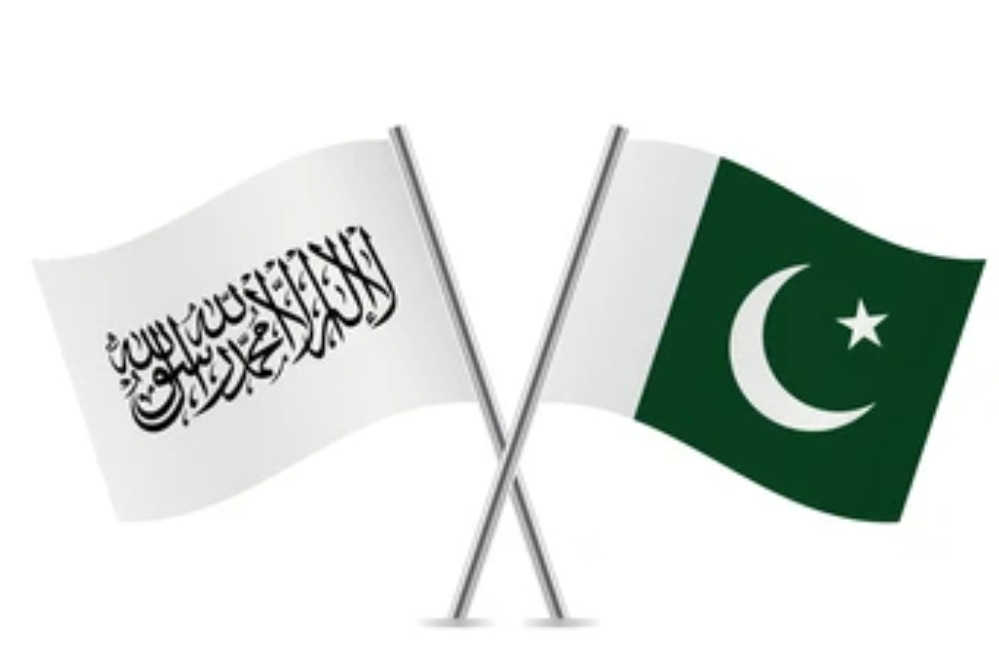 Ariana: Following Russia’s recent decision to formally recognize the Islamic Emirate of Afghanistan (IEA), Pakistani officials have stated that Islamabad will not act hastily and will make a final decision based on its national interests. According to The Express Tribune, quoting government sources, Pakistan may take a more pragmatic approach if other regional countries follow Russia’s lead. Click here to read more (external link).