
Taliban Deprive Four Hazara-Dominated Districts of Humanitarian Aid in Ghazni, Distribute Food and Money to Their Supporters
 8am: Ghazni is one of the provinces where international aid has flowed during the past recent months, but the Taliban have discriminately prevented it from being distributed and granted to deserving segment of the society. According to reports, no aid has been distributed in the four districts of Ghazni province where Hazara people live. This is while thousands of families in Waghez district -where Pashtun and Taliban supporting people live – have received aid for several times. According to the Statistics Department, the entire population of the district, benefiting the humanitarian aid rights of the other districts is smaller than that of the poor families in the other districts. Click here to read more (external link).
UN Official Says Afghan Taliban Has Stripped Women’s Rights
 Lisa Schlein
VOA News
June 18, 2022
GENEVA — U.N. High Commissioner for Human Rights Michelle Bachelet this week accused Afghanistan’s ruling Taliban of stripping women and girls of their fundamental rights and freedoms and rendering them invisible in public life. Her report was submitted Wednesday to the U.N. Human Rights Council.
Bachelet told the council that Afghans are experiencing some of the darkest moments in a generation. Since the Taliban authorities took control in August, she said, the country has been plunged into a deep economic, social, humanitarian, and human rights crisis.
She pointed to a dramatic erosion of women’s rights and freedoms since the Taliban assumed power. She said secondary school for girls has been banned, depriving more than a million of an education and a future.
She said women are forced to wear a hijab in all public places, are barred from employment, and cannot participate in public and political life. She said women’s freedom of movement has been severely restricted.
“Let me be clear: what we are witnessing today in Afghanistan is the institutionalized systematic oppression of women,” Bachelet said. “… Afghan women are rapidly facing the worst-case scenario many feared. While Afghanistan has ratified a number of international treaties … the de facto authorities remain far from complying with those international obligations, in both policy and practice, to respect and protect the rights of women and girls.”
In the wake of the Taliban takeover of Afghanistan, conflict in the country dropped significantly and security improved. However, this positive effect has faded. Bachelet said attacks against dissident groups and ethnic and religious minorities have increased. She said civilians have been killed and injured at schools, places of worship, marketplaces, and on public transport.
She said human rights violations have increased.
“There are serious allegations, which require verification, that civilians have been exposed to violations of international human rights law and international humanitarian law, including arbitrary arrests, extrajudicial killings and torture,” Bachelet said.
The Taliban could not respond to Bachelet’s charges because the United Nations does not recognize the legitimacy of its rule. However, Nasir Ahmad Andisha, the previous Afghan government’s ambassador to the U.N. in Geneva was allowed to speak and corroborated the information contained in Bachelet’s report.
He meanwhile called on the outside world not to abandon Afghans, saying millions are suffering from acute hunger, lack of basic services, malnutrition, and disease.
Balkhab Siege: Civilians to Be Used As Cannon Fodders if the Battle Breaks Out

Mawlawi Mehdi Mujahid
8am: After seizing power in August 2021, the Taliban has slowly and steadily begun to purge non-Pashtun commanders off its ranks. So far, several Uzbek and Tajik commanders of the group have been ousted from the government in control of the Taliban. Among the Taliban commanders ousted by the group is Mawlawi Mehdi Mujahid. Mahdi is credited with being an influential and important commander in the fall of the northern provinces, including Sar-e-Pul, to the Taliban. Promises were then made, including about his appointment as deputy head of the Taliban intelligence that never happened. Click here to read more (external link).
Related
At Least Two Killed In Attack On Kabul Sikh Temple
 By RFE/RL’s Radio Azadi
June 18, 2022
An attack on a Sikh temple in Kabul killed at least two people and wounded seven on June 18, following the detonation of a car loaded with explosives, officials said.
There was no immediate claim of responsibility for the attack. A video circulating on social media showed a plume of smoke rising from the building.
“There were around 30 people inside the temple,” Sikh community leader Gornam Singh told the media. “We don’t know how many of them are alive or how many dead.”
Abdul Nafi Takur, a spokesman for the Taliban Interior Ministry, told RFE/RL that attackers had laden a car with explosives but it had detonated before reaching its target.
A spokesman for Kabul’s Taliban commander said his forces had taken control of the area and cleared it of attackers.
One Sikh worshipper had been killed in the attack and one member of the Taliban forces killed during the clearing operation, he added.
The UN Assistance Mission in Afghanistan condemned the attack, stressing that the security of Sikh, Sufi, and Hazara religious minorities must be protected.
The European Union’s representative for Afghanistan, Thomas Niklasson, tweeted that attacks on civilians must be stopped and the rights of all people, including religious minorities, must be protected.
Indian Prime Minister Narendra Modi in a tweet condemned the “barbaric attack.”
Islamic State-Khorasan (IS-K), a regional affiliate of the Islamic State militant group, has lately increased attacks on mosques and minorities across the country.
Sikhs are a tiny religious minority in largely Muslim Afghanistan made up of some 300 members before the fall of the country to the Taliban. Many had left the country in the wake of the takeover, according to community members and media reports.
After taking power in a blitz campaign in August amid the withdrawal of U.S.-led international forces, the Taliban claimed to have secured Afghanistan. But international officials and experts warn there’s a continuous risk of a resurgence in militancy.
The Sikh community, like other religious minorities, has been a permanent target of violence in Afghanistan. An attack claimed by IS-K at another temple in Kabul in 2020 killed 25.
With reporting by Reuters, AFP, dpa, and AP
Copyright (c) 2022. RFE/RL, Inc. Reprinted with the permission of Radio Free Europe/Radio Liberty, 1201 Connecticut Ave NW, Ste 400, Washington DC 20036.
Update
Afghan Bodybuilders Fear Taliban Restrictions Could Kill Their Popular Sport
 By RFE/RL’s Radio Azadi
Abubakar Siddique
June 17, 2022
Mohammad has been sweating it out at the gym almost daily for the past four years in the hope of becoming a bodybuilder.
But since the Taliban seized power in Afghanistan, his dream has faded. Even though the militant group has allowed the sport, it has ordered bodybuilders to cover up their bulging biceps, six-packs, and chiseled thighs during training and competitions.
Athletes and gym owners say the restrictions will kill the sport, which is focused on showcasing muscular development. In bodybuilding competitions worldwide, tanned athletes in tiny briefs flash their sculpted bodies.
Mohammad is outraged by the Taliban order, which requires bodybuilders to cover their abdominal muscles and limbs with loose-fitting garments even while working out in gyms.
“There are only men where we train,” Mohammad, who did not reveal his full name for fear of retribution by the Taliban, told RFE/RL’s Radio Azadi. “The Taliban order has no religious justification, but it creates many problems for us.”
After the Taliban regime fell in 2001, bodybuilding become one of most popular sports in Afghanistan. Over 1,000 gyms sprung up across the war-torn country, including hundreds in the capital, Kabul, where huge posters of famous bodybuilders were visible in public.
When the Taliban regained power in August, hundreds of athletes and sports administrators fled their homeland, including top male athletes, as well as female soccer, volleyball, and basketball players.
Their fears were driven by the Taliban’s rule of Afghanistan during the 1990s, when many sports were considered “against human dignity” and banned along with music, films, and other forms of entertainment.
This time, the Taliban has claimed that it will not ban any sport as long as it complies with its extreme interpretation of Islamic law. But it has not confirmed if it will allow women to play any sports.
The restrictions on bodybuilding are believed to be the first targeting a sport almost exclusively dominated by men.
‘Not A Crime’
Afghan bodybuilders fear for the future of the sport under the Taliban. Competition organizers said a recent national bodybuilding contest in Kabul was held behind closed doors with a limited number of judges and no spectators to avoid the wrath of the Taliban.
Afghan athletes also say the militants’ restrictions will prevent them from participating in international competitions, where bodybuilders wear briefs to show off their muscles.
“In this sport, you have to monitor muscle growth while training,” Mehdi, a university graduate and aspiring bodybuilder, told Radio Azadi. “This is important to measure the progress you make.”
The Taliban did not respond to Radio Azadi’s repeated requests for comment.
Afghans have taken to social media to vent their anger at the Taliban’s restrictions on bodybuilding.
“The Taliban is in conflict with everything that is beautiful,” Sajjad Nuristani, a journalist and fitness trainer, tweeted on June 9 as he posted photos of himself working out. “Exercise and having a fit body [are] not a crime.”
During its first stint in power from 1996-2001, the Taliban tolerated bodybuilding. But it required athletes to wear long trousers.
Restrictions On Appearance
The Taliban’s restrictions on bodybuilders are the latest attempt by the militant group to police the appearances of Afghan men and women in public.
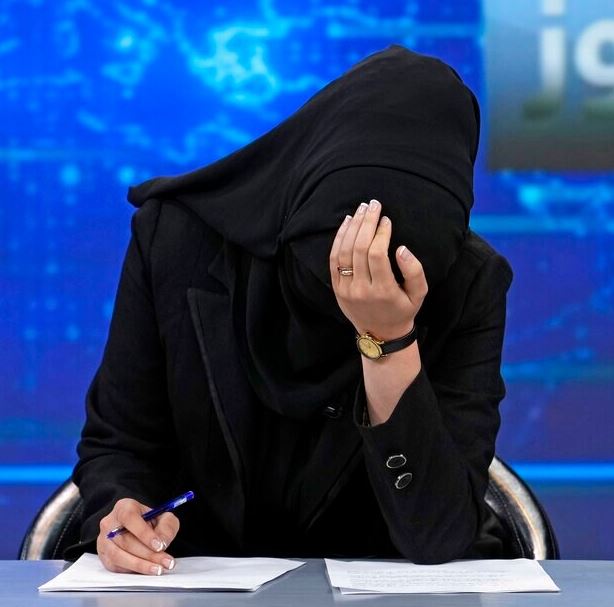
Last month, the Taliban issued a decree that ordered all women to cover their faces by wearing an all-encompassing burqa or a niqab, which is common in the Arab Gulf states.
The Taliban’s Ministry for the Promotion of Virtue and Prevention of Vice later extended the rules to female TV presenters, who must cover their faces while on the air.
Meanwhile, the Taliban’s religious police have issued orders banning men in some parts of Afghanistan from shaving their beards and trimming their hair. The militants have also advised men not to wear Western-style clothes.
Copyright (c) 2022. RFE/RL, Inc. Reprinted with the permission of Radio Free Europe/Radio Liberty, 1201 Connecticut Ave NW, Ste 400, Washington DC 20036.
1TV Afghanistan Dari News – June 17, 2022
NRF Manages to Inflict Heavy Casualties on Taliban in Panjshir
 8am: Sources added that 51 Taliban fighters have been killed or wounded in the clashes in the Chamalwarda area of Rokha district alone. Sources say that as a result of these clashes, two NRF members have been killed and another was wounded. According to sources, the Taliban are carrying the bodies of those fighters killed in the Mountains by donkeys. Click here to read more (external link).
Related Video (in Dari)
Taliban Closes Access Routes to Balkhab District, Sar-e Pol
 8am: As disputes escalating between Commander Mehdi Mujahid, the only Hazara commander of the Taliban group, sources in Sar-e Pol province now reported that the Taliban group has closed the access routes between Balkhab district and the provincial capital. According to sources, the Taliban have banned the commute of passengers and the transport of foodstuff after the military siege of Balkhab district. Click here to read more (external link).
Explosion Hits a Mosque in Kunduz, Afghanistan: Preliminary Estimates Show 12 Dead, 30 Injured
 8am: Sources say that an explosion occurred in a mosque in Kunduz province during Friday prayers. The explosion took place today afternoon inside a mosque in the village of Alefbardi in the Imam Sahib district of Kunduz province, locals said. The type of explosion is still unknown. It is not clear if the blast was caused by a suicide attack or by implemented explosives. Click here to read more (external link).