
Afghanistan defeat Qatar by 25 runs in T20 clash at Asian Town Cricket Stadium

Amu: Afghanistan secured a 25-run victory over Qatar in a one-off T20 international on Tuesday evening at the Asian Town Cricket Stadium, with captain Darwish Rasooli anchoring the innings and the bowlers delivering under pressure to seal the win. The win gives Afghanistan a 1–0 series result in the one-off contest and comes amid their broader efforts to expand international T20 experience ahead of next year’s ICC World T20 qualifiers. Click here to read more (external link).
Other Afghan Sports News
Pakistan Warns Of Possible Military Action Inside Afghanistan After Islamabad Bombing
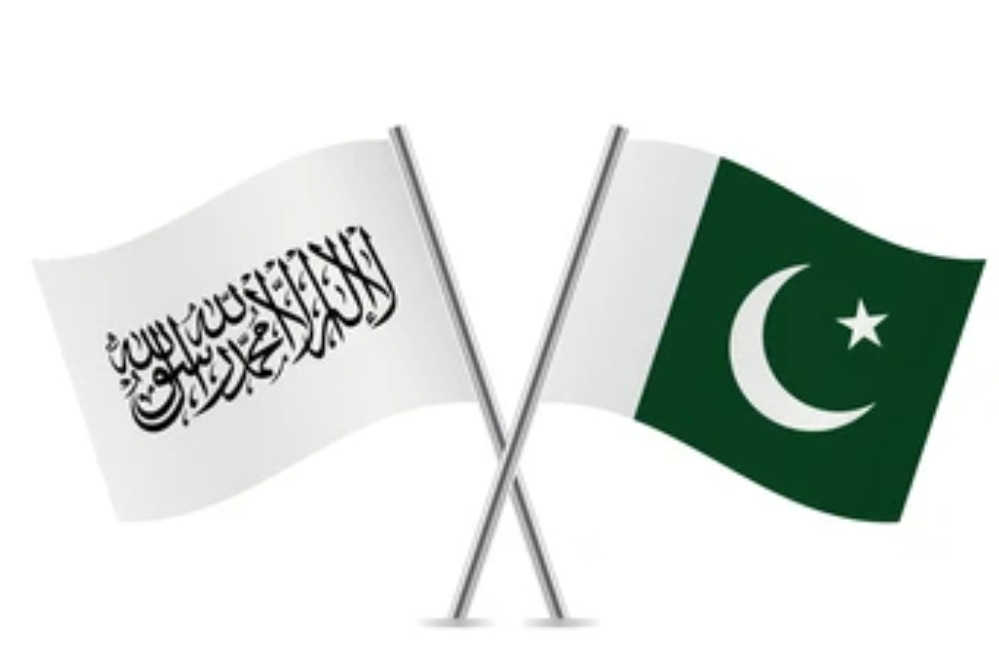 Afghanistan International: Pakistan’s Defence Minister Khawaja Asif warned Tuesday that his country could carry out military action inside Afghanistan following a deadly suicide bombing in Islamabad that killed at least 12 people and wounded 30 others. Asif accused the Afghan Taliban of harbouring militants responsible for attacks in Pakistan and rejected their condemnation of the bombing as “insincere and meaningless.” Click here to read more (external link).
More on Pakistan-Afghanistan relations
- Can Pakistan-Afghanistan peace talks survive Islamabad, Delhi blasts?
- Taliban say they may host TTP if Islamabad calls them ‘good people’
- Afghan delegation declines Pakistan’s request for Fatwa on domestic conflicts
- Taliban Set Three-Month Deadline to Replace Trade Routes with Pakistan
- Taliban urge traders to reduce reliance on Pakistan
- Taliban’s Baradar demands halt to medicine imports from Pakistan, seeks trade guarantees
- Taliban commerce minister says border closures with Pakistan cost $200 million a month
- Afghanistan Seeks Alternatives to Pakistan Trade; Fallout Likely for Central Asia
Kabul’s Water Turns Undrinkable, Forcing Residents to Rely on Bottled Supplies
 8am: Several residents of Kabul have voiced concerns over the contamination of the city’s water. They say that the water in Kabul is no longer drinkable, forcing them to spend thousands of Afghanis each month on bottled water. Meanwhile, environmental experts warn that rapid population growth, the use of absorption wells for sewage, and the absence of a proper sewage system are the main causes of groundwater pollution in the capital. Click here to read more (external link).
More
Tolo News in Dari – November 12, 2025
WFP Warns of Rising Hunger Crisis in Afghanistan
 Khaama: The World Food Programme (WFP) has warned that Afghan women are witnessing their children die from malnutrition amid shrinking humanitarian support. John Aylieff, WFP’s Country Director in Afghanistan, said on Tuesday that many families have been cut off from vital aid and are struggling to survive. He stressed that now is not the time to scale back assistance, urging the international community to increase support as winter approaches to uphold promises of solidarity. Click here to read more (external link).
How an Afghan child bride became one of Europe’s top bodybuilders
 BBC: Roya Karimi’s perfectly-applied make-up and hair highlighted blonde wouldn’t look out of place in the finals of Miss Universe. It is hard to imagine that just 15 years ago, she was a teenage mother in Afghanistan, married off as a child bride, before she escaped to her new life. Now aged 30, she is one of Europe’s top bodybuilders, and will be competing in the World Bodybuilding Championships this week. Her rise has been meteoric – she only took up the sport professionally less than two years ago. Click here to read more (external link).
Overnight Operation In Kunduz Left Two Taliban Dead, Says NRF
 Afghanistan International: In a statement posted on its official account on X, the NRF said the attack was carried out at about 10 p.m. on Monday in the Zanjir-e Charchab area of Khanabad district. The group said one other Taliban fighter was wounded. Click here to read more (external link).
Taliban Bars Women Without A Burqa From Entering Hospitals In Afghanistan
 By Firuza Azizi
Radio Free Europe/Radio Liberty
November 11, 2025
The Taliban has barred female patients, visitors, and medical staff who do not wear the all-encompassing burqa from entering public hospitals in western Afghanistan, the latest restriction by the hard-line Islamist group targeting women.
The new dress restriction came into force on November 5 in the western city of Herat, the country’s third largest. It is unclear if the measure will be extended nationwide.
International organizations have warned that the move will create further obstacles for women that will impede their access to critical health care.
Since seizing power in 2021, the Taliban has largely erased women from public life and severely impeded their right to work or get an education.
“This is suffocating for us,” a female resident of Herat, who spoke on condition of anonymity for fear of retribution, told RFE/RL’s Radio Azadi.
The woman said she was forced to spend the equivalent of around $20 to buy a burqa so she could visit a hospital for treatment. She said members of the Taliban’s dreaded morality police were enforcing the restrictions outside major public hospitals and clinics in the city of some 600,000 people.
Doctors Without Borders (MSF), the Geneva-based charity, said the Taliban’s new restrictions were already leading to fewer women visiting public health facilities in Herat.
“Female patients and caretakers are now barred from entering the hospital unless they wear a burqa, meaning that access to care is determined by clothing rather than medical need,” Sarah Chateau, MSF program manager, said in a statement on November 7.
“Each restriction placed on women as patients translates into delayed or denied medical care. We know that this will have severe consequences for children and mothers who already face enormous barriers to accessing health services in Afghanistan.”
She said the Herat Regional Hospital, one of the city’s largest, has observed a 28 percent drop in admissions of patients in need of urgent care.
Morality Law
In August 2024, the Taliban enacted a morality law that imposed severe restrictions on the appearances, behavior, and movement of women.
Under the law, women are required to fully cover their faces and bodies when in public and are banned from wearing “transparent, tight, or short” clothing.
The enforcement of the extremist group’s laws, however, has been sporadic and uneven across the country and often left to the discretion of local Taliban leaders.
Many Afghan women wear a hijab, or Islamic headscarf, which covers the head and neck. In addition, some women wear a face mask to conceal their nose and mouth.
Other women don the burqa or an Islamic abaya robe and niqab that covers the hair, body, and most of the face. The latter is common in the Arab Gulf states.
Afghan women, especially those in urban areas, consider the burqa and niqab to be alien to Afghan culture. Before the Taliban’s return to power, many women wore loose headscarves that only concealed their hair.
Saiful Islam Khyber, a spokesman for the Taliban’s Ministry for the Promotion of Virtue and the Prevention of Vice, said all Afghan women were required to cover their bodies from head to toe.
In Herat, a multiethnic city with strong cultural influences from neighboring Iran, the burqa has been enforced in many public places, including government offices, over the past year.
Women complain of harassment and violence if they go outside their homes without a burqa.
“I was threatened with arrest,” said a female resident of Herat who spoke on condition of anonymity. “The Taliban told me they will send my husband to prison if I fail to wear a burqa.”
Another woman in Herat said members of the Taliban’s morality police were forcing women to buy burqas in shops and markets in the city.
“It is an impossible situation for me because I’m not used to wearing a burqa,” she said.
Written by Abubakar Siddique based on reporting by Firuza Azizi of RFE/RL’s Radio Azadi
Copyright (c) 2025. RFE/RL, Inc. Reprinted with the permission of Radio Free Europe/Radio Liberty, 1201 Connecticut Ave NW, Ste 400, Washington DC 20036.
More