
 HRW: “The situation is getting worse every day,” Ahmad, a former journalist in Herat, Afghanistan, told me. “I don’t think anyone can afford to buy enough food anymore.” According to the United Nations, in 2024, 23.7 million people – more than half of the country’s population – will need humanitarian assistance. The statistics are startling: 69 percent of people do not have enough food; 67 percent have trouble accessing water, worsened by a prolonged drought linked to climate change; the economy has contracted by 27 percent; and only 40 percent of the population has access to electricity. On top of this, the healthcare system is on the verge of collapse. Click here to read more (external link).
Tolo News in Dari – March 15, 2024
Taliban’s Investment In Iranian Port Signals Shift Away From Pakistan

A ship at Chabahar Port (file photo, Press TV)
RFE/RL: The Taliban’s decision to turn to Iran to access international markets is a strategic move with regional implications. Access to the Chabahar Port reduces Afghanistan’s reliance on Pakistan and gives it access to India, Islamabad’s archenemy and Kabul’s traditional ally. Islamabad has historically been Kabul’s biggest trading partner, but Iran has taken its place in recent years. Click here to read more (external link).
Related
Taliban Detain Brother of Ex-National Security Chief of Takhar Province
 8am: Reports from local sources indicate that the Taliban have detained the brother of General Najibullah Najib, the former National Security Chief of Takhar Province, within the province’s boundaries. According to accounts received on Thursday, March 14th, the Taliban apprehended the individual in question from Taliqan, the capital city of Takhar Province, and subsequently relocated him to an undisclosed destination. It’s noteworthy that despite the Taliban leadership’s declaration of a broad amnesty, after their resurgence in Afghanistan, there have been instances where the group has detained and subjected former government officials and their affiliates to mistreatment, including fatal outcomes. Click here to read more (external link).
US not providing direct support to Taliban: White House
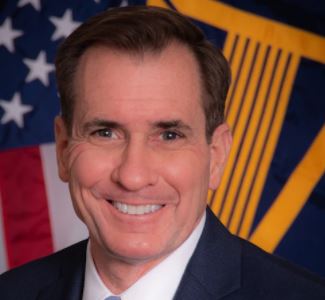
Kirby
Khaama: On Thursday, White House national security spokesperson John Kirby stated that the United States is not extending any form of direct support to the Taliban, whether diplomatically, economically, or otherwise. This includes diplomatic assistance, economic aid, or any other means of backing. Kirby’s declaration underscores the administration’s stance amid ongoing concerns and scrutiny regarding the U.S.’s engagement with the Taliban in the wake of recent geopolitical shifts. Kirby’s statement came as a response to reporters’ inquiries regarding a U.S. senator’s proposal to delay U.S. contributions to the UN for aid to Afghanistan. The senator raised concerns over allegations that such aid may inadvertently benefit the Taliban. Click here to read more (external link).
Taliban Expand Madrasas, May Never Reopen Girls’ Secondary Schools
 Akmal Dawi
VOA News
March 14, 2024
An Afghan education official says Taliban authorities may permanently close girls’ secondary schools, promoting religious schools known as madrasas as an alternative.
The Taliban shut down girls’ secondary schools in 2022, citing “religious and cultural” concerns.
Taliban officials defend the ban, insisting they are working to create a suitable educational environment for older female students.
“Schools may never be reopened the way they were under the occupation,” an official at Afghanistan’s Education Ministry told VOA on Tuesday, referring to the 2001-2021 U.S. military presence in the country.
“Principally, there is no difference between a school and a madrasa,” the official said, asking for anonymity because the Taliban have banned their members from speaking to VOA.
“If the purpose is education, it can be attained as much in madrasas as in schools, so there should be no insistence only on schools.”
Religious studies rather than diverse subjects
However, the U.N. and human rights activists worry that madrasas, focused on religious studies, cannot fully replace traditional schools that deal with diverse subjects.
“I am concerned that the quality of education in these institutions does not adequately prepare girls or boys for higher-level education and professional training to join an effective workforce in the future,” U.N. Secretary-General Antonio Guterres said in a report to the Security Council this month.
While girls’ secondary schools have remained closed for about two years, the United Nations has reported a surge in newly registered madrasas across the country.
The U.N. reported over 7,000 registered madrasas in Afghanistan, with roughly 380 designated for girls.
There are no age restrictions for girls attending the seminaries, Taliban officials have confirmed.
“Recruitment of madrasa teachers continued following the promulgation in July 2023 of the Taliban leader’s decree mandating the recruitment of 100,000 new madrasa teachers by the end of 2023,” Guterres said in his report.
‘Gender apartheid’
Pashtana Dorani, a U.S.-based Afghan women’s education activist, said the Taliban have already replaced schools with religious seminaries.
“They have created their own system,” Dorani told VOA, expressing concerns about potentially extremist teachings in madrasas.
The Taliban are widely accused of enforcing a “gender-apartheid” aimed at erasing women from most public spheres.
In addition to educational restrictions, Afghan women are banned from most jobs and even entry to some public places like parks and sport centers.
Last year, the all-male Taliban cabinet barred women’s beauty parlors.
Male Taliban officials say their policies are aligned with the aspirations of all Afghans.
“Far-reaching consequences”
Last year, education ended for more than 330,000 Afghan girls as they passed grade six exams. They joined more than 3.7 million girls who are banned from secondary schooling, according to aid agencies.
“This short-sighted decision has far-reaching consequences,” Salam Al-Janabi, a spokesperson for the U.N. Children’s Fund, or UNICEF, said to VOA.
Already plagued by some of the worst maternal health indicators, Afghanistan is heading toward far worse public health crises because of the Taliban’s educational restrictions, experts warn.
Keeping girls out of schools causes $500 million in economic losses for Afghanistan annually, UNICEF calculates.
“For the sake of the children and for the sake of the country’s economy, health system and security for years to come,” said Al-Janabi, “we urge the de facto authority to allow all children, at all levels of schooling, to resume learning immediately.”
23rd Anniversary of the Destruction of the Bamyan Buddhas: Historical Artifacts Are Plundered

Destroyed Buddha Statue
8am: Twenty-three years ago, the Taliban destroyed two large Buddha statues in Bamyan province. The taller statue, named Salsaal, standing at 53 meters, and the smaller one, Shahmama, at 35 meters, were carved into the mountains between the 3rd and 7th centuries AD with a distinctive style. Mullah Omar, the former Taliban supreme leader, ordered the destruction of these statues on February 26, 2001, and the group blew them up from March 9 to 11 of the same year. Simultaneously, under Mullah Omar’s orders, sculptures and artifacts from the Buddhist era in various parts of Afghanistan, including hundreds of ancient artifacts in the National Museum of Afghanistan, were also destroyed. In the past two years, during which the Taliban has once again gained control over Afghanistan, some cultural activists and residents of Bamyan have criticized vandalism, destruction, and unauthorized excavations in the historical sites of Bamyan by the Taliban. According to them, these acts of vandalism are carried out by Taliban fighters. Click here to read more (external link).
Tolo News in Dari – March 14, 2024
America Can’t Isolate the Taliban

Foreign Affairs: Two and a half years into Taliban rule, however, the United States has little to show for this approach. For one thing, the Taliban appear to be unmoved by global shaming, in particular when it comes to what they deem domestic affairs, such as the question of girls’ access to higher education and women’s right to work. Instead, Taliban leaders have portrayed international pressure as a violation of Afghanistan’s sovereignty, framing calls by Western leaders to uphold international norms as the latest episode in a long history of interference and intervention. As the Taliban have become more established in power, moreover, they have doubled down on a posture of resistance. As a result, rather than moderate their policies, they have pressed forward with further restrictions on women and social norms. Click here to read more (external link).
Rashid back in team for T20I series against Ireland

Rashid Khan
Ariana: The Afghanistan Cricket Board (ACB) has announced the names of 15 national cricket team players for the T20 international series against Ireland. Included in the team is Rashid Khan. This comes after a break of a few months following back surgery. Rashid will also captain the team. Click here to read more (external link).