
 Amu: Pakistan’s envoy to the United Nations warned the Security Council that terrorism originating from Afghanistan poses the most serious threat to regional and global security, pointing to the presence of thousands of fighters from multiple groups operating there. “The situation in Afghanistan remains precarious, with some 2,000 fighters. ISIL-K poses the most serious threat,” Asim Iftikhar Ahmed said. He said while the Taliban administration has fought the Islamic State group’s local affiliate, ISIL-Khorasan, the presence of other groups such as the Tehrik-e-Taliban Pakistan (TTP), Baloch militant factions, and what he called Fitna al-Khawarij remains unaddressed. Click here to read more (external link).
More
 TIME: Over the past 12 years, the small family-health clinic in Melmastok, a remote mountainous community in Afghanistan’s central Daikundi province, has withstood multiple upheavals—from a Taliban insurgency to the withdrawal of international troops and the collapse of the U.S.-backed government in Kabul in 2021. Ever since, as the Taliban returned to power, once again issuing edicts to suppress women and girls, the clinic and its 34-year-old midwife Atifa have continued to provide a lifeline for mothers and young children. Until this summer, that is. Come July, the clinic finally closed its doors. For Atifa, who identifies herself like many local women with only her first name, that means one thing: “Mothers and children will die.”
  Afghanistan International: It has been four years since the fall of the republic in Afghanistan. During this period, a diverse array of political movements, military fronts, and civil resistance groups have emerged—both within the country and beyond its borders. What unites these forces is their opposition to the Taliban. Several of these groups have proposed plans and programmes under the banner of “roadmaps,” aimed at breaking the current deadlock and envisioning a new future for Afghanistan. In parallel, efforts have begun to foster coordination and solidarity among anti-Taliban forces.
 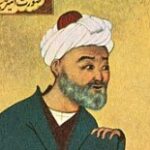 Amu: Taliban have begun rebuilding the monument of Ali-Shir Nawa’i, a famed 15th-century poet and scholar, in the city of Mazar-e-Sharif, Balkh province, after its demolition drew strong criticism from cultural figures and Uzbekistan’s government. The monument, located in Mazar-e-Sharif, was torn down this week, prompting outrage from local communities, Afghan civil society groups, and officials in Uzbekistan. Nawa’i, a statesman, linguist and poet in the Timurid era, is regarded as one of the most influential figures in Turkic literature and a cultural icon for Uzbeks.
  By Reid Standish
 Afghanistan International: At least 71 people, including 17 children, were killed when a passenger bus carrying Afghan migrants deported from Iran collided with a truck and a motorcycle on a highway in western Afghanistan, officials said Tuesday. Taliban police blamed the accident on the bus driver’s “high speed and recklessness.” Mohammad Yousuf Saeedi, spokesman for the Taliban-appointed governor of Herat, told Agence France-Presse the passengers had recently been expelled from Iran and were en route to Kabul.
