logo

Daily Updated Afghan News Service

  • Home
  • About
  • Opinion
  • Links to More News
  • Good Afghan News
  • Poll Results
  • Learn about Islam
  • Learn Dari (Afghan Persian/Farsi)

Recent Posts

  • The toxic aftermath of decades of war in Afghanistan November 17, 2026
  • Taliban Force Two Shia Clerics To Abandon Mourning Ceremonies In Exchange For Release November 17, 2026
  • Taliban Leader Offers Government Posts To Opponents For First Time November 17, 2026
  • Tolo News in Dari – November 17, 2026 November 17, 2026
  • Ariana Airlines to launch direct flights between Mazar-e-Sharif and Jeddah November 17, 2026
  • Nearly 2 Million People in Afghanistan Living With Diabetes, 71% Unaware November 17, 2026
  • Zimbabwe beat Afghanistan by 57 runs in second Test November 17, 2026
  • Australia’s transparency watchdog orders new search for Afghanistan killing documents November 17, 2026
  • ICC Must Reconsider Closure Of Afghanistan War Crimes Case, Say Afghan Rights Groups November 16, 2026
  • Tolo News in Dari – November 16, 2026 November 16, 2026

Categories

  • Afghan Children
  • Afghan Sports News
  • Afghan Women
  • Afghanistan Freedom Front
  • Afghanistan United Front
  • Al-Qaeda
  • Anti-Government Militants
  • Anti-Taliban Resistance
  • AOP Reports
  • Arab-Afghan Relations
  • Art and Culture
  • Australia-Afghanistan Relations
  • Book Review
  • Britain-Afghanistan Relations
  • Canada-Afghanistan Relations
  • Censorship
  • Central Asia
  • China-Afghanistan Relations
  • Civilian Injuries and Deaths
  • Corruption
  • Crime and Punishment
  • Drone warfare
  • Drugs
  • Economic News
  • Education
  • Elections News
  • Entertainment News
  • Environmental News
  • Ethnic Issues
  • EU-Afghanistan Relations
  • Everyday Life
  • France-Afghanistan Relations
  • Germany-Afghanistan Relations
  • Haqqani Network
  • Health News
  • Heroism
  • History
  • Human Rights
  • India-Afghanistan Relations
  • Interviews
  • Iran-Afghanistan Relations
  • ISIS/DAESH
  • Islamophobia News
  • Japan-Afghanistan Relations
  • Landmines
  • Media
  • Misc.
  • Muslims and Islam
  • NATO-Afghanistan
  • News in Dari (Persian/Farsi)
  • NRF – National Resistance Front
  • Opinion/Editorial
  • Other News
  • Pakistan-Afghanistan Relations
  • Peace Talks
  • Photos
  • Political News
  • Reconstruction and Development
  • Refugees and Migrants
  • Russia-Afghanistan Relations
  • Science and Technology
  • Security
  • Society
  • Tajikistan-Afghanistan Relations
  • Taliban
  • Traffic accidents
  • Travel
  • Turkey-Afghanistan Relations
  • UN-Afghanistan Relations
  • Uncategorized
  • US-Afghanistan Relations
  • Uzbekistan-Afghanistan Relations

Archives

Dari/Pashto Services

  • Bakhtar News Agency
  • BBC Pashto
  • BBC Persian
  • DW Dari
  • DW Pashto
  • VOA Dari
  • VOA Pashto

Taliban bombing in Afghanistan’s Helmand leaves casualties

23rd August, 2017 · admin

helmand_aq_mapPress TV
August 23, 2017

At least five people have been killed and over 2 dozen wounded when a car bomb exploded at a police headquarters in Afghanistan’s southern Helmand Province.

The blast took place in Lashkargah, Helmand’s provincial capital, on Wednesday, with the Taliban militant group claiming the responsibility for the bombing.

“A … bomber detonated an explosive-filled car in a parking lot near the main police headquarters in Lashkargah,” said Omar Zhwak, a spokesman for the governor of Helmand province.

He further noted that five civilians had lost their lives and 25 sustained injuries in the explosion that also damaged a mosque near the police headquarters.

Meanwhile, Mauladad Tabihdad, director of hospitals in Helmand, said most of the wounded were schoolchildren.

“The car bomb targeted a number of army vehicles parked in the parking lot. We have reports of some casualties to army soldiers,” Salam Afghan, a police spokesman, told AFP.

Earlier this week, US President Donald Trump unveiled his administration’s new strategy in Afghanistan, saying he would prolong the military intervention in the Asian country and rejected what he called “arbitrary timetables” for the withdrawal of US troops.

Although Trump did not provide details about the exact number of troops he might send, he hinted that he had embraced the Pentagon’s proposal to deploy another 4,000 more forces to Afghanistan. There are already 8,400 American boots on the ground there.

Following Trump’s announcement, the Taliban vowed to make Afghanistan a “graveyard” for US forces.

Afghanistan has been torn by decades of a Taliban-led militancy and the 2001 invasion of the US and its allies. The terrorist group of Daesh has also emerged there more recently.

Posted in Civilian Injuries and Deaths, Security, Taliban | Tags: Afghan Police, Helmand |

Taliban ‘to turn Afghanistan into US graveyard’

22nd August, 2017 · admin
Taliban fighters

Taliban fighters

Press TV
August 22, 2017

The Taliban militant group says it will turn Afghanistan into a “graveyard” for the United States following Washington’s announcement that it will continue the occupation of the Asian country.

“If America doesn’t withdraw its troops from Afghanistan, soon Afghanistan will become another graveyard for this superpower in the 21st century,” Taliban spokesman Zabiullah Mujahid said in a statement issued on Tuesday.

Mujahid also urged the US to think of an exit strategy “instead of continuing the war” on Afghanistan.

He said the Taliban would continue their militancy “as long as there is one US soldier in our land, and [as long as] they continue to impose war on us.”

The warning came hours after President Donald Trump backtracked on his promise to end the longest-running war in US history.

In a televised speech before a military audience at Fort Myer on Monday, Trump outlined a new strategy for Afghanistan, rejecting what he called “arbitrary timetables” for the withdrawal of US troops.

The US president further claimed that his “original instinct” had been to pull American forces out but that he had been dissuaded by considering the prospect of terrorist groups taking over a security vacuum.

Although Trump did not provide details about the exact number of troops he might send, he hinted that he had embraced the Pentagon’s proposal to deploy another 4,000 more forces to Afghanistan. There are already 8,400 American boots on the ground there.

He stressed that the US commitment to Afghanistan was not a “blank check” and that American people expected “real results.”

The US forces would “fight to win” by preventing the Taliban from taking over Afghanistan, and by attacking enemies, “crushing” the al-Qaeda militant group, and “obliterating” the Daesh terrorist outfit there, he said.

Trump also said that he was open to a political agreement with the Taliban “someday” following an “effective military effort.”

NATO backs US plan

On Tuesday, the North Atlantic Treaty Organization (NATO) welcomed Trump’s plan to send more troops to Afghanistan, saying he was “looking forward to discussing the way ahead with [US Defense] Secretary [James] Mattis and our allies and international partners.”

NATO Secretary General Jens Stoltenberg also noted in a statement that the US-led Western military alliance would not let Afghanistan become a “haven for terrorists.”

“Our aim remains to ensure that Afghanistan never again becomes a safe haven for terrorists who would attack our own countries,” he said.

Afghanistan has been torn by decades of a Taliban-led militancy and the 2001 invasion of the US and its allies. The terrorist group of Daesh has also emerged there more recently.

Related

  • World Reacts to Trump’s Speech on New Afghanistan Strategy
  • Ghani, U.S. Allies Welcome Trump’s Commitment In Afghanistan
  • Trump’s new Afghanistan strategy wins praise from war hawks
  • After Trump barbs, China jumps to defend Pakistan
  • Media: Russia Talks Down Trump’s New Afghan strategy
  • Former CIA Chief Of Staff Questions Donald Trump’s Vague Afghanistan Strategy
  • The Revolution Betrayed
  • A Look At 16 Years Of US Involvement In Afghanistan
  • Text of President Trump’s Speech on Afghanistan
Posted in NATO-Afghanistan, Security, Taliban, US-Afghanistan Relations | Tags: Zabihullah Mujahid |

Trump Sidesteps Afghan Troop Announcement, Warns Pakistan Over Terrorist ‘Safe Havens’

22nd August, 2017 · admin

pak_usa_trump

Frud Bezhan

Radio Free Europe/Radio Liberty

August 22, 2017

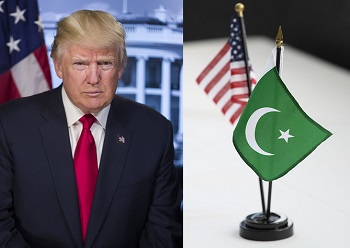
U.S. President Donald Trump sidestepped an announcement on U.S. troops levels in Afghanistan during a major address to the nation and warned Pakistan over its alleged support for extremist groups in the region.

Trump, outlining his new strategy for Afghanistan and the South Asia region, said he would not “talk about numbers of troops or our plans for further military activities.”

Speaking at the Fort Myer military base near Washington on August 21, Trump said his new strategy will not be based on “arbitrary timelines,” but conditions on the ground.

“Our troops will fight to win,” he said, offering no timetable for how long U.S. forces would need to remain in the country.

The president warned that Washington will no longer tolerate Pakistan offering “safe havens” to extremist groups like the Afghan Taliban, a claim Islamabad denies.

“We can no longer be silent about Pakistan’s safe havens,” Trump said. “Pakistan has much to gain from partnering with our effort in Afghanistan. It has much to lose by continuing to harbor terrorists.”

“Of the three U.S. presidents who have had to grapple with Pakistan’s undeclared war on Afghanistan, Trump’s words were the clearest in pointing out Pakistan as part of the problem,” said Mohammad Taqi, a Pakistani analyst.

“I anticipate a tougher U.S. line with Pakistan but whether Trump would move from political pressure and withholding money to withdrawing major non-NATO ally status to outright sanctions on Pakistan’s military remains to be seen,” added Taqi.

Afghanistan’s ambassador to the United States, Hamdullah Mohib, applauded Trump’s strategy, saying it rated a “10 out of 10.”

Mohib praised Trump for “breaking the silence” about Pakistan’s sheltering of what he called terrorists.

Trump also said the United States needs a plan for an “honorable and enduring outcome” in Afghanistan, and added that a rapid exit would have “unacceptable” consequences.

He left the door open to an eventual peace deal with the Taliban, adding that “nobody knows if or when that will ever happen.”

Following Trump’s address, U.S. Defense Secretary James Mattis announced that the United States and several allies have committed to boosting their troop numbers in Afghanistan. He did not provide further details.

He said he had directed the chairman of the Joint Chiefs of Staff to carry out Trump’s new strategy.

“The Trump administration rightly believes that an enduring commitment without arbitrary withdrawal timelines will convey the right message to both friends and enemies in Afghanistan and the broader region,” said Ahmad K. Majidyar, a South Asia expert.

Majidyar said Trump’s new approach appears to comprise elements of both counterterrorism and counterinsurgency strategies.

“The U.S. will continue to train, equip, and assist the Afghan security forces to arrest the Taliban momentum and will help the Afghan government to expand its writ across the country,” he said. “At the same time, the administration will give more authority to the Pentagon to target regional and international terrorist groups in Afghanistan and Pakistan that pose a direct threat to American security.”

Trump has long been skeptical of U.S. policy in the region, where the United States has been at war since the U.S.-led invasion of Afghanistan in 2001.

During his address, Trump said his “original instinct was to pull out” from Afghanistan, but he reached a different conclusion after studying the issue once he was in office.

He also said U.S. support for the Afghan government was not a “blank check” and urged Kabul to implement “real reform and progress.”

“Compared with his predecessors, Trump has outlined a more comprehensive and clearer strategy in Afghanistan,” said Omar Samad, an Afghan analyst. “Most importantly, he has distinguished who is friend and who is foe.”

Trump announced a strategic review soon after taking office in January, and U.S. officials have said he has privately questioned whether sending more troops was prudent.

Trump told his top officials in July that “we aren’t winning…we are losing” the war in Afghanistan to militant groups like the Taliban, Al-Qaeda, and Islamic State (IS).

Options that were considered by U.S. leaders reportedly ranged from pulling U.S. military troops out of Afghanistan entirely, to drawing down troop numbers in favor of outside security contractors, to sending in more troops and stepping up efforts to defeat the Taliban and other militants battling the Afghan government.

Trump’s decision came after he met with his national security team at the Camp David presidential retreat on August 18 to discuss the conflict.

Earlier this year, reports suggest the president sought to give U.S. Defense Secretary Jim Mattis the authority to set troop levels in Afghanistan, opening the door for future troop increases requested by General John Nicholson, the top U.S. Army commander in Afghanistan.

Media reports said Mattis sought greater clarity on Trump’s strategy but also recommended an increase of up to 4,000 troops to help strengthen the Afghan army.

Nicholson said in February he needed “a few thousand” more troops, with some potentially drawn from Washington’s NATO allies.

U.S. military and intelligence officials are concerned that a withdrawal or reduced presence of U.S. forces would give the Taliban the upper hand in the current standoff and allow Al-Qaeda and IS militants to use Afghanistan as a base for plotting attacks on the United States and its allies.

The United States invaded Afghanistan in October 2001 after invoking NATO’s Article Five clause on collective self-defense following the September 11 attacks on New York and Washington. The U.S.-led campaign overthrew the Islamist Taliban government, which was hosting Al-Qaeda leader Osama bin Laden and his group’s training camps.

U.S. forces have remained bogged down there through the presidencies of George W. Bush, Barack Obama, and now Trump.

“I took over a mess, and we’re going to make it a lot less messy,” Trump said when asked earlier this year about Afghanistan.

“It is quite striking that after an eight month strategic review, the end result is a policy that sounds remarkably like the policies that have been used-and in many ways failed-in the past,” said Michael Kugelman, South Asia associate at the Woodrow Wilson International Center for Scholars in Washington.

Omar Samad, an Afghanistan expert in Washington, says a combination of factors has ensured the United States’ failure so far to achieve its objectives in Afghanistan.

“The U.S. has had an on-off engagement with Afghanistan,” he says. “There have been distractions by other hot spots like Iraq, and Washington has not focused on the real source of the threat in the form of the Taliban’s external sanctuaries and support systems in Pakistan.”

“The strategy has been ineffective because it hasn’t stated clear objectives,” says Michael Kugelman, South Asia associate at the Woodrow Wilson International Center for Scholars in Washington.

“The initial objectives — removing Al-Qaeda safe havens and removing its Taliban hosts from power –were clear and achieved very quickly. But ever since then the U.S. has struggled to articulate why it’s in Afghanistan and why Americans continue to die.”

The Taliban has repeatedly urged the United States and its allies to leave Afghanistan, ruling out peace talks with the Kabul government as long as foreign forces remain on Afghan soil.

The strategy in Afghanistan was complicated by internal differences over whether the United States should take a harder line toward Pakistan for failing to shut down alleged Afghan Taliban sanctuaries and arrest Afghan extremist leaders.

U.S. and Afghan officials have said the Afghan Taliban are supported by elements of Pakistan’s military and top intelligence agency, a charge Islamabad denies.

Before Trump’s decision, the proposals under discussion were reported to include the United States launching a review of whether to designate Pakistan a state sponsor of terrorism if it didn’t pursue senior leaders of the Afghan Taliban and the allied Haqqani network, considered the most lethal Afghan extremist group.

Such a designation would have triggered harsh U.S. sanctions, including a ban on arms sales and an end to U.S. economic assistance for Pakistan.

“Without making Pakistan face the consequences of its actions, its behavior won’t change towards Afghanistan,” analyst Taqi said.

A U.S. report found earlier this year that the Taliban controls or contests control of about 40 percent of the country. Furthermore, Afghan security forces are facing an increasing presence of IS militants in the country.

Since peaking at about 100,000 troops in 2010-11, the U.S. force has diminished. The United States currently maintains 8,400 troops in Afghanistan — a cap set last year by then-President Barack Obama.

However, there are at least another 2,000 U.S. troops — mostly special forces — assigned to fight militant groups such as the Taliban and IS.

About 5,000 non-U.S. NATO forces are still in the country.

With reporting by Reuters and AP

Copyright (c) 2016. RFE/RL, Inc. Reprinted with the permission of Radio Free Europe/Radio Liberty, 1201 Connecticut Ave NW, Ste 400, Washington DC 20036.

Related

  • Trump Unveils ‘Path Forward’ on Afghanistan
  • Trump unveils new strategy to prolong military presence in Afghanistan
  • Trump’s ‘America First’ base unhappy with flip-flopping Afghanistan speech
  • Trump Declares Open-Ended War In Afghanistan
  • Trump Promises To ‘Deal With Pakistan’ On Afghan War
  • Trump’s Vague New Afghanistan Strategy Continues An Endless War
Posted in Anti-Government Militants, Haqqani Network, ISIS/DAESH, Pakistan-Afghanistan Relations, Security, Taliban, US-Afghanistan Relations |

Taliban assault underway in Afghanistan’s Jawzjan province

21st August, 2017 · admin

jowzjan_mapPress TV
August 21, 2017

Taliban militants have launched an attack in the northern Afghan province of Jawzjan, attempting to run over the district headquarters and setting off heavy fighting, the provincial police chief says.

Gen. Rahmatullah Turkistani said on Monday that a fierce gun battle was underway between Afghan security forces and the militants in Khamab district.

Turkistani added that security forces were trying to repel the assault across the troubled region.

Elsewhere in his remarks, Turkistani said that in recent days the militants had gained control of several villages nearby.

Some unconfirmed reports claim that the Taliban have seized control of the Khamab district headquarters.

The Taliban have yet to comment on the ongoing fierce fighting in the north.

The renewed attacks by the Taliban militants come amid fresh warnings by the group about the need for the US to fully withdraw its forces from Afghanistan after more than a decade and half of occupation.

US President Donald Trump has resisted repeated requests by the Pentagon to approve the deployment of another 4,000-strong US force to Afghanistan, which the US military says is needed to boost the so-called counter-terrorism operations in the country.

There are 8,400 American troops in Afghanistan. Washington claims they are advising and assisting the Afghan military in the fight against the Taliban and Daesh.

Trump is to detail his strategy for the war in Afghanistan, the US’ longest military conflict, in an address later on Monday.

In a prime-time speech to the nation, Trump may announce a modest increase in US troops, as recommended by his senior advisers.

The United States invaded Afghanistan in October 2001 after the September 11 attacks on New York and Washington, and overthrew the Taliban regime. But US forces have remained bogged down there through the presidencies of George W. Bush, Barack Obama and now Trump.

Posted in ISIS/DAESH, Security, Taliban | Tags: Jowzjan |

Trump To Explain Path Forward On Afghanistan

21st August, 2017 · admin
Donald Trump

Donald Trump

Radio Free Europe/Radio Liberty
August 21, 2017

The White House says U.S. President Donald Trump will deliver a major address to the nation on August 21 to explain “the path forward for America’s engagement in Afghanistan and South Asia.”

The statement said Trump will make the speech at the Fort Myer military base near Washington and it will be televised at 9 p.m. local time (0100 GMT August 22).

The options that have been considered by U.S. leaders range from pulling out of the country entirely to sending more troops and stepping up efforts to defeat the Taliban and other militants battling the Afghan government.

Some speculation has centered on the possibility of substituting paid contractors for U.S. service personnel to battle the Taliban, although most officials have dismissed that option.

Speaking on August 20 to reporters during a trip to Jordan, U.S. Defense Secretary Jim Mattis said that Trump has agreed with military leaders on a new strategy for Afghanistan after “rigorous” debate. He declined to provide details.

“The president has made a decision. As he said, he wants to be the one to announce it to the American people,” Mattis said.

He said that “everyone who had equity was heard,” including budget officials responsible for funding any possible changes.

“I’m very comfortable that the strategic process was sufficiently rigorous, and did not go in with a preset condition in terms of what questions could be asked and what decisions could be made,” Mattis said.

Trump met on August 18 with his national security team at the Camp David presidential retreat to discuss the conflict in Afghanistan.

A White House statement following the meeting said Trump had been briefed on “a new strategy” but that no decisions had been made.

“The president is studying and considering his options and will make an announcement to the American people, to our allies and partners, and to the world at the appropriate time,” press secretary Sarah Sanders said.

General John Nicholson, the top U.S. Army commander in Afghanistan, speaking before the White House announcement, signaled his belief in a long-term U.S. commitment during a ceremony to inaugurate a new Afghan special operations unit.

“I assure you we are with you in this fight. We are with you and we will stay with you,” he said at Camp Morehead, a training site for Afghan commandos southeast of Kabul.

There are about 8,400 U.S. troops in Afghanistan and some 5,000 troops from other NATO member and partner countries.

A senior administration official told Reuters news agency that the likeliest outcome was that Trump would agree to a modest increase in U.S. troops as recommended by his top advisers.

Media reports have indicated that the U.S. military has requested 3,000 to 5,000 additional troops.

A top U.S. military officer in Kabul told the Associated Press that increasing the number of troops would allow the U.S. military to send additional advisers or provide air support to two battlefields simultaneously. Currently, the official said, they can only do so for one operation at a time.

Colonel Abdul Mahfuz, an Afghan intelligence agency official, said a withdrawal of U.S. forces “would be a total failure.”

U.S.-backed forces have been in Afghanistan since invading following the September 11, 2001, terror attacks in the United States carried out by Al-Qaeda militants, whose leaders were being harbored by the Taliban-led government.

The coalition drove the Taliban from power, but the militant group has been resurgent in recent years and controls large portions of the country.

On August 21, Afghan officials said heavy clashes were under way between security forces and Taliban fighters in the northern province of Jawzjan.

Provincial police chief General Rahmatullah Turkistani said the militants launched an attack in Khamab district to try capture the district headquarters.

Some unconfirmed reports claimed that the Taliban had seized control of the district headquarters.

With reporting by AFP, dpa, Reuters, The Washington Post, AP, and Khaama Press

Related

  • What Trump said about Afghanistan before he became president
  • A history of Trump’s thoughts on Afghanistan
  • Trump’s Afghanistan strategy isn’t really a flip-flop. But his entire foreign policy is.
  • Today: Afghanistan Is Now Trump’s War
  • Afghan Insurgents Gaining as Trump Rolls Out War Plan
Posted in Security, US-Afghanistan Relations |

Hekmatyar Makes Anti-Massoud Remarks ‘For Fame’

21st August, 2017 · admin
Gulbuddin Hekmatyar

Gulbuddin Hekmatyar

Tolo News:  Chief Executive Abdullah Abdullah on Monday said the recent statement by Gulbuddin Hekmatyar, the Hizb-e-Islami leader, about Afghanistan’s National Hero Ahmad Shah Massoud are rooted from a reprisal and that those remarks will not affect the status of the country’s martyrs.  Abdullah said that Hekmatyar was seeking fame by making such ‘false allegations’. Click here to read more (external link).

Posted in Ethnic Issues, Political News | Tags: Ahmad Shah Masood, Dr. Abdullah, Hekmatyar, Hezb-e Islami |

Taliban, Daesh jointly massacred people in Afghan village: UN

20th August, 2017 · admin

massgrave_mirza

Press TV / August 20, 2017

An investigation team of the United Nations has confirmed that the Taliban and Daesh terrorist groups jointly massacred dozens of people, mostly Shia Hazaras, in an attack that “may amount to a war crime” in a remote northern village in Afghanistan earlier this month.

Investigators of the UN Assistance Mission in Afghanistan (UNAMA) said in a fact-finding report published on Sunday that they had “verified allegations” of at least 36 deaths in the Shia-majority village of Mirza Olang in Sayad district of the northern province of Sar-e Pul.

“These killings, corroborated by multiple credible sources, constitute violations of international humanitarian law and may amount to war crimes,” UNAMA said in its report.

Fierce fighting began in the area on August 3, when militants, reportedly including foreign nationals, seized a checkpoint manned by local police. Two days later, they entered the village, and according to provincial officials, killed civilians in “a brutal, inhumane way.”

The militants set fire to several mosques, torched at least 30 houses, beheaded a number of villagers and shot dozens of others dead, officials said.

Following the civilian deaths, Taliban said in a statement that they had gained control of the village, but dismissed reports of the massacre, calling it “hollow propaganda by the enemy.”

The report added that more than half of the killings occurred on August 5, when hundreds of families tried to flee the militant-held Mirza Olang.

At the time, Afghan officials announced that over 60 people had lost their lives in the brutal killing carried out by Taliban and Daesh in a rare joint operation between the two rival terrorist groups.

Taking advantage of the chaos, the Daesh Takfiri group, which is mainly based in the Middle East, has managed to establish some footholds in Afghanistan, trying to recruit from Afghan Taliban defectors.

In a statement, Taliban rejected the UN report, claiming that it contained “baseless allegations” and “false claims.” Last week, however, Daesh said in a statement that it had killed some 54 Shia Muslims in the ill-fated village.

Taliban militants were removed from power following the 2001 US-led invasion of Afghanistan, but they have stepped up activities in recent months, attempting to overrun several regions. During the past 16 years, the militants have been conducting terrorist attacks across the country, killing and displacing civilians.

Many parts of Afghanistan remain plagued by militancy despite the presence of foreign troops.

Related

  • UN Probe Concludes Taliban, Islamic State Jointly Killed 36 Afghans
  • IS Atrocities Spike in North, East Afghanistan
Posted in Civilian Injuries and Deaths, Ethnic Issues, Human Rights, ISIS/DAESH, Security, Taliban | Tags: Hazaras, Shiites |

Afghanistan’s Special Operations Forces Transition from Division to Corps

20th August, 2017 · admin

afghan_securityNoor Zahid

VOA News / August 20, 2017

Afghanistan’s elite Special Operations Forces officially transitioned from a division to a corps, as part of a four-year security plan aimed at vastly improving the country’s security forces.

“Today, it is a special day because the success you all have achieved for this nation is exemplified here,” Afghan President Ashraf Ghani said at the ceremony in Kabul on Sunday. “This year you defeated the enemy on the battlefield. I can see the results of your fight from last week and I see the huge improvement from last year.”

“To the enemy: our Special Forces will defeat you,” Ghani warned the militant groups that are fighting his government.

His country’s forces are facing a growing threat posed by the Taliban and and Islamic State’s self-styled Khorasan branch (IS-K), which emerged in the Afghanistan-Pakistan region two years ago.

U.S. Army General John Nicholson, NATO commander in Afghanistan, said the beginning of the corps would further bolster Afghan security forces’ capabilities against the militants.

“The activation of special operations corps today marks the beginning of the end for the enemy of Afghanistan. As we sit here today, Afghanistan commandos are defeating the Taliban across Afghanistan,” said Gen. Nicholson. “When these commandos appear on the battlefield, the enemy has no choice but to run or die.”

The Special Forces division, which currently consists of two special operations brigades will add two more brigades under its command and control, according to NATO’s Resolute Support Mission in Afghanistan.

Shifting focus

Afghanistan has announced a four-year security plan to improve its security forces in the next few years to help beat the growing threat posed by Taliban, which recently made advances in Afghanistan and the Pakistan border region.

In addition to doubling the special operation forces from 17,000 and upgrading the division of special forces to a new military corps within the Afghan National Army structure, the four-year plan also includes “increasing aviation capabilities of Afghan Air Force and reforms inside the structure of Afghan security forces,” Ahmad Shah Katawazai, defense liaison at the Afghan embassy in Washington, told VOA.

Given the nature of the fight, Afghanistan has shifted its focus from conventional warfare to special operations.

“Most of the army offensive have been conducted by our special forces,” Afghan diplomat Katawazai told VOA.

Currently, Special Forces conduct 70 percent of the country’s military operations. These elite forces are trained as quick reaction forces and conduct regular night raids against militants in various regions of the country.

U.S. President Donald Trump said Saturday his administration has decided how to deal with the 16-year war in Afghanistan.

One day after meeting at the Camp David presidential retreat with his national security team, Trump tweeted, “Important day spent at Camp David with our very talented generals and military leaders. Many decisions made, including on Afghanistan,” without providing details.

Roughly 13,000 NATO troops, including 8,400 Americans, are deployed in Afghanistan, carrying out anti-terrorism operations and training Afghanistan’s 300,000 security forces.

Kabul has said that the U.S. policy should include supporting the Afghan security plan as it needs more U.S. and NATO trainers as well as additional military hardware.

Posted in Security | Tags: Afghan Army |

Trump has made decision on Afghanistan strategy: Mattis

20th August, 2017 · admin
James Mattis

James Mattis

Press TV / August 20, 2017

US President Donald Trump and his military commanders have agreed on the country’s new strategy in Afghanistan after a “rigorous” debate, the Pentagon chief says.

US Defense Secretary James Mattis made the announcement on Sunday but said Trump would lay out the new plan himself.

However, Mattis did not provide details about what the decision was on Afghanistan on when the White House would make an announcement.

“I’m very comfortable that the strategic process was sufficiently rigorous, and did not go in with a preset condition in terms of what questions could be asked and what decisions could be made,” Mattis said in Jordan, at the beginning of a five day tour of the Middle East and Eastern Europe.

“Everyone who had equity was heard,” he said, including budget officials responsible for funding the effort.

On Saturday, Trump said in a tweet that the meeting at Camp David saw “many decisions made, including on Afghanistan.”

It seems that the new strategy would allow the Pentagon to increase troop levels in Afghanistan. Before his election, Trump had on several occasions voiced his frustration with the 16-year war.

In an executive order issued back in February, Trump tasked Mattis with devising an Afghan strategy that was expected to be delivered in mid-July, but the timeline has reportedly been thrown off by the president’s demand for revisions.

It was reported in June that Trump had allowed Mattis to increase the estimated 8,400 troop level in Afghanistan by about 4,000.

Mattis said all strategic decisions were up to Trump and he needed more time to think.

“The president had to make strategic decisions,” Mattis said. “He delegated to me, when he came in, the tactical and operational decision. He did not delegate one ounce of the strategic decision.”

“He really did come in with very different courses of action, and I think he now needs the weekend to collect his thoughts about how he’s going to explain it to the American people,” the pentagon chief added.

The US invaded Afghanistan in 2001 to allegedly eradicate Taliban and other terror groups. After years of deadly clashes, however, Taliban is seemingly stronger while the Daesh (ISIL) terror group has also gained foothold in the country.

Related

  • Mattis Tight-Lipped on New Afghan Strategy
  • Trump Announces Speech To Lay Out U.S. Strategy In Afghanistan
  • Nicholson Says Winning War Is Critical


Posted in ISIS/DAESH, Security, Taliban, US-Afghanistan Relations |

Afghanistan Marks 98 Years Of Independence From Britain

19th August, 2017 · admin · 1 Comment

Independence-day

RFE/RL’s Radio Free Afghanistan

August 19, 2017

Security forces are on high alert across Afghanistan, as the country marks the 98th anniversary of its independence from Britain.

The celebrations this year are occurring following a number of high-profile attacks in the country and as the U.S. administration is trying to forge a new strategy in the 16-year war against the Taliban.

Afghan pop star Aryana Sayeed went ahead with a charity concert in Kabul on the evening of August 19 despite threats from conservatives who oppose women performing in public.

More than 1,000 people gathered at the five-star Hotel Inter-Continental amid tight security to attend the performance.

“I’m going to try to give a smile to my fellow Afghans, and give them a good time, and try to change their mind, and take their tension away for at least an hour or two,” Sayeed told RFE/RL on August 17.

August 19 commemorates the signing of the Treaty of Rawalpindi in 1919, which gave Afghanistan complete independence from British rule after three wars. Although Britain controlled Afghanistan’s foreign policy for 40 years following the end of the second Anglo-Afghan War, Afghanistan was never part of the British Empire.

Earlier in the day, Afghan President Ashraf Ghani laid a wreath at the Freedom Minaret inside the Defense Ministry compound in Kabul during a ceremony attended by cabinet members and other government officials.

Ghani also welcomed dozens of Afghan dignitaries and family members at the presidential palace to mark the anniversary, and later traveled to the western city of Herat, where he inaugurated two factories and addressed both troops and ordinary Afghans.

“A very happy Independence Day to everyone in AFG,” Ghani wrote in a message on Twitter.”This day was earned with lots of sacrifices. We must pay homage & celebrate this legacy.”

There is an increased police presence in Kabul, which has been on edge since a massive truck bomb ripped through its diplomatic quarter on May 31, killing about 150 people. No group claimed responsibility for the attack.

“All of our police units are on the highest state of alert and they are placed everywhere across the city,” Kabul police spokesman Abdul Basir Mujahid told AFP.

“We have increased the number of police checkpoints in and around the diplomatic quarters [too],” he added, amid fears that the Taliban would mark the anniversary with a large-scale attack.

Taliban militants are currently at the peak of their summer fighting season.

In the southern province of Helmand, officials said clashes with Taliban militants killed at least five police officers and wounded five others late on August 18. The Taliban claimed responsibility for the attack in Nawa district.

The Taliban also attacked a checkpoint at Tarin Kot, the capital of the neighboring Uruzgan Province. One police officer and 15 militants were reported killed in the fighting, while three officers were wounded.

The celebrations this year are also occurring after President Donald Trump met with his military advisers at the Camp David presidential retreat in Maryland on August 18 to discuss a U.S. strategy in South Asia.

On August 19, Trump tweeted about the meeting, saying, “Many decisions made, including on Afghanistan.”

It was unclear what decisions were made and when they will be announced.

Speaking after meeting at Camp David, White House Press Secretary Sarah Sanders said Trump had made no decision on committing more U.S. troops to Afghanistan.

“The president is studying and considering his options and will make an announcement to the American people, to our allies and partners, and to the world at the appropriate time,” Sanders told reporters.

There are currently some 8,400 U.S. and 5,000 NATO troops supporting Afghanistan’s security forces in the fight against Taliban and other militants.

U.S. Secretary of State Rex Tillerson conveyed his congratulations to Afghanistan on the eve of the anniversary of the country’s independence from Britain, saying, “Our strong friendship with Afghanistan is based on our mutual dedication to helping the Afghan people secure a safe and prosperous future.”

“Afghanistan has made significant economic, political, and social progress in the last 16 years, and we bear witness every day to the Afghan people’s dedication to building a more democratic and peaceful country,” a statement said.

“The Afghan spirit of resilience and courage in the face of adversity continues to guide the people of Afghanistan toward a better future,” it added.

With reporting by AFP and AP

Copyright (c) 2016. RFE/RL, Inc. Reprinted with the permission of Radio Free Europe/Radio Liberty, 1201 Connecticut Ave NW, Ste 400, Washington DC 20036.
Posted in Britain-Afghanistan Relations, History, Security | Tags: Aryana Sayeed |
Previous Posts
Next Posts

Subscribe to the Afghanistan Online YouTube Channel

---

---

---

Get Yours!

Peace be with you

Afghan Dresses

© Afghan Online Press
  • About
  • Links To More News
  • Opinion
  • Poll