logo

Daily Updated Afghan News Service

  • Home
  • About
  • Opinion
  • Links to More News
  • Good Afghan News
  • Poll Results
  • Learn about Islam
  • Learn Dari (Afghan Persian/Farsi)

Recent Posts

  • The toxic aftermath of decades of war in Afghanistan November 17, 2026
  • Taliban Force Two Shia Clerics To Abandon Mourning Ceremonies In Exchange For Release November 17, 2026
  • Taliban Leader Offers Government Posts To Opponents For First Time November 17, 2026
  • Tolo News in Dari – November 17, 2026 November 17, 2026
  • Ariana Airlines to launch direct flights between Mazar-e-Sharif and Jeddah November 17, 2026
  • Nearly 2 Million People in Afghanistan Living With Diabetes, 71% Unaware November 17, 2026
  • Zimbabwe beat Afghanistan by 57 runs in second Test November 17, 2026
  • Australia’s transparency watchdog orders new search for Afghanistan killing documents November 17, 2026
  • ICC Must Reconsider Closure Of Afghanistan War Crimes Case, Say Afghan Rights Groups November 16, 2026
  • Tolo News in Dari – November 16, 2026 November 16, 2026

Categories

  • Afghan Children
  • Afghan Sports News
  • Afghan Women
  • Afghanistan Freedom Front
  • Afghanistan United Front
  • Al-Qaeda
  • Anti-Government Militants
  • Anti-Taliban Resistance
  • AOP Reports
  • Arab-Afghan Relations
  • Art and Culture
  • Australia-Afghanistan Relations
  • Book Review
  • Britain-Afghanistan Relations
  • Canada-Afghanistan Relations
  • Censorship
  • Central Asia
  • China-Afghanistan Relations
  • Civilian Injuries and Deaths
  • Corruption
  • Crime and Punishment
  • Drone warfare
  • Drugs
  • Economic News
  • Education
  • Elections News
  • Entertainment News
  • Environmental News
  • Ethnic Issues
  • EU-Afghanistan Relations
  • Everyday Life
  • France-Afghanistan Relations
  • Germany-Afghanistan Relations
  • Haqqani Network
  • Health News
  • Heroism
  • History
  • Human Rights
  • India-Afghanistan Relations
  • Interviews
  • Iran-Afghanistan Relations
  • ISIS/DAESH
  • Islamophobia News
  • Japan-Afghanistan Relations
  • Landmines
  • Media
  • Misc.
  • Muslims and Islam
  • NATO-Afghanistan
  • News in Dari (Persian/Farsi)
  • NRF – National Resistance Front
  • Opinion/Editorial
  • Other News
  • Pakistan-Afghanistan Relations
  • Peace Talks
  • Photos
  • Political News
  • Reconstruction and Development
  • Refugees and Migrants
  • Russia-Afghanistan Relations
  • Science and Technology
  • Security
  • Society
  • Tajikistan-Afghanistan Relations
  • Taliban
  • Traffic accidents
  • Travel
  • Turkey-Afghanistan Relations
  • UN-Afghanistan Relations
  • Uncategorized
  • US-Afghanistan Relations
  • Uzbekistan-Afghanistan Relations

Archives

Dari/Pashto Services

  • Bakhtar News Agency
  • BBC Pashto
  • BBC Persian
  • DW Dari
  • DW Pashto
  • VOA Dari
  • VOA Pashto

Trump seeks ‘permanent occupation’ of Afghanistan

11th October, 2017 · admin · 1 Comment
Donald Trump

Donald Trump

Press TV / October 11, 2017

Interview

The Trump administration has intensified the US bombing campaign in Afghanistan and is changing the rules of engagement there, indicating a plan for a “permanent occupation” of the country, an analyst says.

Stephen Lendman, an author and radio host from Chicago, made the remarks in an interview when asked about new data which shows the United States military dropped a total of 751 bombs on Afghanistan in September, the highest monthly number in the past seven years.

The figure indicated a 50-percent increase from August (503 bombs), which the command attributed to President Donald Trump’s so-called “strategy to more proactively target extremist groups” in the country.

“The Trump administration intends changing the rules on Afghanistan, the so-called rules of engagement which are never enforced anyway.  Field commanders will have more latitude on how they want to handle the situation in Afghanistan,” Lendman told Press TV on Tuesday.

“The US bombing of the country is more intensive than it has been in years,” he noted. Over the past years, the US has been bombing the country “with no possibility of resolving the conflict.”

Lendman also said the US presence in Afghanistan “has nothing whatsoever to do with combating terrorism and has everything to do with controlling the country, occupying it, using it as a land-based aircraft carrier as part of the plan to surround Russia and China with US military bases.”

“The reason for all US wars is dominance, power, control of countries, and of course contesting independent ones, Russia, China, Iran and all the others,” Lendman opined.

In a clear U-turn from his campaign pledge to end the now 16-year occupation of Afghanistan, Trump said in August that his views had changed since entering the White House and that he would continue the military intervention “as long as we see determination and progress” in the South Asian country.

Posted in Interviews, Opinion/Editorial, US-Afghanistan Relations |

Quartet to meet in Oman to revive Afghan peace talks with Taliban

11th October, 2017 · admin

peacePress TV / October 11, 2017

The four-nation Quadrilateral Coordination Group (QGC), comprising Afghanistan, China, Pakistan and the United States, are expected to hold a meeting in Oman next week to revive stalled peace talks involving the Taliban militant group.

A senior Pakistani Foreign Ministry official confirmed on Wednesday that the meeting would be convened in Muscat on October 16. The official would not elaborate on whether the representatives of the Taliban would join the gathering.

An Afghan official and a senior member of the High Peace Council (HPC) said the meeting would certainly take place with the presence of the Taliban delegates.

“HPC and government representatives will participate, and it is an important one because the Taliban representatives will be there. We will go with a clear plan,” said Amin Waqad, who is also a close aide to Afghan President Ashraf Ghani.
Sources from the Taliban said the group had yet to receive an invitation, adding that the general plan in the leadership was to skip the meeting.

Two senior members of the Taliban later said that even an invitation at the time being would be too late and the group would certainly refrain from sending a delegation.

“Till that time, we were not invited, but even if we received any invitation, our senior members decided not to participate in the meeting,” said one of the Taliban leaders on condition of anonymity.
The QGC has been trying over the past years to facilitate direct talks between the Afghan government and the Taliban. Efforts stalled in 2015 when news broke out that Taliban’s founder and long-time leader Mullah Omar had died in 2013.

Washington has yet to comment on the news of the Oman meeting. Many blame the White House for the recent resurgence in Taliban militancy, saying US forces have effectively failed to establish security in Afghanistan some 16 years after they led an invasion of the country to oust the Taliban from power.

Posted in Pakistan-Afghanistan Relations, Peace Talks, Security, Taliban |

Afghanistan election plans face political, technical test

11th October, 2017 · admin

ballot_boxReuters: Less than a year before Afghanistan is due to hold much-delayed parliamentary elections, technical problems and political wrangling are hampering a project seen as vital to ensuring the country’s long-term stability. Click here to read more (external link).

Related

  • IEC Determined To Hold Elections On Time
Posted in Elections News, Political News |

Memos reveal torture of detainees at CIA black site in Afghanistan

11th October, 2017 · admin

ciaPress TV / October 10, 2017

New details have been disclosed about the CIA’s torture program at a black site prison near Kabul, Afghanistan, thanks to newly unsealed documents the spy agency and US Defense Department were forced to declassify over a lawsuit filed by victims of the torture program.

The newly revealed papers expose in shocking detail how the agency integrated two contract psychologists to design brutal torture techniques to break detainees’ resistance and give torture the appearance of legality.

Two surviving prisoners and the family of a detainee who died at the ‘Cobalt’ site in Afghanistan reached an out-of-court settlement with CIA psychologists James Mitchell and Bruce Jessen in August after a lawsuit was filed for their role in the torture.

The CIA and Pentagon were forced to declassify the documents related to the case in pretrial discovery. The memos also capture high-level agency discussions revealing a cover-up in action.

The Cobalt site, which opened outside Kabul in September 2002, was made up of 20 cells, according to the documents. In 16 cells, prisoners were shackled to a metal ring in the wall. In four, designed for sleep deprivation, they stood chained by the wrists to an overhead bar.

The cells were unheated, and inmates were subjected to blaring music around the clock.

“The atmosphere was very good,” Jessen told CIA investigators. “Nasty, but safe.”

The Cobalt site came to be referred to as “The Darkness” by inmates for its full sensory deprivation darkness which detainees experienced round the clock, sometimes for years.

Mitchell and Jessen designed a list of “techniques” to be used to torture prisoners, including waterboarding (causing the individual to experience the sensation of drowning and walling (slamming inmates into flexible walls).

The objective was to “reach the stage where we have broken any will or ability of subject to resist or deny providing us information,” the pair unambiguously stated.

Jessen had been visiting the site to oversee the interrogation of Gul Rahman, a detainee who was interrogated for several weeks in November.

Rahman, wearing only socks and a diaper in the unheated cells, was subjected to 48 hours of sleep deprivation and cold showers, despite concerns by one supervisor that he might develop hypothermia.

Five days after Jessen left the site, Rahman died of hypothermia. He had been left in his cell naked from the waist down.

The two psychologists were paid $80 million for their work, which included helping interrogate Khalid Sheikh Mohammed, the alleged mastermind of the September 11, 2001 attacks, and Abu Zubaydah, another top al-Qaeda official.

The Senate Intelligence Committee released a report in 2014 about CIA’s brutal detention and interrogation program and its use of various forms of torture on detainees between 2001 and 2006 during the so-called war on terror.

The report concluded that the spy agency’s interrogation methods were far more brutal and less effective than what the agency had publicly acknowledged.

The report also said that not a single terrorist attack was foiled as a result of the use of the so-called harsh interrogation techniques.

Posted in Human Rights, US-Afghanistan Relations | Tags: Gul Rahman, Torture |

Taliban Dismissive of Four-Nation Afghan Peace Talks in Oman

11th October, 2017 · admin

omanVOA News / October 10, 2017

ISLAMABAD — The Taliban’s stance of not engaging in peace talks with the current Afghan government “remains unchanged” and the insurgent group has “nothing to do” with next week’s four-nation dialogue in Oman aimed at seeking a politically negotiated end to the war, a senior insurgent official said Tuesday.

Negotiators from Afghanistan, Pakistan, China and the United States are scheduled to meet in the Gulf state on October 16 to revive discussions on encouraging the Taliban to come to the negotiating table and enhance regional anti-terrorism cooperation.

“Nobody has contacted us, nor are we participating in this meeting,” a senior Taliban official told VOA when asked whether the Islamist insurgency intends to join or approve the so-called Quadrilateral Cooperation Group, or QCG. He requested anonymity as he was not authorized to publicly discuss Taliban political matters.

“Our stance on talks with the Kabul government remains unchanged. We have nothing to do with this meeting. It is their [member nations] own affair,” the official said.

The Taliban has long refused to engage in any Afghan peace talks until U.S. and NATO forces completely withdraw from Afghanistan. The insurgents have also been calling for, among other demands, recognition for their so-called political office in Qatar.

The QCG was launched in January 2016, but the peace process broke down after a fifth session in May of that year, when a U.S. drone attack killed the leader of the Taliban, Mullah Akhtar Mansoor, while he was traveling through the Pakistani province of Baluchistan.

QCG members were supposed to use their respective influence on parties to the Afghan conflict to nudge the Taliban to the negotiating table; however, the Taliban’s reluctance to engage in peace talks, along with Kabul-Islamabad relations marred by mistrust, have been blamed for preventing any progress in previous QCG sessions.

Pakistan Foreign Ministry spokesman Nafees Zakaria says that as a member of QCG, his country has always played the role of a facilitator along with China and the U.S to promote Afghan peace and reconciliation.

“Pakistan supports negotiated settlement of issues and national reconciliation in Afghanistan. We do not believe that military approach can bring peace in Afghanistan,” he told VOA when asked about Islamabad’s expectations from the upcoming QCG meeting.

Pakistani officials blamed Washington for scuttling the four-way process by eliminating Mansoor. Afghan and U.S. officials have long complained the Taliban uses sanctuaries on Pakistani soil to orchestrate insurgent attacks on the other side of the border.

The QCG process is being revived at a time when the U.S. military has stepped up counter-Taliban operations in Afghanistan in a bid to halt resurgent Taliban advances and pressure them to engage in peace talks.

The latest official data shows U.S. forces dropped 751 bombs in September against the Taliban and militants linked to the Afghan branch of the Islamic State terrorist group, the largest number of weapons employed in a single month since 2012.

“This increase can be attributed to the president’s strategy to more proactively target extremist groups that threaten the stability and security of the Afghan people,” according to a U.S. airpower monthly summary.

In August, U.S. President Donald Trump announced his “new strategy” for the Afghan war, America’s longest overseas military engagement, promising intensification in military efforts and asking Pakistan to end “safe havens” on its territory. Islamabad rejected the charges as an attempt to “scapegoat” Pakistan for U.S. failures in Afghanistan.

Skeptics are unsure whether the latest QCG process will produce results in the wake of growing contacts Russia and Iran have established with the Taliban.

Pakistani Foreign Minister Khawaja Asif said last week that Moscow’s influence on the Taliban may have increased to the point that Moscow would be better able than Islamabad to coax the insurgents into peace talks.

“At least for our influence on Taliban today, there is a mistrust… perhaps they have more influence from other countries in that region than in our Pakistan,” Asif told VOA when asked whether he was referring to Russia.

The Pakistani foreign minister, however, appeared upbeat about the coming QCG meeting in Oman’s capital, Muscat. ”The quadrilateral arrangement will again be in operation. So, that is something we still hope will… still work,” Asif said.

Islamabad, Moscow, Beijing and Tehran are pushing for a political solution to the Afghan war, saying 16-year of military efforts have failed to achieve peace in Afghanistan.

Analysts like former U.S. special representative for Afghanistan and Pakistan, Richard Olson, at a recent public talk in Washington, also emphasized the need for making a political settlement with the Taliban a central element of the U.S. policy.

“I would say that the first step in a modality, that is to say the first step in getting a peace process going, would be to… open formally the Taliban office in Doha for the purposes of discussing peace with the Afghan government in a publicly recognized way,” Olson said.

The former U.S. envoy also noted that regional countries would have to be involved in Afghan peace building efforts because of an increase in the “hedging strategies” by countries around Afghanistan.

“Russia and Iran have been building their relationships with the Taliban despite a lack of ideological religious affinity, especially on the part of Iran. Pakistan has never really abandoned a hedging strategy with regard to Afghanistan,” said Olson, who also served as Washington’s ambassador to Kabul and Islamabad.

Posted in Pakistan-Afghanistan Relations, Peace Talks, Security, Taliban, US-Afghanistan Relations |

Taliban Warns Phone Companies to Shut Down Their Coverage in Ghazni

11th October, 2017 · admin

ghazniVOA News / October 10, 2017

GHAZNI, WASHINGTON — Taliban militants have ordered mobile phone companies to shut down their networks at dark in central Ghazni province, provincial police authorities told VOA.

In a bid to mitigate risks, the insurgent group has asked telecom operators in Ghazni province to halt operations from 6 p.m. to 6 a.m. in order to make it difficult for the Afghan forces to get intelligence and tips on militants through mobile phones.

The insurgent group has destroyed several telecom towers in the restive province over the last three days.

“The recent uptick in airstrikes against militants is causing increasing casualties in Taliban ranks. The militants want to destroy telecom towers to disturb communications,” Fahim Amarkhil, a police spokesperson in Ghazni told VOA.

The Taliban has said Afghan and U.S. forces use the network signals to locate the group’s fighters.

In addition to Ghazni, the insurgent group has asked mobile phone companies to halt their networks’ coverage in several other provinces as well, an official of a major cell phone company in Kabul told VOA on the condition of anonymity.

The official added that in many cases, the operators have no option but to comply with what the insurgents want.

The disruption in telecom services have angered customers in Ghazni who rely on mobile phone as their only means of communication. The residents fear that if the government does not address the issue in a timely manner, the telecom companies may end their operation in the province.

“Some time ago, the Taliban had warned the telecom companies to pay taxes to the Taliban, not to the government, and the issue was resolved,” Jamil Weqar, an activist in Ghazni told VOA. “But this time, they destroyed the towers which has created many problems [for customers],” he added.

The telecommunication sector in Afghanistan has made tremendous progress following the fall of the Taliban and the establishment of a new government in the post 2001 era. With little to no access to cell phones and the internet 15 years ago, the country now has more than 20 million mobile phone subscribers, covering more than 85 percent of the population.

New strategy

The communication blackout comes as the new U.S. strategy in Afghanistan is increasing military pressure on militant groups across the country. The new plan includes a more intensive use of airpower against militants.

The latest official data shows U.S. forces dropped 751 bombs in September against the Taliban and militants linked to the so-called Islamic State terror group in Afghanistan. This is the largest number of bombs dropped on militants in a single month since 2012.

“This increase can be attributed to the president’s strategy to more proactively target extremist groups that threaten the stability and security of the Afghan people,” according to a summary from the U.S. Air Force’s Central Command.

U.S.-backed Afghan forces are trying to regain control of areas and districts lost to the Taliban across the country.

The government has said it controls nearly two-thirds of the country’s 407 districts. Taliban reportedly control 33 districts, less than 10 percent of the national total. Around 116 districts are “contested” areas, according to a recent U.S. military assessment.

Posted in Security, Taliban | Tags: Ghazni |

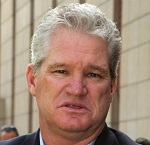
Australian Jones named interim Afghanistan head coach

10th October, 2017 · admin
Dean Jones

Dean Jones

Reuters: Former Australia batsman Dean Jones is to take over the role of Afghanistan’s head coach on an interim basis and lead the team in their Intercontinental Cup fixture in Hong Kong later this month, the country’s cricket board has announced. Afghanistan did not renew their contract with former India cricketer Lalchand Rajput and have been without a head coach since August. Click here to read more (external link).

Posted in Afghan Sports News | Tags: Cricket |

Trump’s military dropped 751 bombs on Afghanistan in September, highest number in 7 years

10th October, 2017 · admin
Donald Trump

Donald Trump

Newsweek: The September total represents a 50% increase from August and was described by the command as being part of President Donald Trump’s “strategy to more proactively target extremist groups” in the country. Since 2010, the most bombs dropped during one month was 589, in August 2012—still almost 200 fewer than were released in September.  Click here to read more (external link).

Posted in Security, US-Afghanistan Relations |

Serious Concerns Raised Over Taliban Leader’s Visit To Helmand

9th October, 2017 · admin
Mullah Haibatullah Akhundzada

Mullah Haibatullah Akhundzada

Tolo News: Kandahar’s police chief General Abdul Raziq said that Taliban leader Mullah Haibatullah Akhundzada visited Helmand a week and a half ago where he met with Taliban members.  Raziq said that the visit had been at the request of Pakistan’s intelligence services, ISI. According to him, the Taliban leader visited Mosa Qala in Helmand after entering the country from Pakistan through Baluchistan.  According to Raziq, the reason for his visit was to discuss their plans for resistance against increased airstrikes and to agree to a ceasefire with Daesh in the country. Click here to read more (external link).

Posted in Pakistan-Afghanistan Relations, Taliban | Tags: Abdul Raziq, General Abdul Raziq, Helmand, Hibatullah Akhundzada, ISI |

Deadly Attacks Prompt ICRC to ‘Drastically’ Cut Afghan Operations

9th October, 2017 · admin

red_crossVOA News
October 9, 2017

Ayaz Gul

ISLAMABAD — The International Committee of the Red Cross (ICRC) has decided to “drastically” reduce its presence and relief operations in war-torn Afghanistan, citing a series of recent attacks that have killed seven of its staff, including a foreigner.

“This is a difficult moment for the ICRC and the staff. After 30 years of continuous presence in the country, we are reducing our presence and operations,” said Monica Zanarelli, the aid group’s county head, on Monday.

“But let’s be very clear, we are not leaving Afghanistan,” she explained to reporters in Kabul.

There have been security incidents over the past 30 years undermining relief activities, said Zanarelli, but three direct attacks in northern Afghanistan since last December have particularly affected the ICRC on the whole.

They included last month’s attack on the biggest rehabilitation center in the country located in the city of Mazar-i-Sharif, in which a 38-year-old Spanish physiotherapist, Lorena Enebral, was shot and killed by a patient inside the orthopedic facility.

“This last incident has really hit us in our heart in a place that has always been considered as the safest place for everyone in Afghanistan treating the most vulnerable people for decades and being hit directly by a long-term patient has been really a shock not only for us in Afghanistan but for the whole organization across the world,” she said.

The ICRC’s office in the northern volatile provinces of Faryab and Kunduz will be closed by end of the year while the main office in Mazar-i-Sharif, capital of Balkh province, will be “seriously downsized,” explained the country head.

Among other latest security incidents that prompted the ICRC to scale back its Afghan operations was the abduction of an ICRC staff member in Kunduz in December 2016 who was released four weeks later.

The incident was followed by the killing of six staff and the abduction of two others after militants attacked an ICRC relief mission passing through the northern Jawzjan province.

The abductees were released in early September, just days before the Spanish physiotherapist was gunned down in Mazar-i-Sharif.

These incidents left the organization with “no other choice but to drastically reduce” its relief activities in the country, said Zanarelli. She said the ICRC is still not clear about reasons for these attacks and refused to speculate on who could be behind them.

The Taliban has denied involvement in any of the attacks on ICRC. Some local media reports said militants linked to the Islamic State were behind some of them.

Currently, ICRC has 1,800 staff in Afghanistan, including 120 foreigners, she said.

U.N.-led relief groups say millions of war-hit and poverty-stricken Afghans are in need of urgent humanitarian assistance across Afghanistan and the intensified conflict continues to uproot tens of thousands of families.

While Afghan security forces are struggling to contain the Taliban insurgency in most of the country’s 34 provinces, IS loyalists have also stepped up attacks in Afghanistan.

U.N. officials say conflict related Afghan civilian casualties have already hit new highs this year.

Posted in Security | Tags: Kidnapping |
Previous Posts
Next Posts

Subscribe to the Afghanistan Online YouTube Channel

---

---

---

Get Yours!

Peace be with you

Afghan Dresses

© Afghan Online Press
  • About
  • Links To More News
  • Opinion
  • Poll