logo

Daily Updated Afghan News Service

  • Home
  • About
  • Opinion
  • Links to More News
  • Good Afghan News
  • Poll Results
  • Learn about Islam
  • Learn Dari (Afghan Persian/Farsi)

Recent Posts

  • The toxic aftermath of decades of war in Afghanistan November 17, 2026
  • Taliban Force Two Shia Clerics To Abandon Mourning Ceremonies In Exchange For Release November 17, 2026
  • Taliban Leader Offers Government Posts To Opponents For First Time November 17, 2026
  • Tolo News in Dari – November 17, 2026 November 17, 2026
  • Ariana Airlines to launch direct flights between Mazar-e-Sharif and Jeddah November 17, 2026
  • Nearly 2 Million People in Afghanistan Living With Diabetes, 71% Unaware November 17, 2026
  • Zimbabwe beat Afghanistan by 57 runs in second Test November 17, 2026
  • Australia’s transparency watchdog orders new search for Afghanistan killing documents November 17, 2026
  • ICC Must Reconsider Closure Of Afghanistan War Crimes Case, Say Afghan Rights Groups November 16, 2026
  • Tolo News in Dari – November 16, 2026 November 16, 2026

Categories

  • Afghan Children
  • Afghan Sports News
  • Afghan Women
  • Afghanistan Freedom Front
  • Afghanistan United Front
  • Al-Qaeda
  • Anti-Government Militants
  • Anti-Taliban Resistance
  • AOP Reports
  • Arab-Afghan Relations
  • Art and Culture
  • Australia-Afghanistan Relations
  • Book Review
  • Britain-Afghanistan Relations
  • Canada-Afghanistan Relations
  • Censorship
  • Central Asia
  • China-Afghanistan Relations
  • Civilian Injuries and Deaths
  • Corruption
  • Crime and Punishment
  • Drone warfare
  • Drugs
  • Economic News
  • Education
  • Elections News
  • Entertainment News
  • Environmental News
  • Ethnic Issues
  • EU-Afghanistan Relations
  • Everyday Life
  • France-Afghanistan Relations
  • Germany-Afghanistan Relations
  • Haqqani Network
  • Health News
  • Heroism
  • History
  • Human Rights
  • India-Afghanistan Relations
  • Interviews
  • Iran-Afghanistan Relations
  • ISIS/DAESH
  • Islamophobia News
  • Japan-Afghanistan Relations
  • Landmines
  • Media
  • Misc.
  • Muslims and Islam
  • NATO-Afghanistan
  • News in Dari (Persian/Farsi)
  • NRF – National Resistance Front
  • Opinion/Editorial
  • Other News
  • Pakistan-Afghanistan Relations
  • Peace Talks
  • Photos
  • Political News
  • Reconstruction and Development
  • Refugees and Migrants
  • Russia-Afghanistan Relations
  • Science and Technology
  • Security
  • Society
  • Tajikistan-Afghanistan Relations
  • Taliban
  • Traffic accidents
  • Travel
  • Turkey-Afghanistan Relations
  • UN-Afghanistan Relations
  • Uncategorized
  • US-Afghanistan Relations
  • Uzbekistan-Afghanistan Relations

Archives

Dari/Pashto Services

  • Bakhtar News Agency
  • BBC Pashto
  • BBC Persian
  • DW Dari
  • DW Pashto
  • VOA Dari
  • VOA Pashto

Afghanistan’s All-Female TV Channel Surges Ahead

20th October, 2017 · admin


Radio Free Europe/Radio Liberty
October 19, 2017

Zan TV is Afghanistan’s first and only TV station run by and for women. When it went on air in May, some Afghans doubted that it would succeed. Five months on, the station’s ratings are soaring. RFE/RL’s Frud Bezhan met some of the professionals who are braving the threat of violence in order to break new ground for Afghan women. (Camera: Ahmad Massoud)

Copyright (c) 2017. RFE/RL, Inc. Reprinted with the permission of Radio Free Europe/Radio Liberty, 1201 Connecticut Ave NW, Ste 400, Washington DC 20036.
Posted in Afghan Women, Media | Tags: Zan TV |

Pakistan Builds Afghan Border Fence in Bid to Stem Terrorist Attacks

20th October, 2017 · admin · 1 Comment

afg_and_pakistanVOA News / October 19, 2017

Ayaz Gul

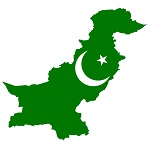
ANGOOR ADDA, PAKISTAN — Pakistan’s military is installing a robust fence along its largely porous 2,600-kilometer border with Afghanistan and establishing new forts as well as outposts on mountain peaks.

Officials hope the fortification plan of hundreds of millions of dollars will effectively prevent militant infiltration and stabilize both sides of what has been traditionally an open border with numerous regular and irregular crossings.

Afghanistan opposes the fence project. It has traditionally disputed the colonial-era demarcation drawn up by the British in 1893 and does not recognize it as an international boundary. Kabul maintains the fence plan would add to the problems of divided families and tribes, mainly ethnic Pashtuns, straddling the dividing line.

Islamabad dismisses Afghan objections over the status of the boundary and insists it inherited the international frontier when Pakistan gained independence from Britain in 1947.

On Wednesday, the Pakistan army flew reporters to the tribal border regions of South Waziristan and adjoining North Waziristan, which together share a more than 300-kilometer border with Afghanistan.

The two semi-autonomous tribal districts are part of the volatile Federal Administered Tribal Areas, known as FATA, and were until a few years ago notorious for harboring militants blamed for terrorist attacks on both sides of the Pakistan-Afghanistan border.

Pakistani commanders say security operations have neutralized the threat of militancy in almost all of FATA, prompting authorities to launch the construction of a pair of 12-feet high chicken wire fences topped with barbed wire.

The fence is a “paradigm change” and an “epoch shift” in the border control management, said local army commander, Major-General Nauman Zakaria while briefing reporters at a newly built fort on in Angoor Adda, which overlooks Afghan district of Barmal.

“I have a border of about 106 kilometers that this [South Waziristan] agency shares with Afghanistan,”… [which] is going to be completely fenced, and the border forts will be completed. There will not be an inch of international border [here] which shall not remain under our observation by December of 2018,” said Zakaria.

He noted while Pakistani troops occupy over 150 outposts in the area under his command, Afghan forces maintain only 21 posts on their side due to capacity issues and lack of sufficient forces.

“We are sitting here to stay now, inshallah [God willing]. So, while we do this for our sakes, we complement our Afghan brothers and we complement their capacity issues, so that they are also very sure that there is no place left unguarded on the Pakistan and Afghanistan border,” said the general.

High-tech surveillance

Modern surveillance systems, including drones, are also being deployed to ensure day-and-night monitoring of the border.

The fencing plan, expected to be fully implemented within the next two years, will cost Pakistan an estimated cost of $532 million. Around 180 of the 750 forts the army plans to build along the border have been either completed or are under construction.

Military officials say they have thus far fenced off more than 40 kilometers of what is considered as most critical and vulnerable to militant infiltration.

Strict border controls have been introduced at the two main border crossings of Torkham and Chaman to document identities of daily crossers.

Area military commanders admit the fencing plane will divide villagers around Chaman but say the government plans to relocate Pakistani families by offering them financial compensations.

But despite Pakistan’s border security measures, the country remains under scrutiny amid persistent Afghan and U.S. allegations that Islamabad is covertly helping the Taliban and its ally, the Haqqani terrorist network, to use safe havens on Pakistani soil for plotting attacks against the Afghan government.

Pakistan rejects charges

Afghan officials allege insurgent leaders are located on the other side of the border and are being protected by the Pakistani spy agency.

Islamabad strongly rejects the charges and says sustained security operations have cleared all areas of militants on its side of the border. In turn, Pakistan alleges militants have taken refuge in ungoverned Afghan areas and plot cross-border deadly raids.

Speaking in Angoor Adda, General Zakaria vowed that by the time the border management plan is completed “we will be very sure of one thing: that nobody can cross this place.” He said the fence will address mutual concerns “once forever” and help Pakistan maintain a stable relationship with the neighbors he described as “Afghan brothers.”

Related

  • CIA Chief Says US Needs Pakistan Help on Taliban Safe Havens
  • Taliban Attack Army Camp in Southern Afghanistan
  • Pakistan’s Tehreek-i-Taliban Confirms Death of Its Top Leader
Posted in Haqqani Network, Pakistan-Afghanistan Relations, Security, Taliban, US-Afghanistan Relations | Tags: Durand Line, Pashtuns |

Taliban attacks leave 70 dead, 170 injured in two Afghan provinces

17th October, 2017 · admin
Taliban fighters

Taliban fighters

Press TV / October 17, 2017

The Taliban militants have launched coordinated attacks on police forces in two neighboring provinces in southern Afghanistan, leaving at least 70 people dead and nearly 170 others injured.

Militants with explosives-laden vehicles had initially attacked a police training center in Gardez, the capital of Paktia Province in southeast Afghanistan, claiming at least 41 lives and wounding 158 others.

“At first a suicide bomber detonated a car filled with explosives near the training center, making way for a number of attackers to start their assault,” the Interior Ministry said in a statement.

Hospital officials said “women, students and police” were among the victims.

A battle is underway between the attackers, armed with guns and vests, and security forces inside the center located near the Paktia police headquarters, the ministry added.

“At the moment the area is sealed by the Crisis Response Unit and efforts are ongoing to eliminate the terrorists,” the statement noted.

Separately in the southern Ghazni Province, the militants attacked a police station and a checkpoint in the center of Andar District, leaving 25 policemen dead and 10 others injured, according to provincial authorities.

Elsewhere in western Afghanistan, Farah Province’s police chief Abdul Maruf Fulad said the Taliban had attacked a government compound in Shibkho district and killed at least three security forces.

The Taliban have claimed responsibility for all the assaults.

The militants have warned that there will be no let-up in their attacks until foreign forces fully withdraw from Afghanistan.

Afghanistan is still suffering from insecurity and violence years after the United States and its allies invaded the country as part of Washington’s so-called war on terror. The invasion removed the Taliban from power, but militancy continues to this day.

Taking advantage of the chaos, the Takfiri Daesh terror group has also emerged in eastern Afghanistan.

Other Security News

  • Civilians Caught in Taliban, IS Crossfire in Afghanistan’s Nangarhar Province
Posted in Civilian Injuries and Deaths, ISIS/DAESH, Security, Taliban | Tags: Ghazni, Paktia |

HRW Gives Kabul, Donors Failing Grade On Afghan Girls’ Education

17th October, 2017 · admin

hrwRadio Free Europe/Radio Liberty

October 17, 2017

Efforts by Kabul and international donors to educate girls in Afghanistan have “significantly faltered in recent years,” according to Human Rights Watch (HRW).

Sixteen years after the U.S.-led military intervention in Afghanistan ousted the Taliban from power, an estimated two-thirds of Afghan girls do not attend school, HRW said in a new report released on October 17.

The 132-page report says efforts to educate girls have faltered as security in the country worsens and international donors disengage.

The report — titled I Won’t Be A Doctor, And One Day You’ll Be Sick: Girls’ Access To Education In Afghanistan — is based on 249 interviews with girls aged 11 to 18 from four provinces.

More girls are attending school in Afghanistan today than under the Taliban, but the Western-backed Afghan government is far from reaching its stated goal of educating all of them.

According to the government, 3.5 million children are out of school and 85 percent of them are girls. Only 37 percent of adolescent girls are literate, compared to 66 percent of adolescent boys.

The obstacles girls face in Afghanistan to get an education are many, the HRW report says.

In a country where co-ed education is nearly unheard of, Kabul provides fewer schools for girls than boys at both the elementary and high-school levels.

Fewer than 20 percent of teachers are female in more than half of Afghanistan’s provinces, HRW explains, creating a barrier for the many girls from families who won’t allow them to be taught by a male.

Many girls are forced to remain at home, HRW says, “due to discriminatory attitudes that do not value or permit their education.”

With one-third of girls marrying before 18, many are compelled to drop out of school.

Despite the obstacles, many Afghan families are doing all they can to educate their daughters, the HRW report highlights.

HRW interviewed families that moved across cities and even the country to find a school for their daughters, as well as others that separated to enable girls to study.

In some cases, older brothers traveled to Iran to work illegally to pay school costs for their younger sisters back home.

Even when school is free, there are other costs families face in sending their kids to school. And if forced by financial constraints, many families opt to send their sons instead of their daughters to school.

About one-quarter of Afghan children work to help their families survive desperate poverty, and many girls weave, embroider, beg, or pick garbage rather than study.

The Taliban and other insurgents now control or contest more than 40 percent of Afghanistan’s districts. Fighting between Taliban and government forces has driven thousands of families from their homes and more than 1 million Afghans are internally displaced.

In areas under their control, the Taliban often limits girls to only a few years of schooling or bans them from education altogether.

In contested areas, girls seeking to attend school face heightened security threats. The conflict has been accompanied by lawlessness, as militias and criminal gangs have proliferated, and girls face threats including sexual harassment, kidnapping, and acid attacks, as well as targeted attacks and threats against girls’ education, the HRW report said.

International donors also come in for criticism. HRW applauded efforts by Kabul and donors to develop “community-based education,” which is a network of classes, often held in homes, that allow children, particularly girls, to access education in communities far from a government school.

But HRW pointed out that these specialized classes, funded by donors and implemented by NGOs, remain outside the government school system and are vulnerable to the vagaries of NGO funding.

Copyright (c) 2017. RFE/RL, Inc. Reprinted with the permission of Radio Free Europe/Radio Liberty, 1201 Connecticut Ave NW, Ste 400, Washington DC 20036.
Posted in Afghan Children, Afghan Women, Education, Human Rights |

Gitmo’s Living Legacy in the Trump Era

16th October, 2017 · admin
Donald Trump

Donald Trump

TomDispatch: Almost 13 years later, Guantanamo remains open. It is still officially a “detention facility,” not a “prison,” and those held within it still aren’t “prisoners” – you weren’t even allowed to use that word there in 2007 – but “enemy combatants,” a category the Bush administration believed put them beyond all legal norms, American or international. As Greenberg reports today, the Trump administration has just classified its first American prisoner off the battlefields of Syria as an “enemy combatant.” Gulp. Click here to read more (external link).

Related

  • I am in Guantánamo Bay. The US government is starving me to death: Khalid Qassim
Posted in Human Rights | Tags: Torture |

Afghanistan obtains AIIB permanent membership

16th October, 2017 · admin

aiib[Xinhua] – KABUL – Afghanistan has obtained the permanent membership of the Asian Infrastructure Investment Bank (AIIB), the country’s finance ministry reported on its website Sunday.

Afghan Finance Minister Eklil Hakimi received the Certificate of Permanent Membership of the AIIB on the sidelines of the World Bank and International Monetary Fund (IMF) meeting earlier this week in Washington, the United States, the ministry said in a statement.

Hakimi also met Jin Liqun, president of AIIB, and discussed a number of topics including Afghanistan’s membership in the bank, financial and technical facilities for Afghan solar energy, railway connectivity of five countries (Afghanistan, Kyrgyzstan, Tajikistan, Iran and China), financing infrastructure projects, among others, the statement noted.

“Afghanistan’s membership in the bank has been very important and paves the way for the implementation of major national projects,” the statement said.

Established in 2015, AIIB aims to provide financing to address the daunting infrastructure needs across Asia.

Posted in Economic News |

Afghanistan’s Zurkhaneh Team Wins Nepal Contest

16th October, 2017 · admin

sports

Tolo News: Afghanistan’s National Zurkhaneh Team won eight gold medals, two silver medals and one bronze at the South Asian Zurkhaneh Sports Championships held in Nepal.   The competition was attended by eight teams and was hosted by Nepal. Click here to read more (external link).

Other Sports News

  • Hosts Iran trounce Afghanistan 8-2 in futsal encounter
Posted in Afghan Sports News | Tags: Futsal, Zurkhaneh |

Afghan Authorities Say Truck Bombing Foiled In Kabul

15th October, 2017 · admin

afghan_securityRadio Free Europe/Radio Liberty

October 15, 2017

Afghan authorities say they have foiled a potentially deadly blast in the capital, Kabul, after seizing a truck loaded with explosives.

The Interior Ministry said on October 15 that police officers shot and wounded the driver of the vehicle after he failed to stop at a security checkpoint.

“The driver was wounded and the truck stopped” in the incident late on October 14, a statement said.

Mohamed Salem Almas, the head of criminal investigations in the Kabul police, said that the truck was carrying more than 2,700 kilograms of explosives.

Almas added that the Haqqani network, a group that has ties to the Afghan Taliban, was behind the attack, which he said was to be carried out in a crowded part of the city.

Security has been ramped up in Kabul since a massive truck bomb ripped through the city’s diplomatic quarter on May 31, killing about 150 people and wounding hundreds of others, mostly civilians.

No group has claimed responsibility for the attack — the deadliest in the city since 2001 – but the government blamed the Haqqani network for the bombing. Western officials said it was caused by more than 1,500 kilograms of explosives packed in a truck.

Despite the enhanced security measures, militants have continued to carry out deadly attacks in the capital.

On September 29, suicide attackers detonated a bomb near a large Shi’ite mosque in Kabul, killing at least six people as worshippers prepared to commemorate Ashura, the holiest celebration in the Shi’ite religious calendar. The extremist group Islamic State claimed responsibility for the attack.

The Western-backed government in Kabul is struggling to beat back insurgents in the wake of the exit of most NATO forces in 2014.

The administration of President Donald Trump has recently unveiled a strategy to try to defeat the militants, and officials said more than 3,000 additional U.S. troops are being sent to the country to reinforce the 11,000 U.S. troops already stationed there.

With reporting by AP and AFP

Copyright (c) 2017. RFE/RL, Inc. Reprinted with the permission of Radio Free Europe/Radio Liberty, 1201 Connecticut Ave NW, Ste 400, Washington DC 20036.
Posted in Ethnic Issues, Haqqani Network, Security, Taliban | Tags: Shiites |

Four-Way Afghan Peace Talks Set to Resume in Oman

15th October, 2017 · admin · 1 Comment

omanVOA News / October 15, 2017

ISLAMABAD — Afghanistan, Pakistan, China and the United States are set to resume four-way discussions Monday in Oman in a renewed bid to seek a politically negotiated settlement to the Afghan war.

The meeting of the so-called Quadrilateral Cooperation Group, or QCG, in the Gulf state is taking place after a gap of 16 months. Senior foreign ministry officials from the four nations will lead their respective delegations at the talks.

“The objective is to bring the warring factions within Afghanistan to the negotiating table. It is upon all members of QCG to meet and decide on how to move forward in this context,” Pakistani Foreign Ministry spokesman Nafees Zakaria said on the eve of Monday’s meeting.

The QCG was launched in January 2016. The aim was for members to use their respective influence on the Afghan government and the Taliban insurgency to nudge them to the negotiating table.

But the peace process broke down after a fifth session in May of that year, when a U.S. drone attack killed the Taliban Chief, Mullah Akhtar Mansoor, while he was traveling through the Pakistani province of Baluchistan.

The insurgents’ reluctance to engage in peace talks with the Afghan government and Kabul’s strained relations with Islamabad also hampered previous QCG sessions from making any significant headway.

While officials have reported a thaw in bilateral relations following recent high-level meetings between Afghan and Pakistani leaders, the Taliban has reiterated its stance of not engaging in peace negotiations with Kabul until all American and NATO forces withdraw from Afghanistan.

A senior insurgent official told VOA his group has “nothing to do” with the QCG process.

“Nobody has contacted us, nor are we participating in this meeting,” the official said requesting anonymity as he was not authorized to publicly discuss Taliban political matters.

The Islamist insurgency currently controls or contests more than 40 percent of Afghan territory and continues to make battlefield gains despite intensified ground operations and airstrikes by U.S.-backed Afghan security forces.

Pakistani officials blamed Washington for scuttling the four-way process by eliminating Mansoor.

For their part, Afghan and U.S. officials complained Islamabad was not doing enough to prevent the Taliban from using sanctuaries on Pakistani soil to orchestrate insurgent attacks in Afghanistan, charges Pakistan denied.

Diplomatic sources told VOA that participating nations this time have agreed to revive the QCG process with a commitment to maintain secrecy of its proceedings.

Posted in Pakistan-Afghanistan Relations, Peace Talks, Taliban, US-Afghanistan Relations |

Bomb Kills Pakistani Troops Seeking Captors of Freed Western Family

15th October, 2017 · admin

pakistanVOA News / October 15, 2017

ISLAMABAD — Officials in Pakistan say a roadside bomb attack Sunday killed at least four soldiers and wounded several others near the Afghan border.

The troops were part of a search party deployed in the Kurram tribal district to hunt down the handlers of a kidnapped American-Canadian family Pakistani forces rescued from captivity last week on a tip from U.S. intelligence, the army said.

The Pakistani Taliban took credit for plotting the bomb attack and gave a much higher death toll for government soldiers than what was officially reported. The militant group often issues inflated casualty tolls for such attacks.

American Caitlan Coleman, 31, her Canadian husband Joshua Boyle, 34, and their three young children were freed Wednesday hours after kidnappers transported them into Kurram from across the porous Afghan border.

Upon arriving in Toronto, Boyle revealed the captors, members of the Taliban-linked Haqqani network, had raped his wife and killed one of couple’s four children, an infant daughter.

The Afghan Taliban Sunday rejected Boyle’s charges as “false and fabricated”, saying they are enemy-driven propaganda to defame the insurgent group. In a statement to the media, Taliban spokesman Zabihullah Mujahid said Coleman had a “natural miscarriage.”

Pakistani officials said the driver and three armed men escorting the hostages fled to a nearby Afghan refugee camp after troops shot out the tires of their vehicles.

U.S. President Donald Trump praised and thanked Pakistani leaders for rescuing the family and described the action as “a positive moment” in bilateral relations, which through the years have been periodically marred by mutual distrust and suspicion.

Related

  • Pakistan, US Upbeat About Future Ties After Hostage Rescue
  • What were Caitlan Coleman and Joshua Boyle really doing in Afghanistan?
Posted in Haqqani Network, Security, Taliban |
Previous Posts
Next Posts

Subscribe to the Afghanistan Online YouTube Channel

---

---

---

Get Yours!

Peace be with you

Afghan Dresses

© Afghan Online Press
  • About
  • Links To More News
  • Opinion
  • Poll