logo

Daily Updated Afghan News Service

  • Home
  • About
  • Opinion
  • Links to More News
  • Good Afghan News
  • Poll Results
  • Learn about Islam
  • Learn Dari (Afghan Persian/Farsi)

Recent Posts

  • The toxic aftermath of decades of war in Afghanistan November 17, 2026
  • Taliban Force Two Shia Clerics To Abandon Mourning Ceremonies In Exchange For Release November 17, 2026
  • Taliban Leader Offers Government Posts To Opponents For First Time November 17, 2026
  • Tolo News in Dari – November 17, 2026 November 17, 2026
  • Ariana Airlines to launch direct flights between Mazar-e-Sharif and Jeddah November 17, 2026
  • Nearly 2 Million People in Afghanistan Living With Diabetes, 71% Unaware November 17, 2026
  • Zimbabwe beat Afghanistan by 57 runs in second Test November 17, 2026
  • Australia’s transparency watchdog orders new search for Afghanistan killing documents November 17, 2026
  • ICC Must Reconsider Closure Of Afghanistan War Crimes Case, Say Afghan Rights Groups November 16, 2026
  • Tolo News in Dari – November 16, 2026 November 16, 2026

Categories

  • Afghan Children
  • Afghan Sports News
  • Afghan Women
  • Afghanistan Freedom Front
  • Afghanistan United Front
  • Al-Qaeda
  • Anti-Government Militants
  • Anti-Taliban Resistance
  • AOP Reports
  • Arab-Afghan Relations
  • Art and Culture
  • Australia-Afghanistan Relations
  • Book Review
  • Britain-Afghanistan Relations
  • Canada-Afghanistan Relations
  • Censorship
  • Central Asia
  • China-Afghanistan Relations
  • Civilian Injuries and Deaths
  • Corruption
  • Crime and Punishment
  • Drone warfare
  • Drugs
  • Economic News
  • Education
  • Elections News
  • Entertainment News
  • Environmental News
  • Ethnic Issues
  • EU-Afghanistan Relations
  • Everyday Life
  • France-Afghanistan Relations
  • Germany-Afghanistan Relations
  • Haqqani Network
  • Health News
  • Heroism
  • History
  • Human Rights
  • India-Afghanistan Relations
  • Interviews
  • Iran-Afghanistan Relations
  • ISIS/DAESH
  • Islamophobia News
  • Japan-Afghanistan Relations
  • Landmines
  • Media
  • Misc.
  • Muslims and Islam
  • NATO-Afghanistan
  • News in Dari (Persian/Farsi)
  • NRF – National Resistance Front
  • Opinion/Editorial
  • Other News
  • Pakistan-Afghanistan Relations
  • Peace Talks
  • Photos
  • Political News
  • Reconstruction and Development
  • Refugees and Migrants
  • Russia-Afghanistan Relations
  • Science and Technology
  • Security
  • Society
  • Tajikistan-Afghanistan Relations
  • Taliban
  • Traffic accidents
  • Travel
  • Turkey-Afghanistan Relations
  • UN-Afghanistan Relations
  • Uncategorized
  • US-Afghanistan Relations
  • Uzbekistan-Afghanistan Relations

Archives

Dari/Pashto Services

  • Bakhtar News Agency
  • BBC Pashto
  • BBC Persian
  • DW Dari
  • DW Pashto
  • VOA Dari
  • VOA Pashto

Uzbek, Afghan Leaders Discuss Bilateral Ties, Regional Security

5th December, 2017 · admin

uzbekistanRadio Free Europe/Radio Liberty
December 5, 2017

Uzbek President Shavkat Mirziyoev and Afghan President Ashraf Ghani have discussed bilateral ties and regional security at a meeting in Tashkent.

Joint efforts against terrorism, extremism, and drug trafficking were also on the agenda at the December 5 talks.

Officials said several documents were signed after the talks, including agreements on cooperation in trade, education, health care, and creation of a joint commission to enforce security along the Uzbek-Afghan border.

The documents also included deals on a new electricity line from Uzbekistan to Afghanistan and Tashkent’s involvement in construction of a new railway line connecting the Afghan cities of Herat and Mazar-e Sharif.

Ghani arrived in Tashkent on December 4.

He is scheduled to visit the ancient city of Bukhara and meet with teachers and students of Bukhara State University before the end of his official visit on December 6.

Based on reporting by uz24.uz and uzdaily.com

Copyright (c) 2017. RFE/RL, Inc. Reprinted with the permission of Radio Free Europe/Radio Liberty, 1201 Connecticut Ave NW, Ste 400, Washington DC 20036.

Related

  • Afghanistan, Uzbekistan sign 23 agreements
  • Uzbekistan Seeks Eventual Sea Access With Afghan Railway Deal
  • Kabul’s Plan to Realize Afghanistan’s Geographic Dividend
Posted in Central Asia, Economic News, Security | Tags: Uzbekistan-Afghanistan Relations |

Afghan Officials Say Leading Al-Qaeda Leader Killed In Operation

5th December, 2017 · admin · 3 Comments

ndsRadio Free Europe/Radio Liberty
December 5, 2017

Afghan officials say they have killed dozens of Al-Qaeda officials during operations in eastern and southern Afghanistan, including senior leader Omar Khetab.

The National Directorate of Security said in a statement on December 5 that some 80 members of the extremist Islamic group had been killed and 27 others arrested in the joint operations with NATO-led coalition forces.

It did not give a date for when the operations were carried out.

The Afghan intelligence agency added that its forces also destroyed five Al-Qaeda bases in southern Zabul Province and the eastern Ghazni and Paktia provinces.

The statement said Khetab — who was also known as Omar Mansoor — was the second-most powerful leader of the Al-Qaeda in the Indian Subcontinent group, which has vowed to establish an Islamic caliphate by overthrowing the governments in Pakistan, India, Burma, and Bangladesh.

Based on reporting by AP and Reuters

Copyright (c) 2017. RFE/RL, Inc. Reprinted with the permission of Radio Free Europe/Radio Liberty, 1201 Connecticut Ave NW, Ste 400, Washington DC 20036.
Posted in Al-Qaeda, Security | Tags: NDS |

Protected but Stifled, a Pakistani Minority Feels Imprisoned in its Own Community

5th December, 2017 · admin · 8 Comments

pakistanAyesha Tanzeem
VOA News
December 5, 2017

QUETTA, PAKISTAN — Ali Haris dreamed of getting a college degree and a well-paid job. Instead, he had to quit his education after high school. Going to Balochistan University, the only public university in the area that he could afford, would require him to travel through areas unsafe for him, putting his life at risk.

“At that time, around 2013-14, there was no chance that if we went there we would come back alive,” he said. He wasn’t alone in giving up the prospects of a comfortable future.

“Out of my class in school, almost 70-80 percent quit higher education,” he added. Some who could afford it migrated to other cities or other countries. The ones left behind were doing odd jobs in the area.

The 21-year-old belonged to the Hazara community, a minority Shiite sect that primarily resides in Pakistan, Afghanistan, and Iran. For years, Sunni militant groups in Pakistan have targeted Shiites across the country for their faith, but the Hazaras seem to have an extra-large target blazed on their backs, and for good reason.

While it is usually hard to physically distinguish between Shiites and Sunnis, the Hazaras are an exception. Their distinctive facial features, a mixture of Mongolian and Central Asian ancestry, make them easily identifiable. In addition, many of them live in two large clusters in Quetta, the capital city of Pakistan’s restive Balochistan province, making attacks easier to plan.

Over the last ten or so years, hundreds have been killed in suicide bombings or targeted attacks. Stories of near death experiences are aplenty.

“We were saved just because the car took a turn. If we were a few seconds late, we would be gone,” said Daud Changezi, describing the day when a massive blast ripped through Quetta’s Alamdar road, killing more than 90 people. In the car with Changezi were his wife and four kids.

He now works from home, consulting for various NGOs, but feels his professional growth has stagnated.

“The favorite part of my job was field work. Now I can’t go out,” he said, although he still feels he is one of the luckier ones—at least he has a job. Many of his friends were less fortunate.

“My friend Abdul had a mobile phone shop in the main bazaar, but he closed his business and left the country. He is now in Indonesia, in a transit center for refugees,” Changezi said.

Protection for Hazaras

After several particularly heinous attacks in 2013, the government started providing Hazaras extra protection. A paramilitary force called the Frontier Corps set up check posts at main entrances to Hazara areas. Anyone going inside is now stopped, their identity documents checked. Peripheral entrances are blocked by thick walls.

While these measures have helped stem attacks on Hazaras, they have also stifled the community’s social and economic life. The designated safe areas for Hazaras mean the rest of the city is inherently unsafe for them.

“We’ve been economically strangled. We had a lot of shops around town. Now there are none. We had a successful transport business across town. Now we are limited to our own areas,” said Ahmed Ali Kohzad, a politician and a member of the Hazara Democratic Party.

Many have left their jobs because they feel unsafe traveling to work. Haris recalled how one of his friends was called for a job interview. It could be a lucrative career in a government office. But he was the only son and the family decided against sending him.

Others, like a local journalist Qadir Nayel, complained of social isolation.

“While the city is multi-cultural, our kids are learning only one culture and one language. They are not getting ready for the world,” he said.

The government says it has taken remedial steps and the situation has significantly improved as a result.

Since the beginning of the violence, several thousand Hazaras from Pakistan have tried to migrate to other countries, sometimes illegally. Several thousands of them are languishing, along with Hazaras from Afghanistan and Iran, in transit camps in Indonesia, waiting, sometimes for years, for the UNHCR to help them settle in another country. Meanwhile, since Indonesia does not recognize refugees, they cannot enroll in a school, work, or travel.

Meanwhile back in Pakistan, the young Hazara men who once hoped to support families are now struggling to support themselves.

“Right now I am working here as a laborer, Haris said. “The dreams I had, the prospects of income I imagined, they’re all gone.”


Posted in Ethnic Issues, Pakistan-Afghanistan Relations | Tags: Hazaras, Shiites |

Explainer: Taliban ‘Special Forces Unit’ Bursts Into Spotlight With Deadly Attacks

5th December, 2017 · admin
taliban_red_unit

Photo from a Taliban ‘special forces’ training camp

Frud Bezhan
Radio Free Europe/Radio Liberty
December 4, 2017

On the increasingly crowded battlefields of Afghanistan, a feared, commando-style Taliban unit is gaining attention for a series spectacular, deadly attacks on Afghan security forces.

Known as “Sara Kheta” — Red Unit or Danger Unit in Pashto — it is said to be the Taliban’s elite special-forces group. Unlike regular Taliban fighters, analysts say the outfit is better trained and armed and is sent on special operations targeting bases and posts of the Afghan National Army and police force.

The so-called Red Unit’s rise has raised concerns among government forces struggling to fend off the Taliban since the withdrawal of NATO troops in 2014 and suffering record casualty rates on the battlefield.

When did it emerge?

The first mention of a Taliban “special-forces unit” was in June 2015, when Taliban fighters published photos on social media purportedly showing a training camp where recruits were being trained on heavy machine guns and antiaircraft guns.

In December 2015, the Taliban said it was unleashing its special forces to eliminate fighters allied with the militant group Islamic State (IS) that had emerged in Afghanistan earlier that year.

In August 2016, Afghan military officials confirmed the existence of the Taliban’s Red Unit in the southern province of Helmand.

But the unit has fought its way to greater prominence in the past month or so. On November 1, the Taliban uploaded photos of the unit on its official Telegram account. The photos show members of Red Unit in new uniforms and armed with the kind of tactical assault gear worn by soldiers and law enforcement teams around the world.

Weeks later, Afghan officials blamed it for a spate of attacks on November 13 and 14 during which dozens of Afghan security personnel were killed in the southern province of Kandahar and the western province of Farah.

On December 3, Afghanistan’s intelligence agency said the commander of the new unit, Mullah Shah Wali, also known Mullah Naser, was killed in an air operationin Helmand Province the week before.

How is it different from other Taliban units?

“What distinguishes this force from other fighting units is its intensive and longer training, the degree of vetting, its tactics, weapons and equipment, and structure,” says Borhan Osman, senior Afghanistan analyst at the International Crisis Group (ICG).

“The unit is mainly used for quick interventions, high-value targets, special operations, or offensives such as capturing a highly strategic area, breaking major sieges of regular Taliban forces, jailbreaks, and escorting important leaders,” Osman adds.

Military analysts estimate the size of the unit at anywhere from several hundred to up to 1,000 fighters.

Those tactics and capabilities were on show in the November attacks when Afghan officials said the unit, equipped with lasers and night-vision gear, attacked police checkpoints and army bases and rapidly left the scene to avoid NATO air strikes. On November 14, the unit drove a pickup truck loaded with explosives into a police checkpoint point and then launched attacks on 14 nearby posts, killing over two dozen police officers.

In Farah Province the same day, Taliban units with night-vision scopes killed eight police officers in their beds early in the morning. Three police officers in the province were also killed in night attacks around the same time.

The U.S. military has equipped many Afghan soldiers with night-vision equipment, but police forces rarely possess them.

“The Red Unit and regular Taliban forces use the same types of weapons: small arms, RPGs, and machine guns,” says Bill Roggio, senior fellow at the Washington-based think tank Foundation for Defense of Democracies and editor of the Long War Journal. “Typically, the Red Unit has newer weapons, and is occasionally seen with night-vision devices that have been seized from Afghan forces.”

The unit is believed to equipped with the Taliban’s most advanced weaponry, including 82-millimeter rockets, laser pointers, heavy machine guns, and U.S.-made M-4 assault rifles. They are also known to have used and possess dozens of armored Humvees and Ford Ranger pickup trucks stolen from Afghan forces.

Ahmad K. Majidyar, a South Asia and Middle East expert for the Washington-based Middle East Institute, says it is misleading to call the unit a special-forces outfit because it lacks elite commando capabilities of even the Afghan Special Forces, let alone advanced elite commando units such as the U.S. SEAL Team Six.

“The Red Team is more a heavily armed group used in surprise attacks against vulnerable Afghan security check posts,” he says. “It also has well-trained snipers that aid ordinary Taliban militants in their attack against the Afghan forces.”

The unit has also spread from southern Afghanistan, where it was established, and has expanded into eastern and western regions.

How much of a threat is it?

“The Red Unit poses a significant threat to Afghan forces,” Roggio says. “It has had great success on the battlefield when going head to head with Afghan units.”

Roggio says the unit operates like shock troops, often leading assaults on Afghan district centers, military bases, and outposts.

The NATO-led mission in Afghanistan has said it has not seen any evidence of the Taliban possessing advanced weaponry like night-vision equipment, which Afghan officials say the militants have purchased on the black market or have accumulated after overrunning Afghan army bases.

But Afghan military officials have confirmed the unit’s capabilities.

Kandahar’s powerful police chief, General Abdul Raziq, has said the Red Unit is part of the Taliban’s “new approach and new tactics,” adding that it was “well equipped and highly armed.”

Majidyar says he expects the Red Unit to come under increasing pressure if President Donald Trump relaxes U.S. rules of engagement.

“The Taliban will suffer more significant losses on the battlefield in the coming months,” he predicts.

Copyright (c) 2017. RFE/RL, Inc. Reprinted with the permission of Radio Free Europe/Radio Liberty, 1201 Connecticut Ave NW, Ste 400, Washington DC 20036.
Posted in Security, Taliban |

MPs Approve 11 Ministers but Rejected Female Candidate

4th December, 2017 · admin

cabinet_nominess2

Tolo News: Lawmakers in the parliament on Monday approved 11 out of 12 cabinet ministers and rejected the appointment of, Nagis Nehan, the female nominee for the Ministry of Mines.  MPs approved Tariq Shah Bahrami as the Minister of Defence and Wais Ahmad Barack as the Minister of the Interior.

In addition, parliament confirmed the following new ministers:

·      Yama Yari, the nominee for Ministry of Public Works with 156 confidence votes;

·      Faizullah Zaki, the nominee for Ministry of Labour, Social Affairs with 126;

·      Najibullah Khwaja Omari, the nominee for the Ministry Higher Education with 124;

·      Hamidullah Tahmasi, the nominee for the Ministry of Transport and Civil Aviation with 149;

·      Mujib Rahman Karimi, nominee for the Ministry of Rural Rehabilitation and Development (MRRD) with 129;

·      Nasir Ahmad Durani, nominee for the Ministry of Agriculture with 144 confidence votes;

·      Gul Aqa Shirzai nominee for the Ministry of Border and Tribal Affairs with 158 confidence votes;

·      Mohammad Mustafa Mastoor, the nominee for the Ministry of Economic Affairs with 155; and

·      Shahzadgul Aryobi the nominee for the Ministry of Information and Technology 115 confidence votes.

Click here to read more (external link).

Posted in Political News | Tags: Gul Agha Shirzai, Parliament, Tariq Shah Bahrami, Wais Ahmad Barack |

Pakistan PM: ‘Nobody Wants Peace in Afghanistan More Than Pakistan’

4th December, 2017 · admin · 7 Comments
Shahid Khaqan Abbasi

Shahid Khaqan Abbasi

William Gallo
VOA News
December 4, 2017

KUWAIT CITY, KUWAIT — Pakistani Prime Minister Shahid Khaqan Abbasi said Monday at the start of talks with visiting U.S. Defense Secretary Jim Mattis that Pakistan is committed to the war against terror.

“Nobody wants peace in Afghanistan more than Pakistan,” Abbasi said.

He added that the United States and Pakistan “share the same common objectives.”

Monday’s meeting in Islamabad also included Pakistan’s interior minister, national security adviser and the Inter-Services Intelligence chief.

Mattis did not offer any public comment on Monday’s talks.

Ahead of his visit to Islamabad he said he did not plan to “prod” Pakistan, but expected it to adhere to its promises to combat terrorism. He also expressed hope for a collaborative approach.

“I believe that we (can) work hard on finding common ground and then we work together,” Mattis said.

In October, Mattis warned the United States is willing to work “one more time” with Pakistan before taking “whatever steps are necessary” to address its alleged support for militants.

But on Sunday, Mattis said he is focused on trying to find “more common ground … by listening to one another without being combative.”

The United States has for a decade accused Pakistan of sheltering or having ties to terrorists, such as the Haqqani Network and the Afghan Taliban, which attack NATO coalition forces in neighboring Afghanistan.

Islamabad rejects the accusation, saying Washington is scapegoating Pakistan for its own failures in Afghanistan, where the United States remains in a stalemate after 16 years of war.

Tougher stance

Before Mattis’ visit, other Trump administration officials are taking a harder public stance on Pakistan.

Speaking at a defense forum Saturday, CIA director Mike Pompeo said, “We are going to do everything we can to ensure that safe havens no longer exist,” if Pakistan does not heed the U.S. message on militants.

Since 2004, the CIA has conducted drone strikes – mostly against al-Qaida and Pakistani Taliban targets – in northwest Pakistan, near the border with Afghanistan.

The United States is considering expanding those strikes, along with several other measures, according to media reports.

Other options include downgrading Pakistan’s status as a major non-NATO ally or sanctioning individual Pakistani leaders suspected having ties with the Taliban.

But any kind of punitive action wouldn’t take place for at least a few weeks at minimum, predicts Michael Kugelman, a South Asia analyst with the Woodrow Wilson Center.

“I think (the administration) wants to give the Pakistanis a bit more time to see if they’re responding to the various demands the United States made of them when it comes to cracking down on terrorists,” said Kugelman.

One of the likelier U.S. responses, according to Kugelman, is expanding not only the geographic scope of the drone war, but also widening the type of targets the United States goes after.

“I think we could start seeing the U.S. trying to target more Haqqani Network and Afghan Taliban targets,” especially in the sparsely populated Baluchistan and Khyber Pakhtunkhwa provinces, he said.

The Trump administration has also threatened cut off aid to Pakistan. Since 2002, the United States has given over $33 billion in assistance to Pakistan. But the aid has already been cut sharply in recent years.

Pakistani leverage?

If ties were to deteriorate, the United States also has much to lose. Pakistan controls U.S. military supply routes to landlocked Afghanistan, and could close them down, as they did in 2011. The United States would also like Pakistan to scale back its nuclear modernization, improve ties with India, and stay engaged in the broader fight against Islamic militants.

But despite the risks, Michael O’Hanlon, a senior fellow at the Brookings Institution, warns Washington appears to be running out of patience.

“For many years we were trying to hold out hope that the Pakistanis would change their mind about Afghanistan and our role there,” he said. “But those kinds of hopes aren’t as prevalent anymore. And on balance, therefore, I think we are closer to using some of those tougher methods.”

Mattis, who is on a regional tour that also took him to Egypt, Jordan, and Kuwait, wouldn’t elaborate on any possible U.S. action. But he says the situation is pressing.

“There’s always an urgency to something when 39 nations plus Afghanistan have their troops in the midst of a long war where casualties are being taken,” he said.

Posted in Haqqani Network, Pakistan-Afghanistan Relations, Security, Taliban, US-Afghanistan Relations |

Ghani Dissolves NOC Under Hanif

4th December, 2017 · admin
Aghbar

Aghbar

Tolo News: President Ashraf Ghani has in a decree dissolved the Afghanistan National Olympic Committee (NOC) chaired by Mahmoud Hanif to prevent having parallel departments.  Previously there had been two National Olympic Committees. One was chaired by Hanif and the other by Mohammad Zahir Aghbar. Click here to read more (external link).

Posted in Afghan Sports News | Tags: Mohammad Zahir Aghbar, National Olympic Committee |

Taliban commander killed in recent Helmand operation, Afghan intelligence sources say

4th December, 2017 · admin · 4 Comments

ndsPress TV
December 3, 2017

A Taliban commander was killed last week during an operation by Afghan forces in the southern province of Helmand, intelligence sources say.

Afghanistan’s main intelligence agency said in a statement on Sunday that Mullah Shah Wali, also known as Mullah Naser, was killed in an air raid.

The National Directorate of Security (NDS) added that Wali was killed alongside a bomber and two other commanders.

Wali became the commander of the Taliban’s “Red Unit” as well as the deputy shadow governor of Helmand three years ago and was directly involved in the offensives of the militant group.

According to the Afghan military, the “Red Unit” is thought to be equipped with advanced weapons, including night vision scopes, 82mm rockets, heavy machine guns and US-made assault rifles.

Another commander was killed in an Afghan airstrike in the northeastern province of Kapisa on Friday. The strike in Nijrab district killed Dilawar Khan and five of his family members.

Last month, the Taliban launched several attacks on a number of checkpoints and military bases across the war-ravaged country, leaving more than 100 Afghan soldiers dead and dozens more injured.

Afghanistan is engulfed by violence and many parts of the country remain plagued by militancy despite the presence of foreign troops. The United States and its NATO allies invaded the country as part of Washington’s so-called war on terror in 2001.

Over the past 16 years, the Taliban have been engaged in militancy across Afghanistan, killing and displacing government officials, security forces, and civilians.

Other Security News

  • US Forces to Stay in Afghanistan Till War is Ended: Barmak
  • Six Civilians Killed in Jalalabad Suicide Attack
  • Days After Release, Alleged Terror Mastermind Announces His Party’s Election Bid in Pakistan
Posted in Security, Taliban, US-Afghanistan Relations | Tags: Helmand, Kapisa |

US-Pakistani ‘Reset’ Doomed as Chasm Widens Over Terror, India

2nd December, 2017 · admin · 8 Comments

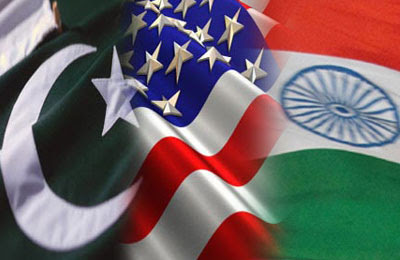
India-Pakistan-US

Michael Hughes: Recent efforts to jumpstart a dialogue between the U.S. and Pakistan seem futile given the duo’s irreconcilable differences – especially in two key areas. The U.S. wants Pakistan to hand over the Haqqani Network and other Afghan Taliban while Islamabad would like Washington to dial down its love affair with India. However, it is hard to imagine either side budging with the U.S.-Pakistani trust gap growing larger by the day. Click here to read more.

Posted in Haqqani Network, Opinion/Editorial, Pakistan-Afghanistan Relations, Security, Taliban, US-Afghanistan Relations |

US General: $50 Million Worth of Taliban Narcotics Destroyed in Afghanistan

2nd December, 2017 · admin · 6 Comments
Nicholson

Nicholson

VOA News
December 2, 2017

ISLAMABAD — The top U.S. general in Afghanistan said Saturday recently launched joint strikes against Taliban sources of revenue have destroyed more than $50 million worth of narcotics in southern Helmand province.

Afghanistan produces about 85 percent of the world’s opium. Income generated from drugs is providing 60 percent of the Taliban’s funding, according to U.S. military estimates.

“Together in the last few weeks alone, we have destroyed over 50 million dollars worth of narcotics in Helmand. This is the Taliban’s financial engine and the Taliban drug cartels are now on notice that they are in our sights and we are coming after them,” said General John Nicholson.

The general commands American troops and NATO’s Resolute Support mission in the country.

The counternarcotics combined air and ground strikes began on November 19 and have since destroyed a number of factories and heroin processing labs. Nicholson said at the time authorities granted by President Donald Trump in August prompted the crackdown to curb terrorists and their revenue streams.

Helmand is the largest Afghan province and opium-poppy producing region, bordering Pakistan. Many of the districts in the volatile province are either controlled or influenced by the Taliban.

The Islamist insurgency, however, has denied any links to the illicit narcotics trade. The Taliban points to the historic reduction in poppy cultivation due to official eradication efforts when the Islamic group was ruling Afghanistan.

The U.S. has spent about $8.6 billion on narcotics eradication in Afghanistan since 2002, but the production has risen to historic levels.

The U.N. Office on Drugs and Crimes revealed in a new survey last month that narcotics production almost doubled in 2017 in Afghanistan to a record 9,000 tons, with a 63 percent increase in cultivation areas compared with 2016.

Narcotics trade fuels official corruption and undermines governance as well as rule of law in Afghanistan

U.S. officials say drugs lords provide weapons and funding to the Taliban in return for the protection of drug trade routes, cultivation fields, laboratories and trafficking organization. The Taliban, which controls or influences more than 40 percent of Afghan territory, generates revenue by taxing drugs trafficked through areas they control.

Critics say without eradicating opium production, U.S.-led efforts to eliminate terrorism and establish peace in Afghanistan will remain a daunting task. Afghan President Ashraf Ghani has stated that “the heroin is a very important driver” of the war in his country.

Other Security News

  • Two Killed, 13 Injured In Separate Afghan Attacks
  • Daesh terrorists kill 2 policemen in bomb attack in Nangarhar
  • Iran condemns Taliban attack on university campus in NW Pakistan


Posted in Drugs, ISIS/DAESH, Security, Taliban | Tags: Helmand, heroin, Nangarhar, opium, Poppy cultivation |
Previous Posts
Next Posts

Subscribe to the Afghanistan Online YouTube Channel

---

---

---

Get Yours!

Peace be with you

Afghan Dresses

© Afghan Online Press
  • About
  • Links To More News
  • Opinion
  • Poll